The best science fiction books can deliver page-turning suspense while exploring identity, technology, politics, survival, and humanity’s place in the universe. This selection spans modern bestsellers, award-winning classics, ambitious space opera, and thought-provoking anthologies.
Use the comparison and buying advice below to match your reading mood with the right science fiction novel or collection, whether you want a fast thriller, hard science, literary depth, or an expansive future setting.
Best 10 Science Fiction Books Picks for 2026
Best Science-Based Thriller
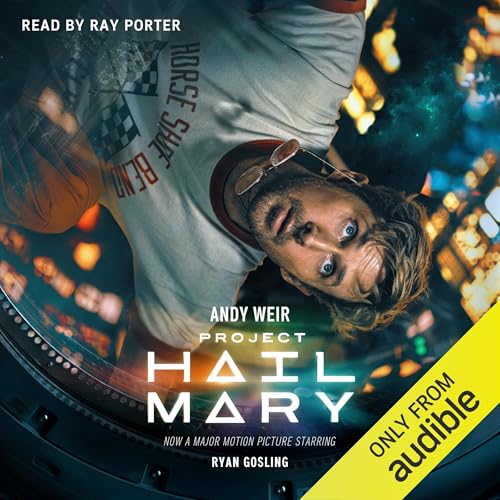
- Amnesiac astronaut on a last-chance mission
- Science-driven mystery and survival story
- Unabridged audiobook narrated by Ray Porter
Best For: Readers who enjoy scientific space thrillers and interstellar discovery
Best for Dystopian Rebellion

- Caste-based future society on Mars
- Infiltration and brutal Institute competition
- Book one of a six-book series
Best For: Readers drawn to rebellion, social hierarchy, and high-stakes competition
Best for Practical Space Survival

- Astronaut stranded alone on Mars
- Engineering-led survival challenges
- Wil Wheaton narration with bonus content
Best For: Readers who enjoy realistic problem-solving and survival fiction
Best for Thoughtful World-Building

- Diplomatic mission on an icebound planet
- Explores culture, gender, and identity
- 50th anniversary edition with new material
Best For: Readers who prefer intellectual and socially focused science fiction
Epic Evolutionary Adventure

- Terraforming and survival on a new Earth
- Collision between two civilizations
- 16-hour-31-minute unabridged audiobook
Best For: Readers who enjoy expansive planetary science fiction
Reality-Bending Thriller

- Alternate realities and paths not taken
- Family-centered emotional stakes
- 10-hour-8-minute unabridged audiobook
Best For: Readers who want fast-paced speculative suspense
Genre-Spanning Classics
Masterpieces: 20th-Century Science Fiction

- Short stories from influential genre authors
- Selected and evaluated by Orson Scott Card
- 432-page print anthology
Best For: Readers exploring the foundations of science fiction
Best Time-Bending Thriller

- Fast-paced thriller about memory and time
- Features Detective Barry Sutton and Helena Smith
- 324-page digital edition with accessibility features
Best For: Readers who enjoy high-concept, action-driven science fiction
Best Epic Space Opera

- Galaxy-spanning story about humanity's survival
- Follows Idris and a freelance salvage crew
- Unabridged audiobook runs 18 hours 43 minutes
Best For: Listeners who want a large-scale science fiction adventure
Best Classic Big-Idea Science Fiction

- Explores energy exchange with a parallel universe
- Threatens Earth and the Sun with unintended consequences
- 304-page classic by Isaac Asimov
Best For: Readers who enjoy philosophical, concept-driven science fiction
Best Science-Based Thriller – Project Hail Mary
For readers choosing science fiction books centered on problem-solving and survival, Project Hail Mary combines a high-stakes space mission with scientific mystery. Ryland Grace awakens alone millions of miles from Earth and must recover his memory while confronting an extinction-level threat.
Best For: Readers who enjoy science-based space thrillers, survival challenges, and interstellar discovery.
Pros:
- Strong mystery built around Grace’s missing memories and desperate assignment.
- Focuses on scientific reasoning, discovery, and survival.
- Features an unexpected ally and a 16-hour, 10-minute unabridged audiobook narrated by Ray Porter.
Cons:
- The story begins with the protagonist unable to remember his identity or mission.
- Its scientific and space-focused premise may not suit readers seeking fantasy-driven science fiction.
This is a compelling pick for listeners who want an accessible, high-concept science fiction audiobook with both urgency and exploration.
Best for Dystopian Rebellion – Red Rising
Among science fiction books about inequality and revolution, Red Rising follows Darrow, a Red who discovers that his people have been deceived and exploited by a ruling Gold caste. To seek justice, he infiltrates the Institute and enters a brutal struggle for power.
Best For: Readers who want caste conflict, political rebellion, intense competition, and a continuing series.
Pros:
- Clear social hierarchy creates a strong foundation for the conflict.
- Darrow’s infiltration gives the story a focused personal and political mission.
- Book one of a six-book series, with an unabridged audiobook lasting 16 hours and 12 minutes.
Cons:
- The story includes brutal competition and life-or-death struggles.
- Readers seeking a standalone novel may prefer a self-contained selection.
Red Rising is a strong choice when you want science fiction with a fast-moving power struggle and a protagonist determined to challenge an entrenched ruling class.
Best for Practical Space Survival – The Martian
For readers browsing science fiction books grounded in engineering and resourcefulness, The Martian follows astronaut Mark Watney after he is stranded on Mars with no way to contact Earth. He must solve one dangerous problem after another while racing against limited supplies and a hostile environment.
Best For: Readers who enjoy survival stories, practical science, engineering challenges, and a sarcastic narrator.
Pros:
- Strong survival premise built around isolation and limited resources.
- Highlights ingenuity, engineering skills, and persistence.
- This edition is narrated by Wil Wheaton and includes bonus material from Mark Watney’s writings.
Cons:
- The plot repeatedly places the protagonist against technical and environmental hazards.
- Its focus on practical problem-solving may be less appealing to readers seeking space opera.
With a 10-hour, 59-minute unabridged runtime, this edition suits listeners who want a grounded Mars survival story enhanced by humor and bonus content.
Best for Thoughtful World-Building – The Left Hand of Darkness
For readers seeking science fiction books with cultural and social depth, The Left Hand of Darkness follows a human ambassador on the icebound planet of Winter. He must navigate an unfamiliar society with fluid gender while working toward the planet’s inclusion in an intergalactic civilization.
Best For: Readers interested in intellectual science fiction, alien cultures, psychology, society, and human emotion.
Pros:
- Explores culture and identity through the inhabitants of Winter.
- Centers on diplomacy and communication across a major cultural divide.
- This 50th anniversary edition includes a new introduction and afterword.
Cons:
- Its emphasis on psychology, society, and emotion may feel less action-focused.
- The 367-page novel is aimed at readers comfortable with reflective world-building.
This landmark, award-winning novel is a thoughtful selection for readers who value ideas, atmosphere, and the examination of human assumptions over constant action.
Epic Evolutionary Adventure – Children of Time
For readers seeking ambitious science fiction books in audiobook form, Children of Time combines humanity’s search for a new home with a striking conflict over a terraformed planet. This unabridged production runs 16 hours and 31 minutes and is narrated by Mel Hudson.
Best For: Readers who enjoy large-scale survival stories, terraforming concepts, and conflicts between competing civilizations.
Pros:
- Explores humanity’s battle for survival on a terraformed world.
- Features an expansive, civilization-level premise.
- Long unabridged listening time offers an immersive experience.
Cons:
- The 16-hour-plus runtime may require a substantial time commitment.
- Its epic scope may be less suitable for readers seeking a compact story.
Choose this audiobook if you want science fiction with high stakes, planetary world-building, and a serious question about who will inherit a new Earth.
Reality-Bending Thriller – Dark Matter
Among science fiction books, Dark Matter is a fast-moving speculative thriller built around alternate realities, difficult choices, and the pull of family. This unabridged audiobook lasts 10 hours and 8 minutes and is narrated by Jon Lindstrom.
Best For: Readers who prefer accessible speculative fiction with mystery, psychological tension, and a race to recover a familiar life.
Pros:
- Uses an immediately engaging alternate-reality premise.
- Centers emotional stakes on Jason’s wife, son, and former life.
- Shorter listening length suits readers seeking a focused thriller.
Cons:
- Its thriller structure may appeal less to readers seeking slow, detailed world-building.
- The premise focuses more on personal choices and identity than on broad interstellar adventure.
This is a strong pick when you want science fiction that moves quickly while examining the lives we choose and the paths we leave behind.
Genre-Spanning Classics – Masterpieces: 20th-Century Science Fiction
Masterpieces: The Best Science Fiction of the 20th Century is a practical choice for readers building a foundation in science fiction books. Selected and evaluated by Orson Scott Card, this 432-page collection brings together short fiction from major authors including Isaac Asimov, Ursula K. Le Guin, Ray Bradbury, Arthur C. Clarke, and William Gibson.
Best For: Readers who want a broad survey of twentieth-century science fiction through acclaimed short stories.
Pros:
- Includes work from a wide range of influential science fiction authors.
- Short-story format makes it easy to sample different styles and ideas.
- Includes a critical essay by Orson Scott Card.
Cons:
- Its focus is twentieth-century fiction rather than newer science fiction.
- A multi-author anthology may feel less consistent than a single-author novel.
- Readers seeking one continuous narrative may prefer a novel.
Consider this collection if you want variety, historical perspective, and a convenient way to explore many of the genre’s celebrated voices in one print volume.
Best Time-Bending Thriller – Recursion
Recursion is a strong choice for readers looking for science fiction books with a fast-moving thriller structure. Blake Crouch combines memory, identity, neuroscience, and time distortion in a high-concept story centered on Detective Barry Sutton and neuroscientist Helena Smith.
Best For: Readers who want an accessible, action-packed science fiction thriller focused on memory and the consequences of altering time.
Pros:
- Combines science fiction concepts with suspense and investigation.
- Features dual protagonists pursuing the source of a reality-breaking phenomenon.
- Compact 324-page format with enabled accessibility and reading features in the digital edition.
Cons:
- Its focus on loops, alternate memories, and changing reality may feel complex.
- Readers seeking a slower, more literary science fiction novel may prefer a different style.
Choose Recursion if you value momentum, emotional stakes, and mind-bending ideas in equal measure. It is particularly well suited to readers who enjoy science fiction that feels close to contemporary technology and thriller conventions.
Best Epic Space Opera – Shards of Earth
Shards of Earth is a substantial audiobook pick for fans of science fiction books built around galaxy-scale danger. Adrian Tchaikovsky follows Idris and his salvage-ship crew as they investigate a mysterious object linked to the vanished Architects while facing pressure from governments, cults, and criminals.
Best For: Audiobook listeners seeking a sprawling space opera with alien technology, enhanced humans, interstellar travel, and an extinction-level mystery.
Pros:
- Opens a larger trilogy, The Final Architecture.
- Combines space adventure with political, criminal, and cult-related threats.
- Unabridged 18-hour, 43-minute narration by Sophie Aldred.
Cons:
- The long runtime requires a significant listening commitment.
- As the first book in a trilogy, the story may leave larger arcs for later installments.
Shards of Earth makes the most sense for readers who want expansive world-building and a continuing space adventure rather than a standalone story. Its audiobook format is convenient for long commutes or extended listening sessions.
Best Classic Big-Idea Science Fiction – The Gods Themselves
The Gods Themselves is a classic choice among science fiction books for readers interested in the consequences of seemingly limitless energy. Isaac Asimov’s novel moves between human and alien perspectives as a small group tries to warn Earth that its energy exchange with a parallel universe could destroy the Sun.
Best For: Readers who prefer idea-driven science fiction involving parallel universes, alien societies, scientific risk, and planetary survival.
Pros:
- Explores the hidden cost of an apparently unlimited energy source.
- Uses human, alien, and lunar-born viewpoints to examine the central threat.
- At 304 pages, it offers a relatively concise classic science fiction read.
Cons:
- The premise emphasizes scientific and philosophical concepts more than action.
- Published in 1990, it may feel stylistically older than contemporary science fiction.
Pick this novel when the appeal of science fiction lies in ambitious premises and ethical consequences rather than a purely action-oriented plot. Its compact length also makes it a practical entry point for readers exploring classic Asimov.
How We Picked These Science Fiction Books
We selected these 10 titles for a balance of critical reputation, reader appeal, originality, and variety. The list includes accessible page-turners such as Project Hail Mary and The Martian, large-scale space adventures such as Red Rising and Shards of Earth, and influential works that examine society, gender, evolution, and human nature.
We also considered format and reading experience. The collection includes standalone novels, series openers, a short-story anthology, contemporary releases, and landmark twentieth-century fiction. That makes it useful for both newcomers and experienced readers building a broader science fiction shelf.
Quick Comparison
| Book | Best For | Reading Experience |
|---|---|---|
| Project Hail Mary | Science-driven survival | Fast, inventive, and accessible |
| Red Rising | Intense space adventure | Action-heavy and dramatic |
| The Martian | Problem-solving and realism | Technical, witty, and suspenseful |
| The Left Hand of Darkness | Literary world-building | Reflective and anthropological |
| Children of Time | Evolutionary science fiction | Expansive and conceptually bold |
| Dark Matter | High-concept suspense | Quick, emotional, and twisty |
| Masterpieces | Genre breadth | Varied short fiction |
| Recursion | Memory and reality puzzles | Propulsive and cerebral |
| Shards of Earth | Modern space opera | Large-scale and cinematic |
| The Gods Themselves | Classic scientific speculation | Idea-focused and unconventional |
Key Buying Factors for Science Fiction Books
Choose the Right Subgenre
Hard science fiction emphasizes plausible science and engineering, while space opera prioritizes sweeping conflict, political stakes, and adventure. Social and literary science fiction focuses more on culture, identity, and moral questions. If you prefer suspense, choose a high-concept thriller; for variety, an anthology offers multiple authors and styles in one volume.
Consider Pacing and Complexity
Readers who want immediate momentum may prefer Dark Matter, Recursion, or Red Rising. Books such as The Left Hand of Darkness and The Gods Themselves reward slower reading and closer attention to ideas, structure, and setting.
Check Whether It Begins a Series
Red Rising, Children of Time, and Shards of Earth introduce larger fictional universes. They are good choices if you want continuing stories, but a standalone such as The Martian, Project Hail Mary, or Dark Matter may be better for a complete experience in one book.
Who Should Buy Which Science Fiction Books?
Newcomers to the genre should start with The Martian or Project Hail Mary for approachable science, humor, and strong narrative momentum. Choose Dark Matter or Recursion for a thriller-led introduction to speculative ideas.
Readers seeking ambitious world-building should consider Children of Time or Shards of Earth. Those interested in influential, idea-rich classics may prefer The Left Hand of Darkness, The Gods Themselves, or the broad historical range of Masterpieces. For action, rivalry, and a series-opening commitment, Red Rising is the strongest fit.