Choosing the right model railroad books can save time, prevent costly layout mistakes, and help you build with more confidence. Whether you’re starting small or refining an existing railroad, the best guides make each decision easier.
This roundup focuses on practical, builder-friendly titles covering design, wiring, scenery, operations, and digital control for 2026.
Best 10 Model Railroad Books Picks for 2026
Wiring Essentials
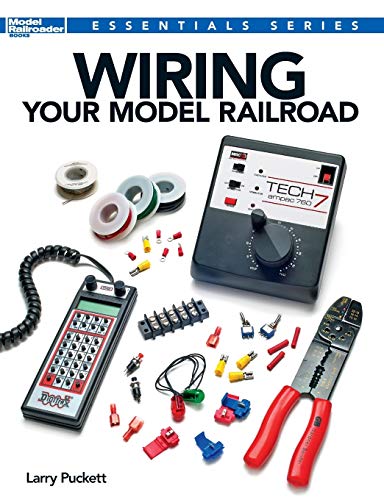
- Covers traditional wiring and DCC.
- Current reference for layout wiring.
- Short, practical guide at 127 pages.
Best For: Modelers who need a focused wiring reference
N Scale Starter
Your Guide to N Scale Railroading

- Fresh 2024 N scale handbook.
- Covers DCC, scenery, benchwork, and couplers.
- Good for beginners and downsizers.
Best For: Modelers wanting practical N scale projects
Scenery Builder
Building Realistic Model Railroad Scenery

- Complete overview of scenery modeling.
- Step-by-step photo guidance included.
- Covers mountains, rivers, towns, and more.
Best For: Modelers focused on layout scenery
Yard Planning

- Explains prototype yard operations.
- Uses examples from real layouts.
- Best for intermediate to advanced modelers.
Best For: Readers focused on yard design and operation
Classic Track Plan Collection
101 Track Plans for Model Railroaders

- More than 101 traditional track plans
- Covers N, HO, S, and O scales
- Includes plan conversion and layout tips
Best For: modelers who want a big library of classic layout ideas
Starter Layout Guide

- Beginner-friendly step-by-step guide
- Covers benchwork, tracklaying, scenery, and structures
- Features a small, easy-to-build example layout
Best For: new model railroaders building a first compact layout
Design Planning Guide
How to Design a Model Railroad

- Covers aisle space, benchwork, and curve radius
- Helps turn ideas into a workable track plan
- Focuses on realistic design and staging
Best For: modelers planning a realistic layout from the ground up
Workbench Reference

- Single-volume reference for common layout questions
- Cross-index helps speed up lookups
- Covers track, wiring, scenery, and prototype info
Best For: Modelers who want a compact, all-in-one reference
HO Layout Planning

- Eleven HO layouts with diagrams
- Covers planning, foundation, wiring, and design
- Short 52-page guide for quick reference
Best For: HO scale modelers looking for layout ideas and basic planning guidance
DCC Setup Guide

- Explains DCC systems and components
- Covers decoder installation, programming, and wiring
- Includes conversion guidance for older DC layouts
Best For: Modelers who want a practical introduction to DCC setup, upgrades, and decoder work
Wiring Essentials – Wiring Your Model Railroad
If you’re researching model railroad books that can help you get the basics right, this guide is a strong place to start. Larry Puckett covers both traditional wiring and DCC in a current, practical overview, making it useful whether you’re building your first layout or updating an older one.
Best For: Modelers who want a clear, up-to-date wiring reference for both beginners and experienced hobbyists.
Pros:
- Covers traditional wiring and DCC in one book.
- Described as the first wiring book any modeler should buy.
- Current source, with the topic not updated by a publisher in 15 years.
- Useful as both an introduction and a reference guide.
Cons:
- Focused specifically on wiring, not a broad all-in-one hobby guide.
- At 127 pages, it is relatively compact.
This is a practical choice if wiring is your priority and you want a book that blends foundational guidance with modern DCC coverage. For many layouts, it fills a niche that older model railroad books may not cover as thoroughly.
N Scale Starter – Your Guide to N Scale Railroading
Among model railroad books aimed at N scale, this 2024 title stands out as a modern, idea-rich guide. David Popp covers a range of projects and tips, from growing a starter oval into a larger railroad to benchwork, scenery, couplers, and DCC installation.
Best For: Newer N scale modelers and experienced hobbyists looking for fresh project ideas in a compact format.
Pros:
- All-new 2024 book with a current approach to N scale.
- Includes projects on benchwork, scenery, couplers, and DCC.
- Useful for beginners and modelers considering a smaller scale.
- Offers ideas for expanding from a basic oval to a larger layout.
Cons:
- Specialized specifically for N scale.
- At 112 pages, it is concise rather than exhaustive.
If you want a focused N scale handbook, this one combines entry-level guidance with practical upgrade ideas. It should appeal to readers who want model railroad books that are both accessible and directly usable on the layout.
Scenery Builder – Building Realistic Model Railroad Scenery
For model railroad books that focus on scenery, this title is a strong all-around choice. Kathy Millatt presents a complete overview of scenery modeling, combining newer materials and techniques with classic methods for mountains, rivers, forests, rights-of-way, towns, and cities.
Best For: Anyone who wants a step-by-step scenery guide for taking a layout from bare basework to a finished scene.
Pros:
- Covers a wide range of scenery subjects, from mountains to cities.
- Includes step-by-step photo sections for different methods.
- Blends latest techniques and materials with classic approaches.
- Suitable for beginners through advanced modelers.
Cons:
- Centered on scenery, so it is not a general hobby overview.
- Some readers may already know the classic methods covered.
This is a useful pick if the main goal is making a layout look complete and believable. As a scenery-focused entry among model railroad books, it offers practical guidance that can help transform a plain base into a detailed scene.
Yard Planning – Designing & Operating Yards
If you’re looking for model railroad books that go beyond basics, this yard-focused title offers a detailed look at how real railroad yards work. Dave Abeles draws on prototype knowledge and examples from his own layout and well-known modelers to explain yard types and operations.
Best For: Intermediate and advanced modelers who want a deeper understanding of yard design and operation.
Pros:
- Explains how railroad yards work and how to model them.
- Draws on prototype knowledge and real-world operations.
- Includes examples from Dave’s layout and noted modelers’ layouts.
- Geared toward intermediate to advanced readers.
Cons:
- Likely too detailed for absolute beginners.
- Focused narrowly on yards rather than general layout building.
This is a solid choice if yard design is a major part of your plan and you want a book with operational depth. Among model railroad books, it stands out for translating prototype yard practice into layout ideas you can actually use.
Classic Track Plan Collection – 101 Track Plans for Model Railroaders
If you’re comparing model railroad books for layout ideas, this classic collection is built around more than 101 traditional-style track plans in N, HO, S, and O scales. It also includes guidance on converting plans to different scales, choosing a plan for your space, and building a layout from the plan.
Best For: Modelers who want a large set of classic track plans and practical planning guidance.
Pros:
- More than 101 different track plans.
- Covers N, HO, S, and O scales.
- Includes tips for scale conversion and layout selection.
- Offers instruction on building a layout from a plan.
Cons:
- Focuses on traditional-style plans rather than modern design concepts.
- Shorter print length than many full-length how-to books.
This is a strong pick if you want a broad reference of proven track ideas in one compact handbook. It is especially useful when you need inspiration that can be adapted to different spaces and scales.
Starter Layout Guide – Build Your First Layout
For readers looking at model railroad books as a step-by-step starting point, this guide is aimed at beginners and anyone building a simple, compact layout. It follows the Northspur & Tiburon Railroad and covers the core basics of benchwork, tracklaying, scenery, and structures.
Best For: Beginners who want a straightforward book for building their first operating layout.
Pros:
- Designed for people getting started in model railroading.
- Uses a small, easy-to-build example layout.
- Covers benchwork, tracklaying, scenery, and structures.
- Step-by-step approach makes the process easier to follow.
Cons:
- Focused on a simple compact layout rather than large or complex builds.
- May be too basic for experienced modelers.
This book is a practical choice if you want a clear, beginner-friendly path from planning to an operating layout. It keeps the scope manageable while covering the fundamentals needed to get started.
Design Planning Guide – How to Design a Model Railroad
If you’re shopping model railroad books to move from ideas to a workable plan, this guide focuses on layout design decisions like aisle space, benchwork depth, curve radius, and staging tracks. It is meant to help you turn a concept into a realistic track plan and overall layout design you can build with confidence.
Best For: Modelers who want help turning layout ideas into a realistic design.
Pros:
- Covers important planning questions like aisle space and benchwork depth.
- Addresses curve radius, yards, and staging tracks.
- Helps transform ideas into a workable track plan.
- Focuses on realistic layout design and common pitfalls.
Cons:
- More design-focused than build-step focused.
- May be best suited to readers already thinking through their layout space.
This is a strong choice if you need a hands-on guide to the design stage before construction begins. It is especially useful when you want to fit a layout to available space without losing realism.
Workbench Reference – Model Railroader's Handbook
If you’re shopping for model railroad books that work like an on-the-bench reference, Model Railroader’s Handbook is built for quick lookups. It pulls together general terms, measurements, track and wiring basics, painting and weathering, scenery, and prototype information in one organized guide, with charts, photos, illustrations, and a detailed cross-index.
Best For: Modelers who want a compact, all-in-one reference they can keep near the workbench.
Pros:
- Broad coverage of key model railroading topics in one volume
- Cross-index makes specific facts easier to find quickly
- Includes charts, photographs, and illustrations for practical use
- Useful for all skill levels and all scales
Cons:
- At 208 pages, it is a reference guide rather than an in-depth course on any single topic
- Focuses on lookup-friendly facts, so some readers may want more project-based instruction
This is a strong choice if you want one of the more practical model railroad books for repeated reference. Its value is in organization and breadth, making it easy to return to whenever a layout question comes up.
HO Layout Planning – HO Layouts For Every Space
For readers comparing model railroad books focused on layout planning, HO Layouts For Every Space keeps things straightforward and practical. It offers eleven detailed HO scale layouts with diagrams, plus chapters on planning, Atlas track diagrams, building a foundation, track laying, wiring, and design.
Best For: HO scale modelers looking for layout ideas and basic planning guidance.
Pros:
- Includes eleven detailed layouts with diagrams
- Covers planning, track design, wiring, and layout foundation basics
- Focused HO scale content makes it easy to use for that specific format
- Short 52-page format is quick to review
Cons:
- Very brief compared with longer reference books
- Limited to HO scale rather than multiple scales
This is a useful pick if you want layout inspiration without a large time commitment. It works best as a planning aid for HO builders who want diagrams and a few core setup topics in one slim guide.
DCC Setup Guide – DCC and Model Railroading
If you’re narrowing down model railroad books for digital command control, DCC and Model Railroading focuses on the fundamentals you need to get started or upgrade an existing layout. It explains DCC systems and components, choosing and installing a system, decoder installation and programming, wiring for DCC, and even smartphone or tablet control.
Best For: Modelers who want a practical introduction to DCC setup, upgrades, and decoder work.
Pros:
- Explains the basics of DCC systems and components
- Covers wiring, decoder installation, and programming
- Includes guidance for converting a DC layout to DCC
- Mentions control options using a smartphone or tablet
Cons:
- At 96 pages, it is a focused guide rather than an exhaustive technical manual
- Reading age is listed as 18 years and up, which may narrow its audience
This is a strong practical pick if your priority is understanding how DCC works and how to apply it on a layout. Its value comes from covering both setup and installation steps in one concise guide.
How We Picked These Model Railroad Books
We focused on titles that offer clear instruction, practical examples, and broad usefulness across skill levels. The strongest books explain not just what to do, but why a method works, making them easier to apply to real layouts. We also looked for topics that matter most to hobbyists: planning space, choosing scale, wiring correctly, building scenery, and operating with confidence.
Quick Comparison
If you’re building your first layout, prioritize beginner-friendly layout and track-plan books. If you already have benchwork in place, wiring, scenery, and yard-operation titles may be more valuable. For modelers moving into modern control systems, DCC-focused books can be especially helpful. The best choice depends on where you are in the build process and what problem you need to solve next.
Key Buying Factors for Model Railroad Books
Skill Level
Some Model Railroad Books are written for newcomers and use step-by-step language, while others assume you already understand track geometry or electrical basics. Pick a book that matches your current experience so the advice feels usable instead of overwhelming.
Topic Focus
Different books specialize in different areas. A layout design book may help you fit a railroad into a room, while a wiring guide is better for troubleshooting power distribution. If you want broad guidance, choose a general handbook; if you want progress on one problem, choose a focused title.
Scale and Operating Style
Make sure the book matches your scale or can be adapted easily. HO, N scale, and other formats can have different space requirements and design tradeoffs. Also consider whether you prefer realistic operations, compact shelf layouts, or prototype-inspired planning.
Visual Learning Value
Strong diagrams, photos, and track-plan illustrations are especially important in Model Railroad Books. Visual examples make it easier to translate ideas into benchwork, scenery, and wiring decisions.
Who Should Buy Which Model Railroad Books?
New modelers should look first at beginner-oriented guides on building a first layout, track planning, and basic railroading fundamentals. Intermediate hobbyists often benefit most from books on scenery, yards, and layout design. Advanced builders and operators may want deeper references on DCC, track planning, and prototypical operations. If you’re unsure, a general handbook is usually the safest starting point because it gives you a wider foundation before you specialize.
No matter your experience level, the best Model Railroad Books are the ones you’ll keep returning to while you build. A practical reference on your workbench often matters more than a title packed with theory.