The right STEM encyclopedia can turn a passing question into an afternoon of discovery. For teenagers, the best choice balances engaging visuals with explanations substantial enough to reward a closer look.
These 10 books cover everything from broad science and engineering to the human body, elements, space, and everyday technology. Use the guide below to find a match for your teen’s interests and reading habits.
Best 10 Stem Encyclopedias for Teenagers Picks for 2026
Best STEM Fundamentals
Science: A Visual Encyclopedia

- Biology, chemistry, and physics
- Image-led, clear explanations
- Stated reading age: 8–12
Best For: Younger teens learning core science concepts
Best for Engineering Curiosity
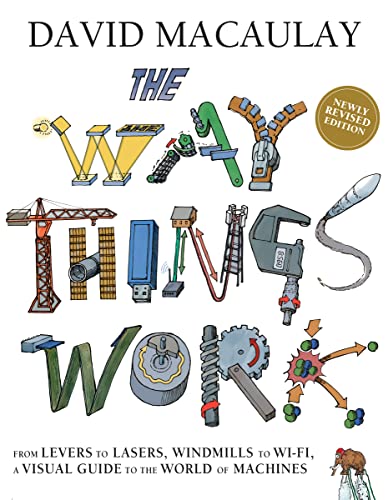
- Explains machine principles
- Includes touchscreens and 3D printers
- Glossary and index included
Best For: Teens interested in machines and technology
Best Visual All-Rounder

- STEM plus history and geography
- Detailed CGI and photographs
- Updated 2023 edition
Best For: Younger teens who enjoy broad visual reference books
Best for Hands-On Exploration
National Geographic Kids Science Encyclopedia

- Physical and life sciences
- DIY experiments included
- Photos and scientist profiles
Best For: Younger teens who like science activities and facts
Best for Anatomy
Knowledge Encyclopedia Human Body!
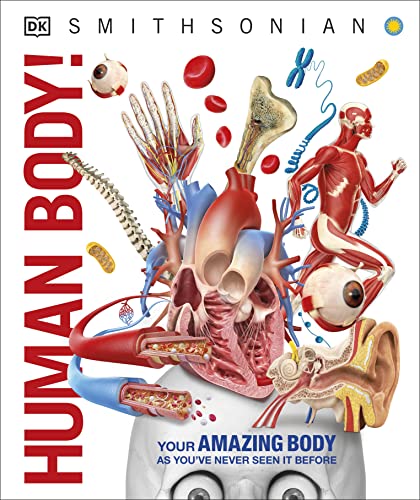
- Head-to-toe anatomy coverage
- Detailed CGI cutaways and charts
- Accessible text aimed at ages 9–12
Best For: Visual learners exploring human anatomy
Best for Chemistry

- Profiles all 118 elements
- Includes more than 1,000 images
- Links elements to everyday objects
Best For: Visual introductions to the periodic table
Best for Space

- Covers galaxies, stars, and spacecraft
- Uses 3D imagery and diagrams
- Revised with updated space information
Best For: Visual introductions to space and astronomy
Best for Invention History
Knowledge Encyclopedia: Inventions and Discoveries

- 192 pages on inventions and discoveries
- Diagrams, visuals, and a glossary
- Child-friendly explanations suit younger readers
Best For: Younger teens curious about how inventions changed the world
Best Broad Visual Reference
Eyewitness Encyclopedia of Everything

- 400-page, wide-ranging reference
- More than 1,500 images
- Quizzes and expert interviews add variety
Best For: Visual learners who want STEM alongside nature, history, and culture
Best for Everyday Teen Questions

- Designed for ages 13–17
- 100 illustrated, one-page answers
- Connects science to phones, sleep, and sport
Best For: Teens who prefer practical questions and visual explanations
Best STEM Fundamentals – Science: A Visual Encyclopedia
Science: A Visual Encyclopedia of STEM and Discovery (DK Children's Visual Encyclopedias)
Check Price On AmazonFor shoppers comparing stem encyclopedias for teenagers, this 304-page DK guide offers a visual introduction to biology, chemistry, and physics. Its clear text and graphics suit a teen who wants to build confidence with the basics, though its stated reading age is 8–12.
Best For: Younger teens who prefer illustrated explanations of core science subjects.
Pros:
- Covers biology, chemistry, and physics in one volume.
- Uses images and simple graphics to explain concepts.
- Connects topics to questions about fireworks, plants, and robots.
Cons:
- The stated reading age of 8–12 may make it too introductory for older teens.
Choose this for an accessible science foundation rather than a reference aimed at advanced coursework.
Best for Engineering Curiosity – The Way Things Work Now
Among stem encyclopedias for teenagers, David Macaulay’s 408-page illustrated guide stands out for explaining how machines and technologies work. It links underlying principles to examples ranging from windmills and jets to touchscreens, Wi-Fi, and 3D printers.
Best For: Teens who like taking apart ideas behind machines and everyday technology.
Pros:
- Explains principles through a wide variety of mechanical and technological examples.
- Uses humorous illustrations and a recurring woolly mammoth to keep explanations approachable.
- Includes a glossary, index, and illustrated survey of inventions.
Cons:
- Its focus on machines makes it less suitable as a broad biology-and-chemistry reference.
- At 3.98 pounds, it is a substantial book to carry.
Pick this when understanding how things work matters more than surveying every STEM subject equally.
Best Visual All-Rounder – Knowledge Encyclopedia!
If you’re browsing stem encyclopedias for teenagers who also enjoy history and the wider world, this updated 360-page DK volume offers a broad visual survey. Detailed CGI, photographs, charts, and timelines help explain topics from atoms and black holes to robotics and the human body.
Best For: Visually oriented younger teens who want STEM alongside history and other subjects.
Pros:
- Ranges across science, technology, geography, history, and more.
- Uses detailed 3D images alongside illustrations and photographs.
- The 2023 updated edition includes developments in science, technology, space, and geography.
Cons:
- Its broad scope gives less exclusive attention to STEM than a science-only volume.
- At 4.75 pounds, it is better suited to a desk than a backpack.
This is a strong browsing choice for a curious teen, but its stated grade level of 4–7 is worth considering for older readers.
Best for Hands-On Exploration – National Geographic Kids Science Encyclopedia
For readers seeking stem encyclopedias for teenagers with activities as well as facts, this National Geographic Kids science reference pairs physical and life sciences with do-it-yourself experiments. Full-color photographs, statistics, and scientist profiles add ways to explore its A-to-Z topics.
Best For: Younger teens who enjoy science facts, photographs, and experiments.
Pros:
- Covers physical and life sciences, including chemistry, animals, space, and robots.
- Includes do-it-yourself experiments alongside reference material.
- Features photographs, statistics, and profiles of scientists and explorers.
Cons:
- The listed customer reading age of 8–11 may be too young for some teens.
- Its 2016 publication date makes it less recent than an updated reference.
Consider it for an engaging, activity-friendly introduction rather than a teen-specific advanced science encyclopedia.
Best for Anatomy – Knowledge Encyclopedia Human Body!
Knowledge Encyclopedia Human Body!: Human Anatomy as You've Never Seen It Before
Check Price On AmazonFor shoppers comparing stem encyclopedias for teenagers, this is a visual introduction to anatomy rather than a general STEM reference. Its head-to-toe coverage uses detailed CGI cutaways, charts, and clear text to explain cells, body systems, and medical milestones.
Best For: Younger teens who enjoy visual learning and want an accessible starting point for human anatomy.
Pros:
- Detailed cross-sections and 3D CGI imagery show how body structures fit together.
- Covers multiple systems, including the nervous and muscular systems.
- Short, clear explanations make it easy to explore a little at a time.
Cons:
- Intended for ages 9–12, so older teens may want a more advanced anatomy resource.
- Focuses on the human body rather than STEM topics broadly.
Choose it when compelling visuals matter more than advanced depth; it is particularly well suited to a reader beginning to explore biology.
Best for Chemistry – The Elements Book
The Elements Book: A Visual Periodic Table Encyclopedia for Kids (DK Our World in Pictures)
Check Price On AmazonAmong stem encyclopedias for teenagers, The Elements Book is a focused pick for learning the periodic table through pictures. It covers all 118 elements, pairing their properties and uses with images of raw materials and objects readers may recognize.
Best For: Younger teens who want a visual introduction to chemical elements and where they appear in everyday life.
Pros:
- Covers all 118 elements, including naturally occurring and man-made ones.
- More than 1,000 images support its visual approach.
- Connects elements to familiar and unexpected objects.
Cons:
- Designed for ages 9–12, so it may be too introductory for advanced chemistry students.
- Concentrates on elements rather than chemistry as a whole.
This is a useful browseable reference for making the periodic table feel concrete, but readers seeking deeper chemistry instruction may need a companion book.
Best for Space – Knowledge Encyclopedia Space!
For readers browsing stem encyclopedias for teenagers, Knowledge Encyclopedia Space! offers an image-led tour of the universe. Its revised edition covers topics from star and galaxy formation to the Milky Way, the International Space Station, and future rockets.
Best For: Younger teens who like large-format visuals and want a broad introduction to space.
Pros:
- Combines 3D computer-generated imagery, photographs, and explanatory diagrams.
- Covers both cosmic phenomena and space engineering.
- Revised edition includes updated images and space-related information.
Cons:
- Customer-reported reading age is 5–10, so some teens may find it introductory.
- Its space focus will not suit readers seeking an all-subject STEM encyclopedia.
Pick this for a visually engaging overview of astronomy and space exploration; check the reading level if buying for an older teen.
Best for Invention History – Knowledge Encyclopedia: Inventions and Discoveries
Knowledge Encyclopedia - Inventions and Discoveries (Knowledge Encyclopedia For Children)
Check Price On AmazonFor shoppers comparing stem encyclopedias for teenagers, this 192-page book is a focused choice for readers interested in how inventions and scientific discoveries developed over time. Its child-friendly approach makes it better suited to younger teens than to readers seeking advanced technical detail.
Best For: Younger teens who enjoy the history of science, technology, and everyday inventions.
Pros:
- Covers inventions and discoveries alongside their historical context.
- Uses labeled diagrams, visuals, and clear explanations.
- Includes a glossary and memorable fact features.
Cons:
- Marketed mainly to children ages 7–12, so older teens may find the explanations basic.
- Its inventions-and-discoveries focus is narrower than a general STEM reference.
Choose this one when the appeal is tracing human ingenuity rather than surveying every branch of STEM. The accessible format is a strength for a younger or less confident reader.
Best Broad Visual Reference – Eyewitness Encyclopedia of Everything
Eyewitness Encyclopedia of Everything: The Ultimate Guide to the World Around You
Check Price On AmazonAmong stem encyclopedias for teenagers, this 400-page Eyewitness volume offers the broadest subject mix here: science and technology sit alongside nature, history, and culture. Its photography-led layout makes it an appealing book to browse, particularly for younger teens.
Best For: Visual learners who want a wide-ranging reference book rather than a STEM-only guide.
Pros:
- Covers science and technology within a wider survey of the world.
- Features more than 1,500 images and vivid photography.
- Adds facts, statistics, quizzes, and interviews with experts.
Cons:
- History and culture share space with STEM, limiting its focus on science topics.
- Its stated audience starts at age 9, so some older teens may prefer more advanced material.
This is the pick for variety and visual impact. It works best as a browsing-friendly general encyclopedia, not as a dedicated advanced science reference.
Best for Everyday Teen Questions – 100,000 Whys for Teens
If the goal is stem encyclopedias for teenagers that speak directly to ages 13–17, this book takes a question-by-question approach. Its 100 full-page visual answers connect science and technology with familiar topics such as sleep, phones, friendships, money, and sport.
Best For: Teens who like visual explanations tied to questions they encounter in daily life.
Pros:
- Written for ages 13–17, with teen-specific questions about the brain, body, and digital life.
- Gives each of its 100 questions a dedicated illustrated page.
- Uses diagrams, charts, visual summaries, and myth checks across 10 sections.
Cons:
- Its 120 pages and one-page-per-question format limit how deeply it can explore each subject.
- Friendships and money share space with science, so it is not exclusively STEM-focused.
Choose this for relevance and easy, one-question-at-a-time reading. Teens seeking a comprehensive reference organized around traditional science disciplines may want a different format.
How We Picked These Stem Encyclopedias for Teenagers
We prioritized books that invite independent browsing and help teens connect scientific ideas to things they can see, use, or investigate. The selection includes broad references for general curiosity and focused titles for readers already drawn to chemistry, anatomy, space, or engineering. We also considered how diagrams, photographs, and short explanations can make a reference book approachable without requiring a cover-to-cover read. Editions can vary, so check the publication date and contents if up-to-date discoveries or technology are a priority.
Quick Comparison: Which Type Fits?
For an all-around shelf reference, start with Science: A Visual Encyclopedia of STEM and Discovery or National Geographic Kids Science Encyclopedia. Knowledge Encyclopedia! and Eyewitness Encyclopedia of Everything cast a wider net beyond STEM, which suits teens who like to follow questions across subjects.
For a particular interest, choose Knowledge Encyclopedia Human Body! for anatomy, The Elements Book for the periodic table, or Knowledge Encyclopedia Space! for astronomy. The Way Things Work Now emphasizes mechanisms, while Knowledge Encyclopedia – Inventions and Discoveries focuses on how ideas and innovations developed. 100,000 Whys for Teens blends science questions with topics from everyday teenage life.
Key Buying Factors
Match the Scope to the Reader
A broad encyclopedia is a safer gift when you do not know which subject will stick. A focused volume offers more time with a favorite topic, but may see less use if that interest changes. For a teen building a home reference shelf, one general guide plus one specialist book can be more useful than two books with similar coverage.
Look at How the Book Explains Ideas
Some readers learn best from labeled diagrams and visual sequences; others prefer photographs, short facts, and question-led entries. Preview a few interior pages if possible. Check whether captions explain the visuals, unfamiliar terms are defined, and the layout encourages the teen to explore rather than merely skim.
Consider Age Fit and Currency
“For kids” does not automatically mean too young for a teenager: a clear visual reference can still be valuable. But compare sample pages with the reader’s existing knowledge, especially for older teens. Foundational anatomy and chemistry concepts may stay useful longer than coverage of fast-changing technology or recent space discoveries.
Who Should Buy Which Stem Encyclopedias for Teenagers?
Buy a broad visual science reference for the curious teen with many interests or for a shared family shelf. Choose a focused body, elements, or space book when the teen already asks detailed questions in that area. Pick The Way Things Work Now for someone who likes taking apart ideas and understanding mechanisms; consider the inventions title for a reader interested in the people and developments behind them. For a teen more likely to open a book because of an immediate question about daily life, 100,000 Whys for Teens may be the most inviting starting point.