The best wildflower field guide books make plant identification faster, more reliable, and more enjoyable—whether you are hiking locally or exploring a new region.
This 2026 roundup compares 10 useful options, including beginner-friendly guides, compact references, and regional books designed for more precise identification.
Best 10 Wildflower Field Guide Books Picks for 2026
Classic Keying Choice

- Five-question identification system
- Covers flowers, shrubs, and vines
- 490 pages for detailed regional coverage
Best For: Northeastern and North-central plant identification
Beginner Pocket Pick
National Geographic Pocket Guide to Wildflowers

- Profiles 160 common species
- Includes photos and close-up illustrations
- Lightweight North American reference
Best For: Beginners and casual outdoor identification
Michigan Specialist
Wildflowers of Michigan Field Guide

- Covers 200 Michigan species
- Organized by color and size
- Updated photos and naturalist notes
Best For: Michigan field trips and local plant study
First-Guide Favorite
Peterson Guide to Northeastern Wildflowers

- Built for beginning naturalists
- Focuses on common regional plants
- Compact 128-page format
Best For: Students and first-time field-guide users
Ohio Wildflower Specialist
Wildflowers of Ohio Field Guide

- Covers 200 Ohio wildflower species
- Organized by color and size
- Updated photos and naturalist notes
Best For: Ohio hikes and local plant identification
Western Region Reference
Audubon North American Wildflowers

- Details over 1,000 species
- Includes 700 habitat photographs
- Covers plants, grasses, sedges, vines, and shrubs
Best For: Broad Western-region wildflower reference
Florida Field Companion
Wildflowers of Florida Field Guide
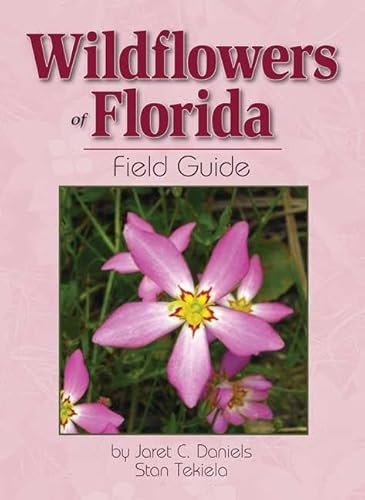
- Covers 200 Florida wildflower species
- Organized by color and size
- Features photographs, icons, and nature notes
Best For: Florida hikes and local identification
Carolinas Color-Coded Choice

- Covers 200 Carolinas wildflowers
- Organized by color and size
- Updated photos and naturalist insights
Best For: Hikes and plant identification in North and South Carolina
Desert Region Specialist

- Features 200 Arizona species
- Uses color-and-size organization
- Includes updated photos and field notes
Best For: Arizona hikes and regional wildflower identification
Southeast Coverage Pick

- Covers 200 Southeastern species
- Spans 12 listed states
- Features photos, facts, and Nature Notes
Best For: Wildflower walks across the Southeastern United States
Classic Keying Choice – Newcomb's Wildflower Guide
For readers seeking comprehensive wildflower field guide books for the Northeast and North-central regions, Newcomb’s Wildflower Guide stands out for its structured identification system. Instead of relying only on flower color, it guides users through five questions about plant type, petals, and leaves, with illustrations to confirm the result.
Best For: Amateur and experienced naturalists identifying wildflowers, flowering shrubs, and vines in Northeastern and North-central North America.
Pros:
- Uses a repeatable key system based on visible plant structures.
- Covers wildflowers, flowering shrubs, and vines across two broad regions.
- Includes illustrations for identification confirmation.
- Offers substantial coverage in a 490-page format.
Cons:
- Its regional focus is not intended for all of North America.
- The 1989 reprint may feel less current than newer guides.
- The structured key may require more practice than a simple photo guide.
This is a strong choice if you want to learn a dependable identification method rather than simply browse flower photographs. Its detailed coverage makes it better suited to serious field use than quick introductory reference.
Beginner Pocket Pick – National Geographic Pocket Guide to Wildflowers
National Geographic Pocket Guide to Wildflowers of North America | cycling-equipment
Check Price On AmazonAmong beginner-friendly wildflower field guide books, this National Geographic pocket guide emphasizes portability and visual identification. It profiles 160 common wildflowers and weeds across North America, including Canada and Alaska, with both contextual photographs and close-up illustrations.
Best For: Beginners, families, and casual outdoor users who want a compact introduction to common North American wildflowers.
Pros:
- Covers common species from coast to coast, including Canada and Alaska.
- Pairs a plant-in-context photograph with a blossom close-up illustration.
- Compact, lightweight design is convenient for outdoor use.
- Uses a straightforward format suited to new learners.
Cons:
- Its 160-species selection is narrower than larger field guides.
- Focuses on common plants rather than extensive regional coverage.
- May be less useful for advanced identification needs.
This guide is an approachable starting point for building basic identification skills. Its small size and visual layout make it especially practical for short walks, backyard exploration, and beginner nature study.
Michigan Specialist – Wildflowers of Michigan Field Guide
For Michigan readers comparing wildflower field guide books, this state-specific guide narrows the search to 200 common and important species found in the region. Entries are organized by flower color and then size, while full-page photographs, icons, and fact-filled descriptions support quick identification.
Best For: Michigan hikers, gardeners, and naturalists who want a focused guide for both the Upper Peninsula and Lower Michigan.
Pros:
- Features only Michigan wildflowers, reducing irrelevant results.
- Color-and-size organization makes browsing efficient.
- Full-page professional photographs provide detailed visual references.
- Includes updated photographs, expanded information, and naturalist notes.
Cons:
- Its Michigan-only scope limits usefulness outside the state.
- Color-based organization may be less helpful when a bloom is difficult to classify.
- It covers 200 species rather than every plant found in Michigan.
This is a practical regional option when local accuracy matters more than broad geographic coverage. The focused species list and field-friendly layout should help Michigan users identify plants without sorting through unrelated entries.
First-Guide Favorite – Peterson Guide to Northeastern Wildflowers
This Peterson First Guide is a compact choice for shoppers seeking accessible wildflower field guide books for Northeastern and North-central North America. As a condensed beginner guide, it focuses on common wildflowers and is designed to make a first step into nature study easier.
Best For: Beginning naturalists, students, and families who want a small introductory guide for common regional wildflowers.
Pros:
- Designed specifically for beginning naturalists.
- Focuses on plants users are most likely to encounter.
- Compact 128-page format is easy to carry.
- Can provide a stepping stone toward fuller Peterson field guides.
Cons:
- Condensed coverage may omit less-common species.
- Its regional range does not cover all of North America.
- The 1998 second edition is older than the other listed options.
If you are new to plant identification, this guide offers a low-complexity way to begin. Its small size and beginner orientation are useful for students and casual outings, though advanced users may eventually want a more comprehensive reference.
Ohio Wildflower Specialist – Wildflowers of Ohio Field Guide
For Ohio hikers, gardeners, and nature observers, this compact entry among wildflower field guide books focuses on 200 common and important species found in the state. Its color-and-size organization helps narrow down an identification quickly while you are outdoors.
Best For: Ohio-based readers who want a portable, region-specific identification guide.
Pros:
- Covers only Ohio wildflowers, reducing irrelevant species.
- Organizes entries by flower color and then size.
- Includes full-page photographs, fact-filled descriptions, identification icons, and naturalist notes.
- The second edition features updated photographs and expanded information.
Cons:
- Its coverage is limited to Ohio rather than North America broadly.
- It focuses on 200 species, so it may not cover every flower encountered.
The focused regional scope makes this a practical choice for Ohio outings, especially if you prefer a small guide with visual shortcuts instead of a broad national reference.
Western Region Reference – Audubon North American Wildflowers
The National Audubon Society Field Guide to North American Wildflowers: Western Region
Check Price On AmazonThis Audubon volume is a substantial choice among wildflower field guide books for readers identifying plants across the Western Region. It covers more than 1,000 species in detail, with additional notes on more than 400 others and photographs showing plants in natural habitats.
Best For: Western-region naturalists who want extensive species coverage in a detailed reference.
Pros:
- Covers the Rocky Mountains and states west of them.
- Details more than 1,000 species and notes more than 400 additional species.
- Includes 700 identification photographs.
- Also covers grasses, sedges, flowering vines, and shrubs.
Cons:
- The Western Region edition is not intended as the primary guide for states east of the Rocky Mountains.
- At 872 pages and 1.28 pounds, it is less lightweight than a small pocket guide.
- Its publication date is 1979, which may matter to readers seeking a newer edition.
Choose this guide when breadth matters more than minimal size. Its extensive coverage and habitat photographs make it well suited to serious Western-region reference use.
Florida Field Companion – Wildflowers of Florida Field Guide
Florida hikers and gardeners can use this regional pick from the wildflower field guide books category to identify 200 common and important state species. Entries are arranged by color and size, with full-page photography and practical details designed for quick field use.
Best For: Florida readers seeking a focused, easy-to-navigate guide for local outings.
Pros:
- Concentrates on Florida wildflowers rather than unrelated regions.
- Uses color and size organization to speed up identification.
- Provides full-page photographs, fact-filled information, and visual identification icons.
- Includes nature notes and expert insights from Jaret C. Daniels and Stan Tekiela.
Cons:
- Its regional coverage is limited to Florida.
- It focuses on 200 species and may not include every plant found in the state.
- At 428 pages and 13.6 ounces, it may be bulkier than a very small pocket guide.
This is a sensible match for Florida outings where a regional, color-organized reference is more useful than a broad North American guide.
Carolinas Color-Coded Choice – Wildflowers of the Carolinas
For readers seeking wildflower field guide books focused on North or South Carolina, this compact regional guide narrows identification to 200 common and important species found in the Carolinas. Its color-and-size organization makes it practical to use on hikes, garden walks, and other outings.
Best For: Exploring wildflowers in North Carolina and South Carolina.
Pros:
- Covers 200 species specific to the Carolinas.
- Organizes entries by flower color and then size.
- Uses full-page photographs, fact-filled descriptions, visual icons, and Nature Notes.
- The second edition includes updated photographs and expanded information.
Cons:
- Its regional focus makes it less useful outside North and South Carolina.
- It covers 200 species rather than attempting a comprehensive catalog.
At 4.5 by 6 inches and 12 ounces, this 432-page second edition is sized for carrying outdoors. Choose it when Carolinas-specific coverage and quick color-based identification matter most.
Desert Region Specialist – Wildflowers of Arizona
Among wildflower field guide books, this Arizona-focused option is designed for straightforward identification in the state. It profiles 200 typical Arizona wildflowers, with color-based organization, full-color photographs, and practical notes for use in the field.
Best For: Identifying common and important wildflowers throughout Arizona.
Pros:
- Focuses exclusively on 200 Arizona wildflowers.
- Arranges plants by color and then size for quicker searching.
- Includes full-page photographs, factual descriptions, icons, and naturalist notes.
- The second edition features updated photographs and expanded author insights.
Cons:
- Its Arizona-only coverage is not intended for identification in other regions.
- The selection is limited to 200 featured species.
The 432-page second edition measures about 4.38 by 6 inches and weighs 13.6 ounces, making it a portable companion for Arizona outings. It is a strong fit for readers who want regional focus rather than a broad national reference.
Southeast Coverage Pick – Wildflowers of the Southeast
This Southeast-focused choice stands out among wildflower field guide books for covering 12 states, from Alabama and Florida to Virginia and West Virginia. Its color-and-size layout, full-page photography, and concise species information support quick identification during regional outings.
Best For: Identifying wildflowers across the Southeastern United States.
Pros:
- Covers 200 common and important Southeastern species.
- Includes Alabama, Arkansas, Florida, Georgia, Kentucky, Louisiana, Mississippi, North Carolina, South Carolina, Tennessee, Virginia, and West Virginia.
- Organizes entries by color and size with helpful visual icons.
- Combines full-page photographs with facts and expert Nature Notes.
Cons:
- Its geographic scope is limited to the listed Southeastern states.
- It is an illustrated edition rather than the newer second-edition format described for some related guides.
Measuring 4.3 by 5.9 inches and weighing 13.8 ounces, this 428-page guide remains practical to carry. Pick it when you need broader Southeastern coverage than a single-state guide provides.
How We Picked the Best Wildflower Field Guide Books
We focused on practical usefulness in the field rather than simply choosing the largest or most comprehensive-looking books. Our selections represent a mix of national references, regional guides, simplified beginner editions, and state-specific books. We considered geographic coverage, identification approach, portability, image usefulness, organization, and suitability for different experience levels.
Regional accuracy was especially important. A guide focused on Michigan, Florida, Arizona, the Carolinas, or the Southeast can be more useful locally than a broad national reference because it narrows the possibilities to plants readers are likely to encounter.
Quick Comparison
| Guide type | Best for | Main advantage |
|---|---|---|
| National reference | Travelers and broad coverage | Wider geographic range |
| Pocket guide | Hikers and casual users | Lightweight and portable |
| State field guide | Local exploration | More region-specific detail |
| Simplified beginner guide | New plant identifiers | Less intimidating organization |
| Regional guide | Multi-state travel | Useful balance of scope and detail |
Key Buying Factors for Wildflower Field Guide Books
Geographic Coverage
Choose a guide that matches where you live or plan to hike. A state guide is often the most efficient choice for local walks, while a national or regional book is better for road trips and varied habitats. Western, southeastern, northeastern, and north-central floras can differ substantially.
Identification Method
Some books organize plants by flower color, while others use leaf arrangement, flower structure, habitat, or formal botanical keys. Color-based layouts are approachable, but more detailed systems can help distinguish similar species. Beginners may prefer a simplified guide before moving to a technical reference.
Portability and Durability
Consider whether you will carry the book on trails or use it primarily at home. Pocket guides are easier to pack, while larger references may offer clearer photographs and more complete descriptions. Check the binding, size, and whether the format is comfortable to use with one hand outdoors.
Images and Descriptions
Clear photographs or illustrations should show more than the flower itself. Leaves, stems, growth habit, and habitat clues are valuable when two species look alike. Range maps, bloom periods, and concise descriptions can further confirm an identification.
Who Should Buy Which Wildflower Field Guide Books?
Beginners should start with a simplified Peterson-style guide or a clearly organized pocket reference. These options reduce the amount of botanical terminology and help build confidence.
Local hikers and gardeners will usually get the fastest results from a state-specific guide. Matching the book to your location makes common species easier to find and compare.
Frequent travelers should consider a national guide or a broad regional volume. These provide better coverage when your trips cross state lines, although they may be heavier or less detailed for any one location.
Experienced nature enthusiasts may prefer a comprehensive guide with formal identification details, range information, and coverage of less common species. If accuracy matters more than weight, choose the most detailed reference that fits your budget and region.