The best visual thesauruses make vocabulary easier to understand by connecting words with illustrations, themes, examples, and related concepts. They can help children discover language, support students with word choice, and give writers a faster route to more precise phrasing.
This roundup compares 10 visual and illustrated thesauruses, from accessible children’s references to comprehensive resources for older students and experienced writers.
Best 10 Visual Thesauruses Picks for 2026
Best for Young Vocabulary Builders
Children's Illustrated Thesaurus

- More than 4,000 illustrated entries
- Definitions, examples, synonyms, and antonyms
- Designed for young readers and writers
Best For: Children developing vocabulary through visual, contextual learning
Best for Broad Visual Reference
Merriam-Webster's Visual Dictionary

- Nearly 25,000 terms
- 8,000 full-color illustrations
- 115 themes across 18 chapters
Best For: Visual learners needing wide subject coverage
Best for Creative Word Play

- More than 90 engaging word topics
- Illustrations, writing tips, and word games
- Includes a Word Finder index
Best For: Young writers creating stories and expanding word choice
Best for Detailed Object Study

- More than 33,000 annotated terms
- 640 pages of detailed visual reference
- Covers technical, natural, and everyday subjects
Best For: Readers exploring objects and specialized subjects visually
Best Visual Thesaurus for Young Children
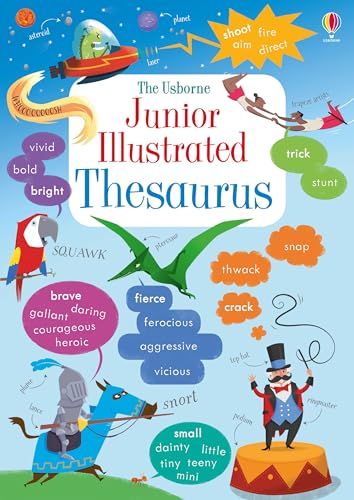
- Illustrated format for visual learning
- Designed for ages 3–5
- Compact 128-page paperback
Best For: Preschool vocabulary building
Best Portable Color Reference
Color Dictionary & Thesaurus, 3e

- Dictionary and thesaurus in one volume
- 65,000+ synonyms and colorful entries
- Compact, backpack-friendly design
Best For: Portable everyday language reference
Best Visual Thesaurus for Middle School
American Heritage Student Thesaurus

- 70,000+ synonyms for grades 7–10
- Sample sentences guide word choice
- Includes antonyms and word groups
Best For: Middle school and early high school writing
Best Visual Thesaurus for Young Writers
Scholastic Children's Thesaurus

- 500+ headwords and 2,500 synonyms
- Definitions, parts of speech, and examples
- Designed for beginning writers
Best For: Young writers and students building vocabulary
Best Comprehensive Visual Thesaurus
Roget's International Thesaurus, 8th Edition

- Meaning-based organization for concept browsing
- Thousands of new words and phrases
- 1,200-page comprehensive reference
Best For: Writers and students seeking broad vocabulary coverage
Best Practical Visual Thesaurus for Everyday Language

- 200+ words in practical categories
- Definitions, synonyms, antonyms, and examples
- Helps reduce repetition and clichés
Best For: Writers improving precision and everyday communication
Best for Young Vocabulary Builders – Children's Illustrated Thesaurus
For families and educators seeking visual thesauruses for children, this DK reference book combines colorful photography and illustration with more than 4,000 entries. Definitions, example sentences, synonyms, advanced synonyms, and antonyms make it a practical tool for developing confident word choice.
Best For: Children ages 9 and older, roughly grades 4–7, who are building English vocabulary through visual examples.
Pros:
- Includes more than 4,000 illustrated main entries.
- Provides definitions, example sentences, synonyms, and antonyms.
- Includes regional synonyms from several English-speaking regions.
- Colorful word features can encourage exploration and vocabulary growth.
Cons:
- Its 256-page format is focused on children rather than advanced reference use.
- At 2.55 pounds, it is relatively substantial for a children’s book.
This is a strong choice when illustrations and context matter as much as lookup speed. It is especially useful for writing practice, classroom vocabulary work, and children who benefit from extra encouragement with word selection.
Best for Broad Visual Reference – Merriam-Webster's Visual Dictionary
Merriam-Webster’s Visual Dictionary: Second Edition - Newest Edition: Second Edition
Check Price On AmazonAmong visual thesauruses and related reference books, Merriam-Webster’s Visual Dictionary stands out as a large-scale resource for learning terms through labeled images. It covers nearly 25,000 terms with 8,000 full-color illustrations across subjects ranging from nature and science to food, clothing, sports, and technology.
Best For: Visual learners, students new to English, researchers, and curious readers who want broad subject coverage.
Pros:
- Combines nearly 25,000 terms with 8,000 full-color illustrations.
- Includes clear definitions from Merriam-Webster.
- Covers 18 chapters and 115 themes.
- Contains updated illustrations in technology, medical equipment, and energy.
Cons:
- At 1,152 pages and 5.88 pounds, it is a heavy, oversized reference.
- Its second edition was published in 2012, so some content may not reflect the newest terminology.
This is the most comprehensive option in the group for browsing across many fields. Choose it when image-based learning and wide-ranging reference coverage are more important than portability.
Best for Creative Word Play – Not-Your-Everyday Thesaurus
For younger writers looking at visual thesauruses, this Usborne title organizes synonyms into more than 90 engaging topics. Colorful pictures, writing tips, word games, a Word Finder index, and links to additional writing resources make it approachable for both browsing and story development.
Best For: Children ages 7–11 who want help choosing lively words for stories, conversation, and school writing.
Pros:
- Groups words and synonyms into more than 90 child-friendly topics.
- Includes colorful illustrations to clarify many word meanings.
- Offers writing tips, word games, and a Word Finder index.
- Compact 128-page format is easier for children to handle.
Cons:
- Its topic-based approach is less comprehensive than a large general thesaurus.
- The book is aimed at ages 7–11, limiting its usefulness for older readers.
This is a lively pick for children who learn best by connecting words to themes and activities. It favors creative discovery over exhaustive reference coverage, making it particularly useful for story writing.
Best for Detailed Object Study – Ultimate Visual Dictionary
For readers who want visual reference depth beyond conventional visual thesauruses, the Ultimate Visual Dictionary explains and annotates more than 33,000 terms. Its detailed illustrations cover subjects such as volcanoes, engines, and dinosaur distinctions, offering a close look at how objects and systems are structured.
Best For: Curious learners and reference users who want detailed, image-led explanations of objects, natural features, and technical subjects.
Pros:
- Explains and annotates more than 33,000 terms.
- Shows objects and subjects in detailed visual context.
- Covers varied topics, including volcanoes, engines, and dinosaurs.
- Provides 640 pages of reference material.
Cons:
- Published in 1994, it may not include newer terminology or technology.
- At 4.25 pounds, it is better suited to shelf or desk use than carrying around.
- Its broad visual-reference format is not specifically designed as a synonym-focused thesaurus.
This is a compelling choice when the goal is understanding specialized terms through labeled visuals. It works best as a substantial home reference for readers who enjoy studying how things are built or categorized.
Best Visual Thesaurus for Young Children – Junior Illustrated Thesaurus
The Junior Illustrated Thesaurus is a compact 128-page reference designed for young readers ages 3–5. Its illustrated format makes it a practical starting point for introducing vocabulary and visual thesauruses to children who may benefit from seeing word concepts as well as reading them.
Best For: Preschool children and families looking for an age-appropriate illustrated vocabulary reference.
Pros:
- Illustrated format supports visual learning.
- Designed for a young reading age of 3–5.
- Compact 6.73-by-9.41-inch paperback format.
Cons:
- At 128 pages, it offers less coverage than larger thesauruses.
- Its young-reader focus limits usefulness for older students and adults.
This is the most age-specific option in the group. Choose it when simple, picture-supported vocabulary practice matters more than extensive synonym coverage.
Best Portable Color Reference – Color Dictionary & Thesaurus, 3e
The Oxford Color Dictionary & Thesaurus, 3e combines dictionary and thesaurus entries in one portable 800-page volume. Its colorful layout, side-by-side definitions and synonyms, and compact dimensions make it a practical choice for shoppers comparing visual thesauruses for school, work, or everyday language questions.
Best For: Students and everyday users who want a portable combined dictionary and thesaurus with color-coded navigation.
Pros:
- Includes more than 40,000 words, phrases, and definitions and more than 65,000 synonyms.
- Places thesaurus information alongside dictionary entries for easier lookup.
- Includes a 30-page “Effective English” section on writing and language usage.
- Compact 1.4-by-4-by-5.9-inch format fits easily in a bag or pocketbook.
Cons:
- The compact format may provide less page space for comfortable reading.
- Its 2010 publication date may matter to shoppers seeking the newest edition.
With its bright layout and broad coverage, this is the strongest all-purpose pick for users who want visual organization and portability without carrying separate reference books.
Best Visual Thesaurus for Middle School – American Heritage Student Thesaurus
The American Heritage Student Thesaurus is built for grades 7–10 and presents 70,000 synonyms in contexts students can relate to. While it is not described as an illustrated book, its sample sentences, word groups, antonyms, and word-choice guidance make it a useful structured alternative for students comparing visual thesauruses and other learning-focused references.
Best For: Middle school and early high school students developing vocabulary, reading, and writing skills.
Pros:
- Provides 6,000 main entries and more than 70,000 synonyms.
- Sample sentences show typical usage and help guide word choice.
- Includes antonyms, word groups, and a parts-of-speech table.
- Designed specifically for grades 7–10 and ages 11–16.
Cons:
- Its 2.4-pound weight makes it less portable than compact references.
- It is aimed at students rather than preschool learners or general adult users.
This is the best fit when educational context matters most. Students get extensive synonym coverage plus guidance for selecting words according to meaning and usage, even though the book is not primarily picture-based.
Best Visual Thesaurus for Young Writers – Scholastic Children's Thesaurus
For beginning writers looking at visual thesauruses, the revised Scholastic Children’s Thesaurus offers a straightforward, age-appropriate way to explore stronger word choices. Its alphabetical entries pair definitions, synonyms, parts of speech, and example sentences to show how words work in context.
Best For: Young or beginning writers who need an accessible thesaurus for schoolwork and creative writing.
Pros:
- Includes more than 500 headwords and 2,500 synonyms selected for young writers.
- Provides definitions and example sentences for headwords and synonyms.
- Lists each headword’s part of speech to support correct usage.
Cons:
- Its child-focused word selection may be too limited for advanced writers.
- The alphabetical format is less idea-oriented than a concept-based thesaurus.
This is a practical starter reference rather than a comprehensive adult thesaurus. The contextual sentences and approachable design make it a useful choice for developing vocabulary and writing confidence.
Best Comprehensive Visual Thesaurus – Roget's International Thesaurus, 8th Edition
Readers comparing visual thesauruses may appreciate Roget’s International Thesaurus, 8th Edition for its meaning-based organization. Instead of relying only on A-to-Z entries, it groups related words and phrases around concepts, helping writers survey language, develop ideas, and find alternatives efficiently.
Best For: Writers, students, and speakers who want a broad, concept-organized vocabulary reference.
Pros:
- Arranges words and phrases according to meaning and shared concepts.
- The revised edition adds thousands of words and phrases, including newer slang and expressions.
- Its 1,200 pages provide a substantial reference for writing and vocabulary building.
Cons:
- The extensive coverage may feel overwhelming for users seeking quick, simple synonym lists.
- Its large reference format is less targeted to young or beginning writers.
With more than 150 years of development behind its organizing system, this edition is the strongest choice here for breadth and idea generation. Choose it when conceptual browsing matters more than a compact, beginner-focused layout.
Best Practical Visual Thesaurus for Everyday Language – The Well-Spoken Thesaurus
The Well-Spoken Thesaurus is a focused option for shoppers seeking visual thesauruses that organize vocabulary by practical categories. It covers more than 200 words in groups such as positive emotions, negative emotions, intellectual terms, and descriptive terms, with usage support for more precise writing.
Best For: Writers and college students who want to replace repetitive or clichéd wording with more vivid choices.
Pros:
- Groups vocabulary into easy-to-use categories rather than presenting only alphabetical lists.
- Each entry includes definitions, synonyms, antonyms, and usage examples.
- Focuses on precision, impact, and more memorable everyday language.
Cons:
- Its coverage of over 200 words is narrower than a comprehensive thesaurus.
- The category-based approach may not suit users looking for extensive alphabetical lookup.
This book is a targeted vocabulary enhancer, not an all-purpose reference. Its categories and usage examples make it especially useful when you know the general idea but want a sharper, more expressive word.
How We Picked These Visual Thesauruses
We selected books that offer more than a conventional alphabetical synonym list. The strongest Visual Thesauruses use illustrations, clear organization, themed entries, usage guidance, or contextual examples to show how related words differ. We also considered audience, vocabulary range, educational usefulness, portability, and suitability for writing or study.
Because these references serve different readers, the list includes child-friendly books, school-focused editions, general visual dictionaries, and advanced thesauruses for writers. Check the recommended age or grade range before buying, particularly for younger readers or students who need appropriately challenging vocabulary.
Quick Comparison
- For young children: Choose a highly illustrated, accessible reference with simple definitions and familiar categories.
- For elementary students: Look for clear examples, broad coverage, and guidance that encourages independent word discovery.
- For middle and high school: Student-focused editions with synonyms, antonyms, and word-choice advice are usually the most useful.
- For writers: Favor comprehensive references with nuanced distinctions, phrase-level alternatives, and strong alphabetical or conceptual indexing.
- For broad visual learning: A visual dictionary may be a better fit than a traditional thesaurus when the reader needs to connect terms with objects or concepts.
Key Buying Factors for Visual Thesauruses
Audience and Vocabulary Level
Start with the intended reader. Children benefit from large illustrations, short explanations, and familiar vocabulary, while older students and writers often need shades of meaning, register notes, and more advanced alternatives.
Visual Organization
Illustrations should clarify relationships rather than simply decorate the page. The best layouts group words by subject or concept, label images precisely, and make it easy to move from a familiar word to related vocabulary.
Depth and Word-Choice Guidance
Consider whether you need basic synonyms or more detailed help with nuance. Antonyms, example sentences, usage notes, collocations, and warnings about awkward substitutions can make a reference substantially more useful.
Format and Usability
Check the edition, binding, page size, and indexing. A large hardcover can work well at a desk or classroom table, while a paperback may be more convenient for everyday study. Newer editions may also include updated entries or refreshed examples.
Who Should Buy Which Visual Thesauruses?
Parents and younger learners should prioritize approachable illustrated editions that make browsing enjoyable. Elementary and secondary students should look for structured vocabulary support that helps with reading, essays, and precise word choice. Writers may prefer a deeper reference with extensive synonyms and distinctions between near-equivalents. If the goal is learning concepts as well as words, choose a visual dictionary-style book; if the goal is revision and expression, select a thesaurus with strong usage guidance.
When in doubt, match the book to the reader’s immediate task. The most useful reference is not necessarily the largest—it is the one that makes the right vocabulary easy to find, understand, and use correctly.