The right thesaurus can help you find more precise, varied, and natural wording without slowing down your writing. This roundup compares 10 strong options for students, authors, professionals, and everyday readers.
We included traditional reference books, compact editions, dictionary-and-thesaurus combinations, and vocabulary-focused guides so you can choose a format that matches how and where you write.
Best 10 Thesauruses Picks for 2026
Best Everyday Reference Set
Merriam-Webster Language Reference Set

- Three-volume boxed reference set
- 150,000+ thesaurus word choices
- Includes quizzes and root-word study
Best For: Families, students, and general home or office reference
Best for Writers
Oxford American Writer's Thesaurus
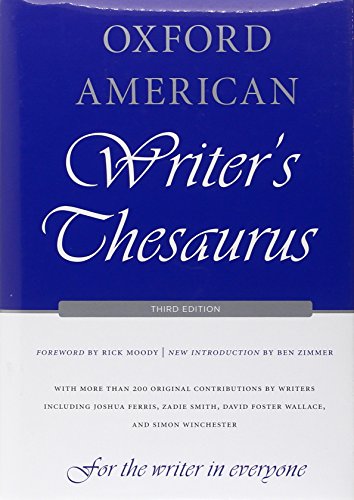
- 300,000+ synonyms and 10,000 antonyms
- Examples and usage notes support word choice
- Includes Word Finder and language guide
Best For: Writers, editors, and students refining vocabulary in context
Best Comprehensive Collegiate Pick
Merriam-Webster's Collegiate Thesaurus

- More than 275,000 word choices
- Definitions and examples clarify distinctions
- Includes phrases, related words, and antonyms
Best For: Frequent readers and writers needing broad alphabetical coverage
Best Premium General Reference

- Large 1,072-page Oxford reference
- Updated and redesigned third edition
- Useful for writing and puzzle solving
Best For: General-interest readers, writers, and puzzle solvers
Classic Choice
Roget's International Thesaurus

- Meaning-based organization for broad word exploration
- Updated with new words, phrases, and slang
- 1,200-page indexed reference for writers and students
Best For: Concept-driven vocabulary building and comprehensive reference use
All-in-One Reference
Merriam-Webster Dictionary and Thesaurus

- Combines dictionary and thesaurus content
- Includes 60,000+ dictionary and 13,500+ thesaurus entries
- Usage examples clarify meanings and word choices
Best For: Everyday users who want definitions, synonyms, and antonyms together
Focused Vocabulary Builder

- Groups 200+ words into useful categories
- Includes definitions, synonyms, antonyms, and examples
- Targets precise, vivid, and memorable language
Best For: Writers and students refining everyday word choice
Best Pocket Pick
Merriam-Webster's Pocket Thesaurus

- More than 110,000 word choices
- Compact, 5-ounce design
- Alphabetical synonyms, related words, and antonyms
Best For: Portable everyday word searches
Best Full-Featured Volume
New American Roget's College Thesaurus

- 912-page expanded reference
- Over 5,000 new words and phrases
- Alphabetical synonyms and antonyms with added categories
Best For: Home, office, and vocabulary building
Best for Students
Webster's Thesaurus for Students

- Over 122,000 related words
- Brief definitions explain shared meanings
- Designed for grades 3–6
Best For: Students ages 8–12 and classroom use
Best Everyday Reference Set – Merriam-Webster Language Reference Set
For shoppers who want more than one of the standard thesauruses, this Merriam-Webster boxed set combines a dictionary, thesaurus, and vocabulary builder. It is a practical choice for building vocabulary and supporting everyday language skills at home, school, or the office.
Best For: Families, students, and anyone who wants a compact all-in-one language reference set.
Pros:
- Includes a dictionary, thesaurus, and vocabulary builder.
- The thesaurus offers more than 150,000 word choices plus usage guidance.
- The vocabulary builder covers 3,200 words with quizzes and root words.
- Designed for home, office, and school use.
Cons:
- It is a boxed set rather than a dedicated thesaurus alone.
- The 2016 publication date may matter to shoppers seeking the newest reference editions.
This is a versatile starter set for broad language support, especially if you value vocabulary practice alongside synonym lookup. Choose it over a standalone thesaurus when convenience and variety are priorities.
Best for Writers – Oxford American Writer's Thesaurus
Among thesauruses aimed at serious writing, the Oxford American Writer’s Thesaurus stands out for combining synonym choices with examples, usage notes, and guidance on selecting similar words. Its broad coverage and writer-focused tools make it useful for refining tone, clarity, and word choice.
Best For: Authors, editors, students, and other writers seeking context-rich vocabulary guidance.
Pros:
- Contains more than 300,000 synonyms and 10,000 antonyms.
- Provides real-life example sentences and usage guidance.
- Includes a subject-organized Word Finder and comprehensive language guide.
- Features quotations, word reflections, and a graphical word toolkit based on Oxford Corpus evidence.
Cons:
- At 1,128 pages and 3.8 pounds, it is a substantial desk reference.
- Its 2012 publication date may not suit buyers seeking the latest edition.
This is a strong pick when simply finding a synonym is not enough and you want help judging how a word works in context. Writers who prefer examples and nuanced usage advice will get the most from it.
Best Comprehensive Collegiate Pick – Merriam-Webster's Collegiate Thesaurus
Merriam-Webster's Collegiate Thesaurus - Synonyms, Antonyms, & More: Second Edition
Check Price On AmazonThis revised Merriam-Webster volume is a practical choice for readers and writers who want extensive coverage in an alphabetical format. It combines more than 275,000 word choices with definitions, examples, phrases, and antonyms to help narrow down the right term quickly.
Best For: Readers and writers who want a broad, straightforward collegiate thesaurus for frequent lookup.
Pros:
- Offers more than 275,000 word choices, examples, and explanations.
- Concise definitions clarify meanings shared by synonyms.
- Includes related words, idiomatic phrases, near antonyms, and antonyms.
- Alphabetical organization supports fast searching.
Cons:
- Its 1,162 pages and nearly 3-pound weight make it less portable than a smaller reference.
- It focuses on thesaurus lookup rather than vocabulary lessons or a bundled dictionary.
Choose this edition if you want a dedicated, high-coverage thesaurus with clear explanations and contextual examples. It is particularly well suited to a desk, classroom, or home reference shelf.
Best Premium General Reference – Oxford Thesaurus of English
The Oxford Thesaurus of English is a substantial general-purpose reference for broadening vocabulary, solving puzzles, and finding words for writing. Its updated and redesigned third edition is aimed at shoppers who want a large, top-of-the-range thesaurus for regular browsing.
Best For: Writers, puzzle solvers, and general-interest readers who prefer a large Oxford reference volume.
Pros:
- Designed for writing, puzzle solving, and general interest.
- Completely updated and redesigned according to the supplied description.
- Provides a substantial 1,072-page reference format.
- Helps users broaden vocabulary and find needed words.
Cons:
- At 5.28 pounds, it is notably heavy for a desktop reference.
- The listed publication date is 2006, which may concern shoppers seeking a newer edition.
- It offers less specifically writer-focused detail in the description than the Oxford American Writer’s Thesaurus.
This makes sense for buyers who prioritize a large, traditional Oxford thesaurus for browsing and general word discovery. Its size is a benefit for shelf use but a drawback if you need a portable book.
Classic Choice – Roget's International Thesaurus
For shoppers seeking comprehensive thesauruses for writing, study, or idea development, Roget’s International Thesaurus offers a distinctive meaning-based approach. This indexed, 1,200-page eighth edition includes new words, phrases, slang, and everyday expressions.
Best For: Writers, students, and anyone who prefers finding related language by concept rather than alphabetically.
Pros:
- Arranges words and phrases according to their meanings.
- Includes thousands of updated words and expressions.
- Supports word finding, idea organization, and clearer communication.
- Time-tested reference with more than a century and a half of development.
Cons:
- The extensive 1,200-page format may be more reference book than casual users need.
- Its concept-based organization may take adjustment for readers accustomed to A-to-Z entries.
Choose this edition if breadth and conceptual browsing matter more than a compact format. It is a strong traditional reference for exploring language and developing ideas.
All-in-One Reference – Merriam-Webster Dictionary and Thesaurus
This combined dictionary and thesaurus is a practical pick for shoppers who want two essential language references in one volume. Its alphabetical entries pair more than 60,000 dictionary definitions with over 13,500 thesaurus entries, including synonyms and antonyms.
Best For: Students, general readers, and households wanting dictionary definitions and thesaurus guidance together.
Pros:
- Combines dictionary and thesaurus entries in a single volume.
- Offers more than 60,000 dictionary entries and over 13,500 thesaurus entries.
- Includes usage examples to clarify meanings.
- Contains newly added words and senses from varied fields.
Cons:
- Readers seeking only thesaurus content may not need the dictionary material.
- Its combined alphabetical format is less focused on concept-based browsing than Roget-style thesauruses.
This is the most versatile everyday option of the three, especially when definition checking and synonym searches often happen together. It balances broad coverage with a straightforward alphabetical layout.
Focused Vocabulary Builder – The Well-Spoken Thesaurus
For shoppers who want targeted help replacing ordinary wording with more precise language, The Well-Spoken Thesaurus offers a focused alternative to larger thesauruses. Its entries are arranged by categories such as emotions, intellectual terms, and descriptive terms, with definitions, synonyms, antonyms, and usage examples.
Best For: Writers, college students, and communicators seeking more vivid, specific, and memorable word choices.
Pros:
- Organizes more than 200 words into practical vocabulary categories.
- Provides definitions, synonyms, antonyms, and usage examples for each entry.
- Helps users avoid repetition and clichés.
- Focuses on precise and impactful everyday language.
Cons:
- Its 200-plus-word selection is substantially narrower than the larger reference volumes.
- It may be less suitable for comprehensive lookup needs.
Select this book when usability and intentional vocabulary improvement are more important than exhaustive coverage. Its category-based approach makes it approachable for refining writing and communication.
Best Pocket Pick – Merriam-Webster's Pocket Thesaurus
Merriam-Webster's Pocket Thesaurus, Newest Edition, (Flexi Paperback) (Pocket Reference Library)
Check Price On AmazonMerriam-Webster’s Pocket Thesaurus is a practical choice when you want one of the most portable thesauruses available. Its compact format offers more than 110,000 word choices, with alphabetical entries, related words, and antonyms for quick reference at home, school, or on the go.
Best For: Writers, students, and readers who need a lightweight reference for finding synonyms and antonyms away from a desk.
Pros:
- Compact 3.5-by-5.38-inch format weighs only 5 ounces.
- Includes more than 110,000 word choices.
- Alphabetical organization supports quick lookups.
- Related-word and antonym lists provide additional options.
Cons:
- The pocket-sized format may offer less page space than a full-size reference.
- Published in 2002, so it may not reflect newer vocabulary.
This is a strong pick for portability and everyday word searches. Choose it when carrying convenience matters more than a large, updated reference volume.
Best Full-Featured Volume – New American Roget's College Thesaurus
For shoppers wanting a substantial thesaurus for home or office use, the New American Roget’s College Thesaurus offers broad coverage in an easy-to-use dictionary-style format. Its revised edition includes more than 5,000 new words and phrases, 2,000 new synonym entry words, and 30 new categories.
Best For: Writers, students, and households seeking a comprehensive reference for vocabulary building and clearer expression.
Pros:
- Contains synonyms and antonyms arranged alphabetically.
- Includes more than 5,000 new words and phrases.
- Adds 2,000 synonym entry words and 30 categories.
- Features colloquial and slang terms plus quotations and phrases.
Cons:
- At 912 pages, it is less convenient to carry than a pocket thesaurus.
- Published in 2002, making it an older reference edition.
This is the most substantial option in the group, especially for users who value depth and cross-referencing. Its larger size is a reasonable tradeoff for a more expansive home or office resource.
Best for Students – Webster's Thesaurus for Students
Webster’s Thesaurus for Students is designed for younger learners who need straightforward help choosing the right words. This affordable, alphabetically arranged volume includes more than 122,000 synonyms, antonyms, and related words, with brief definitions explaining shared meanings.
Best For: Students in grades 3–6 and ages 8–12 who are developing writing and vocabulary skills.
Pros:
- Includes more than 122,000 synonyms, antonyms, and related words.
- Brief definitions clarify the shared meaning of entries.
- Alphabetical arrangement makes lookups simple.
- Value-priced format suits budget-conscious parents and teachers.
Cons:
- Its student-focused coverage may be less suitable for advanced writers.
- Designed for grades 3–6, so older users may want a more comprehensive reference.
This is the clearest fit for school-age users who need accessible support with writing assignments and vocabulary practice. It also pairs naturally with the listed Webster’s Dictionary for Students, Sixth Edition.
How We Picked These Thesauruses
We evaluated each title by considering coverage, organization, intended audience, portability, ease of use, and practical value. Traditional Thesauruses are useful for exploring related words and shades of meaning, while specialized titles may be better for students, writers, or readers who want help improving everyday vocabulary.
We also considered whether a book includes a dictionary, antonyms, usage guidance, phrase-based suggestions, or a compact format. Because print references vary in size and depth, the best choice depends on whether you prioritize breadth, convenience, or targeted writing help.
Quick Comparison
| Best For | Look For | Recommended Type |
|---|---|---|
| Professional and creative writers | Broad entries, nuanced alternatives, and usage context | Comprehensive writer’s or international thesaurus |
| Students | Clear definitions, accessible organization, and vocabulary support | Student or college thesaurus |
| Everyday reference | Dictionary access alongside synonym searches | Dictionary-and-thesaurus combination |
| Travel and quick lookups | Small size and flexible binding | Pocket thesaurus |
| Vocabulary building | Explanations, examples, and stronger word choices | Vocabulary-focused guide |
Key Buying Factors for Thesauruses
Coverage and Depth
A larger reference generally offers more entries, related terms, antonyms, and nuanced distinctions. Choose a comprehensive volume if you regularly revise essays, manuscripts, reports, or other important writing. A smaller book may be sufficient for occasional lookups.
Organization and Usability
Check whether entries are arranged alphabetically, by concept, or in a dictionary-style format. Alphabetical listings are fast for known words, while conceptual organization can help when you know the meaning you want but not the exact term.
Context and Accuracy
Synonyms are not always interchangeable. Definitions, usage notes, examples, and antonyms can help you select a word that fits the intended tone and meaning instead of simply choosing the closest-looking alternative.
Size and Format
Hardier full-size editions work well on a desk, whereas flexi-paperback and pocket editions are easier to carry. If you want one general reference, a combined dictionary and thesaurus can save space and provide broader coverage.
Who Should Buy Which Thesauruses?
Writers and editors should favor detailed editions with broad coverage and usage guidance, particularly when refining tone or avoiding repetition. Students will generally benefit from accessible entries and a manageable format that supports essays, assignments, and vocabulary development.
Readers seeking a general home reference may prefer a dictionary-and-thesaurus set or combined volume. Travelers, commuters, and test-takers should consider a pocket edition. If your main goal is to sound more precise in everyday speech and writing, a vocabulary-focused thesaurus with explanations and phrases may be more useful than the largest available book.