The right thesaurus can help students move beyond repetitive word choices, understand nuanced synonyms, and write with greater precision. The best option depends on grade level, portability, and whether the student needs a focused school reference or a broader vocabulary-building resource.
We compared 10 student-friendly thesauruses, including grade-specific editions, pocket references, dictionary-and-thesaurus sets, and comprehensive Roget-style works. Use the guide below to match the format and features to the student’s everyday assignments and long-term goals.
Best 10 Thesauruses for Students Picks for 2026
Best Budget Pick
Webster's Thesaurus for Students

- 122,000+ synonyms, antonyms, and related words
- Alphabetical entries with brief definitions
- Designed for grades 3–6
Best For: Elementary and early middle-school students
Best for Middle School Writing
American Heritage Student Thesaurus

- 70,000+ synonyms across 6,000 main entries
- Sample sentences demonstrate typical usage
- Synonyms ordered to guide precise word choice
Best For: Grades 7–10 vocabulary and writing practice
Best for High School and Test Prep
Merriam-Webster's School Thesaurus
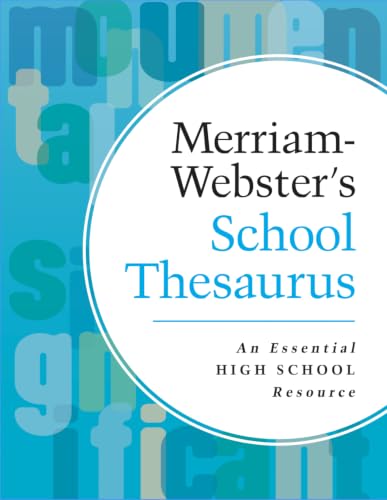
- 154,000+ word choices and idiomatic phrases
- 37,000 usage examples provide context
- Designed for grades 9–12 and test preparation
Best For: High-school writers and standardized-test study
Best Comprehensive Reference
Roget's International Thesaurus, 8th Edition

- Meaning-based organization groups related concepts
- Updated with new words, slang, and expressions
- 1,200-page reference for broad language exploration
Best For: Advanced students and serious writers
Best Portable Reference
Pocket Oxford American Dictionary & Thesaurus

- Combines definitions, synonyms, and antonyms
- Updated vocabulary includes technology and ecology terms
- Portable 928-page all-in-one reference
Best For: Students wanting one compact dictionary and thesaurus
Best for Middle School
Merriam-Webster's Intermediate Thesaurus

- Designed for grades 5-8 and ages 10-14
- Includes nearly 28,000 synonyms and 32,000 examples
- Adds current social media and technology vocabulary
Best For: Middle school vocabulary and writing practice
Best for Easy Lookup
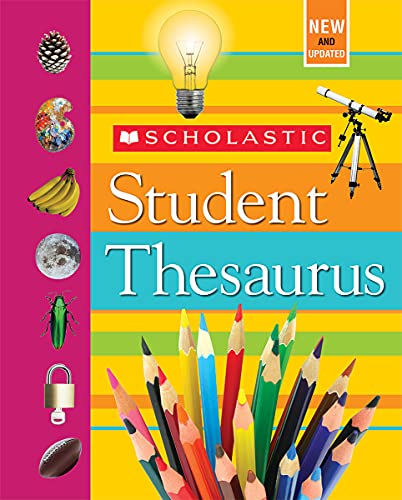
- Same-page index redirects difficult lookups
- Revised entries reviewed by a lexicographer
- Includes language and word-evolution backmatter
Best For: Students who want simple, frustration-free word lookup
Best Pocket Pick
Merriam-Webster's Pocket Thesaurus

- More than 110,000 word choices
- Alphabetical quick-reference format
- Compact five-ounce design
Best For: Students who need a portable thesaurus
Best Heavy-Duty Pick
New American Roget's College Thesaurus

- Alphabetical synonyms and antonyms
- More than 5,000 new words and phrases
- Includes slang, quotations, and 30 new categories
Best For: Students who want an expansive writing reference
Best Elementary Set
Webster's For Students Dictionary/Thesaurus Set

- Dictionary and thesaurus bundled together
- 122,000 thesaurus word choices
- Designed for grades 3–6
Best For: Elementary and middle-grade homework
Best Budget Pick – Webster's Thesaurus for Students
For younger students and families seeking practical thesauruses for students, Webster’s Thesaurus for Students offers an affordable, easy-to-use paperback format. Its alphabetized entries combine brief definitions with synonyms, related words, and antonyms.
Best For: Students in grades 3–6 and budget-conscious parents or teachers.
Pros:
- Includes more than 122,000 synonyms, antonyms, and related words.
- Brief definitions help clarify the shared meaning of listed words.
- Alphabetical organization supports straightforward lookups.
- Compact 352-page paperback is easy to keep on hand.
Cons:
- Its reading and grade range may make it less suitable for older students.
- It does not offer the extensive usage-example coverage found in some larger editions.
This is a sensible starter reference for elementary and middle-school writing assignments, especially when price and simple navigation matter most.
Best for Middle School Writing – American Heritage Student Thesaurus
Students moving into more advanced writing can benefit from this American Heritage reference. Among thesauruses for students, it stands out for contextual guidance: synonyms are ordered by how well they fit a sample sentence, helping readers make more deliberate word choices.
Best For: Students in grades 7–10 who want vocabulary development and word-choice support.
Pros:
- Provides 6,000 main entries and more than 70,000 synonyms.
- Each main entry includes a clear sample sentence.
- Word Group features add conceptually related terms when exact synonyms are unavailable.
- Many entries include antonyms and a table explaining parts of speech.
Cons:
- At 2.4 pounds and 384 pages, it is relatively substantial for a student reference.
- Its grade range may not be ideal for elementary students or advanced high-school users.
The contextual examples and synonym ordering make this a particularly useful choice for students learning that the most precise word depends on sentence meaning.
Best for High School and Test Prep – Merriam-Webster's School Thesaurus
For older students who need a broad reference for essays, vocabulary building, and standardized-test preparation, Merriam-Webster’s School Thesaurus is a substantial option. It combines more than 154,000 word choices with usage examples and concise explanations of shared meanings.
Best For: High-school students in grades 9–12, particularly those preparing for the SAT, ACT, or other standardized tests.
Pros:
- Features more than 154,000 synonyms, antonyms, related and contrasted words, and idiomatic phrases.
- Includes 37,000 usage examples showing words in context.
- Concise shared-meaning statements help distinguish related terms.
- Its revised content is designed for students ages 14 and up.
Cons:
- The 1,024-page format is heavier and less portable than a compact student thesaurus.
- It is likely more reference book than younger students need.
- Cover designs may vary, although the interior content is the same.
This is the strongest fit in the lineup for high-school writers who value breadth, context, and a reference that can support both everyday writing and test preparation.
Best Comprehensive Reference – Roget's International Thesaurus, 8th Edition
Roget’s International Thesaurus is the most expansive choice among these thesauruses for students, especially for writers who prefer exploring language by concept rather than only searching alphabetically. Its meaning-based organization gathers words and phrases associated with the same idea and includes updated language, slang, and expressions.
Best For: Advanced students, writers, and anyone seeking a broad vocabulary-building reference.
Pros:
- Arranges words and phrases according to meaning and related concepts.
- The eighth edition includes thousands of new words and phrases, including contemporary slang.
- Its long-established system supports idea development and finding alternatives.
- At 1,200 pages, it offers extensive coverage in a single volume.
Cons:
- Its concept-based organization may take more adjustment than an A-to-Z student thesaurus.
- The comprehensive format may be more than younger students need for basic assignments.
- It does not specify a grade-level reading range in the supplied details.
This is a strong long-term reference for students who want to investigate language broadly, stimulate ideas, and move beyond simple synonym substitution.
Best Portable Reference – Pocket Oxford American Dictionary & Thesaurus
For students who want thesaurus support and dictionary definitions in one compact book, the Pocket Oxford American Dictionary & Thesaurus is a practical all-in-one option. It places meanings, synonyms, and antonyms in the same entry, while updated vocabulary covers areas such as technology, computing, and ecology.
Best For: Students who need a portable dictionary-thesaurus combination for writing, reading, and everyday reference.
Pros:
- Combines dictionary definitions, synonyms, and antonyms in one entry.
- Includes hundreds of newer words across modern subject areas.
- Features usage tips and an updated center reference section.
- Portable 928-page format for broad general-purpose coverage.
Cons:
- Its compact format may be less convenient for extended desk-based browsing.
- It is a general reference rather than an age-specific student thesaurus.
This is a strong choice when convenience matters most. Students get substantial language coverage without carrying separate dictionary and thesaurus volumes.
Best for Middle School – Merriam-Webster's Intermediate Thesaurus
Merriam-Webster's Intermediate Thesaurus - Middle School Thesaurus - Newest Edition
Check Price On AmazonDesigned for grades 5-8 and ages 10-14, Merriam-Webster’s Intermediate Thesaurus is one of the most student-focused thesauruses for students in this roundup. It offers extensive synonym coverage alongside definitions, usage examples, related words, antonyms, and vocabulary reflecting social media, technology, and entertainment.
Best For: Middle school students building vocabulary, improving writing, and completing language-arts homework.
Pros:
- Written specifically for students in grades 5-8.
- Provides nearly 28,000 synonyms and more than 71,000 related words.
- Includes over 32,000 usage examples and definitions for multiple senses.
- Covers more than 150,000 word choices, including newly added age-relevant vocabulary.
Cons:
- Its 944-page size and 2.31-pound weight make it less portable.
- The age and grade focus may be less suitable for younger children or advanced high school users.
With clear explanations and a large selection of examples, this is the most comprehensive fit for middle school writing and vocabulary development among these options.
Best for Easy Lookup – Scholastic Student Thesaurus
The Scholastic Student Thesaurus is built to make word lookup less frustrating for students. Its same-page index helps redirect users when a searched word is not listed, while the revised edition includes lexicographer-reviewed entries and new backmatter about language and how words evolve.
Best For: Students in grades 6-12, including confident fifth graders, who want a straightforward thesaurus with an accessible lookup system.
Pros:
- Same-page index helps students find related entries when a word is not listed.
- Entries were reviewed by a lexicographer in the revised edition.
- Includes new backmatter explaining language and word evolution.
- Designed to be easy to use for student writing and vocabulary work.
Cons:
- At 208 pages, it offers less overall content than the larger reference volumes here.
- The listed grade-level details vary, so it may require judgment for a particular student.
This is a sensible pick for students who need an uncomplicated thesaurus experience. Its index design directly addresses a common lookup problem and may encourage more independent use.
Best Pocket Pick – Merriam-Webster's Pocket Thesaurus
Merriam-Webster's Pocket Thesaurus, Newest Edition, (Flexi Paperback) (Pocket Reference Library)
Check Price On AmazonFor students who need a quick reference at school, in a study space, or on the go, Merriam-Webster’s Pocket Thesaurus is one of the most portable thesauruses for students. Its compact format provides more than 110,000 word choices, with synonyms, related words, and antonyms arranged alphabetically.
Best For: Students who prioritize portability and quick word lookups.
Pros:
- Compact 3.5-by-5.38-inch design fits easily in a backpack or desk.
- Includes more than 110,000 word choices.
- Alphabetical organization supports fast reference.
- Includes related words and antonyms for added options.
Cons:
- Its small format may be less comfortable for extended browsing.
- It is a thesaurus rather than a combined dictionary-and-thesaurus set.
Choose this edition when convenience matters most. It offers substantial synonym coverage in a lightweight five-ounce reference book, making it a practical supplementary tool for student writing.
Best Heavy-Duty Pick – New American Roget's College Thesaurus
Students looking for a fuller reference can consider the New American Roget’s College Thesaurus in Dictionary Form. This expanded and revised volume uses alphabetical synonym and antonym listings, so it works much like a dictionary while also supporting vocabulary building and more precise writing.
Best For: Older students and writers who want broad coverage in a substantial reference book.
Pros:
- Alphabetical format requires no separate index.
- Adds more than 5,000 words and phrases and 2,000 synonym entry words.
- Includes 30 new categories, colloquial and slang terms, quotations, and phrases.
- Double-column layout is designed for readable reference use.
Cons:
- The 912-page volume is less portable than a pocket thesaurus.
- Its extensive content may be more than younger students need.
This is a strong choice when students need depth rather than minimal size. Its broad, alphabetically arranged coverage can support vocabulary development, clearer writing, and repeated study use.
Best Elementary Set – Webster's For Students Dictionary/Thesaurus Set
For elementary and middle-grade learners, this shrink-wrapped dictionary-and-thesaurus set offers two classroom-ready references in one purchase. The thesaurus includes 122,000 synonyms, antonyms, and related words, while the companion dictionary adds kid-friendly definitions and homework-help sections.
Best For: Students in grades 3–6 who need both vocabulary lookup and writing support.
Pros:
- Combines a student dictionary and thesaurus in one value-priced set.
- Thesaurus entries are alphabetically arranged and include core definitions.
- Provides 122,000 synonyms, antonyms, and related words.
- Dictionary includes 37,000 kid-friendly definitions and homework-help sections.
Cons:
- Its elementary focus may not meet advanced high-school or college needs.
- The two-book set is bulkier than a standalone pocket reference.
This set is particularly practical for younger students because it addresses both finding meanings and choosing stronger words. It is a sensible homework and classroom option for the listed ages and grade levels.
How We Picked the Best Thesauruses for Students
We focused on usefulness in real school settings rather than simply choosing the largest volume. Our selections represent different age ranges, learning needs, and study habits, from middle school and high school references to college-level and general-purpose thesauruses.
We considered clarity of definitions, synonym and antonym coverage, word-choice guidance, organization, portability, and suitability for writing assignments. We also included combination dictionary/thesaurus sets for students who need both spelling and vocabulary support in one resource.
Quick Comparison
| Best For | Recommended Type | Why It Helps |
|---|---|---|
| Elementary and younger students | Student dictionary/thesaurus set | Combines definitions, spelling help, and accessible synonyms |
| Middle school | Intermediate or student thesaurus | Balances straightforward explanations with useful vocabulary growth |
| High school and test prep | School or educational thesaurus | Supports essays, word choice, and standardized-test preparation |
| College students and writers | College or international thesaurus | Offers broader coverage and more sophisticated vocabulary |
| Students who travel or study on the go | Pocket thesaurus | Fits easily in a backpack and provides quick access |
Key Buying Factors for Thesauruses for Students
Grade Level and Vocabulary Difficulty
Choose a reference that matches the student’s reading ability. A middle-school edition may explain words more clearly than an advanced college thesaurus, while high school students may benefit from guidance on shades of meaning and formal writing.
Organization and Usability
Alphabetical entries are usually fastest for school assignments. Roget-style or category-based organization can be better for brainstorming because it groups related ideas, but it may take longer to learn.
Coverage and Word-Choice Guidance
Look for more than long synonym lists. Antonyms, example phrases, usage notes, and distinctions between similar words help students select the word that fits their intended meaning.
Size and Durability
A full-size reference offers broader coverage, but a pocket edition is easier to keep available. Consider whether the book will stay at a desk, travel between classes, or be used during study sessions.
Who Should Buy Which Thesauruses for Students?
For younger learners, a student dictionary/thesaurus set is the most versatile starting point. Middle school students will generally benefit from an intermediate or dedicated student edition with accessible explanations. High school students writing essays or preparing for the SAT and ACT should prioritize school-focused coverage and word-choice support.
College students, aspiring writers, and anyone building an advanced vocabulary may prefer a larger college or international thesaurus. Finally, choose a pocket model for convenience when portability matters more than maximum coverage. The best Thesauruses for Students are the ones that match both the learner’s level and the way they actually study.