The best style guides for students make difficult writing tasks easier, from choosing the right citation format to polishing grammar, punctuation, and structure. This roundup compares 10 useful references for classroom assignments, research papers, and college-level writing.
Whether you need an official APA manual, a Chicago research guide, a quick laminated reference, or an all-purpose writing handbook, the right choice depends on your subject, school requirements, and preferred learning style.
Best 10 Style Guides for Students Picks for 2026
Official APA Handbook

- Official APA seventh-edition resource
- Student paper and citation examples
- Includes inclusive writing and reference guidance
Best For: Students completing APA-formatted assignments
Grammar Girl's Choice
Complete Writing Guide for Students

- Explains grammar and punctuation clearly
- Includes quizzes and memorable writing tips
- Revised for modern style and usage
Best For: Students wanting an approachable general writing guide
Classic Style Pick

- Compact 105-page reference
- Focuses on clear English style
- Memorable classic presentation
Best For: Students seeking a portable prose-style manual
Quick Reference Pick

- Six-page laminated reference
- Covers the academic research process
- Includes tips for papers and theses
Best For: Students needing a fast research-writing overview
Grammar in Context

- Explains the logic behind grammar and punctuation
- Uses examples from real student papers
- Includes exercises for stronger academic sentences
Best For: High school and college writers building grammar and sentence skills
Research Paper Standard
Turabian Manual, Ninth Edition

- Covers research, writing, and revision
- Explains both Chicago citation systems
- Includes guidance for digital sources and visuals
Best For: College and graduate research papers using Chicago style
History Research Companion

- Guides students from research question to paper
- Covers print, online, written, and nonwritten sources
- Includes a model student research paper
Best For: History students developing source-based, thesis-driven papers
Best with Extra Features

- Six laminated pages for fast lookups
- Covers AP style, grammar, and ethics
- Useful for journalism and media students
Best For: Quick AP Style checks in journalism and communications coursework
Best Comprehensive Writing Guide
Student’s Guide to College Papers
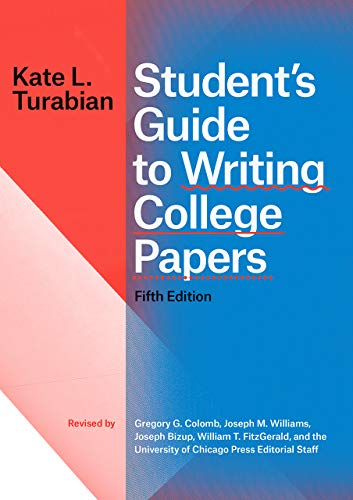
- Covers research, argument, and class papers
- Updates Chicago, MLA, and APA guidance
- Includes online sources and citation software
Best For: Beginning college writers handling research assignments
Best Source-Integration Guide

- Explains responsible source use
- Covers digital and print citations
- Includes MLA, Chicago, APA, and CSE
Best For: Students integrating and citing sources across disciplines
Official APA Handbook – Student APA Style Guide
For students comparing style guides for students, this official APA resource is a strong choice when assignments require APA formatting, citations, and scholarly writing conventions. It is adapted from the seventh-edition Publication Manual and focuses specifically on student papers and course work.
Best For: High school and undergraduate students writing APA-formatted papers across a range of majors.
Pros:
- Includes a dedicated chapter on student papers, plus sample student papers and an annotated bibliography.
- Provides extensive citation guidance, more than 100 reference templates, and examples for traditional and digital sources.
- Covers inclusive language, grammar, formatting, headings, in-text citations, tables, figures, and statistics.
Cons:
- Its focus on APA Style may make it less useful for assignments using another citation system.
- At 326 pages, it is more comprehensive than a quick-reference card.
This is the most specialized option in the roundup and a practical desk reference for students who regularly need current APA guidance.
Grammar Girl's Choice – Complete Writing Guide for Students
Grammar Girl Presents the Ultimate Writing Guide for Students (Quick & Dirty Tips)
Check Price On AmazonAmong style guides for students, this revised Grammar Girl guide stands out for explaining grammar and usage in a clear, approachable way. It combines instruction with pop quizzes and memorable tips, making it suitable for students who want help with both fundamentals and writing style.
Best For: Beginners and more advanced students who want an accessible all-purpose grammar and writing reference.
Pros:
- Covers parts of speech, sentences, punctuation, and writing style in one volume.
- Uses humorous explanations, pop quizzes, and Quick and Dirty Tips to reinforce challenging rules.
- The 2023 revision reflects modern topics and changes in style and usage.
Cons:
- It is a general writing guide rather than a dedicated citation or formatting manual.
- Students seeking a specific style system may need an additional reference.
Choose this guide for an engaging, broad introduction to writing mechanics and style, especially if traditional grammar explanations feel difficult to approach.
Classic Style Pick – The Elements of Style
For readers seeking compact style guides for students, The Elements of Style offers a brief introduction to English style in a highly portable format. Its concise advice, distinctive tone, and long-standing reputation make it a convenient reference for tightening everyday academic prose.
Best For: Students who want a small, classic manual for concise English style guidance.
Pros:
- At 105 pages, it is quick to browse and easy to keep nearby.
- Focuses on practical principles of English style with a memorable, witty presentation.
- The fourth edition includes a new foreword by Roger Angell.
Cons:
- It does not provide the specialized APA citation and student-paper guidance found in an APA manual.
- As a 1999 fourth edition, it is not a recent revision.
This is a useful minimalist companion for improving sentence style, but students should pair it with any citation guide required by their courses.
Quick Reference Pick – Research Writing Guide
Students comparing style guides for students may appreciate this laminated QuickStudy reference for its emphasis on the research-writing process. Its six-page format presents a concise, step-by-step overview of reading, thinking, researching, discussing, and writing academic ideas.
Best For: Students who need a quick visual reminder of research-paper, thesis, and dissertation writing steps.
Pros:
- Compact three-panel, six-page format is easy to scan during study sessions.
- Explains a step-by-step academic writing process designed for scholars.
- Includes practical tips and techniques intended to improve writing at multiple levels.
Cons:
- Its abbreviated format cannot match the depth of a full-length writing handbook.
- It offers an overview rather than detailed guidance for a particular citation style.
This guide works best as an at-a-glance planning aid for research writing, especially when students want process reminders rather than extensive explanations.
Grammar in Context – How to Write for Class
For students comparing style guides for students, How to Write for Class focuses on the grammar, punctuation, and sentence construction skills needed for stronger academic writing. It explains the logic behind English rather than presenting rules as isolated items to memorize, and it uses material from real student papers to demonstrate how to build more sophisticated statements.
Best For: High school and college students who want deeper instruction in grammar and practical help applying it to academic writing.
Pros:
- Explains the reasoning behind grammar and punctuation choices.
- Uses real-paper examples and guided sentence construction.
- Includes exercises and substantial material beyond the author’s SAT and ACT English guides.
Cons:
- Its focus is primarily grammar, punctuation, and sentence-level style rather than the full research process.
- Some content overlaps with the author’s other test-preparation books.
This is a practical choice for students whose main challenge is turning grammar knowledge into polished academic sentences. Its 297 pages provide room for more depth than a brief reference guide.
Research Paper Standard – Turabian Manual, Ninth Edition
Among style guides for students, this ninth-edition Turabian manual is the most comprehensive option for research papers, theses, and dissertations. It covers the research and drafting process, evidence-based arguments, digital sources, citation management, Chicago-style documentation, editorial style, quotations, and visual material.
Best For: College and graduate students who need an authoritative guide to research, writing, and Chicago-style citations.
Pros:
- Covers the process from research question through drafting and revision.
- Explains both Chicago notes-bibliography and author-date citations.
- Addresses online sources, information literacy, software, graphics, and paper submission.
- Aligned with the Chicago Manual of Style, 17th edition, and the latest Craft of Research.
Cons:
- At 464 pages, it may be more extensive than students need for short or non-research assignments.
- Its emphasis on Chicago style may not match courses requiring another citation system.
This is the strongest all-purpose selection here for substantial academic research projects. Its examples and three-part structure make it useful as both a learning resource and a continuing reference.
History Research Companion – A Student's Guide to History
Students seeking style guides for students in history courses will find a focused research and writing companion in A Student’s Guide to History. It walks through developing a research question, locating and evaluating written and nonwritten sources, creating a thesis, and writing an effective paper, including a model student research paper.
Best For: History students learning how to research sources and turn evidence into a clear thesis-driven paper.
Pros:
- Covers the historian’s research process from question formation to source evaluation.
- Addresses print, online, written, and nonwritten sources.
- Explains thesis development and effective paper writing.
- Includes a model student research paper and resource-focused appendixes.
Cons:
- Its subject-specific focus may be less useful for assignments outside history.
- The notes do not indicate coverage of a particular citation style.
This guide is a sensible fit when the assignment centers on historical research rather than general grammar or Chicago formatting. Its 324 pages offer a structured path from initial question to finished paper.
Best with Extra Features – AP Style Guide
For students exploring journalism, communications, or mass media, the AP – Associated Press Style Guide is a compact option among style guides for students. Its six laminated pages provide quick access to writing, punctuation, grammar, terminology, ethics, and AP-specific guidance.
Best For: Students who need a fast, durable AP Style reference for coursework, news writing, or media projects.
Pros:
- Six laminated pages are designed for quick reference.
- Covers AP style, punctuation, spelling, grammar, and terminology.
- Includes guidance on ethics, social media, broadcast, business, photography, and videography.
- Useful for journalism, communications, mass media, and online publishing.
Cons:
- The brief six-page format cannot provide the depth of a full style manual.
- Its focus is specifically AP style, so it may not suit assignments requiring MLA, APA, or Chicago guidance.
This is a practical pick when portability and rapid lookups matter more than detailed instruction. The laminated format should also hold up well in frequent-use study or newsroom settings.
Best Comprehensive Writing Guide – Student’s Guide to College Papers
Students who need more than citation reminders will find this book a substantial choice among style guides for students. The fifth edition covers argument, research, and class-paper writing while updating guidance for Chicago, MLA, and APA styles, online sources, and citation software.
Best For: Beginning college writers and researchers developing research papers, arguments, and source-based assignments.
Pros:
- Provides 340 pages of guidance on research, argument, and writing.
- Includes updated citation guidelines for Chicago, MLA, and APA styles.
- Addresses online sources and citation software.
- Uses fresh examples, clarified terminology, and more illustrations.
Cons:
- Its broader coverage may be more than students need for a quick citation lookup.
- It is a full-sized book rather than a compact laminated reference.
This is the strongest all-around choice of the three for students building independent research and writing skills. It combines practical paper-writing instruction with coverage of several major citation systems.
Best Source-Integration Guide – Writing with Sources
For students focused on responsible source use, Writing with Sources is a concise option among style guides for students. Its third edition explains how to integrate and cite digital and print sources across disciplines, with conventions for MLA, Chicago, APA, and CSE styles.
Best For: Students learning paraphrasing, source integration, and citation across different academic disciplines.
Pros:
- Concise 128-page format is easier to work through than a large manual.
- Updated examples cover both digital and print sources.
- Includes MLA, Chicago, APA, and CSE citation conventions.
- Focuses directly on using sources responsibly in academic work.
Cons:
- It is narrower in scope than a full guide to research-paper writing.
- Students needing extensive instruction on argument development may prefer a more comprehensive book.
This guide fits students who already understand the basics of an assignment but need clearer help incorporating and documenting evidence. Its cross-style coverage makes it especially useful for varied course requirements.
How We Picked These Style Guides for Students
We selected references that address the most common student writing needs: citation and formatting rules, grammar and punctuation, research methods, source use, and general academic style. The list includes official manuals, concise quick-reference guides, practical handbooks, and discipline-focused resources so students can match a book to the work they actually do.
We also considered clarity, usefulness at different academic levels, portability, and whether a guide works well as a primary reference or a supplement to instructor requirements. Always follow your school, instructor, or publication’s specified style when it differs from a general recommendation.
Quick Comparison
| Best For | Look For |
|---|---|
| APA assignments | Official APA rules for citations, references, formatting, and papers |
| Chicago research papers | Detailed guidance on notes, bibliographies, theses, and dissertations |
| Fast study help | Laminated or concise references that are easy to scan |
| Grammar and punctuation | Plain-language explanations with practical examples |
| History and source-based work | Advice on evidence, interpretation, research, and documentation |
Key Buying Factors for Style Guides for Students
Required Style
Start with the format your class requires. APA is common in psychology, education, and social sciences; Chicago is widely used for history and longer research projects; and AP style is associated with journalism and news writing. A general grammar guide cannot replace a required citation manual.
Depth Versus Convenience
Comprehensive manuals offer authoritative answers but can feel overwhelming when you need a quick example. Compact guides are easier to keep beside a laptop or carry to class, though they may not cover unusual source types or complex research questions.
Assignment Level and Subject
High school students may benefit from straightforward explanations of sentence mechanics and basic source use. College students and researchers often need deeper coverage of outlines, literature reviews, notes, bibliographies, theses, and dissertations.
Examples and Accessibility
Choose a guide with examples that resemble your assignments. Clear headings, indexes, tables, and plain-language explanations can save time when you are checking a citation or revising a draft under deadline.
Who Should Buy Which Style Guides for Students?
Choose the Concise Guide to APA Style if your coursework specifically requires APA and you want an official, focused reference. For everyday grammar and writing questions, Grammar Girl Presents the Ultimate Writing Guide for Students or How to Write for Class may be more approachable.
The Elements of Style is a compact general reference for students who want help with clear, economical prose. Research-heavy students should consider A Manual for Writers of Research Papers, Theses, and Dissertations, Research Writing, or Writing with Sources. History students may get the most value from A Student’s Guide to History.
If you need a portable desk reference, the APA, AP, or research-writing QuickStudy guides are convenient choices. Students writing college papers in Chicago style should look closely at Student’s Guide to Writing College Papers. When in doubt, buy the guide that matches your required style first, then add a general grammar resource if you need broader writing support.