The best quotation books do more than collect memorable lines. They can provide daily encouragement, spark writing ideas, support research, or explain the people and stories behind familiar words.
We selected ten standout quotation books for different needs, from compact giftable collections to authoritative reference volumes and books focused on motivation, attribution, and meaning.
Best 10 Quotation Books Picks for 2026
Best for Daily Transformation
365 Quotes to Live Your Life By

- 365 daily inspirational quotes
- Organized around seven life principles
- Includes famous voices from East and West
Best For: Daily mindset and personal-growth reflection
Best for Guided Reflection
The Daily Book of Positive Quotations

- 365 positive daily readings
- Explains each quote's meaning
- Offers practical application advice
Best For: Thoughtful, yearlong positive reflection
Best for Casual Browsing

- Hundreds of themed quotations
- Includes ornamentation and caricatures
- Compact format suited to gifts and browsing
Best For: Accessible reference, conversation, and casual reading
Best for Comprehensive Reference

- Contains more than 6,500 quotations
- Useful for speeches, letters, and conversation
- Large 544-page reference volume
Best For: Broad quotation lookup and writing support
Best Comprehensive Collection

- Nearly 600 pages of quotations
- 128 organized categories
- Author index with biographical context
Best For: Large-scale browsing, teaching, and reference use
Best Artistic Gift Book

- Handwritten and watercolored presentation
- 272 pages organized by themes
- Includes a sewn-in ribbon bookmark
Best For: Inspirational reading and thoughtful gifting
Best for Quote Origins

- More than 300 quote-history articles
- 704 pages in hardcover
- Explores attribution and historical context
Best For: Learning the stories behind famous quotations
Best with Extra Features
Bartlett's Familiar Quotations

- More than 20,000 quotations
- Over 3,000 new quotations in the 19th edition
- Search by author, chronology, or subject
Best For: Serious reference collections and broad quotation research
Best for Accuracy and Attribution
The New Yale Book of Quotations

- More than 12,000 quotations
- Updated attribution and wording research
- Includes annotations and a keyword index
Best For: Research-focused readers and careful quotation sourcing
Best Interpretive Guide
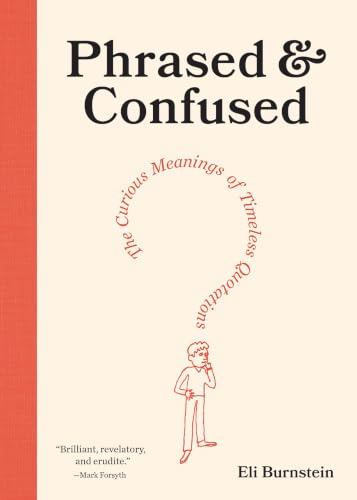
- Explains misunderstood quotations
- Explores context, ideas, and language
- Compact 208-page format
Best For: Readers seeking meaning and context behind familiar phrases
Best for Daily Transformation – 365 Quotes to Live Your Life By
Among quotation books, this pick stands out as a structured daily read rather than a random collection. It offers 365 inspirational quotes organized around seven guiding ideas, including gratitude, mindfulness, purpose, and focusing on what you can control.
Best For: Readers who want a short, motivational routine focused on mindset, personal growth, and daily reflection.
Pros:
- Provides one quote for each day of the year.
- Uses a seven-part framework to give the collection a clear focus.
- Features wisdom attributed to figures including Einstein, Gandhi, Oprah Winfrey, and Confucius.
Cons:
- Readers seeking a neutral reference book may find its self-help orientation too specific.
- The emphasis on life improvement may not suit those wanting only brief quotations.
This is a practical choice for anyone who prefers quotation books with an intentional habit-building format and a strong motivational angle.
Best for Guided Reflection – The Daily Book of Positive Quotations
This quotation book pairs 365 positive maxims with several paragraphs explaining each one and offering practical ways to apply its message. It is a yearlong format for readers who want more context than a standalone quote can provide.
Best For: Readers who appreciate positive daily readings supported by explanation and practical advice.
Pros:
- Includes 365 life-affirming quotes for year-round use.
- Explains the meaning behind each maxim.
- Connects quotations with suggestions for applying their wisdom to daily life.
Cons:
- At 408 pages, it is less compact than a simple quote-a-day booklet.
- Its positive-quotation focus may feel narrow for readers seeking humor, history, or broad reference coverage.
Choose this volume if you want quotation books that encourage slower reading, interpretation, and practical application instead of quick browsing alone.
Best for Casual Browsing – Pocketbook of Quotes
Pocketbook of Quotes: From Socrates to Lebowski (Quotes Collection for Reference / Gifts)
Check Price On AmazonFor shoppers comparing quotation books as gifts or conversation pieces, this compact collection offers hundreds of quotes arranged by themes such as love, courage, wisdom, character, and self-control. Illustrations, ornamentation, and caricatures help break up the text-heavy format common to reference books.
Best For: Readers who want an accessible, giftable quote collection for browsing, conversation starters, or reading on the go.
Pros:
- Organizes quotations into clearly defined themes.
- Includes voices ranging from Socrates to contemporary cultural figures such as Lebowski.
- Designed as a compact reference and coffee-table-style gift book.
Cons:
- Its broad mix of philosophy, literature, and entertainment may feel stylistically uneven.
- The supplied details do not indicate explanatory commentary for individual quotes.
This is a flexible pick when presentation, variety, and easy browsing matter more than a chronological or deeply annotated reference format.
Best for Comprehensive Reference – The Harper Book of Quotations
If your priority is breadth, this established quotation reference includes more than 6,500 quotations selected for occasions ranging from letters and speeches to everyday conversation. Its substantial 544-page format is designed for looking up a suitable line rather than following a daily reading plan.
Best For: Writers, speakers, students, and readers who need a large general-purpose quotation reference.
Pros:
- Offers more than 6,500 quotations.
- Useful for letters, speeches, and everyday conversations.
- The third edition provides a substantial reference format in 544 pages.
Cons:
- Its reference-oriented design may be less engaging for readers seeking motivational guidance.
- It is less suited to portable, one-quote-per-day reading than the daily-format options.
Among these quotation books, this is the strongest choice for volume and versatility when you want many options in one dedicated reference.
Best Comprehensive Collection – Ageless Wisdom
If you want quotation books with exceptional breadth, Ageless Wisdom offers nearly 600 pages of curated material. Its 128 categories and author index make it a practical reference for browsing, teaching, writing, or finding a quote for a specific occasion.
Best For: Readers seeking a large, organized quotation reference with thousands of entries.
Pros:
- Contains thousands of quotes drawn from more than 1,000 sources.
- Organized into 128 categories for easier searching.
- Includes an author index with brief biographies, timelines, and occupations.
- Designed as both a useful reference and an attractive gift book.
Cons:
- Its nearly 600-page format is relatively large and heavy.
- The extensive range may feel more reference-oriented than casual.
Ageless Wisdom is a strong pick when variety and navigability matter most. Its substantial size makes it especially useful for frequent consultation, though less ideal if you want a compact book for quick reading.
Best Artistic Gift Book – Distilled Genius
Among quotation books, Distilled Genius stands out for its handwritten, watercolored presentation and thematic organization. Susan Branch’s 272-page collection brings together encouraging, humorous, poetic, and reflective quotations in a format designed to be read as much as consulted.
Best For: Readers who value inspirational content, distinctive design, and giftable presentation.
Pros:
- Features Susan Branch’s charming handwritten and watercolored style.
- Arranged around themes such as creativity, dreams, and the secrets of life.
- Draws from a wide range of figures and sources, including Mark Twain, Maya Angelou, and the Bible.
- Includes a sewn-in ribbon bookmark and is printed in the USA.
Cons:
- At 272 pages, it is less extensive than the largest quotation references.
- The reading age is listed as 15 years and up.
This is a particularly appealing choice when the physical character of a book matters. It offers a curated, hopeful reading experience rather than the sheer scale of a comprehensive quotation encyclopedia.
Best for Quote Origins – The Book of Who Said That?
For readers who want more than the words themselves, The Book of Who Said That? adds fascinating background to famous quotations. Its 704 pages contain more than 300 articles exploring attribution, historical context, and the stories surrounding sayings from politics, literature, science, culture, and everyday life.
Best For: Curious readers who want to investigate who said famous lines and how those quotations became well known.
Pros:
- Explains the stories and context behind famous quotations.
- Includes more than 300 articles across 11 themed chapters.
- Covers both familiar figures and lesser-known sources.
- Addresses disputed or incorrect attributions, including the origin of “Facts are stubborn things.”
Cons:
- Its focus on stories and attribution may be less useful for readers seeking only quick quote lists.
- The 704-page hardcover is substantial in size and weight.
This book is best viewed as a quotation-history reference rather than a simple collection of inspirational lines. Choose it when the background behind a quote is as important as the quote itself.
Best with Extra Features – Bartlett's Familiar Quotations
For shoppers seeking a definitive quotation book, Bartlett’s Familiar Quotations offers exceptional breadth. This 19th edition contains more than 20,000 quotations from roughly 4,000 contributors, with searches organized by author, chronology, and subject.
Best For: Readers, writers, researchers, and households wanting a large, long-term quotation reference.
Pros:
- More than 20,000 quotations spanning centuries and many fields.
- Includes over 3,000 new quotations from more than 700 new sources.
- Three useful ways to search: author, birth-date chronology, and subject.
Cons:
- At 1,504 pages and 4.51 pounds, it is substantial rather than highly portable.
- Its extensive scope may be more than casual browsers need.
This is the strongest all-purpose choice when coverage and reference utility matter most. Its substantial size makes it better suited to a desk, library, or permanent home collection than everyday carry.
Best for Accuracy and Attribution – The New Yale Book of Quotations
The New Yale Book of Quotations is a strong quotation book choice for readers who care about sourcing and context. Its more than 12,000 quotations are arranged alphabetically by author and supported by annotations, cross-references, and a large keyword index.
Best For: Writers, researchers, and readers who want carefully sourced quotations and convenient cross-referencing.
Pros:
- Includes more than 12,000 quotations from a wide range of fields and eras.
- Updated with over a thousand new quotations and improved attribution research.
- Annotations, cross-references, and a large keyword index support detailed searching.
Cons:
- Its alphabetical-by-author arrangement may be less immediate for shoppers seeking only topical browsing.
- At 1,168 pages, it remains a sizeable reference volume.
Choose this volume when reliability, attribution, and research tools are higher priorities than maximum quotation count. It also offers an engaging browsing experience for readers interested in how familiar sayings developed.
Best Interpretive Guide – Phrased & Confused
Unlike a traditional quotation book, Phrased & Confused explains the ideas and contexts behind familiar sayings. Eli Burnstein’s witty, accessible approach makes this 208-page guide a practical pick for readers who want to understand quotations rather than simply locate them.
Best For: Curious readers, language lovers, and students interested in meaning, context, and the origins of well-known phrases.
Pros:
- Unpacks commonly misunderstood and enigmatic quotations.
- Connects quotations with philosophy, literature, language, and historical context.
- Compact, accessible format with an engaging and humorous style.
Cons:
- It is an interpretive guide, not a comprehensive quotation database.
- Its 208-page length offers less breadth than major reference compendiums.
This is the best fit for readers who pause over a familiar phrase and wonder what it really means. Pick it for explanation and entertainment, not for exhaustive quotation searches or extensive attribution research.
How We Picked These Quotation Books
We looked for books that offer a clear purpose, dependable editorial value, and a useful reading experience. The selection includes motivational anthologies, compact gift books, scholarly references, and titles that investigate the origins or interpretation of famous quotations.
We also considered breadth, organization, portability, readability, and suitability for different readers. A large reference work may be ideal for writers or researchers, while a short daily collection can work better for someone seeking a regular dose of encouragement.
Quick Comparison
| Best For | Look For | Typical Format |
|---|---|---|
| Daily motivation | Short entries and accessible themes | Portable or bedside book |
| Research and writing | Indexes, attribution, dates, and sources | Large reference volume |
| Learning quote origins | Context, biographies, and historical notes | Narrative reference |
| Gifting | Appealing design and broad subject range | Hardcover or compact collection |
| Humor and casual browsing | Unexpected pairings and modern references | Light, accessible anthology |
Key Buying Factors for Quotation Books
Purpose and Subject Coverage
Start with how you plan to use the book. Inspirational collections emphasize encouragement and personal reflection, while reference titles prioritize range, accuracy, and discoverability. If you want quotes for speeches, articles, or creative work, choose a book with substantial indexing and attribution information.
Organization and Usability
Alphabetical listings are useful when you know the speaker or subject. Thematic chapters work better for browsing by mood or topic, such as leadership, friendship, creativity, or resilience. A detailed index can make a larger volume considerably easier to use.
Attribution and Context
Famous quotations are often misattributed or shortened over time. Books that explain sources, wording, dates, and surrounding events offer more value for research and reduce the risk of repeating an inaccurate citation. For casual inspiration, context may be less important than a pleasant, easy-to-read selection.
Size, Format, and Presentation
Check the physical dimensions and binding if the book will travel or serve as a desk reference. Hardcover editions can make better gifts, while compact paperbacks are easier to carry. Large-print layouts, clear typography, and generous spacing also matter for frequent reading.
Who Should Buy Which Quotation Books?
Choose a motivational daily collection if you want brief prompts for reflection or a positive start to the day. Pick a pocket-sized anthology for commuting, casual browsing, or an affordable gift. Readers interested in classic and contemporary voices may prefer a broad treasury with varied themes.
For students, writers, speakers, and researchers, prioritize comprehensive reference works with strong indexing and careful attribution. If you enjoy literary detective work, choose a title focused on the stories behind famous sayings. Readers who like language, wordplay, or misunderstood expressions may get the most from a book that explores quotation meanings and usage.
Finally, consider buying for the recipient rather than choosing only by reputation. The right quotation book is the one whose scope, tone, and format match how the reader will actually use it.