Finding the right phonics learning kit can make early reading practice more structured, interactive, and manageable. The options in this roundup range from complete learn-to-read programs to flash cards, magnetic letter tiles, flip books, and small-group classroom sets.
Use the guide below to compare teaching approach, age range, materials, and practice style so you can choose a kit that fits your child’s reading stage and learning routine.
Best 10 Phonics Learning Kits Picks for 2026
Best Complete Program
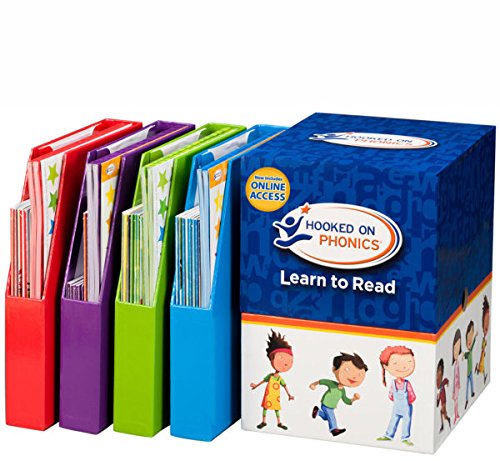
- Eight levels from Pre-K through 2nd grade
- 36 storybooks and eight guided workbooks
- Includes videos, flashcards, and reward stickers
Best For: Families wanting a multi-level reading curriculum
Best Flashcard Set

- Four difficulty levels for ages 4–8
- Includes 480 words, pictures, and 120 sentences
- Sorting rings support hands-on word practice
Best For: Short, portable phonics review sessions
Best Small-Group Set

- Materials support up to six students
- Includes magnetic trays, tiles, and reusable mats
- Practices blending, spelling, and word building
Best For: Classrooms, tutors, and small-group instruction
Best Pre-Reader Kit

- Designed for early learners ages 3 and up
- Includes five workbooks and 10 storybooks
- Adds alphabet cards and one year of app access
Best For: Preschoolers learning foundational letters and sounds
Most Comprehensive
Award-Winning Phonics & Vocabulary Flash Cards

- 122 phonics cards plus prefixes and suffixes
- Six games, teaching methods, and quiz cards
- Laminated jumbo cards with storage box
Best For: Flexible home, classroom, or tutoring practice
Best Hands-On Kit

- 249 phonics tiles plus 16 blank tiles
- Dry-erase folder enables repeated practice
- Color-coded pieces with storage case
Best For: Tactile word building and spelling practice
Best Structured Practice
Spaced Repetition Phonics Flash Cards

- 20 phonogram groups and four difficulty levels
- 1,300 words, 240 sentences, and learning games
- Thick cardboard cards for repeated use
Best For: Sequenced review from CVC words to advanced patterns
Best with Extra Features
Advancing Phonics Magnetic Word Work

- Six trays support group or individual practice
- 672 magnets and 30 reusable activity mats
- Covers sounds, digraphs, and word families
Best For: Classrooms, tutoring, and literacy centers
Best Flip-Book Collection
Read and Rhyme Phonics Flip Books

- Covers 53 patterns and 320+ words
- Five levels span early to advanced practice
- Includes rhymes, blends, digraphs, and sight words
Best For: Preschool and early elementary reading practice
Best All-in-One Kit
Magnetic Phonics Word Building Set

- Includes tiles, mats, boards, marker, and storage
- Color-coded pieces support sound-pattern practice
- Reusable surfaces allow repeated word and sentence work
Best For: Portable preschool and kindergarten practice
Best Complete Program – Complete Learn to Read Kit
Hooked on Phonics Complete Learn to Read Kit (Pre-K through 2nd Grade | Ages 3-8)
Check Price On AmazonFor families seeking comprehensive phonics learning kits, this Hooked on Phonics set covers eight levels from Pre-K through 2nd grade. It combines guided workbooks, original storybooks, videos, stickers, and flashcards for a structured path from early letter skills to early fluency.
Best For: Families wanting a multi-level, at-home reading program for ages 3–8.
Pros:
- Includes all eight program levels, from Pre-K to 2nd grade.
- Provides 36 storybooks, eight workbooks, eight DVDs, stickers, and flashcards.
- Offers video streaming in addition to the included DVD content.
- Uses lessons designed with educators, authors, teachers, and parents.
Cons:
- The complete kit is large and weighs about 17 pounds.
- The broad age range may require storing unused levels for later.
This is the most extensive option in the roundup, especially for households that want one curriculum to grow with a child over several reading stages. Its many components provide variety, though the size of the set may be more than needed for a single beginning reader.
Best Flashcard Set – Phonics Flash Cards
These compact phonics learning kits use flashcards, sorting rings, pictures, and sentences to make sound practice easy to repeat. Four difficulty levels progress from CVC word blending to consonant blends, long vowels, trigraphs, and silent letters.
Best For: Children ages 4–8 who benefit from short, game-like phonics practice.
Pros:
- Includes 62 flashcards, four sorting rings, 480 words and pictures, and 120 sentences.
- Covers four levels of phonics skills and 20 phonogram family groups.
- Supports blending, sound recognition, and reading practice.
- Compact cardstock cards are easy to organize and use for games.
Cons:
- It does not include workbooks, storybooks, or a digital component.
- Older or more advanced learners may move through the set quickly.
This is a focused, portable choice for reinforcing phonics skills without committing to a full curriculum. The staged card format makes it useful for quick sessions, review, or supplemental practice alongside other reading materials.
Best Small-Group Set – Advancing Phonics Word Work
Designed for collaborative instruction, this phonics learning kit gives small groups hands-on tools for building, blending, segmenting, spelling, and matching sounds. Magnetic trays, tiles, and write-on/wipe-off mats keep word work organized for up to six students.
Best For: Kindergarten classrooms, tutors, and small-group literacy instruction for ages 5 and up.
Pros:
- Includes materials for six students.
- Provides six magnetic trays, 30 activity mats, and 672 magnetic grapheme tiles.
- Activities cover blending, sound matching, word building, spelling, and related phonics skills.
- Color-coded tiles include consonants, vowels, hearts, and blank tiles.
Cons:
- Its six-student format may be excessive for individual home use.
- The kit is relatively bulky at about 8.73 pounds.
This set stands out when phonics instruction needs to happen at a table with several learners at once. The reusable mats and magnetic materials support repeated practice, while the trays help contain pieces and reduce setup frustration.
Best Pre-Reader Kit – Letters and Sounds
For children just beginning literacy, this pre-reader kit introduces letter names, shapes, sounds, rhyming, and early phonological awareness through workbooks, storybooks, alphabet cards, stickers, and app activities. It is a gentle starting point among phonics learning kits for ages 3 and up.
Best For: Preschool children building foundational letter and sound knowledge at home.
Pros:
- Includes five workbooks and 10 storybooks for guided practice and reading.
- Alphabet cards provide hands-on reinforcement of letter recognition and sounds.
- Includes one year of app access for Apple, Android, and Amazon devices.
- Covers uppercase and lowercase letters, tracing, sounds, rhyming, and early phonological awareness.
Cons:
- It focuses on pre-reading foundations rather than a complete progression through fluent reading.
- App access is provided for one year, so continued digital use may require another purchase.
This is a strong fit for a preschooler who needs a playful introduction before beginning more advanced decoding lessons. The combination of print materials, stories, and app activities offers several ways to revisit early concepts and celebrate progress.
Most Comprehensive – Award-Winning Phonics & Vocabulary Flash Cards
For families comparing phonics learning kits, this award-winning flash-card set offers broad coverage for children ages 4–8. It combines letter-sound practice with prefixes, suffixes, games, quizzes, and visual references for flexible home or classroom use.
Best For: Homeschooling, classroom centers, tutoring, and children who benefit from varied phonics and vocabulary activities.
Pros:
- Includes 122 phonics cards, plus 16 prefixes and 16 suffixes.
- Offers six games, six teaching methods, four quiz cards, and a color-coded phonics list.
- Jumbo laminated cards feature bold print, rounded corners, and a storage box.
- Designed for preschool through third grade and suitable for individual or group learning.
Cons:
- The large amount of content may require organized, staged practice for younger learners.
- This is a flash-card-focused kit rather than a magnetic word-building system.
Choose this set if you want one structured card collection that extends beyond basic CVC words into vocabulary development and repeated practice.
Best Hands-On Kit – JoyCat Magnetic Letter Tiles
Among phonics learning kits, the JoyCat set stands out for tactile word building. Children can arrange color-coded magnetic tiles, write in the dry-erase folder, and repeatedly practice spelling, sound mapping, and sentence creation.
Best For: Ages 5–8, homeschool lessons, classroom activities, and learners who respond well to hands-on word construction.
Pros:
- Includes 249 phonics tiles and 16 blank tiles for customizable practice.
- Dry-erase folder supports repeated spelling and writing activities.
- Color coding distinguishes consonants, vowels, and special tiles.
- Comes with a magnetic book, markers, eraser, and organized storage case.
Cons:
- Small tiles require careful storage and supervision to keep the set organized.
- It emphasizes active word building rather than a staged flash-card sequence.
This is a practical pick when children learn best by physically manipulating letters and immediately applying sounds to words and sentences.
Best Structured Practice – Spaced Repetition Phonics Flash Cards
For buyers seeking phonics learning kits with a defined progression, these flash cards use a spaced-repetition system across 20 phonogram family groups. The set covers CVC words, digraphs, blends, long vowels, sentences, and games for preschool through second grade practice.
Best For: Children ages 4–8 who benefit from sequenced review, multiple difficulty levels, and frequent reinforcement.
Pros:
- Organized into 20 phonogram family groups and four difficulty levels.
- Includes 1,300 words, 240 sentences, 120-plus phonics elements, and learning games.
- Spaced-repetition format provides a consistent review structure.
- Extra-thick cardboard is designed for durability.
Cons:
- The set may feel more structured than open-ended for children who prefer free play.
- It is primarily a flash-card system, with fewer physical word-building components.
Select this option if systematic review matters most and you want practice to progress from early phonics patterns toward more advanced sound combinations.
Best with Extra Features – Advancing Phonics Magnetic Word Work
This phonics learning kit is designed for shared practice, tutoring, literacy centers, or independent word work. Six magnetic trays, hundreds of letter tiles, and reusable activity mats give children a hands-on way to build words and explore beginning sounds, digraphs, and word families.
Best For: Small-group instruction, classroom literacy centers, tutoring, and families who want multiple children to practice together.
Pros:
- Includes six magnetic boards, 672 alphabet magnets, and 30 double-sided activity mats.
- Supports phonemic awareness, decoding, spelling, and word-family practice.
- Raised tray edges help keep magnetic letters in place during activities.
- Blank tiles allow children to customize word-building activities.
Cons:
- The large piece count may require organized storage.
- Its small-group format may be more than needed for one learner.
Choose this set when collaboration and flexible word building are priorities. The six-tray design makes it especially practical for structured teaching settings.
Best Flip-Book Collection – Read and Rhyme Phonics Flip Books
This phonics learning kit uses flip books to organize reading practice across five levels. Children can build and read words involving CVC patterns, vowels, Magic E, R-controlled vowels, digraphs, blends, and rhyming families through a compact, game-like format.
Best For: Preschool and early elementary learners who enjoy visual, hands-on practice with word families, rhymes, and sight words.
Pros:
- Covers 53 phonics patterns and more than 320 phonics words.
- Five levels provide a progression from early practice through more advanced patterns.
- Flip, match, and word-building activities make practice interactive.
- Also includes high-frequency words that support vocabulary and word recognition.
Cons:
- The cardboard flip-book format offers less open-ended writing practice than a dry-erase kit.
- With many books and levels, younger children may need adult guidance to choose activities.
This set is a good fit for families seeking broad phonics coverage in a portable paper-based format. Its level structure can help adults select activities that match a child’s developing skills.
Best All-in-One Kit – Magnetic Phonics Word Building Set
This phonics learning kit combines magnetic letter tiles, reusable word-building mats, built-in boards, and storage in one portable set. Color-coded tiles and matching activity areas let children build, match, spell, and write words or sentences while practicing phonics repeatedly.
Best For: Preschool, pre-K, and kindergarten learners who need a contained kit for reading, spelling, and writing activities.
Pros:
- Includes 108 magnetic tiles, two double-sided mats, two boards, a marker, and storage.
- Color coding distinguishes consonants, vowels, blends, and blank tiles.
- Dry-erase surfaces support repeatable practice without replacing worksheets.
- Built-in storage and a carrying case help keep materials organized.
Cons:
- It includes fewer magnetic pieces than the six-student small-group set.
- The activities may require adult direction for children just beginning phonics.
Pick this kit when portability and organization matter as much as hands-on practice. It offers a practical mix of word building, matching, spelling, and writing in a single reusable package.
How We Picked These Phonics Learning Kits
We selected these kits for their coverage of foundational phonics skills, usability, and suitability for early readers. The list includes options for pre-readers learning letter sounds, beginners blending CVC words, and children practicing digraphs, blends, long vowels, word families, spelling, and vocabulary.
We also considered format. Complete programs can provide a clearer sequence, while flash cards, magnetic tiles, and flip books are useful for short practice sessions or targeted reinforcement. Kits with games, visual aids, trays, folders, or other hands-on components may be especially helpful for children who learn best by doing.
Quick Comparison
| Kit type | Best for | What to look for |
|---|---|---|
| Complete reading program | Families wanting a guided sequence | Progressive lessons, parent guidance, and age-appropriate levels |
| Flash cards | Quick drills and review | Clear illustrations, sound progression, and manageable card sets |
| Magnetic letter tiles | Hands-on word building | Enough vowels, consonants, digraphs, and storage |
| Flip books and word-family sets | Blending and repeated practice | Readable print, rhyming patterns, and independent usability |
| Small-group classroom sets | Teacher-led instruction | Multiple student sets, trays, and lesson flexibility |
Key Buying Factors for Phonics Learning Kits
Match the Skill Level
Start with the child’s current ability rather than choosing solely by age. Pre-readers generally need letter recognition and basic sound matching. Beginning readers benefit from CVC words and blending, while more advanced learners may need digraphs, blends, long vowels, prefixes, suffixes, and multisyllabic vocabulary.
Check the Teaching Sequence
A useful kit should introduce skills in a sensible order and provide enough repetition to build automaticity. If you are supplementing schoolwork, choose materials that target a specific gap instead of buying overlapping beginner content.
Consider the Practice Format
Flash cards are portable and efficient, but magnetic tiles and word-building boards make sound-to-letter relationships more tactile. Flip books and games can add variety without requiring a long lesson. Look for components that your child will actually use consistently.
Review Contents and Durability
Check whether the kit includes parent or teacher instructions, storage, replacement pieces, and sufficient duplicate letters for building common words. Sturdy cards, readable lettering, and magnets that stay attached can improve the experience, especially with frequent use.
Who Should Buy Which Phonics Learning Kits?
Choose a complete Hooked on Phonics-style program if you want a structured home curriculum from pre-reading through early elementary stages. Choose basic or staged flash cards for short daily reviews, travel, or reinforcing a skill already taught.
Magnetic phonics kits are a strong choice for children who benefit from manipulating letters and constructing words. Small-group sets are better suited to teachers, tutors, or families working with multiple children. Word-family flip books work well for repeated blending and rhyming practice, while vocabulary-focused cards are useful once basic decoding is becoming more secure.
Whichever option you choose, keep sessions brief and consistent. Five to fifteen minutes of focused practice, followed by reading simple decodable words or books, is often more productive than occasional long drills.