Learning to read becomes more engaging when children can see, hear, touch, and build words instead of relying on worksheets alone. The best multisensory phonics learning kits combine activities such as magnetic letter tiles, word cards, spelling games, flip books, and guided lessons.
These 10 picks cover different learning styles, ages, and practice goals—from structured reading programs for beginners to hands-on CVC word games and flexible phonics flash cards. Use the guide below to find the right fit for your child’s current skills and daily learning routine.
Best 10 Multisensory Phonics Learning Kits Picks for 2026
Complete Reading Path
Hooked on Phonics Learn to Read Kit
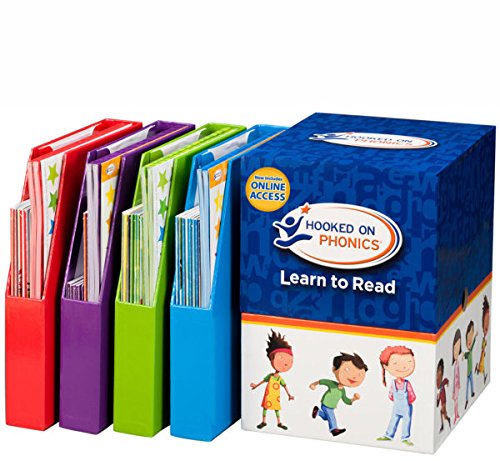
- Eight progressive reading levels
- 36 storybooks and eight workbooks
- Includes video, stickers, and flashcards
Best For: Families wanting a complete, sequential reading program
Hands-On CVC Practice
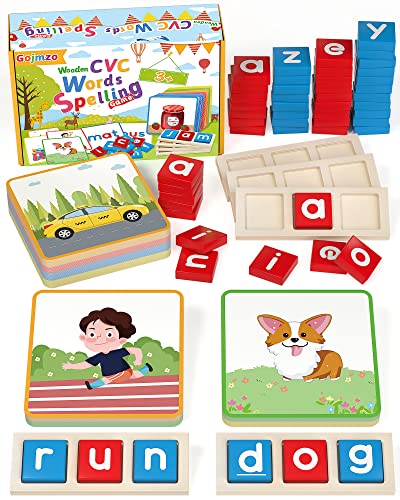
- 50 double-sided phonics cards
- 53 wooden lowercase letter blocks
- Includes spelling boards and storage box
Best For: Young learners practicing CVC words and spelling
Flexible Word Building
JoyCat Magnetic Phonics Tile Kit

- 249 grapheme and 16 blank tiles
- Magnetic folder with dry-erase practice
- Color-coded, organized storage system
Best For: Open-ended phonics and spelling practice
Repetition-Based Review
Phonics Flash Cards Learning System

- Four levels and 20 phonogram groups
- Includes words, sentences, and games
- Organized around spaced repetition
Best For: Structured flashcard review across phonics stages
Best Interactive CVC Game

- Practices blending and 50 CVC words
- Tactile cards and fidget-mat play
- Suitable for home or classroom use
Best For: Young learners who enjoy hands-on CVC word practice
Best Progressive Phonics Flip Books

- Covers 53 patterns and 320+ words
- Five levels from CVC to advanced patterns
- Flip-and-build format supports word families
Best For: Learners needing broad, level-based phonics practice
Best Tactile CVC Spelling Kit

- Wooden tiles and blending board
- Includes 50 illustrated CVC cards
- Supports tracing, spelling, and decoding
Best For: Tactile learners practicing first CVC words
Sentence-Building Phonics Kit

- Builds CVC words into full sentences
- Includes sight words, punctuation, and writing practice
- Reusable felt and dry-erase components
Best For: Early learners practicing phonics, sentence reading, and handwriting
Magnetic Word-Builder Kit

- Includes 108 magnetic phonics tiles
- Uses color-coded letters and activity mats
- Adds word building, matching, and writing practice
Best For: Preschool and kindergarten learners building spelling and sound skills
Word-Family Flip-Book Set

- Includes 40 books across 11 progressive levels
- Practices CVC words and word-family patterns
- Review pages support progress tracking
Best For: Emergent readers ages 4–8 building decoding fluency
Complete Reading Path – Hooked on Phonics Learn to Read Kit
Hooked on Phonics Complete Learn to Read Kit (Pre-K through 2nd Grade | Ages 3-8)
Check Price On AmazonFor families seeking multisensory phonics learning kits with a structured progression, this complete Hooked on Phonics set covers eight levels from Pre-K through 2nd grade. It combines storybooks, workbooks, videos, stickers, and flashcards to support phonics practice in several formats.
Best For: Families wanting an all-in-one, sequential reading program for children ages 3–8.
Pros:
- Includes all eight program levels, from early emergent to early fluent readers.
- Combines 36 storybooks, eight workbooks, DVDs or streaming video, stickers, and letter and picture flashcards.
- Storybooks reinforce the skills introduced in the lessons.
- Designed with educators, authors, teachers, and parents and approved by the Children’s Reading Foundation, according to the supplied description.
Cons:
- The 17-pound kit is relatively large and may require dedicated storage space.
- The extensive, level-based format may be more than families seeking a small, focused activity set need.
This is the broadest option in the roundup for a guided home reading journey. Its range of physical and video materials makes it versatile, though the size and scope are best suited to buyers who plan to use the program over time.
Hands-On CVC Practice – Wooden CVC Word Spelling Game
This wooden CVC spelling set is a focused choice among multisensory phonics learning kits for children beginning to blend sounds and read short words. Picture-backed cards, tactile letter blocks, and spelling boards create a simple matching and word-building activity for preschool and early elementary learners.
Best For: Preschool, kindergarten, and early first-grade learners practicing CVC words, spelling, and initial reading.
Pros:
- Includes 50 double-sided phonics cards with words on one side and pictures on the other.
- Provides 53 wooden lowercase letter blocks, five spelling boards, and a storage box.
- Color-coded vowels and consonants can help children distinguish letter groups.
- Laminated cards and hard-wood letter tiles are designed for repeated use.
Cons:
- The set focuses primarily on CVC words rather than a full range of phonics patterns.
- Letters q, y, and z are not included because they are not used in the card words.
- It is listed for one player, so cooperative play may be limited.
Choose this kit when you want a compact, tactile introduction to spelling and short-word reading. It offers less progression than a full curriculum, but its concrete pieces and picture prompts suit early practice sessions.
Flexible Word Building – JoyCat Magnetic Phonics Tile Kit
For children who learn by manipulating letters, this magnetic set is one of the more flexible multisensory phonics learning kits. Its large tile collection supports sound mapping, spelling, and sentence building, while the folder and dry-erase surfaces allow repeated practice.
Best For: Children ages 5–8 practicing phonics, spelling, and sentence construction at home or in class.
Pros:
- Includes 249 grapheme tiles plus 16 blank tiles for customized word-building activities.
- The magnetic book and dry-erase folder support hands-on spelling and writing practice.
- Color-coded tiles distinguish consonants, vowels, and special tiles.
- Storage case helps keep the 265-piece set organized.
Cons:
- The set does not appear to include a structured lesson sequence or graded reading books.
- With 265 pieces, setup and cleanup may take more time than with a small flashcard set.
This is a strong pick for open-ended word work rather than a stand-alone reading curriculum. The blank tiles and dry-erase components make it particularly adaptable for homeschool or classroom activities.
Repetition-Based Review – Phonics Flash Cards Learning System
This flashcard system suits families looking for multisensory phonics learning kits centered on frequent visual review. The cards are organized into 20 phonogram groups and four difficulty levels, covering CVC words, blends, digraphs, long vowels, sentences, and learning games.
Best For: Children ages 4–8 who benefit from organized flashcard practice across several phonics stages.
Pros:
- Covers 1,300 words, 240 sentences, more than 120 phonics elements, and 20 phonogram family groups, according to the supplied notes.
- Offers four difficulty levels spanning preschool through 3rd grade content.
- Uses a stated spaced-repetition sequence instead of random card order.
- Thick cardboard cards are designed for durability.
Cons:
- The set is primarily card-based and may provide less tactile manipulation than letter-tile kits.
- The supplied details list 64 items and 66 flash cards, so buyers may want to confirm the exact package contents.
This option is useful for systematic review and expanding from basic word patterns to sentences. It is a better fit for short, repeatable practice sessions than for families seeking workbooks, storybooks, or a broader multimedia program.
Best Interactive CVC Game – Word Pop
The Fidget Game Word Pop is a playful option for families seeking multisensory phonics learning kits for children ages 3 to 8. It combines CVC word cards with pop-and-play tactile components to practice blending, recognition, and early reading fluency.
Best For: Preschool and early elementary learners who benefit from active, tactile practice, including children working on CVC words and families supporting varied learning needs.
Pros:
- Includes 88 CVC cards and activities focused on 50 CVC words.
- Uses sight, sound, and touch through cards and fidget mats.
- Designed for classroom, homeschool, or family learning.
- Supports practice in blending, word recognition, and fluency.
Cons:
- Practice is centered primarily on CVC words rather than broader phonics patterns.
- The package design may vary depending on available stock.
- Its game format may require adult guidance for structured lessons.
Word Pop is a strong pick when motivation and tactile engagement matter as much as repetition. Choose it for an interactive introduction to CVC decoding, rather than as a complete progression through advanced phonics patterns.
Best Progressive Phonics Flip Books – Read and Rhyme Flip Books
This 40-book Read and Rhyme set is a broad choice for shoppers comparing multisensory phonics learning kits across several early reading levels. Its flip-book format lets children build and compare word families while progressing from CVC patterns to blends, digraphs, long vowels, and R-controlled vowels.
Best For: Preschool through early elementary learners who need systematic word-pattern practice, rhyming activities, and flexible phonics review.
Pros:
- Covers 53 phonics patterns and more than 320 words in five levels.
- Includes CVC words, vowel patterns, Magic E, blends, and digraphs.
- Flip, match, and build activities connect spelling patterns with sounds.
- Also supports sight-word recognition and vocabulary development.
Cons:
- The cardboard flip books may be less durable than wooden or laminated components.
- The large range of levels may require an adult to select appropriate activities.
- It emphasizes visual and hands-on manipulation but does not list audio components.
This set stands out for coverage and progression rather than a single game mechanic. It is a practical choice for families or teachers who want one collection that can support phonics practice across multiple stages.
Best Tactile CVC Spelling Kit – CVC Word Magic
CVC Word Magic is a compact Montessori-style option for multisensory phonics learning kits, pairing wooden letter tiles with a blending board, slider, tracing stylus, and illustrated cards. It gives children ages 3 to 6 a hands-on way to segment, blend, spell, and trace simple words.
Best For: Pre-K and kindergarten learners who prefer tactile instruction, especially children building phonemic awareness, decoding, spelling, or letter-tracing skills.
Pros:
- Includes 26 wooden letter tiles, 50 double-sided CVC cards, and a blending board.
- Slider, grooves, and stylus provide several tactile ways to practice.
- Color-coded components help distinguish vowels and consonants.
- Wooden and laminated materials are designed for repeated use and storage in the included box.
Cons:
- The activity focuses on CVC words rather than a full range of phonics patterns.
- With one to two players, it is less suited to larger groups.
- The tactile pieces may require supervision with younger children.
CVC Word Magic is particularly appealing when physical manipulation is central to a child’s learning routine. Its focused word set makes it easier to practice foundational decoding skills repeatedly, though advanced readers will eventually need a broader sequence.
Sentence-Building Phonics Kit – CVC Sentence Builder
For families seeking multisensory phonics learning kits that connect decoding with early writing, this CHEFAN set moves children from CVC words to complete sentences. Felt word pieces, sentence cards, sight words, punctuation cards, and a reusable writing board create a practical progression for guided practice.
Best For: Preschool and early elementary learners practicing CVC phonics, sight words, sentence reading, and handwriting at home, in classrooms, or during therapy.
Pros:
- Combines 41 CVC cards, sentence starters, sight words, and punctuation for structured sentence building.
- Supports a see-it, build-it, write-it routine with a dry-erase board and handwriting lines.
- Soft felt pieces and laminated, wipe-clean materials encourage hands-on, repeatable practice.
Cons:
- The set focuses on CVC words and early sentence construction rather than more advanced phonics patterns.
- Its recommended age begins at 3, so older independent readers may find the activities basic.
This is a strong choice when the goal is to blend phonics instruction with vocabulary, sentence formation, and fine-motor writing practice in one reusable kit.
Magnetic Word-Builder Kit – Color-Coded Phonics Tiles
This all-in-one option stands out among multisensory phonics learning kits for children who learn by moving letters, matching sounds, and writing words. It includes 108 magnetic tiles, double-sided activity mats, built-in magnetic boards, a marker, and organized storage for repeatable word-building practice.
Best For: Preschool, pre-K, and kindergarten learners working on letter-sound relationships, word families, spelling, and early sentence creation.
Pros:
- Provides 108 magnetic tiles with color coding for consonants, vowels, blends, and blank tiles.
- Double-sided mats cover word building, writing, beginning sounds, and ending sounds.
- Built-in boards, dry-erase surfaces, a storage bag, and a storage box support organized reuse.
Cons:
- The supplied details do not specify the exact word or sentence progression.
- With many pieces, children may need adult help keeping the tiles organized despite the included storage.
Choose this kit if you want an adaptable, hands-on setup for manipulating letters and practicing spelling across multiple activities rather than a fixed sequence of lessons.
Word-Family Flip-Book Set – 40 Read-and-Rhyme Flip Books
For children ready to practice recurring sound patterns, this set offers a book-based approach to multisensory phonics learning kits. Forty interactive flip books cover 11 progressive levels, using rhyming word families and onset changes to help emergent readers decode and build new words.
Best For: Children ages 4–8, including pre-K and kindergarten learners, homeschool students, and small groups developing CVC decoding and word-family fluency.
Pros:
- Includes 40 flip books progressing from foundational CVC words to more complex word families.
- Flip-through word changes make rhyming patterns and letter-sound connections tactile and interactive.
- Six double-sided review pages help adults monitor spelling progress and identify areas for reinforcement.
Cons:
- The cardstock flip books may be less versatile than magnetic or dry-erase kits for open-ended word construction.
- It emphasizes word families and decoding, with less direct handwriting practice described.
This set suits learners who benefit from a clearly sequenced, portable practice format and repeated exposure to rhyming patterns as they progress toward independent decoding.
How We Picked These Multisensory Phonics Learning Kits
We focused on kits that teach practical early-reading skills through more than one mode of learning. Each selection supports a combination of visual recognition, listening, speaking, movement, or hands-on word building. We also considered age range, progression, activity variety, portability, independent-use potential, and how easily an adult can guide practice.
The roundup includes structured programs, magnetic tile sets, Montessori-style wooden games, CVC activities, word-family materials, sentence builders, and flash-card systems. Because children develop at different rates, no single kit is ideal for every learner.
Quick Comparison
| Best For | Look For |
|---|---|
| First-time readers | Sequential lessons, phonemic awareness, and simple decodable words |
| Hands-on learners | Magnetic tiles, wooden letters, movable pieces, or build-and-check boards |
| CVC word practice | Short-vowel word games with immediate visual feedback |
| Word families and rhyming | Flip books and cards that compare shared spelling patterns |
| Review on the go | Compact flash cards or activity books with short practice sessions |
| Sentence building | Word cards that extend decoding into grammar and comprehension |
Key Buying Factors for Multisensory Phonics Learning Kits
Skill Level and Progression
Choose materials that match what your child can already do. Beginners may need letter-sound practice and simple CVC words, while more advanced learners can work on digraphs, blends, long vowels, sight words, and sentences. A clear progression helps prevent activities from becoming either frustrating or repetitive.
Type of Sensory Interaction
Look for genuine hands-on practice rather than decorative components. Magnetic letters support word construction, wooden pieces encourage manipulation, and flip books make pattern comparison quick. Flash cards can be effective when paired with saying sounds aloud, spelling, or writing—not just passive memorization.
Adult Guidance and Repetition
Early phonics works best with frequent, brief practice. Consider whether instructions are clear enough for independent use and whether the kit offers enough repeatable activities for daily sessions. Spaced review, word-family repetition, and games with built-in feedback can reinforce learning without requiring extensive preparation.
Durability, Storage, and Flexibility
Check the quality and quantity of cards, tiles, boards, and small pieces. A folder or storage system is useful for home or travel, while larger sets may be better for a dedicated learning area. Flexible kits that support spelling, reading, rhyming, and sentence work typically remain useful longer.
Who Should Buy Which Multisensory Phonics Learning Kits?
Choose a structured all-in-one reading program if your child needs a guided path from letter sounds to early reading. Magnetic tile kits are a strong choice for children who learn by physically arranging and rearranging letters. Wooden CVC games suit preschoolers who benefit from tactile, screen-free practice.
Word-family flip books and rhyme materials work well for pattern recognition and quick review. Flash cards are convenient for short daily sessions, tutoring, or travel, especially when an adult practices pronunciation and asks the child to blend sounds. Sentence-building kits are better for children ready to move beyond isolated words into simple reading comprehension.
Whichever option you select, use it consistently for 5 to 15 minutes at a time, celebrate accurate effort, and stop before practice becomes tiring. The best Multisensory Phonics Learning Kits support repeated, positive interaction with sounds and words—not a one-time activity.