Choosing the right phonics kit can make early reading practice more engaging, manageable, and consistent. The options in this roundup cover several learning styles, from screen-free word building and sorting games to flash cards and talking practice tools.
Whether your child is learning letter sounds, blending CVC words, recognizing digraphs, or building early sight-word confidence, this guide highlights what to look for before buying.
Best 10 Phonics Learning Kits for Kindergarten Picks for 2026
Best Structured Practice
Spaced-Repetition Phonics Flash Cards

- 20 phonogram groups and four difficulty levels
- Includes 1,300 words and 240 sentences
- Thick cardboard cards for repeated practice
Best For: Structured phonics review from preschool through second grade
Best Hands-On Word Building
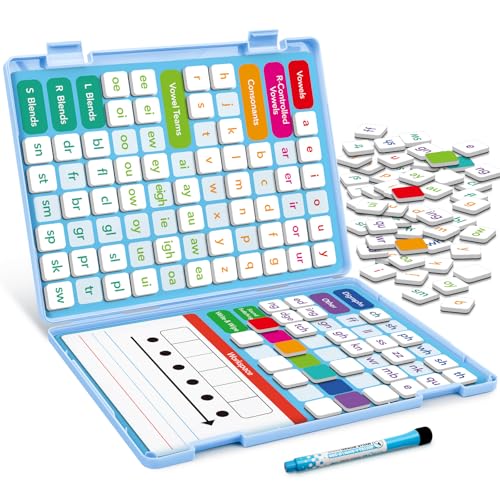
- 108 color-coded magnetic phonics pieces
- Includes matching activities and two dry-erase boards
- Supports blending, spelling, and word building
Best For: Tactile kindergarten practice at home or in class
Best Audio-Supported Learning
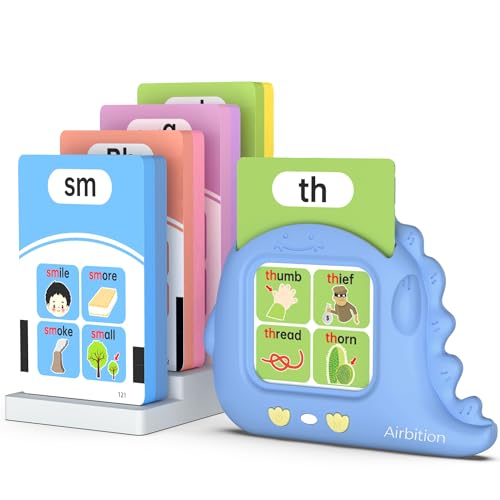
- Reader provides clear spoken pronunciation
- Four levels cover CVC words through silent letters
- Supports independent sound-and-image practice
Best For: Young learners who benefit from audio feedback
Best Vowel-Sound Activity

- 100+ picture pieces and five vowel cups
- Targets short-vowel recognition and phonemic awareness
- Supports sorting, matching, and storytelling games
Best For: Hands-on short-vowel practice for ages 4–7
Hands-On CVC Starter
Wooden CVC Word Spelling Games
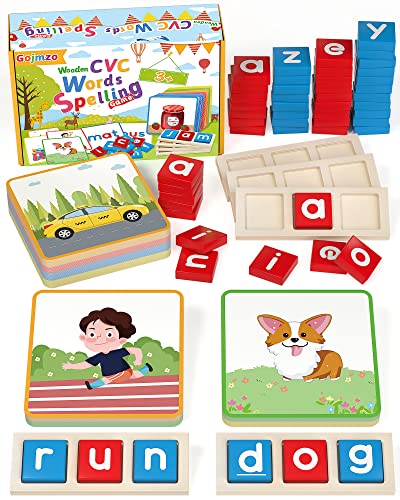
- 50 double-sided CVC flash cards with pictures
- Includes wooden letters, five spelling boards, and storage
- Durable tactile format for preschool through early elementary practice
Best For: Children beginning to blend and spell simple CVC words
Progressive Phonics Practice

- Four levels covering CVCs through silent letters
- Includes 62 cards, sorting rings, words, pictures, and sentences
- Useful for kindergarten through early elementary progression
Best For: Families seeking a structured, expandable card-based phonics resource
Tactile Blending Builder

- Wooden blending board, slider, stylus, and 26 letter tiles
- 50 illustrated cards focus on CVC decoding and spelling
- Multisensory format supports tracing, segmenting, and blending
Best For: Tactile learners starting CVC reading and phonemic-awareness practice
Best with Extra Features

- Builds CVC, CVCC, and CCVC words
- Uses pictures and color-coded letters
- Portable ring-bound, foldable design
Best For: Kindergarten beginners practicing early word patterns
Comprehensive Skill Builder
Award-Winning Phonics Flash Cards

- Covers phonics, prefixes, and suffixes
- Includes games, methods, and quizzes
- Laminated jumbo cards with storage box
Best For: Ages 4–8 needing a versatile home or classroom set
Progressive Reading Practice

- Covers 53 patterns and 320+ words
- Organized into five learning levels
- Builds words through flipping and rhyming
Best For: Interactive phonics practice from preschool through early grades
Best Structured Practice – Spaced-Repetition Phonics Flash Cards
These phonics learning kits for kindergarten are a strong choice for families who want a structured flash-card routine. The set organizes practice across 20 phonogram groups and four difficulty levels, covering CVC words, blends, digraphs, and long-vowel sounds.
Best For: Preschool through second grade learners who benefit from repeated practice, a staged sequence, and a broad selection of reading activities.
Pros:
- Uses a built-in spaced-repetition learning sequence.
- Includes 1,300 words, 240 sentences, and more than 120 phonics items.
- Covers multiple skill levels from preschool through third grade.
- Thick cardboard construction is designed for durability.
Cons:
- Flash cards may offer less hands-on word building than magnetic tiles.
- The large content range may require adult guidance for younger children.
Choose this set when systematic review and extensive phonics coverage matter more than a toy-style activity format. Its staged design makes it suitable for short daily practice sessions that can grow with a child’s skills.
Best Hands-On Word Building – Magnetic Phonics Letter Tiles
For kindergarteners who learn by manipulating letters, these phonics learning kits for kindergarten provide a tactile way to build and spell words. The 108-piece set combines color-coded magnetic tiles, matching activities, dry-erase boards, and a marker.
Best For: Kindergarten classrooms, homeschool settings, and children ages 5–8 who need hands-on practice with sounds, blending, spelling, and word formation.
Pros:
- Includes 108 tiles plus beginning- and ending-sound matching activities.
- Color coding distinguishes vowels, consonants, and blends.
- Two magnetic dry-erase boards support writing and drawing practice.
- Rounded EVA foam tiles are designed for small hands.
Cons:
- Requires setup and storage for the many included pieces.
- Children may need adult support to progress from matching to independent spelling.
This is a practical pick when active word construction is more engaging than passive card review. The combination of tiles, matching mats, and writing surfaces supports several phonics activities in one kit.
Best Audio-Supported Learning – Talking Phonics Flash Cards
These phonics learning kits for kindergarten add audio feedback to picture-based card practice. Children insert cards into the reader to hear a clear standard American-accent voice while working through letters, CVC words, blends, digraphs, long vowels, trigraphs, and silent letters.
Best For: Children ages 3–8 who enjoy independent, sound-and-image learning and need practice with pronunciation, early reading, and spelling.
Pros:
- Provides spoken feedback rather than relying only on printed cards.
- Covers four progressive content levels, from letters and CVC words to silent letters.
- Designed for simple independent use by young children.
- Useful for home, kindergarten, and elementary learning activities.
Cons:
- It is a single electronic reader system rather than a larger manipulatives set.
- The supplied details do not specify battery or charging requirements.
Consider this option if hearing a model pronunciation is important for your child. It offers a more interactive alternative to standard flash cards, though adults may still want to add conversation and writing practice.
Best Vowel-Sound Activity – Phonics Sorter
This phonics sorter is a focused option among phonics learning kits for kindergarten, using picture pieces and five labeled cups to practise short-vowel sounds. Children identify each picture, listen for the vowel sound, and sort the piece into the matching cup.
Best For: Preschool and kindergarten children ages 4–7 who need concrete practice with vowel recognition, phonemic awareness, and early word decoding.
Pros:
- Includes more than 100 picture pieces, five vowel cups, and a learning guide.
- Targets the five short-vowel sounds through sorting and listening.
- Offers additional matching, categorizing, storytelling, and pronunciation activities.
- Supports fine-motor skills, observation, and decision-making.
Cons:
- Focuses primarily on vowel sorting rather than a full phonics curriculum.
- Picture-based play may require adult prompting for accurate sound identification.
This set works well as a targeted supplement when a child needs extra short-vowel practice. Its simple sorting format is easy to introduce and can be extended with oral language and storytelling games.
Hands-On CVC Starter – Wooden CVC Word Spelling Games
For families comparing phonics learning kits for kindergarten, this wooden CVC spelling set offers a tactile way to practice early word building. It combines picture-supported flash cards, lowercase letter blocks, and spelling boards for children who already know basic letter sounds.
Best For: Preschoolers, kindergartners, and first graders beginning CVC word reading and spelling.
Pros:
- Includes 50 double-sided CVC flash cards, 53 wooden letter blocks, and five spelling boards.
- Pictures and color-coded vowels and consonants support multisensory practice.
- Thick laminated cards and sturdy wooden letters are designed for repeated use.
- Comes with a storage box for organizing the components.
Cons:
- Focuses primarily on CVC words rather than a broader progression of phonics skills.
- Letters q, y, and z are not included because they are not used in the card words.
This is a practical choice for hands-on home or classroom practice, especially when a child benefits from physically arranging letters to spell pictured words.
Progressive Phonics Practice – Phonics Flash Cards
Among phonics learning kits for kindergarten, this flash-card set stands out for its staged progression. It starts with kindergarten-level CVC blending and moves through consonant blends, digraphs, long vowels, diphthongs, trigraphs, and silent letters.
Best For: Children ages 4–8 who need a portable card-based path from introductory phonics to more advanced word patterns.
Pros:
- Includes 62 cards, four sorting rings, 480 words and pictures, and 120 sentences.
- Organizes instruction into four difficulty levels and 20 phonogram family groups.
- Covers skills from kindergarten CVC blending through later early-reading patterns.
- Bright pictures and game-based activities can make repeated practice more engaging.
Cons:
- As a cardstock set, it does not provide the tactile letter-building experience of wooden kits.
- The broad skill range may be more material than a beginner needs at once.
This set is a strong fit for caregivers who want one compact resource that can grow with a child from first phonics lessons into more complex decoding practice.
Tactile Blending Builder – CVC Word Magic Phonics Game
For kindergarteners who learn well through touch and movement, this phonics game pairs a wooden blending board with a slider, grooved letter tiles, and picture flash cards. It focuses on segmenting and blending short CVC words while adding letter tracing and spelling practice.
Best For: Children ages 3–6 who are developing phonemic awareness, CVC decoding, spelling, or letter-tracing skills.
Pros:
- Includes 50 double-sided flash cards, 26 beechwood tiles, a blending board, slider, stylus, and storage box.
- Combines building, sliding, blending, and tracing for multisensory practice.
- Color-coded components help distinguish vowels and consonants.
- Designed for one or two players and suitable for home learning activities.
Cons:
- Its curriculum focus is concentrated on CVC words rather than advanced phonics patterns.
- With 26 letter tiles, some words may require rearranging tiles during practice.
This is a compelling option when a child needs an interactive, tactile introduction to decoding rather than passive flash-card review alone.
Best with Extra Features – CVC Phonics Flash Card Kit
For shoppers comparing phonics learning kits for kindergarten, this set focuses on hands-on CVC, CVCC, and CCVC word building. Picture prompts, color-coded vowels and consonants, and ring-bound cards make it practical for short practice sessions at home, in class, or during tutoring.
Best For: Kindergarten learners who need practice with early phonics, short words, and beginning spelling.
Pros:
- Includes 80 double-sided cards and 50 picture-based word-building activities.
- Covers CVC, CVCC, and CCVC patterns while reinforcing vowels and consonants.
- Cards are removable from rings and the foldable format is easy to carry.
- Supports classroom games, homeschool practice, and speech-therapy activities.
Cons:
- The main word-building focus may be less suitable for children ready for more advanced phonics patterns.
- The cards are made of paper rather than a more rigid material.
This is a focused, portable option for building foundational decoding and spelling skills, especially when children benefit from pictures and manipulatives.
Comprehensive Skill Builder – Award-Winning Phonics Flash Cards
This comprehensive choice among phonics learning kits for kindergarten combines letter-sound practice with prefixes, suffixes, quizzes, and games. Jumbo laminated cards, bold print, and a storage box make it well suited to repeated home or classroom use as children progress through early reading skills.
Best For: Ages 4–8 needing a broad phonics and vocabulary resource for home learning, tutoring, or classroom centers.
Pros:
- Includes 122 phonics cards plus 16 prefixes and 16 suffixes.
- Offers six games, six teaching methods, four quiz cards, and a color-coded reference list.
- Jumbo laminated cards have bold print, rounded corners, and an angled sorting corner.
- Designed for independent practice, group activities, and teacher-led instruction.
Cons:
- The broader vocabulary and affix content may be more than a beginning kindergartener needs.
- Its larger scope can require more teacher or parent guidance than a simple CVC set.
Choose this set when flexibility and progression matter more than a narrowly targeted kindergarten activity. Its multiple formats can support learners across several early-grade stages.
Progressive Reading Practice – Read and Rhyme Flip Books
For families seeking phonics learning kits for kindergarten with a clear progression, this flip-book set organizes 320-plus words across five levels. Children can build and read word families while practicing short and long vowels, Magic E, blends, digraphs, and R-controlled vowels.
Best For: Preschool through early elementary learners who enjoy interactive word-family and rhyming activities.
Pros:
- Provides 40 flip books covering 53 phonics patterns and more than 320 words.
- Progresses from CVC and short vowels to long vowels, blends, digraphs, and R-controlled vowels.
- Flip-and-build format encourages matching, word creation, rhyming, and decoding.
- Includes visual support and high-frequency words for vocabulary and recognition practice.
Cons:
- The full five-level range may be too advanced for children just beginning letter-sound work.
- The set contains many books, so organizing and selecting the appropriate level may take adult guidance.
This is a strong fit for learners who respond to interactive materials and need a resource that can grow from pre-K practice into early elementary phonics work.
How We Picked These Phonics Learning Kits for Kindergarten
We selected products that support core kindergarten reading skills: letter-sound recognition, blending, segmenting, rhyming, CVC word building, vowel sounds, digraphs, sight words, and early spelling. We also considered whether each kit offers hands-on practice, clear visual cues, repeatable activities, and a progression suitable for young learners.
Because children learn differently, this list includes several formats rather than treating one teaching method as universally best. Flash cards can provide quick repetition, while magnetic letters, wooden games, sorting activities, and flip books give children more opportunities to manipulate sounds and words.
Quick Comparison
- Best for short daily drills: Phonics and sight-word flash cards.
- Best for hands-on word building: Magnetic letter tiles and wooden CVC spelling games.
- Best for vowel practice: Vowel sorting activities.
- Best for independent repetition: Talking flash cards and self-guided learning tools.
- Best for word families and rhyming: Flip books and read-and-rhyme sets.
- Best for broader vocabulary: Flash-card systems covering prefixes, suffixes, and CVC words.
Key Buying Factors for Phonics Learning Kits for Kindergarten
Skill Coverage
Start with the skill your child needs most. Beginners may benefit from alphabet sounds and simple CVC words, while progressing readers may need blends, digraphs, long vowels, word families, or sight words. A kit with too much advanced material can feel frustrating, so check the recommended age and progression.
Hands-On Design
Moveable letters, sorting pieces, flip pages, and spelling boards encourage active learning. These formats are especially useful for children who learn better by touching and rearranging materials rather than reviewing cards passively.
Practice Length and Flexibility
Look for activities that can be completed in five to fifteen minutes. Short, repeatable sessions are usually easier to maintain than long lessons. Kits with multiple game formats can also help prevent practice from becoming monotonous.
Durability and Storage
Kindergarten materials are handled frequently, so sturdy cards, thick pieces, readable printing, and a practical storage solution matter. Avoid sets with tiny components if they will be used around younger siblings.
Adult Guidance
Some kits are designed for parent-led instruction, while others provide more independent practice. Consider whether you want built-in audio, suggested activities, answer guidance, or a simple open-ended resource for creating your own games.
Who Should Buy Which Phonics Learning Kits for Kindergarten?
Choose flash cards for families wanting portable, structured review. Magnetic tiles or wooden CVC games are better for children who enjoy building and manipulating words. Vowel sorters suit learners who need focused sound discrimination, while flip books work well for rhyming and word-family practice. Talking cards may appeal to families seeking audio reinforcement, and broader vocabulary sets are useful when a child is ready to connect phonics with more advanced word patterns.
Whichever format you choose, use the kit alongside read-alouds, decodable books, conversation, and frequent encouragement. The best Phonics Learning Kits for Kindergarten are those that match your child’s current level and make repeated practice feel achievable.