If you’re learning healthcare vocabulary, the right book can make medical terms easier to pronounce, remember, and use correctly. The best options balance clear explanations with practice, repetition, and real-world context.
This roundup highlights 10 strong medical terminology books for beginners, busy students, and allied health learners who want a practical study tool, not just a dense reference text.
Best 10 Medical Terminology Books Picks for 2026
Student-Friendly Starter Guide
Medical Terminology: The Best and Most Effective Way to Memorize

- Breaks terms into roots, prefixes, and suffixes
- Includes review quizzes for retention
- Covers major healthcare exam prep needs
Best For: Students who want a clear, practical introduction to medical language
Broad Study and Reference Pick
Medical Terminology For Dummies

- Covers pronunciation, definition, and context
- Includes flash cards, quizzes, and mind maps
- Suited to many healthcare career paths
Best For: Readers who want a friendly, wide-ranging study and reference book
Hands-On Companion Workbook

- Built for repetition and active recall
- Includes multiple exercise formats
- Pairs with the matching textbook
Best For: Students who want practice-heavy review to reinforce terminology
Compact Quick Reference
MEDICAL TERMINOLOGY: A Quick & Easy Reference Book

- Organizes affixes by alphabet and body system
- Includes common medical abbreviations
- Built for fast lookup and review
Best For: Learners who need a compact terminology reference for quick study
Fast-Track Vocabulary Builder
Medical Terminology: A Short Course

- Text/workbook format with frequent practice
- Covers common prefixes, suffixes, and roots
- Includes case studies, flash cards, and quizzes
Best For: New learners who want a streamlined, practice-heavy introduction
Body-Systems Study Companion
Stanfield's Essential Medical Terminology

- Body-systems method with flexible chapter order
- Navigate 2 access adds eBook and practice tools
- Includes term-comparison, pharmacy, and allied health boxes
Best For: Students who want a flexible, body-systems-based textbook with built-in digital practice
Current-Content Course Text
Medical Terminology for Health Professions

- Focuses on prefixes, suffixes, and root words
- Includes interactive activities and real-life scenarios
- Updated with current health care topics and terms
Best For: Health professions students who want an up-to-date, comprehensive terminology course text
Busy Student Study Guide
Medical Terminology for Busy Students

- Mnemonic-based learning for easier recall
- Pronunciation drills plus scenario practice
- Compact, structured study guide for busy schedules
Best For: Healthcare students who want a practical, time-efficient study aid
Quick Reference Textbook
Quick & Easy Medical Terminology

- Programmed learning with immediate feedback
- Strong anatomy and word-building focus
- Companion Evolve resources for extra practice
Best For: One-semester students and self-study learners who want structured practice
Roots and Systems Guide
The Complete Idiot's Guide to Medical Terminology
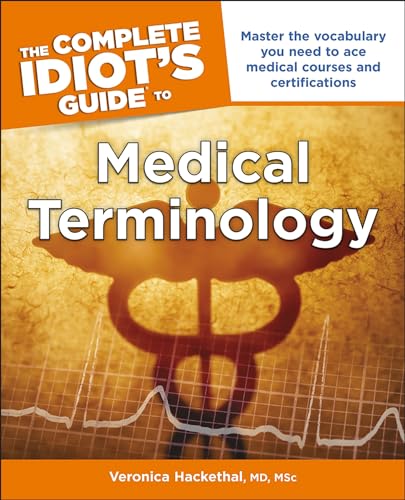
- Greek and Latin roots explained clearly
- Terminology organized by body system
- Covers common diseases, tests, and procedures
Best For: Beginners who want a broad, root-based introduction to medical language
Student-Friendly Starter Guide – Medical Terminology: The Best and Most Effective Way to Memorize
If you want medical terminology books that make the subject feel manageable, this guide takes a straightforward, step-by-step approach. It breaks terms into prefixes, suffixes, and root words, uses simple explanations and charts, and includes review questions to help you retain what you learn for exams and clinical work.
Best For: EMT, paramedic, premed, nursing, medical assistant, and other healthcare students who want a practical foundation in medical language.
Pros:
- Explains medical terms by breaking them into prefixes, suffixes, and root words
- Includes multiple-choice quizzes for review and retention
- Useful for a wide range of exams, including NCLEX, MCAT, HESI, TEAS, and coding certifications
- Designed for students who want a clear, fast, easy-to-retain study guide
Cons:
- At 164 pages, it is shorter than many more comprehensive reference books
- Works best as a focused study guide rather than an all-in-one encyclopedia
Overall, this is a strong pick if you want a medical terminology book that prioritizes clarity and retention over dense textbook detail. It is especially helpful when you need a practical first resource before moving into heavier course material.
Broad Study and Reference Pick – Medical Terminology For Dummies
Among medical terminology books, this title stands out for readers who want a broad, friendly reference with plenty of ways to study. It explains how to identify, pronounce, define, and use medical words in context, while also suggesting flash cards, quizzes, mind maps, games, and other memory tools.
Best For: Current and prospective healthcare professionals who want a roomy, easy-to-use study resource with lots of examples.
Pros:
- Offers multiple study methods, including flash cards, quizzes, mind maps, and games
- Helps readers identify, pronounce, define, and apply terms properly
- Large 416-page format gives it a strong reference-book feel
- Written for a wide range of medical and adjacent healthcare roles
Cons:
- Heavier and larger than a compact quick-reference guide
- May feel more detailed than needed if you only want a rapid refresher
This is a solid option if you want a more expansive medical terminology book that supports both study and reference use. It is especially appealing for learners who prefer extra examples and a variety of memorization tools.
Hands-On Companion Workbook – Medical Terminology Workbook
If you are comparing medical terminology books and want active practice, this workbook is built for repetition and recall. It pairs well with the matching textbook and uses varied exercises like matching, fill-in-the-blank, true/false, picture labeling, and crosswords to help reinforce the language of medicine.
Best For: Students who already have the main textbook and want hands-on practice for exam confidence.
Pros:
- Focuses on active recall and repeated practice instead of passive reading
- Includes a mix of exercises: matching, fill-in-the-blank, MCQs, true/false, labeling, and crosswords
- Designed to pair with the companion textbook for deeper retention
- Useful for nursing, EMT, paramedic, medical assistant, and coding-related study paths
Cons:
- Works best as a companion, not a stand-alone teaching book
- Shorter format may not be enough if you need full explanations from scratch
This workbook is a smart buy for learners who know they need practice to remember terms under pressure. It complements a core textbook well and helps turn study time into active skill-building.
Compact Quick Reference – MEDICAL TERMINOLOGY: A Quick & Easy Reference Book
This is one of the more practical medical terminology books if you want a compact reference that is easy to flip through during study sessions. It organizes Greek and Latin affixes, common abbreviations, and anatomical reference terms so you can quickly find what you need while preparing for exams or refreshing your memory.
Best For: Students and healthcare learners who want a fast reference for exams, abbreviations, and terminology basics.
Pros:
- Provides a refresher on Greek and Latin affixes
- Lists affixes alphabetically and again by body system
- Includes common medical abbreviations and body position terms
- Compact size makes it easy to use as a shelf reference
Cons:
- More of a reference aid than a full teaching text
- May not offer enough depth for learners who need extensive practice
For buyers who want a quick, reliable terminology reference, this book fits the role well. It is especially useful when speed and easy lookup matter more than long-form instruction.
Fast-Track Vocabulary Builder – Medical Terminology: A Short Course
If you want medical terminology books that help you build usable vocabulary quickly, this short course keeps the focus on the basics. It emphasizes the most common prefixes, suffixes, and word roots, and the text/workbook format adds practice on nearly every page so you can reinforce what you learn right away.
Best For: New learners who want a streamlined, practice-heavy introduction to medical terminology.
Pros:
- Focuses on essential prefixes, suffixes, and word roots without extra filler.
- Text/workbook approach includes exercises, labeling, and pronunciation practice.
- Case studies, vignettes, and physician-note activities connect terms to real use.
- Includes Evolve tools like flash cards, quizzes, and animations for review.
Cons:
- Prioritizes core vocabulary over deeper background detail.
- Best suited to structured study rather than casual browsing.
Overall, this is a practical pick if you want a concise, hands-on path to learning medical terminology quickly and retaining it through repetition.
Body-Systems Study Companion – Stanfield's Essential Medical Terminology
For shoppers comparing medical terminology books, this edition offers a flexible body-systems approach with enough detail for health professions students at different levels. It also adds access to Navigate 2, which includes an interactive eBook, practice activities, assessments, and instructor resources, making it a strong option for course-based study.
Best For: Students who want a flexible, body-systems-based textbook with built-in digital practice.
Pros:
- Body-systems format can be used in order or in a flexible sequence.
- Includes access to an interactive eBook, practice activities, and assessments.
- Helpful boxes compare confusing terms, pharmacy terms, and allied health roles.
- Full-color photos and illustrations support visual learning.
Cons:
- Requires navigating digital access features for the full package.
- May be more textbook-oriented than a quick standalone reference.
This is a solid choice if you want a course-friendly medical terminology book that blends structured chapters with digital study tools and instructor support.
Current-Content Course Text – Medical Terminology for Health Professions
Medical Terminology for Health Professions, Spiral bound Version (MindTap Course List)
Check Price On AmazonIf you need medical terminology books focused on current health care vocabulary, this ninth edition is built around word parts, pronunciation practice, and real-world application. It emphasizes common prefixes, suffixes, and root words while adding interactive activities and up-to-date coverage of topics that matter in today’s clinical settings.
Best For: Health professions students who want an up-to-date, comprehensive terminology course text.
Pros:
- Centers on word parts to make complex terms easier to memorize.
- Includes interactive activities, real-life scenarios, and critical thinking exercises.
- Updated with coverage of gender identity, COVID-19, advanced directives, and more.
- Spiral bound format may be convenient for classroom or desk use.
Cons:
- At 672 pages, it is more extensive than a quick-reference title.
- Digital MindTap features are available separately as part of the course solution.
This is a strong choice if you want a thorough, current medical terminology text that supports both memorization and practical classroom learning.
Busy Student Study Guide – Medical Terminology for Busy Students
If you want medical terminology books that make studying feel more manageable, this guide takes a practical, bite-sized approach. It leans on mnemonics, pronunciation drills, and scenario-based review so you can build recall without relying on rote memorization.
Best For: Healthcare students and busy learners who want a structured, time-efficient way to study and remember medical terms.
Pros:
- Uses step-by-step mnemonics to make difficult terms easier to recall.
- Includes pronunciation drills for clearer speaking in class and clinical settings.
- Offers guided review labs and realistic clinical scenarios for practical practice.
- Built around a system-based roadmap that connects terminology to anatomy and physiology.
Cons:
- At 138 pages, it is more of a focused study guide than an all-in-one reference.
- Best suited to learners who want drills and structure, not a dense textbook format.
This is a strong pick if you learn best with short, repeated practice and memory aids. It looks especially useful for turning scattered study time into productive review sessions.
Quick Reference Textbook – Quick & Easy Medical Terminology
Among medical terminology books, this one stands out for its clear, concise, and highly structured approach. It uses small chunks of information followed by immediate review, which makes it a good fit for one-semester courses and self-study.
Best For: Students taking a short medical terminology course or anyone who wants a textbook with built-in practice and feedback.
Pros:
- Programmed learning format gives immediate feedback after each section.
- Strong focus on basic word-building skills helps with learning new terms quickly.
- Includes integrated review exercises to reinforce retention.
- Evolve resources add games, audio terms, animations, and extra practice.
Cons:
- Its 496-page length and textbook style may feel heavier than a quick reference guide.
- Best value comes if you use the companion digital resources alongside the book.
This is a dependable choice if you want a mainstream course text with lots of reinforcement built in. The combination of reviews, visuals, and online tools makes it especially practical for consistent study.
Roots and Systems Guide – The Complete Idiot's Guide to Medical Terminology
If you prefer medical terminology books that explain the logic behind the language, this guide focuses on Greek and Latin roots, body systems, and common clinical terms. It is designed to help readers build a foundation they can use to decode unfamiliar vocabulary in healthcare courses and certification prep.
Best For: Beginners in healthcare who want a broad, root-based introduction to medical language.
Pros:
- Explains Greek and Latin roots, the building blocks for understanding terms.
- Organizes terminology by body systems to keep vocabulary in context.
- Covers diseases, injuries, conditions, tests, and procedures.
- Long 615-page format gives room for a wide-ranging overview.
Cons:
- Published in 2013, so it may feel less current than newer editions.
- The broad scope may be more than some readers need for a single course.
This is a solid foundation book if you want to understand how medical terms are built rather than just memorize them. Its system-based approach should help readers connect vocabulary to real coursework and exams.
How We Picked the Best Medical Terminology Books
We focused on books that are easy to follow, accurate, and useful for self-study or course support. Priority went to titles with strong definitions, pronunciation help, study exercises, mnemonic aids, and clear coverage of anatomy, abbreviations, and common word parts.
We also looked for options that fit different learning styles, from quick-reference guides to more structured textbooks and workbooks. For Medical Terminology Books, clarity and repetition matter more than flashy features.
Quick Comparison: What Matters Most
Some books are built for fast lookup, while others are better for building long-term recall. A workbook or course-style text is ideal if you need active practice. A short course or reference book works better if you want a compact overview. If you’re balancing classes, work, and exams, choose a title with pronunciation drills, review questions, and plenty of examples.
Key Buying Factors for Medical Terminology Books
Coverage and Depth
Check whether the book covers prefixes, suffixes, roots, body systems, abbreviations, and common procedures. Beginners usually benefit from broader coverage, while advanced learners may prefer a tighter, faster review.
Practice Features
Exercises, flashcard-style repetition, answer keys, and mnemonic devices can significantly improve retention. If you’re studying independently, these features are especially valuable.
Readability
The best Medical Terminology Books explain concepts in plain language without overwhelming jargon. Look for clean layouts, strong organization, and examples that show how terms are used in context.
Format and Use Case
Spiral-bound books, workbooks, and compact references can be easier to use on the go or during class. Larger textbooks may be better if you want a more complete learning resource.
Who Should Buy Which Medical Terminology Books?
Choose a beginner-friendly book if you’re new to healthcare or taking your first terminology course. Pick a workbook if you learn best by doing. Go with a concise reference if you need quick refreshers during clinical training or on the job. Students preparing for exams or certifications should prioritize books with drills, review questions, and pronunciation support.
In short, the best choice depends on whether you need a study companion, a classroom text, or a fast reference tool. Matching the book to your workload and learning style will help you get the most value from your purchase.