If you want to start smarter, scale faster, and avoid common founder mistakes, the right entrepreneurship books can save you time, money, and stress.
This roundup focuses on practical, high-value reads for early-stage founders, small-business owners, and anyone building a business with limited resources.
Best 10 Entrepreneurship Books Picks for 2026
Cash Flow Fix
Cash-First Profitability System

- Flips the usual profit formula to prioritize profit first.
- Built around simple rules and bank-balance management.
- Includes case studies and step-by-step guidance.
Best For: Small business owners who need a practical way to improve profitability.
Startup Strategy

- Argues for creating new markets instead of copying others.
- Promotes independent thinking and contrarian strategy.
- Focused on innovation and long-term value creation.
Best For: Founders who want a fresh perspective on startup strategy.
Execution System

- Introduces the Entrepreneurial Operating System.
- Helps address conflict, profit, and decision-making issues.
- Built for focus, growth, and stronger execution.
Best For: Business owners who want a simple system for better execution.
Validated Learning

- Focuses on validated learning and rapid experimentation.
- Helps reduce waste and shorten development cycles.
- Useful for startups and larger companies alike.
Best For: Entrepreneurs who want an experiment-driven approach to building products.
Deep-Dive Leadership Pick
The Hard Thing About Hard Things

- Straight talk on startup management challenges
- Covers firing friends, poaching competitors, and CEO mindset
- Based on Ben Horowitz's founder and investor experience
Best For: Founders and startup leaders facing tough operational decisions
Systems-and-Operations Pick
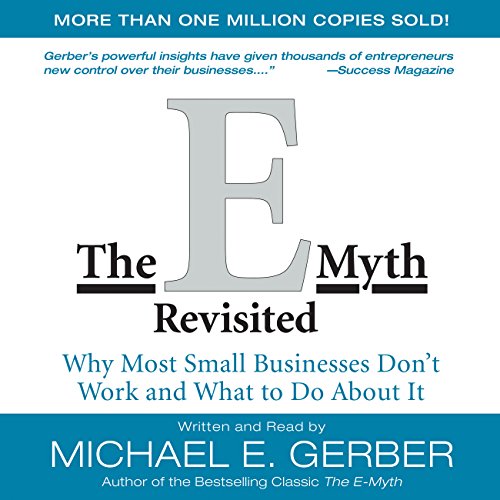
- Explains why many small businesses struggle
- Shows the difference between working in and on the business
- Applies franchising lessons to broader business models
Best For: Small business owners building a more scalable operating system
Startup Primer Pick

- Covers launch, funding, strategy, and growth basics
- Includes research-based advice from HBR contributors
- Structured as a step-by-step business reference
Best For: First-time founders wanting a comprehensive startup guide
Strategic Growth Pick

- Five-move business strategy framework
- Focuses on clarity and leverage
- Useful for founders and executives
Best For: Entrepreneurs who want a practical strategic mindset
Fast-Track Startup Pick

- One-year roadmap to first sales
- Covers product, funding, and advertising
- Built for product-based founders
Best For: New entrepreneurs who want a direct launch plan
Mindset and Leadership Pick

- 33 laws for business and life
- Grounded in psychology and science
- Draws from interviews with top performers
Best For: Readers seeking mindset-driven entrepreneurship lessons
Cash Flow Fix – Cash-First Profitability System
If you’re comparing entrepreneurship books for a small business that feels tight on cash, Profit First offers a practical, behavior-based system. Instead of relying on the usual “sales minus expenses” approach, it flips the formula to help you prioritize profit first and manage expenses with what remains.
Best For: Entrepreneurs and small business owners who want a simple, hands-on way to improve profitability and control cash flow.
Pros:
- Uses a counterintuitive but easy-to-follow cash management model.
- Focuses on bank account balances, which can simplify day-to-day decisions.
- Includes case studies and step-by-step advice for practical implementation.
- Written with a clear, approachable tone and a sense of humor.
Cons:
- Centers on financial management more than broader startup strategy.
- May feel unconventional if you prefer standard accounting logic.
Overall, this is a strong pick if your priority is getting a better grip on profit and cash flow right away. It’s especially useful for owners who want an actionable system rather than abstract entrepreneurship theory.
Startup Strategy – Build Something Unique
For readers browsing entrepreneurship books that challenge standard startup advice, Zero to One stands out with a contrarian view of innovation. Peter Thiel argues that real progress comes from creating something new, not from copying what already exists, making this a strong choice if you want a big-picture framework for building a distinctive business.
Best For: Founders and aspiring entrepreneurs who want a fresh perspective on innovation, competition, and long-term value creation.
Pros:
- Offers a fresh, original take on startup strategy and value creation.
- Encourages independent thinking and looking for untapped opportunities.
- Focuses on building unique businesses rather than competing in crowded markets.
- Draws on the experience of a well-known entrepreneur and investor.
Cons:
- More conceptual than step-by-step operational guidance.
- Best suited to readers interested in strategy and innovation, not daily business systems.
If you want entrepreneurship guidance that pushes you to think differently about markets and progress, this is a compelling read. It’s especially valuable for founders who want to avoid imitation and aim for truly novel ideas.
Execution System – Run Your Company Better
If you’re shopping for entrepreneurship books that help you run the business you already have, Traction is a practical option. It introduces the Entrepreneurial Operating System, a straightforward framework aimed at reducing frustration, improving execution, and helping leadership teams get aligned around the six key components of a company.
Best For: Business owners and leadership teams who want a simple operating system for better focus, execution, and growth.
Pros:
- Provides a practical method for organizing and running a business.
- Targets common pain points like personnel conflict, profit issues, and stalled decisions.
- Focuses on the six key components of a healthy company.
- Designed to help teams gain more focus and enjoyment in operations.
Cons:
- Geared more toward implementation than big-picture startup ideation.
- May be most useful for teams ready to adopt a structured operating system.
In short, this book is a solid fit if your main challenge is execution rather than inspiration. It gives entrepreneurs a concrete framework for making business management more consistent and less chaotic.
Validated Learning – Test, Learn, Adapt Fast
Among entrepreneurship books focused on building smarter, The Lean Startup is a classic guide to reducing waste and uncertainty. Eric Ries shows how entrepreneurs can use validated learning, rapid experimentation, and measurable progress to create products and businesses that adapt quickly to real customer needs.
Best For: Entrepreneurs and product builders who want a disciplined, experiment-driven approach to launching and improving ideas.
Pros:
- Teaches a systematic way to test ideas under uncertainty.
- Emphasizes validated learning over vanity metrics.
- Helps shorten product development cycles through rapid experimentation.
- Applicable to startups and larger companies that need to innovate.
Cons:
- Leans heavily toward product development and startup iteration.
- May feel less useful if you want a broader business-operations manual.
This is a strong choice if you want a practical framework for learning what customers actually want before overcommitting. It’s especially helpful for entrepreneurs who value testing, adapting, and improving as they go.
Deep-Dive Leadership Pick – The Hard Thing About Hard Things
The Hard Thing About Hard Things: Building a Business When There Are No Easy Answers
Check Price On AmazonIf you’re comparing entrepreneurship books for the messy reality of running a startup, this one leans hard into the problems most guides skip. Ben Horowitz focuses on the difficult decisions that come after launch, drawing on hands-on experience building, managing, investing in, and overseeing technology companies.
Best For: Founders and startup leaders who want candid, practical advice on handling the toughest operational and leadership challenges.
Pros:
- Offers straight talk on problems business school often leaves out.
- Covers real leadership issues like firing friends and cultivating a CEO mindset.
- Draws from the author’s experience as a founder, investor, and operator.
- Uses humor and rap lyrics to reinforce key business lessons.
Cons:
- Focused more on hard-won management lessons than on startup basics.
- Best suited to readers already dealing with the pressures of running a business.
Overall, this is a strong pick if you want entrepreneurship books that speak honestly about the day-to-day reality of leadership. It is especially useful when the easy answers are gone and you need a practical framework for difficult calls.
Systems-and-Operations Pick – The E-Myth Revisited
The E-Myth Revisited: Why Most Small Businesses Don't Work and What to Do About It
Check Price On AmazonFor readers sorting through entrepreneurship books, this classic is all about why small businesses struggle and how to build them more deliberately. Michael Gerber emphasizes the difference between working in your business and working on your business, then shows how franchising principles can apply to many kinds of companies.
Best For: Small business owners who need a clearer operating system and want to build a more predictable business.
Pros:
- Explains why many small businesses fail to work as intended.
- Highlights the crucial shift from doing the work to designing the business.
- Applies franchising lessons to non-franchise businesses.
- Walks through business stages from infancy to mature perspective.
Cons:
- More conceptual and framework-driven than tactical.
- May feel less focused on modern startup fundraising or tech-specific topics.
This is a valuable choice if you want entrepreneurship books that help you think structurally about your company. Its main strength is showing how to move from owner-operator mode to a more scalable business mindset.
Startup Primer Pick – HBR Entrepreneur's Handbook
If you want entrepreneurship books that cover the full startup journey, this handbook is built as a practical primer. It brings together guidance on everything from writing a business plan and securing a first loan to testing assumptions, choosing a legal structure, and developing sales and marketing programs.
Best For: First-time founders and ambitious professionals who want a structured, research-informed guide to launching and growing a new business.
Pros:
- Covers startup essentials from launch through growth.
- Includes concise insights from Harvard Business Review contributors and real companies like Airbnb and eBay.
- Addresses funding, experimentation, business models, and competitive strategy.
- Designed as a step-by-step resource you can use throughout the business lifecycle.
Cons:
- Broad handbook format may not go as deep as a single-topic book.
- More practical and structured than story-driven or highly personal.
This is a strong all-around option for readers who want a clear, organized introduction to entrepreneurship books. It works especially well if you need one reference that covers the core decisions a new business has to make.
Strategic Growth Pick – Your Next Five Moves
If you want entrepreneurship books that focus on clearer decision-making and business strategy, this one is built for founders who need direction. Patrick Bet-David frames growth like a chess game, helping you think ahead, sharpen your priorities, and make stronger moves when your business hits a wall.
Best For: Entrepreneurs, executives, and strategists who want a practical framework for thinking several steps ahead.
Pros:
- Teaches a five-move strategy model for business planning.
- Focuses on clarity, leverage, and team building.
- Includes growth tactics for both good times and bad.
- Draws on the author’s own rise as a CEO.
Cons:
- Leans more toward strategy than step-by-step execution.
- May fit best after you already have a business to steer.
Overall, this is a strong pick if you want an entrepreneurship book that helps you reason more clearly and plan beyond the immediate next step.
Fast-Track Startup Pick – 12 Months to $1 Million
Among entrepreneurship books aimed at new founders, this one stands out for its one-year roadmap. Ryan Daniel Moran lays out a clear process for finding a winning product, getting to first sales, and building toward a seven-figure business with a simple stage-by-stage plan.
Best For: Brand-new entrepreneurs and product-based founders who want a direct plan for launching and scaling quickly.
Pros:
- Breaks the year into three clear growth stages.
- Explains how to identify a winning product and target buyers.
- Includes funding, advertising, and scaling guidance.
- Aims at building a real, sustainable online business.
Cons:
- Most useful if you’re pursuing a product-based business model.
- The pace may feel intense for cautious planners.
If you want a highly structured entrepreneurship book with a defined timeline, this is a strong choice for moving from idea to launch and beyond.
Mindset and Leadership Pick – The Diary of a CEO
If you’re comparing entrepreneurship books that blend business and personal development, this title brings a psychology-driven angle. Steven Bartlett draws from his own journey and interviews with top performers to present 33 laws designed to help readers build something great or become someone great.
Best For: Readers who want entrepreneur lessons rooted in psychology, behavioral science, and real-world examples.
Pros:
- Combines business and life principles in one framework.
- Uses psychology and behavioral science as the foundation.
- Draws on the author’s experience and podcast interviews.
- Positioned as a broad playbook for excellence and potential.
Cons:
- Less focused on a specific startup process or revenue plan.
- May appeal more to mindset readers than tactical operators.
This is a strong entrepreneurship book if you want lessons that go beyond tactics and emphasize how success is shaped by principles, habits, and self-mastery.
How We Picked These Entrepreneurship Books
We prioritized books that offer actionable frameworks, clear business lessons, and strong relevance for founders at different stages. The list balances startup strategy, execution, cash flow, operations, leadership, and mindset so readers can choose based on their current business challenge.
We also favored titles with lasting credibility, broad reader usefulness, and guidance that can be applied without a large team or advanced business background.
Quick Comparison of the 10 Books
Some of these Entrepreneurship Books are best for idea-stage founders, while others are better for operators trying to improve traction, profitability, or strategic decision-making. A few focus on startup growth and innovation, while others lean into systems, sales, or personal leadership.
If you need help validating a startup idea, choose books centered on experimentation and product-market fit. If your priority is profit and stability, look for books that address cash flow, pricing, and operational discipline.
Key Buying Factors for Entrepreneurship Books
Stage of Business
Match the book to your stage. New founders may benefit most from books on startup basics, validation, and early traction. Established owners often need help with systems, delegation, and profitability.
Type of Advice
Some books are strategic and conceptual, while others are highly tactical. If you want immediate takeaways, choose books with frameworks, checklists, and repeatable methods rather than purely inspirational content.
Focus Area
Think about your biggest bottleneck: cash flow, growth, leadership, marketing, operations, or product development. The best Entrepreneurship Books usually solve one primary problem well instead of trying to cover everything.
Readability and Application
Strong business books should be easy to revisit and apply in real time. Look for clear structure, memorable principles, and examples that fit modern entrepreneurship rather than outdated theory.
Who Should Buy Which Entrepreneurship Books?
First-time founders should start with books that explain startup fundamentals, business model thinking, and execution. Solopreneurs and small-business owners may get more value from books on profitability, systems, and repeatable processes. Growth-focused readers should choose titles that sharpen strategy, traction, and decision-making.
If you want a well-rounded reading list, mix one book for strategy, one for operations, and one for financial discipline. That combination gives you a more complete toolkit than choosing only one style of entrepreneurship book.