The best marble runs for classrooms turn open-ended play into practical lessons about gravity, motion, sequencing, engineering, and problem-solving. This roundup compares magnetic tiles, construction sets, motorized designs, glow-in-the-dark options, and literacy-focused trays.
Use the buying guide below to match each format to your students, available space, supervision needs, and lesson goals.
Best 10 Marble Runs for Classrooms Picks for 2026
Best All-Around Classroom Builder
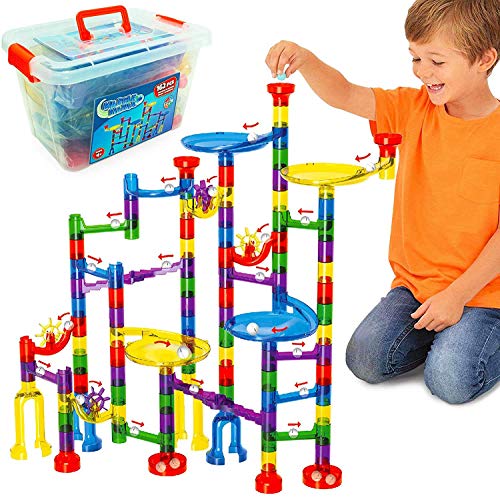
- 90 building pieces and 72 marbles
- Translucent parts show marble paths
- Includes guidebook and storage tub
Best For: Ages 4+, construction centers, and open-ended group play
Best Early Literacy Pick
Lowercase Letter Marble Tracers

- 26 lowercase letter trays
- Guided tracks support letter formation
- Includes 10 marbles and activity guide
Best For: Preschool handwriting and alphabet-learning centers
Best Magnetic STEM Set
Tumble Trax Magnetic Marble Run
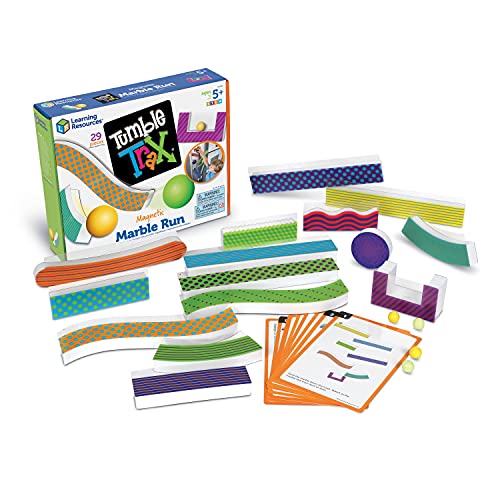
- Foam pieces attach to magnetic surfaces
- Includes activity cards and challenges
- Explores gravity, momentum, and cause and effect
Best For: Ages 5–10 and interactive whiteboard STEM activities
Best Advanced Physics Project

- 80-piece construction set
- Includes 15 glow-in-the-dark glass marbles
- Guide covers motion and aerodynamics
Best For: Ages 8+ and supervised physics-focused projects
Best Magnetic Classroom Pick
PicassoTiles 100-Piece Marble Run
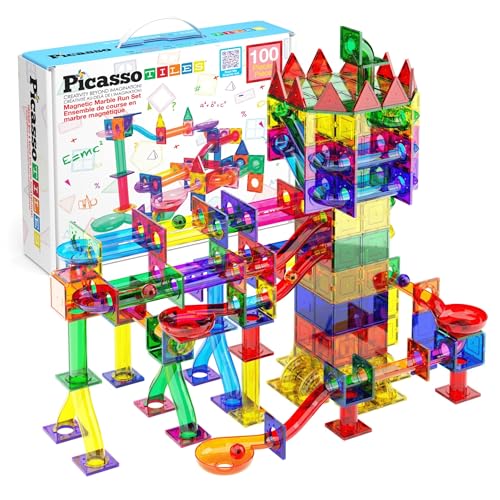
- Magnetic, open-ended construction
- Includes five steel marbles
- Compatible with PicassoTiles sets
Best For: Preschool and early elementary STEM centers
Best Advanced STEM Challenge
National Geographic Motorized Marble Run

- Motorized lift for continuous runs
- 150 pieces with 30 marbles
- Includes physics-focused Learning Guide
Best For: Older elementary STEM activities and clubs
Best Glow-in-the-Dark Value
JOYIN 150-Piece Glowing Marble Run

- 150-piece translucent construction set
- Includes five glow-in-the-dark glass marbles
- Supports creativity and problem-solving
Best For: Ages 3–10 creativity and STEM stations
Best Magnetic Starter
PicassoTiles 50-Piece Magnetic Marble Run

- Magnetic, BPA-free construction
- Supports early STEM and spatial skills
- Compatible with other PicassoTiles sets
Best For: Small-group STEM activities with younger learners
Best for High-Energy Group Play
JOYIN 236-Piece Glow Marble Run

- Includes a motorized elevator
- Comes with glow and classic marbles
- Large 236-piece assortment for varied builds
Best For: Collaborative classroom construction and interactive demonstrations
Best for Flexible Learning Stations
MaxTronic 110-Piece Marble Maze

- Includes 50 building pieces and 60 marbles
- Supports varied age-level STEM activities
- Open-ended designs encourage problem-solving
Best For: Mixed-age stations focused on design and logical thinking
Best All-Around Classroom Builder – 162-Piece Marble Run
For classrooms seeking versatile marble runs for classrooms, the Marble Mania set offers a large collection of construction pieces, marbles, and storage in one package. Its translucent components let children follow each marble, while the included guidebook provides a starting point for building.
Best For: Ages 4 and up, collaborative construction centers, and open-ended STEM-style play.
Pros:
- Includes 90 building pieces and 72 marbles for varied designs.
- Translucent pieces make the marble’s path easy to observe.
- Storage tub keeps the set organized between classroom sessions.
- Guidebook includes four suggested marble runs.
Cons:
- The large number of pieces may require sorting before use.
- Glass marbles may need closer supervision with younger children.
This is a strong general-purpose option when a classroom wants plenty of materials for repeated building, testing, and redesigning. The storage tub is especially useful for keeping a shared activity center manageable.
Best Early Literacy Pick – Lowercase Letter Marble Tracers
For preschool classrooms using marble runs for classrooms to support handwriting, MarbleTracers turns marble play into guided lowercase-letter practice. Each tray includes molded stroke tracks, starting dots, and printed baselines to reinforce letter formation.
Best For: Preschool and kindergarten centers focused on alphabet recognition, pre-writing, and fine motor development.
Pros:
- Includes 26 lowercase alphabet trays and 10 white marbles.
- Built-in guides support stroke order and letter formation.
- Combines tactile, visual, and movement-based learning.
- Activity guide provides structured practice ideas.
Cons:
- Designed for letter tracing rather than open-ended track construction.
- Only 10 marbles are included for the full set of trays.
This is a specialized choice rather than a traditional marble maze. It fits classrooms that want a focused, hands-on literacy activity with a marble-play element.
Best Magnetic STEM Set – Tumble Trax Magnetic Marble Run
Tumble Trax is a practical choice for marble runs for classrooms where teachers want quick setup and visible cause-and-effect demonstrations. Foam magnetic track pieces attach to refrigerators, whiteboards, and other magnetic surfaces, making it easy to redesign tracks during STEM activities.
Best For: Ages 5–10, whiteboard demonstrations, magnetic-surface activities, and guided STEM challenges.
Pros:
- Magnetic pieces attach securely to compatible surfaces.
- Activity cards introduce maze and track challenges.
- Supports exploration of gravity, momentum, and cause and effect.
- Redesigning tracks encourages planning and problem solving.
Cons:
- Requires a suitable magnetic surface for the intended play format.
- The supplied notes do not specify the number of track pieces or marbles.
This set stands out for classroom demonstrations because tracks can be placed at eye level on a whiteboard or other magnetic surface. It is well suited to short challenges, testing, and redesign rather than a large tabletop build.
Best Advanced Physics Project – Glowing Marble Run
For older students, this National Geographic set adds glow-in-the-dark glass marbles to a sturdier construction experience. It is one of the more visually engaging marble runs for classrooms, with a learning guide covering motion, aerodynamics, and construction experiments.
Best For: Ages 8 and up, advanced building projects, physics demonstrations, and supervised evening or dim-light activities.
Pros:
- Includes 45 track pieces, five bases, and 15 action pieces.
- 15 glow-in-the-dark glass marbles add visual interest.
- Tight-fit pieces are designed to keep constructions together.
- Learning guide includes physics information and experiments.
Cons:
- Recommended for ages 8 and up, limiting use with younger classes.
- Glass marbles require careful handling and supervision.
- Glow effects may be less useful in brightly lit classrooms.
This is a compelling project set for older learners who can connect construction choices with motion and aerodynamics. The storage bag also makes the 80-piece kit easier to collect after a group activity.
Best Magnetic Classroom Pick – PicassoTiles 100-Piece Marble Run
For classrooms seeking hands-on marble runs for classrooms, the PicassoTiles 100-piece set combines magnetic construction with gravity-powered tracks. Students can build slopes, funnels, and U-turns while practicing early physics, spatial reasoning, and problem-solving.
Best For: Preschool and early elementary STEM centers, collaborative building, and classrooms that already use PicassoTiles.
Pros:
- Magnetic tiles support open-ended maze layouts and shared play.
- Includes 100 pieces, curved slopes, funnels, U-turns, and five steel marbles.
- BPA-free, non-toxic, lead-free, CPC certified, and ASTM tested.
- Compatible with other standard-size PicassoTiles sets.
Cons:
- Recommended for ages 3 and up, so it may be less challenging for older students.
- Requires students to construct the track before running marbles.
This is a flexible choice for classrooms prioritizing collaborative construction and age-appropriate STEM exploration. Its magnetic format also makes it easy to expand with compatible PicassoTiles collections.
Best Advanced STEM Challenge – National Geographic Motorized Marble Run
The National Geographic Motorized Marble Run is one of the more advanced marble runs for classrooms, pairing a large 150-piece construction set with a motorized lift. Students can explore motion, physics, engineering, and repeated runs while building increasingly complex marble mazes.
Best For: Elementary classrooms, STEM clubs, and older students who can manage an 8-and-up building challenge.
Pros:
- Motorized spiral lift raises marbles nearly 20 inches for continuous runs.
- Includes 106 construction pieces, 30 marbles, and a 14-piece lift.
- Learning Guide covers physics, motion, and building tips.
- Compatible with National Geographic non-magnetic marble run sets and includes a storage bag.
Cons:
- Recommended for ages 8 and up, limiting its suitability for younger classrooms.
- The motorized lift requires a power source, though the supplied notes do not specify which one.
- Its larger, more complex design may need additional classroom setup time.
Choose this set when the classroom goal is sustained engineering exploration rather than a simple introductory build. The motorized lift adds an engaging way to demonstrate repeated motion and system design.
Best Glow-in-the-Dark Value – JOYIN 150-Piece Glowing Marble Run
For budget-conscious classrooms, the JOYIN 150-piece set offers an engaging option among marble runs for classrooms. Its transparent construction lets students watch the marbles move through the track, while glow-in-the-dark glass marbles add a visual element to STEM building activities.
Best For: Classrooms serving children ages 3 to 10, hands-on creativity stations, and teachers seeking a large non-magnetic building set.
Pros:
- Includes 150 pieces with translucent plastic track components and five glow-in-the-dark glass marbles.
- Transparent parts make marble movement easy to observe.
- Supports creativity, logical thinking, hand-eye coordination, patience, and problem-solving.
- Assembly instructions help introduce building and track design.
Cons:
- Glass marbles may require closer supervision with younger children.
- The set is not described as magnetic, so pieces must be connected manually.
- The supplied notes identify a medium set but do not detail classroom storage features.
This JOYIN set fits classrooms that want a substantial piece count and visible marble action without magnetic tiles. Its broad recommended age range makes it adaptable for mixed early-elementary activities, with appropriate supervision for the glass marbles.
Best Magnetic Starter – PicassoTiles 50-Piece Magnetic Marble Run
For classrooms seeking approachable marble runs for classrooms, the PicassoTiles 50-piece set combines magnetic construction with marble-track play. Its age-3-plus design supports hands-on exploration of basic physics, spatial awareness, and building concepts.
Best For: Small-group STEM activities and younger learners practicing construction, coordination, and creative design.
Pros:
- Strong embedded magnets can help children assemble stable track designs.
- BPA-free plastic with smooth, rounded surfaces is designed for comfortable handling.
- Compatible with PicassoTiles nano and full-sized sets for future expansion.
- Supports fine-motor skills, hand-eye coordination, and spatial reasoning.
Cons:
- At 50 pieces, it offers less building volume than the larger sets in this roundup.
- The manufacturer recommends supervision around marbles for young children.
This is a practical choice when a classroom wants a compact, reusable magnetic set with clear STEM and coordination benefits. Its compatibility with other PicassoTiles sets also makes it easier to build a larger classroom collection over time.
Best for High-Energy Group Play – JOYIN 236-Piece Glow Marble Run
The JOYIN 236-piece set is one of the more feature-rich marble runs for classrooms, with extensive track pieces, a motorized elevator, and glow-in-the-dark marbles. The looping elevator design gives students an engaging way to observe repeated motion and track layouts.
Best For: Larger group activities, collaborative construction, and classrooms looking for an especially interactive marble-run experience.
Pros:
- Includes 236 pieces, including 176 track pieces and multiple marble types.
- Motorized elevator creates a continuous marble-running loop.
- Glow-in-the-dark marbles add an engaging low-light play element.
- Supports hand-eye coordination and parent-child or group interaction.
Cons:
- The motorized elevator adds a component that may require additional setup and management.
- The larger piece count can require more storage and sorting space.
- Marbles require appropriate supervision for younger children.
Choose this set when classroom engagement and repeatable action are priorities. Its large assortment and elevator feature offer plenty of building possibilities, though teachers should plan for organized storage and setup time.
Best for Flexible Learning Stations – MaxTronic 110-Piece Marble Maze
The MaxTronic 110-piece kit gives classrooms a flexible option for introducing marble runs for classrooms across a broad stated age range of 3 to 12. With 50 building pieces, 60 marbles, and an assembly manual, students can create different layouts while practicing problem-solving and spatial thinking.
Best For: Flexible learning stations, mixed-age activities, and lessons focused on track direction, design, and problem-solving.
Pros:
- Includes 50 building pieces and 60 marbles for repeated racing activities.
- Open-ended layouts encourage imagination and problem-solving.
- Designed to support color, number, building, spatial, and logical-thinking activities at different ages.
- Made from solid ABS with smooth edges; the notes cite ASTM certification and CPSIA compliance.
Cons:
- The set requires students to assemble the track, so younger groups may need guidance.
- Its 50-piece construction component is less extensive than the JOYIN set.
- The manufacturer warns that children should not swallow the marbles.
This is a well-rounded classroom pick for teachers who want open-ended building rather than a fixed track. Its broad age range and included manual make it suitable for differentiated activities, provided the marbles are carefully supervised.
How We Picked the Best Marble Runs for Classrooms
We focused on classroom usefulness rather than piece count alone. The selected sets offer different approaches to building and experimentation, including magnetic construction, traditional track pieces, motorized lifts, glow features, storage solutions, and letter-based activities. We also considered age range, group-work potential, cleanup, expandability, and how easily teachers can connect play to STEM or literacy objectives.
For shared use, durability and organization matter as much as creative possibilities. A large set can support several teams, but only if students can sort, rebuild, and store the components efficiently.
Quick Comparison
| Best for | Look for | Recommended format |
|---|---|---|
| Early learners | Large, simple components and clear cause-and-effect | Magnetic tiles or basic construction sets |
| STEM investigations | Multiple track layouts, obstacles, and repeatable testing | Large modular or motorized runs |
| Literacy centers | Letter recognition and guided activity prompts | Letter trays with marbles |
| Small groups | Moderate piece counts and easy sorting | Compact magnetic sets |
| Special events | Visual appeal and high engagement | Glow-in-the-dark or elevator sets |
Key Buying Factors for Marble Runs for Classrooms
Age and Supervision
Check the manufacturer’s age guidance and marble size before purchasing. Smaller marbles may require close supervision, especially in early-childhood settings. Choose larger, simpler components when students need more independent use.
Piece Count and Group Size
For stations or team challenges, select enough pieces for students to build simultaneously. Higher-count sets are useful for larger groups, while smaller kits can reduce sorting time and work well as focused centers.
Construction Style
Magnetic tiles are quick to assemble and encourage frequent redesigns. Clip-together tracks may offer more detailed layouts, while motorized elevators add sustained motion but introduce extra parts, batteries, or troubleshooting.
Learning Goals
Use Marble Runs for Classrooms to explore slope, speed, force, friction, prediction, and iteration. Letter trays can support alphabet practice, spelling, and sequencing alongside physical play.
Storage and Cleanup
A tub or bag is valuable when multiple classes share the materials. Before buying, consider whether pieces can be sorted by type and whether the set will fit your storage shelves or activity bins.
Who Should Buy Which Marble Runs for Classrooms?
Teachers seeking flexible STEM stations should prioritize modular magnetic or traditional construction sets with enough parts for repeated redesigns. Choose a motorized model when you want to demonstrate continuous motion, mechanical transfer, or an attention-grabbing engineering challenge.
For preschool and early elementary classrooms, favor straightforward builds, larger components, and strong adult oversight. Literacy teachers and intervention specialists may prefer a letter-based marble activity that adds movement to alphabet or word-work practice. If engagement is the main priority for an after-school program or family STEM night, glow-in-the-dark sets provide a memorable visual element.
Ultimately, the best choice depends on whether your priority is open-ended construction, guided instruction, group collaboration, or compact center use. Match the set’s complexity to your students and plan a dedicated storage routine from the start.