The best laminated language flash cards make repeated practice easier at home, in classrooms, and during speech or language sessions. Durable cards can handle frequent handling while clear images, words, and sign illustrations support faster recognition.
This roundup compares 10 options across American Sign Language, English-Spanish vocabulary, opposites, nouns, and early language development. Use the guide below to match card size, content, and learning level to your needs.
Best 10 Laminated Language Flash Cards Picks for 2026
Best ASL Starter Set
American Sign Language Flash Cards

- 105 cards covering 122 basic signs
- Illustration and word on opposite sides
- Includes resource card and rounded corners
Best For: Preschool and kindergarten ASL beginners
Best English-Spanish Practice Set
Everyday Words English-Spanish Flash Cards

- 56 full-color double-sided cards
- Supports vocabulary and Spanish pronunciation
- Includes activities, tips, and blank cards
Best For: Bilingual vocabulary practice at home or school
Best Visual Vocabulary Cards
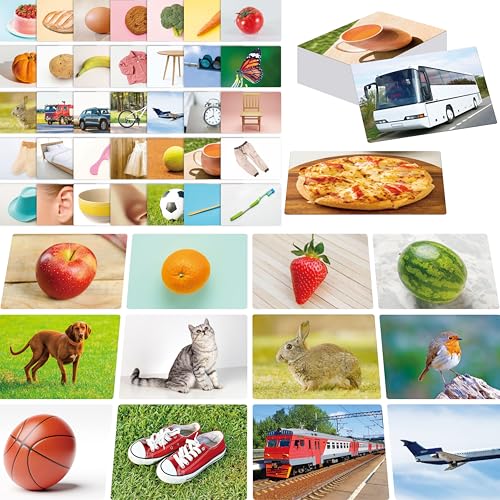
- 50 double-sided noun cards
- Real-life photos paired with written words
- Large format for clear viewing
Best For: Visual vocabulary building and language support
Best Opposites Vocabulary Set
Teacher Created Resources Opposites Flash Cards

- 56 durable double-sided cards
- Includes teaching tips
- Hole-punched for storage and organization
Best For: Focused elementary practice with opposite words
Everyday Vocabulary Pick

- 300 picture-word cards for everyday vocabulary
- Double-sided images and printed words
- Color-coded categories with sturdy cardstock
Best For: Toddlers, speech therapy, ESL, and special learners
Sign Language Classroom Choice

- 56 double-sided sign language cards
- Hole-punched for ring or string storage
- Includes activities, guidance, and blank cards
Best For: Ages 4+ learning sign language at home or school
Speech Therapy Learning Library
Early Learning Language Flash Cards

- 160 photographic vocabulary cards
- Guided questions and language game ideas
- Includes bilingual Spanish text
Best For: Ages 3–6, speech therapy, preschool, and special learners
Most Comprehensive Set

- 500 cards across 10 themed packs
- 350gsm laminated, waterproof cardstock
- Includes rings and a storage box
Best For: Structured ASL learning at home, in classrooms, or in therapy settings
Best Large-Format Option

- 240 cards in five themed packs
- Large 5.71-by-3.94-inch format
- Visual guides explain handshape and movement
Best For: Beginners and group learning where larger cards improve visibility
Best Family-Friendly Set

- Four packs covering everyday beginner topics
- Large colorful cards with matte laminate
- Descriptions and memory hints support repetition
Best For: Young children and families beginning ASL practice together
Best ASL Starter Set – American Sign Language Flash Cards
For families and preschool educators seeking laminated language flash cards, this ASL set offers a hands-on way to practice 122 signs through illustrations, word associations, and everyday categories.
Best For: Preschool and kindergarten learners ages 4 and up who are beginning American Sign Language.
Pros:
- Includes 105 cards covering 122 signs, including the alphabet, numbers 1–20, animals, people, and sight words.
- Double-sided format pairs a colorful signing illustration with the corresponding word.
- Rounded corners make the cards easy to sort and flip.
- Includes a resource card listing the signs and words.
Cons:
- The cards are cardstock rather than explicitly laminated.
- The set focuses on introductory signs and may be limited for advanced ASL learners.
This is a practical starter set for practicing basic signing at home or in preschool settings, especially when an adult works through the cards alongside the child.
Best English-Spanish Practice Set – Everyday Words English-Spanish Flash Cards
These laminated language flash cards are designed for practicing common English and Spanish vocabulary, with pronunciation support and activities suitable for individual, small-group, or classroom learning.
Best For: Learners ages 5 and up, parents, and elementary educators building everyday bilingual vocabulary.
Pros:
- Includes 56 double-sided cards with full-color, high-interest content.
- Supports English and Spanish vocabulary and correct Spanish pronunciation.
- Includes teaching tips, suggested activities, and blank cards for personalization.
- Hole-punched corners can be used with a ring or string for organization.
Cons:
- The supplied details identify the material as paper, not laminated stock.
- The set contains 56 cards, so coverage is focused rather than comprehensive.
The organization features and included activity guidance make this a flexible choice for structured practice, while the blank cards allow parents or teachers to add custom vocabulary.
Best Visual Vocabulary Cards – Noun Photo Flashcards
For buyers comparing laminated language flash cards for visual learning, this noun set uses real-life photos and large, readable text to connect everyday objects with their written names.
Best For: Children and adults developing foundational vocabulary, including ESL learners, non-verbal children, and speech-therapy users.
Pros:
- Provides 50 double-sided noun cards centered on everyday objects.
- Uses a real-life photo on one side and the corresponding word on the other.
- Large 4-by-5.8-inch cards are designed for clear viewing and easy handling.
- Can support matching games, sentence building, storytelling, and acting activities.
Cons:
- The supplied material details do not confirm lamination.
- The set focuses on nouns rather than broader language categories.
- The cards may be less convenient to carry than smaller flash cards because of their large size.
The photo-based format is particularly useful when learners benefit from concrete visual associations, and the cards can be adapted for classroom, homeschool, travel, or therapy activities.
Best Opposites Vocabulary Set – Teacher Created Resources Opposites Flash Cards
These laminated language flash cards provide a focused way to teach opposites, with durable double-sided cards, teaching tips, and a hole-punched design for organized storage.
Best For: Elementary vocabulary practice and learners who need structured instruction on contrasting word pairs.
Pros:
- Includes 56 durable, double-sided cards.
- Teaching tips are included to help guide practice.
- Hole-punched cards can be organized with a ring or string.
- Compact 3-1/8-by-5-1/8-inch card size is suited to hands-on review.
Cons:
- The supplied details do not specify which opposite word pairs are included.
- The set covers opposites only, so additional cards may be needed for broader language instruction.
- The product details list cardstock rather than explicitly confirming lamination.
This is a straightforward choice when the learning goal is specifically opposites, with storage and teaching features that work well for repeated classroom or home practice.
Everyday Vocabulary Pick – 300 Noun Picture-Word Cards
For shoppers seeking laminated language flash cards for vocabulary practice, this 300-card picture-word set offers broad coverage of familiar nouns. Colorful images, printed words, and category organization support repeated practice at home, in therapy, or in the classroom.
Best For: Toddlers, non-verbal children, ESL learners, speech therapy, homeschooling, and autism or dementia teaching support.
Pros:
- Includes 300 everyday noun picture-word cards.
- Double-sided format connects pictures with written words.
- Color-coded categories cover food, animals, outdoor items, and basic concepts.
- Thick, tear-resistant cardstock has rounded corners for frequent handling.
Cons:
- The cards are cardstock rather than explicitly laminated material.
- The set focuses on nouns and may offer less coverage of actions or sentences.
This is a strong choice when variety and visual vocabulary building matter most. Its portable format and structured categories make it practical for flexible, repeated learning sessions.
Sign Language Classroom Choice – Sign Language Flash Cards
These sign language flash cards are a focused option for learners who need practice with common words, letters, and questions. The full-color, double-sided cards are designed for individual, group, or classroom activities and can be kept together on a ring or string.
Best For: Children ages 4 and up learning sign language at home, in elementary school, or in group instruction.
Pros:
- Includes 56 double-sided cards with clear, high-interest visuals.
- Hole-punched corner supports ring or string storage and portability.
- Includes teacher or parent instructions, activity suggestions, and blank cards.
- Distinctive corner shape helps with quick card orientation.
Cons:
- At 56 cards, the set is smaller than larger vocabulary collections.
- The listed material is paper, not explicitly laminated.
- Its content is specialized for sign language rather than broad noun vocabulary.
Choose this set if sign language is the primary learning goal and organized practice is important. The storage hole and included activity guidance add convenience for classroom or home use.
Speech Therapy Learning Library – Early Learning Language Flash Cards
For buyers comparing laminated language flash cards for early learning or speech practice, this library provides 160 photographic vocabulary cards plus a resource guide. Its guided questions, game ideas, and bilingual Spanish text make it useful for structured practice with toddlers, preschoolers, and special learners.
Best For: Children ages 3 to 6, preschool and kindergarten activities, speech therapy, bilingual Spanish-English practice, and special education support.
Pros:
- Includes 160 large photographic vocabulary cards.
- Covers food, colors, animals, transportation, emotions, actions, and school activities.
- Resource guide provides vocabulary lists, guided questions, and game ideas.
- Bilingual Spanish text supports Spanish-English language practice.
Cons:
- The listed material is paper rather than explicitly laminated.
- Its large card format may be less convenient for compact travel use.
- The recommended age range is narrower than some general-purpose sets.
This set stands out for guided language development rather than simple recognition drills. It is a practical pick for adults who want varied themes and built-in activities for home, classroom, or therapy sessions.
Most Comprehensive Set – 500-Card ASL Starter Bundle
If you want laminated language flash cards with broad vocabulary coverage, this ASL bundle is the largest option in the group. It includes 500 double-sided cards across 10 color-coded themed packs, with answers on the backs for self-checking practice.
Best For: Families, teachers, therapists, homeschoolers, and learners who want extensive ASL vocabulary for ages 3 and up.
Pros:
- Includes 500 cards covering basics, vocabulary, calendar terms, meals, animals, nouns, verbs, and sight words.
- 350gsm laminated cardstock is described as waterproof, tear-resistant, and durable.
- Ten color-coded packs and metal rings support organized, customized study sets.
- Storage box helps keep the cards protected and organized.
Cons:
- The large 500-card collection may be more than beginners need initially.
- The set weighs 3.7 pounds, making it less convenient for carrying than smaller sets.
Choose this bundle if variety and long-term progression matter more than portability. Its themed organization and self-checking design make it especially practical for structured home or classroom practice.
Best Large-Format Option – Large-Sized ASL Flashcards
These laminated language flash cards emphasize larger card dimensions and visual instruction. The 240-card set uses five color-coded packs and includes written guidance about each sign’s handshape, location, and movement.
Best For: Beginners, children, adults, teachers, and therapists who prefer larger cards with detailed visual and written sign guidance.
Pros:
- Large 5.71-by-3.94-inch format is designed for children’s hands and classroom use.
- Includes 240 practical words spanning alphabets, numbers, food, emotions, seasons, and greetings.
- 350gsm laminated cardstock is easy to write on and wipe off, while being tear-resistant.
- Five rings and five color-coded packs make sorting easier.
Cons:
- Provides fewer cards than the 500-card bundle.
- The supplied details do not specify a separate storage box size or detailed card-by-card answer system.
This is a sensible middle-ground choice for learners who value readability and clear signing instructions without committing to the largest available set. Its larger format may also work well for demonstrations and group activities.
Best Family-Friendly Set – 200-Card Kids’ ASL Set
ASL Kids Flash Cards - 200 American Sign Language Cards for Children, Toddlers and Beginners
Check Price On AmazonFor families seeking laminated language flash cards for introductory ASL practice, this 200-card set offers a manageable collection of everyday topics. Four packs cover basics, early vocabulary, familiar signs, and day-to-day language, with illustrations and descriptions on opposite sides.
Best For: Children, toddlers, families, and classrooms looking for colorful cards for games, repetition, and beginner sign-language practice.
Pros:
- Four packs of 50 cards cover alphabet, numbers, people, animals, emotions, seasons, colors, and greetings.
- Large 3.75-by-5-inch cards provide room for visual learning and sign descriptions.
- Matte laminate helps protect the 300gsm cards from spills and everyday damage.
- Color-coded category tabs support logical sorting and quick access.
Cons:
- With 200 cards, it offers less vocabulary breadth than the larger bundles.
- The notes do not mention included binder rings or a storage box.
This set is a practical starting point when you want a smaller, child-oriented collection rather than an extensive curriculum. Its colorful format and game-friendly design make repetition easier for home or school use.
How We Picked the Best Laminated Language Flash Cards
We focused on card sets that support practical language practice and repeated use. The comparison considers subject coverage, visual clarity, vocabulary type, audience, and whether the format suits independent learning, guided instruction, speech therapy, or classroom activities. We also looked for sets with useful organization, such as categories, word associations, sign demonstrations, or picture-and-word pairings.
Because product construction and exact materials can vary, check the current listing for details such as lamination, card thickness, dimensions, included storage, and recommended age before ordering. A durable finish is especially valuable when cards will be used by young children or shared across multiple learners.
Quick Comparison
- ASL learners: Choose a sign-focused set with clear demonstrations and vocabulary appropriate to the learner’s level.
- Bilingual practice: English-Spanish cards are useful for building everyday vocabulary across two languages.
- Early language and speech work: Picture-and-word noun cards provide concrete visual prompts for naming and comprehension.
- Concept development: Opposites cards help teach relationships such as big and small, hot and cold, or fast and slow.
- Group instruction: Larger cards or broad collections are easier to display and use with several learners.
Key Buying Factors for Laminated Language Flash Cards
Content and Learning Goal
Start with the skill you want to practice. ASL sets should show hand positions and movements clearly, while vocabulary sets should use familiar words and recognizable images. For speech development, nouns and everyday objects are often easier starting points than abstract terms.
Card Size and Visual Design
Large cards are easier for toddlers, classroom groups, and learners who benefit from prominent visual details. Smaller cards may be more portable. Look for uncluttered layouts, readable type, strong contrast, and images that directly match the target word or sign.
Durability and Handling
Laminated Language Flash Cards are designed for repeated practice, but thickness, edge quality, and finish still matter. Rounded corners can improve handling, and wipe-clean surfaces are useful for classrooms, therapy settings, and busy homes. Confirm whether the cards are genuinely laminated or simply printed on coated stock.
Vocabulary Range and Progression
A compact set can be less overwhelming for beginners, while a larger collection offers more variety and longer-term practice. Sets organized by nouns, verbs, sight words, categories, or difficulty make it easier to create short, focused sessions instead of showing every card at once.
Who Should Buy Which Laminated Language Flash Cards?
Parents and beginners learning ASL should prioritize clear illustrations, beginner-friendly vocabulary, and a manageable card count. Teachers and homeschoolers may prefer larger sets or cards that work well for group games and review stations. Speech-language professionals and special-education instructors should look for straightforward picture-word prompts and content that aligns with the learner’s goals. Families practicing two languages will get the most value from everyday English-Spanish vocabulary rather than highly specialized terms.
For the best results, use short sessions, revisit missed cards frequently, and combine flash cards with conversation, signing, reading, or real-world objects. The right set is the one that matches the learner’s current level and can withstand consistent practice.