The best journalistic style guides help writers make clearer decisions about accuracy, structure, grammar, sourcing, and newsroom conventions. This selection combines authoritative references with practical books for students, reporters, editors, and nonfiction writers.
Whether you need the latest AP rules, a compact desk reference, or deeper instruction in news and feature writing, these options cover different stages of the reporting and editing process.
Best 10 Journalistic Style Guides Picks for 2026
Best Overall

- Comprehensive AP grammar and usage guidance
- Over 200 new or revised entries
- Includes reporting and storytelling guidance
Best For: Professional writers, editors, and journalism students
Best for Writing Craft

- Builds stronger journalistic prose
- Uses real-world article analysis
- Covers clarity, detail, and sentence structure
Best For: Aspiring journalists and writing students
Best Quick Reference

- Six laminated pages for fast access
- Includes AP style and ethics topics
- Covers media and business applications
Best For: Quick desk-side checks and portable reference
Best for Journalism Principles

- Explores journalism’s essential elements
- Addresses media mistrust and fake news
- Covers technology, facts, and democracy
Best For: Journalism students and readers seeking broader context
Best for Clear Nonfiction
- Focuses on clarity and effective communication
- Covers many nonfiction subjects and genres
- 336-page anniversary edition
Best For: General nonfiction writers and communicators
Best for Everyday Use

- Concise 66-page handbook
- Covers leads, quotations, punctuation, and interviews
- Designed for students and media-related writers
Best For: Student reporters and occasional publicity writers
Best Professional Newswriting Guide

- Built around Associated Press guidelines
- Covers features, citations, and concise copy
- Uses examples from contemporary newspapers
Best For: Reporters, editors, and journalism students
Feature-Writing Classic
The Art and Craft of Feature Writing

- Step-by-step feature-writing instruction
- Covers leads, structure, quotes, and editing
- Includes sample feature articles
Best For: Writers learning or refining newspaper-style features
Narrative Reporting Guide

- Focuses on narrative nonfiction craft
- Adds podcasting and storytelling research
- Uses extensive professional examples
Best For: Long-form journalists and nonfiction storytellers
Quick Reference Aid

- Covers composition and research-paper conventions
- Highlights common errors and fixes
- Six-page laminated quick-reference format
Best For: Students needing fast style and usage checks
Best Overall – The AP Stylebook 2026-2028
For writers seeking a comprehensive reference among journalistic style guides, The Associated Press Stylebook: 2026-2028 covers grammar, spelling, punctuation, capitalization, abbreviations, and word and numeral usage. Its updated entries on artificial intelligence, immigration, gender, and other evolving language make it a strong choice for current newsroom and classroom work.
Best For: Professional writers, editors, journalism students, and anyone who needs a full AP-style reference.
Pros:
- Comprehensive coverage of core AP style and usage rules.
- Includes more than 200 new or revised entries.
- Addresses complex reporting, writing, and storytelling issues.
- Includes a comprehensive index for easier navigation.
Cons:
- Its 512-page length is more than some readers need for quick lookups.
- Published in English and focused specifically on AP style.
This is the most complete option in the roundup for readers who want one authoritative, frequently updated reference rather than a compact cheat sheet.
Best for Writing Craft – Journalistic Writing
Journalistic Writing: Building the Skills, Honing the Craft takes a practical, skills-focused approach to journalistic style guides. Instead of concentrating mainly on rules, it helps aspiring journalists improve word choice, sentence structure, detail, clarity, and writing energy through examples and exercises.
Best For: Aspiring journalists and students who want to strengthen everyday writing skills, even under deadline pressure.
Pros:
- Emphasizes strong nouns and verbs and economical prose.
- Provides guidance on concrete detail, clichés, and passive voice.
- Uses analyses of real-world articles to illustrate techniques.
- Includes discussion of diversity sensitivity.
Cons:
- The third edition was published in 2010.
- It is a writing-craft handbook rather than a comprehensive style reference.
Choose this book when your priority is developing sharper, more engaging copy—not simply checking whether a particular term follows a stylebook rule.
Best Quick Reference – AP Style Guide QuickStudy
Among compact journalistic style guides, the AP – Associated Press Style Guide QuickStudy Laminated Reference Guide is designed for fast access. Its six laminated pages summarize AP style, ethics, terminology, punctuation, grammar, broadcast guidance, data journalism, and business writing for use at a desk or on the go.
Best For: Students, editors, media professionals, bloggers, and business writers who need a durable at-a-glance reference.
Pros:
- Six laminated pages support quick lookups.
- Covers writing, style, spelling, punctuation, and grammar.
- Includes ethics topics such as accuracy, corrections, privacy, and conflicts of interest.
- Addresses broadcast, business, social media, and data journalism.
Cons:
- The six-page format cannot provide the depth of a full stylebook.
- Published in 2019, so it may not reflect newer guidance.
- The large laminated format is less suitable for extensive reading.
This is a useful companion for rapid checks, especially when portability and durability matter more than detailed explanations.
Best for Journalism Principles – The Elements of Journalism
The Elements of Journalism, Revised and Updated 4th Edition complements practical journalistic style guides by examining what journalism is for and what the public should expect from it. The updated edition addresses media mistrust, fake news, technology, changing news economics, facts, and democracy.
Best For: Journalists, students, and readers who want a deeper understanding of journalism’s principles and public responsibilities.
Pros:
- Explains essential elements that define journalism and its societal role.
- Addresses reporting in an era of media mistrust and fake news.
- Discusses how technology can help journalists navigate industry challenges.
- Provides broader context beyond grammar and formatting rules.
Cons:
- It is not a hands-on AP grammar or punctuation manual.
- Its focus on journalism principles may be broader than some style-guide needs.
Pick this title when ethical foundations, public trust, and the role of journalism matter as much as mechanics and house style.
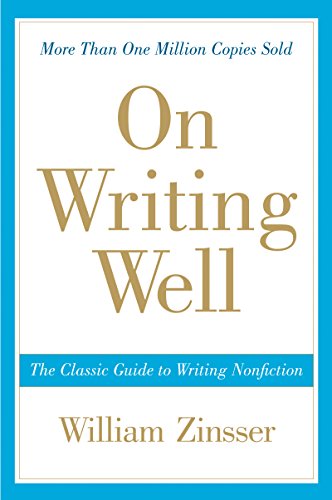
Best for Clear Nonfiction – On Writing Well
On Writing Well: The Essential Guide to Mastering Nonfiction Writing and Effective Communication
Check Price On AmazonFor readers comparing journalistic style guides that also apply to everyday nonfiction, On Writing Well offers broad, practical instruction. William Zinsser focuses on clarity, effective communication, and fundamental writing principles across subjects including business, science, sports, the arts, and memoir.
Best For: Writers who want a warm, accessible guide to clear nonfiction and general communication.
Pros:
- Emphasizes clarity and effective communication.
- Covers a wide range of nonfiction subjects and genres.
- Includes fundamental principles from a distinguished writer and teacher.
- Its 336-page anniversary edition provides substantial guidance.
Cons:
- It is broader than a newsroom-specific handbook.
- Readers seeking quick-reference reporting rules may prefer a shorter guide.
This is a strong choice when your writing needs extend beyond news copy. It complements more specialized journalistic style guides with a wider focus on readable, confident nonfiction.
Best for Everyday Use – Newswriting Guide
Among journalistic style guides, Newswriting Guide stands out as a compact reference for student reporters and other occasional media writers. Its concise sections address style, format, punctuation, quotations, leads, and interviewing techniques, making common questions easy to locate.
Best For: Student reporters, school publications, publicity writers, and newsletter editors who need a portable refresher.
Pros:
- Organizes answers around ten essential areas for student reporters.
- Covers punctuation, quotations, leads, and interviewing.
- Its 66-page format is concise and easy to consult.
- Useful beyond classrooms, including for publicity and newsletter work.
Cons:
- It offers less depth than a full-length newswriting textbook.
- Its student-focused scope may be limited for experienced professional reporters.
Choose this guide when speed and simplicity matter more than extensive explanation. It works well as a desk-side reminder after readers have learned the larger principles of reporting and newswriting.
Best Professional Newswriting Guide – AP Guide to News Writing
For shoppers seeking journalistic style guides with a professional newswriting emphasis, The Associated Press Guide to News Writing offers instruction aligned with Associated Press styles and guidelines. It addresses feature writing, concise copy, informative reporting, source citations, and specialized styles with examples from contemporary newspapers.
Best For: Reporters, editors, journalism students, and writers who want a focused professional newswriting reference.
Pros:
- Uses Associated Press styles and guidelines as its foundation.
- Covers feature stories and core newswriting principles.
- Discusses concise copy, source citations, and specialized styles.
- Includes lively examples from today’s newspapers.
Cons:
- Its 192-page focus is narrower than a broad general writing manual.
- Readers seeking extensive interviewing instruction may need another resource.
This is the most directly newsroom-oriented option in the lineup. It makes a sensible pick for readers who want AP-based guidance and practical examples rather than a general communication guide.
Feature-Writing Classic – The Art and Craft of Feature Writing
For writers comparing journalistic style guides, this practical Wall Street Journal–based handbook focuses on turning factual material into engaging feature articles. It walks through idea generation, organization, leads, quotations, narrative flow, and self-editing, with sample features to clarify the techniques.
Best For: Beginners and experienced writers who want a structured guide to newspaper-style feature writing.
Pros:
- Provides a step-by-step approach from initial idea to finished article.
- Covers leads, wordcraft, organization, quoting, paraphrasing, and self-editing.
- Includes sample feature articles and advice drawn from Wall Street Journal seminars.
Cons:
- Published in 1988, so some examples and publishing context may feel dated.
- Focuses primarily on feature writing rather than a broad range of journalistic formats.
Choose this book for a focused, systematic introduction to narrative feature technique. Its emphasis on fundamentals makes it useful as a working reference, though readers seeking contemporary digital or audio guidance may prefer a newer companion.
Narrative Reporting Guide – Storycraft, Second Edition
Among journalistic style guides, Storycraft is the strongest fit for narrative nonfiction writers who want to shape reported material into compelling stories. Jack Hart covers storytelling craft through examples from notable writers and adds expanded guidance on podcasting and research into storytelling and the brain.
Best For: Journalists, nonfiction authors, and audio storytellers developing long-form narrative work.
Pros:
- Explains narrative nonfiction techniques used by writers such as David Grann, Mary Roach, Tracy Kidder, and John McPhee.
- The second edition adds podcasting guidance and new storytelling research.
- Includes dozens of new examples and comes from an experienced writing coach and former managing editor.
Cons:
- Its narrative focus may be more specialized than a general composition or usage manual.
- At 286 pages, it requires more sustained study than a quick-reference guide.
This is a substantial choice for readers who want to understand how narrative nonfiction is built, not merely corrected. Select it when story structure and immersive reporting matter more than brief style rules.
Quick Reference Aid – Writing Style & Usage Guide
For shoppers seeking journalistic style guides in a compact format, this laminated QuickStudy reference focuses on composition writing, research-paper conventions, common errors, and usage rules. Its six-page format is designed for quick consultation rather than extended instruction.
Best For: Students who need a portable reminder of composition style and usage conventions.
Pros:
- Highlights specific rules and conventions for research-paper writing.
- Shows common errors and explains how to avoid them.
- Laminated, compact reference format supports quick checks while writing.
Cons:
- Six pages offer less depth than a full-length writing guide.
- It is aimed at composition writing, not comprehensive journalism or feature reporting.
Pick this guide when convenience and fast answers matter most. It works well as a desk or study aid, but writers seeking detailed reporting, storytelling, or editing instruction will need a more expansive book.
How We Picked These Journalistic Style Guides
We selected books that serve distinct but complementary purposes: current newsroom style, foundational reporting principles, practical newswriting instruction, copyediting reference, feature writing, and narrative nonfiction. Priority went to established guides, widely used educational texts, and references that offer clear value for their intended audience.
Because no single book covers every editorial decision, the list includes both quick-reference tools and instructional works. Check publication dates carefully when current terminology, digital publishing, or evolving newsroom standards matter to your work.
Quick Comparison
- Best primary newsroom reference: The Associated Press Stylebook: 2026-2028
- Best compact AP reference: AP Associated Press Style Guide
- Best for beginning reporters: Newswriting Guide
- Best for broad journalism principles: The Elements of Journalism
- Best for general nonfiction clarity: On Writing Well
- Best for feature writing: The Art and Craft of Feature Writing
- Best for narrative nonfiction: Storycraft
- Best for advanced newswriting: The Associated Press Guide to News Writing
Key Buying Factors for Journalistic Style Guides
Currency and Authority
If you work for a newsroom, publication, school, or communications team that follows AP style, choose the newest full AP Stylebook available. A current edition is more useful for updated usage, technology terms, identity language, and changing editorial conventions.
Reference Speed
Editors and working reporters often need an answer in seconds. Laminated QuickStudy guides are portable and easy to scan, but they cannot match the depth or searchable breadth of a full book.
Instruction Versus Lookup
Style references answer specific questions; writing handbooks explain how to report, organize, revise, and develop a story. Students and new writers may benefit more from a teaching-oriented guide before adding a concise desk reference.
Writing Format
News briefs, explanatory pieces, profiles, opinion-free features, and narrative nonfiction use different structures. Select a book that matches the work you produce most often rather than relying on a general grammar guide alone.
Print and Digital Workflow
Consider whether you prefer a physical reference beside your keyboard or a digital source that is easier to search and update. A durable print guide can be especially useful in classrooms, interviews, and shared newsroom spaces.
Who Should Buy Which Journalistic Style Guides?
Students and aspiring reporters should start with Newswriting Guide or Journalistic Writing, then add the full AP Stylebook as assignments become more advanced. Working reporters and editors will generally get the most value from the current AP edition, supported by The Associated Press Guide to News Writing.
Feature writers should consider The Art and Craft of Feature Writing, while writers developing long-form reported narratives may prefer Storycraft. Editors, teachers, and general nonfiction writers can pair a QuickStudy reference with On Writing Well for fast decisions and stronger prose. For readers seeking journalism’s broader responsibilities and standards, The Elements of Journalism is the strongest conceptual companion.