The best dystopian science fiction books turn imagined futures into gripping tests of power, survival, identity, and human resilience. This selection spans influential classics, inventive young adult stories, sprawling series, and post-apocalyptic novels.
Use the guide below to match each book with your preferred pace, setting, themes, and reading format before choosing your next speculative-fiction read.
Best 10 Dystopian Science Fiction Books Picks for 2026
Class-Rebellion Epic

- Color-coded caste society
- Action-focused rebellion story
- 16-hour unabridged audiobook
Best For: Readers seeking a high-stakes dystopian audiobook
Feminist Dystopian Classic

- Totalitarian Republic of Gilead
- Offred's fight to retain autonomy
- 336-page Anchor Books edition
Best For: Readers who value literary dystopian social commentary
Underground Survival Saga

- Includes Wool, Shift, and Dust
- Adds Silo Stories and essays
- 1,712-page omnibus collection
Best For: Readers wanting a complete, immersive silo saga
Post-Scarcity Moral Dilemma
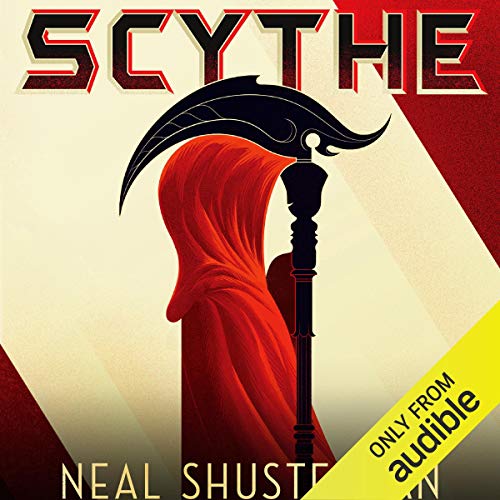
- A world that has conquered death
- Two teens train as scythes
- 10-hour unabridged audiobook
Best For: Readers seeking ethical young-adult dystopia
Virtual-Reality Adventure

- Fast-paced quest through a bleak 2045 reality
- Virtual OASIS setting with puzzle-solving stakes
- Unabridged audiobook narrated by Wil Wheaton
Best For: Gamers and readers who enjoy pop-culture-heavy dystopian adventures
Underground Survival Mystery

- Humanity survives inside one underground silo
- Toxic outside world and forbidden discussion create tension
- Juliette investigates a potentially lethal conspiracy
Best For: Readers seeking atmospheric, mystery-driven survival dystopia
Alien Refugee Resistance

- Alien refugees are confined to a fenced District
- Political conflict threatens interspecies marriage
- Focuses on resistance, prejudice, and personal loyalty
Best For: Readers who prefer socially focused dystopian science fiction
Best Feminist Post-Apocalyptic Classic

- Haunting underground-prison premise
- Focuses on female friendship and humanity
- Concise 208-page read
Best For: Atmospheric, character-driven post-apocalyptic fiction
Best Literary Pandemic Dystopia

- Set fifteen years after a flu pandemic
- Follows a traveling theater troupe
- Combines suspense, art, and human connection
Best For: Literary post-apocalyptic fiction with ensemble characters
Best Satirical Future-America Adventure

- A 2003 hacker wakes in 2088
- Targets inequality and a prison-centered economy
- Mixes politics, cyberspace, and irreverent humor
Best For: Fast-moving dystopian adventure with social satire
Class-Rebellion Epic – Red Rising
Red Rising is a strong pick among dystopian science fiction books if you want a fast-moving story about caste oppression, rebellion, and political power. Darrow’s infiltration of the ruling Gold caste creates a high-stakes coming-of-age conflict with an audiobook runtime of 16 hours and 12 minutes.
Best For: Readers who enjoy ambitious dystopian societies, action-driven plots, and audiobook narration.
Pros:
- Features a vivid color-coded caste system and a major class conflict.
- Combines personal loss, political rebellion, and survival challenges.
- Includes a substantial unabridged audiobook performance by Tim Gerard Reynolds.
Cons:
- The story centers heavily on brutal competition and violence.
- As book one of six, it begins a larger series rather than concluding the saga.
Choose this edition if you want an expansive science-fiction rebellion with a strong revenge-and-justice premise and prefer listening to the story.
Feminist Dystopian Classic – The Handmaid's Tale
The Handmaid’s Tale is an essential choice among dystopian science fiction books for readers who prefer literary suspense and social commentary. Margaret Atwood depicts Gilead through Offred, whose identity, freedom, and family are taken by a totalitarian regime shaped by environmental disaster and declining birthrates.
Best For: Readers looking for a thought-provoking classic about authoritarian control, gender roles, and resistance.
Pros:
- Offers a tightly focused first-person perspective through Offred.
- Explores reproductive control, lost freedom, and enforced social roles.
- The 336-page edition includes an introduction by Margaret Atwood.
Cons:
- Its subject matter includes enslavement, coercion, and political oppression.
- The novel is more literary and psychologically focused than action-oriented.
This 1st Anchor Books edition suits buyers who want a compact, influential dystopian novel with lasting relevance and a strong emphasis on atmosphere and ideas.
Underground Survival Saga – The Silo Series Boxed Set
The Silo Series Boxed Set is a practical choice for readers who want a complete dystopian science fiction books collection rather than a single novel. It brings together Wool, Shift, Dust, and Silo Stories, following humanity’s struggle to survive underground under strict rules about the outside world.
Best For: Readers who want an immersive, multi-volume survival mystery with extensive reading material.
Pros:
- Collects the three main novels plus bonus short fiction and author essays.
- Builds its tension around a compelling underground society and forbidden questions.
- Provides 1,712 pages for readers seeking a long-form series experience.
Cons:
- The boxed set is physically substantial at about three pounds.
- Its large page count may be more commitment than casual readers want.
Buy this set if you want the broadest supplied edition of Hugh Howey’s Silo Saga, including supplemental material beyond the central trilogy.
Post-Scarcity Moral Dilemma – Scythe
Scythe is a compelling entry among dystopian science fiction books for readers interested in the consequences of eliminating disease, war, hunger, and even natural death. Citra and Rowan must apprentice under a scythe and learn how to end lives in a society that relies on this role to control population.
Best For: Readers who enjoy morally challenging young-adult dystopia and audiobook storytelling.
Pros:
- Starts with an intriguing world where humanity has conquered death.
- Places two reluctant teens at the center of a serious ethical conflict.
- Includes a 10-hour, 32-minute unabridged audiobook narrated by Greg Tremblay.
Cons:
- The premise and plot involve repeated discussions and depictions of killing.
- It is the first book in the three-book Arc of a Scythe series.
This audiobook is a good fit if you want accessible dystopian fiction built around ethical questions, institutional power, and the hidden cost of a seemingly perfect world.
Virtual-Reality Adventure – Ready Player One
For readers choosing dystopian science fiction books with a fast, accessible adventure angle, Ready Player One offers a near-future setting where reality is bleak and virtual life dominates. Wade Watts’s race through pop-culture puzzles combines competition, danger, romance, and a high-stakes fight for control of the OASIS.
Best For: Readers who enjoy quick-moving dystopian adventures, virtual worlds, gaming-inspired quests, and extensive pop-culture references.
Pros:
- High-stakes puzzle quest with an immediately clear goal.
- Blends dystopian science fiction with virtual reality, romance, and adventure.
- Available as an unabridged audiobook narrated by Wil Wheaton.
Cons:
- Its heavy focus on pop culture may not suit readers who prefer less reference-driven fiction.
- The story’s virtual setting may appeal less to readers seeking a primarily realistic dystopia.
This is a strong pick when you want dystopian science fiction books to feel energetic and entertaining rather than relentlessly bleak. Its combination of a damaged future, elaborate puzzles, and a race against lethal rivals makes it particularly suited to readers who value momentum.
Underground Survival Mystery – Wool
Among dystopian science fiction books, Wool stands out for its claustrophobic underground setting and tightly controlled society. Humanity survives in a single silo because the outside world is toxic, while Juliette’s unexpected rise to sheriff leads her toward a dangerous conspiracy.
Best For: Readers who prefer atmospheric survival dystopias, investigative plots, social control, and a series-opening mystery.
Pros:
- Creates immediate tension through the toxic outside world and forbidden discussion.
- Centers on Juliette, a mechanic promoted to head of law enforcement.
- Introduces the first book in a three-part Silo series.
Cons:
- The underground setting may feel confined for readers seeking expansive world-building.
- Its conspiracy-driven plot may be less suitable for readers who want a standalone conclusion.
Wool is a practical choice for readers who want dystopian science fiction books built around survival, mystery, and institutional control. The combination of a forbidden outside world and Juliette’s investigation provides a strong hook for continuing into the rest of the trilogy.
Alien Refugee Resistance – Species Traitor
For readers looking for dystopian science fiction books focused on prejudice and political conflict, Species Traitor presents a divided future Earth. Human refugees from a destroyed planet are confined to the District, and Ava Mendoza must oppose efforts to criminalize interspecies relationships and movement across the boundary.
Best For: Readers who enjoy socially focused dystopias involving immigration, discrimination, forbidden relationships, and political resistance.
Pros:
- Builds its conflict around an alien refugee community and human prejudice.
- Combines political tension with Ava’s personal connection to Finn.
- Offers a substantial 376-page reading experience with enhanced digital features.
Cons:
- Readers seeking a purely action-driven dystopia may find its social and political focus less direct.
- The story introduces serious conflicts around exclusion, marriage, and punishment that may feel emotionally heavy.
Species Traitor is best suited to readers who want dystopian science fiction books to examine social division through a speculative lens. Its fenced District, radical political shift, and central relationship create a focused story about standing against institutional discrimination.
Best Feminist Post-Apocalyptic Classic – I Who Have Never Known Men
For readers seeking dystopian science fiction books with an intimate, literary focus, I Who Have Never Known Men offers a haunting story of imprisonment, escape, and survival. Its 208-page length makes it a concise choice, while its emphasis on female friendship and humanity gives the post-apocalyptic setting emotional depth.
Best For: Readers who prefer atmospheric, character-driven post-apocalyptic fiction and feminist speculative literature.
Pros:
- Explores friendship, intimacy, and resilience under extreme conditions.
- Offers a distinctive underground-prison setup and mysterious world above ground.
- Short, focused 208-page format.
Cons:
- The bleak premise may not suit readers seeking lighter dystopian fiction.
- Its emphasis on atmosphere and humanity may appeal less to readers wanting action-heavy plotting.
This is a strong pick if you want dystopian science fiction books that prioritize mystery, emotional impact, and questions of identity over world-building detail.
Best Literary Pandemic Dystopia – Station Eleven
Among dystopian science fiction books, Station Eleven stands out for combining a pandemic-ravaged world with art, memory, and human connection. This 352-page novel follows a traveling troupe of actors across the Great Lakes region fifteen years after a flu pandemic collapses civilization.
Best For: Readers who want literary post-apocalyptic fiction with multiple timelines, ensemble characters, and a strong focus on art and relationships.
Pros:
- Balances suspense with an elegiac, emotionally rich perspective.
- Centers a nomadic theater troupe performing Shakespeare and music.
- Explores how relationships and art sustain survivors after societal collapse.
Cons:
- Its shifting timeline may require more attention than a straightforward survival story.
- The violent prophet and dangerous post-collapse setting may be intense for some readers.
Choose this edition if you want a highly regarded, relationship-focused dystopian novel that treats rebuilding culture as seriously as surviving disaster.
Best Satirical Future-America Adventure – Tomorrowville
For readers looking for dystopian science fiction books with a more irreverent, technology-driven approach, Tomorrowville imagines Southern California in 2088. The 249-page story follows a 2003 computer hacker revived by future medical science as he confronts inequality, privatized punishment, mandatory drugs, and a transformed America.
Best For: Readers who enjoy fast-moving dystopian adventures mixing politics, cyberspace, humor, and social satire.
Pros:
- Features a memorable time-displaced protagonist with a hacker background.
- Builds its dystopia around a widening rich-poor divide and prison-centered economy.
- Includes unusual speculative details, including designer drugs, robotic rats, and a turbocharged wheelchair.
Cons:
- Its treatment of sex, drugs, and politics may not suit every reader.
- The irreverent tone may appeal less to readers seeking solemn or literary dystopia.
Tomorrowville is a good fit when you want dystopian science fiction books that combine social criticism with comic energy and a high-concept revival premise.
How We Picked These Dystopian Science Fiction Books
We selected books that represent a broad range of dystopian storytelling, including authoritarian societies, enclosed communities, post-collapse worlds, technological control, ecological danger, and resistance movements. We also considered critical reputation, reader appeal, originality, accessibility, and whether each title works well as a standalone novel or part of a larger series.
The list includes widely recognized works alongside newer or more specialized choices, so readers can find both essential genre touchstones and less familiar perspectives. Because preferences vary, no single title is best for everyone.
Quick Comparison
| Best For | Recommended Pick | What to Expect |
|---|---|---|
| Political and feminist dystopia | The Handmaid’s Tale | Oppressive social control and psychological tension |
| Fast-paced rebellion | Red Rising | Ambition, class conflict, and action |
| Enclosed-world mystery | Wool or the Silo boxed set | Secrets, survival, and layered world-building |
| Technology and gaming culture | Ready Player One | Virtual reality, puzzles, and pop-culture references |
| Thoughtful literary reading | Station Eleven or I Who Have Never Known Men | Memory, isolation, art, and human connection |
Key Buying Factors for Dystopian Science Fiction Books
Setting and Type of Dystopia
Decide whether you want a tightly controlled government, a sealed underground society, a post-pandemic landscape, or a future shaped by technology. The setting strongly influences the mood and the kind of conflict at the center of the story.
Standalone or Series Commitment
Standalone novels are a better fit for readers who want a complete arc in one book. Series starters and boxed sets offer deeper world-building but require more time and, in some cases, a willingness to follow multiple character and plot threads.
Tone, Pace, and Content
Some dystopian fiction is action-driven and propulsive, while other books are quieter, more literary, or deliberately unsettling. Check the tone and content warnings if you prefer to avoid intense violence, coercion, confinement, disease, or other difficult themes.
Format and Value
Compare paperback, hardcover, ebook, and audiobook editions based on portability and reading habits. A boxed set can be economical for committed series readers, while a standalone edition may be the better low-risk choice for a first introduction to the genre.
Who Should Buy Which Dystopian Science Fiction Books?
Choose The Handmaid’s Tale for a politically focused classic, Red Rising for high-energy rebellion and competition, or Scythe for an accessible young adult take on mortality and social engineering. Readers drawn to mysteries and oppressive enclosed environments should start with Wool or the complete Silo boxed set.
Ready Player One suits readers who enjoy virtual worlds, puzzles, and nostalgic references. For more reflective or literary experiences, consider Station Eleven or I Who Have Never Known Men. Readers looking for newer, less mainstream perspectives can explore Species Traitor or Tomorrowville. If you are unsure, begin with a standalone title that matches your preferred pace and themes before committing to a full series.