Choosing the right calligraphy alphabet book can make learning lettering feel clear, structured, and rewarding. The best options balance alphabet variety, instruction quality, and practice-friendly layouts.
Whether you want beginner guidance, inspiration from classic scripts, or a broad font reference, this roundup helps you compare the top choices for 2026.
Best 10 Calligraphy Alphabet Books Picks for 2026
Classic All-in-One Practice Guide

- 100 complete alphabets with visual guides
- Lay-flat spiral binding supports easy practice
- Covers tools, layout, and left-handed users
Best For: Beginners and seasoned lettering artists who want a broad practice reference
Traditional Western Reference

- 40 alphabets from classic to modern Western styles
- Explains tools, letter structure, and basic strokes
- Includes decorative techniques and photo examples
Best For: Readers who want historical styles and advanced ornamental ideas
Interactive Lettering Workbook

- Teaches five major hand-lettering styles
- Practice pages make learning interactive
- Includes embellishments, shading, and project ideas
Best For: Beginners who want guided practice with creative projects
Font-Filled Script Collection

- 100 complete script and cursive fonts
- Many entries include lowercase letters and numerals
- Compact, inexpensive reference for designers
Best For: Designers and lettering users needing a broad font reference
Modern Calligraphy Starter Guide
The Ultimate Guide to Modern Calligraphy & Hand Lettering for Beginners

- Beginner-friendly explanation of hand lettering basics
- Large 8.5" x 11" pages for easier practice
- Premium matte cover with 60lb paper stock
Best For: Beginners seeking a straightforward modern calligraphy foundation
Gothic Typeface Archive
Gothic and Old English Alphabets: 100 Complete Fonts

- Archive of 100 Gothic and Old English fonts
- Many sets include uppercase, lowercase, numerals, and punctuation
- Copyright-free typefaces for design projects
Best For: Designers who need ready-to-use black-letter alphabets
Spiral-Bound Lettering Workbook
Pretty Simple Lettering: A Step-by-Step Workbook for Beginners
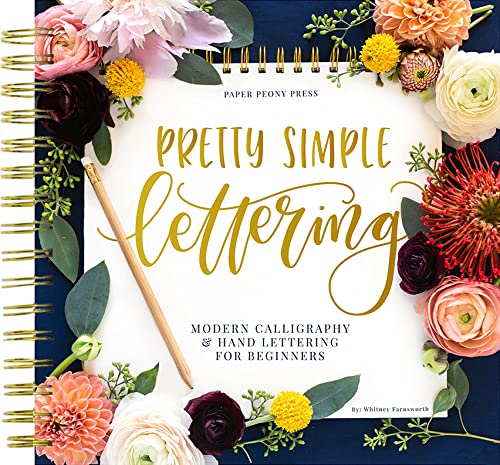
- Step-by-step beginner guide to hand lettering
- Seven styles and ten individual alphabets included
- Spiral-bound hardcover lays flat for practice
Best For: Beginners who want a practical, lay-flat lettering workbook
Royalty-Free Reference Pick
Decorative Alphabets and Initials

- 123 full-page plates and 91 complete alphabets
- Royalty-free reproductions for direct reuse
- Historical range from manuscripts to modern examples
Best For: Designers and artists needing a reusable alphabet reference
Beginner Practice Workbook

- Step-by-step lessons for beginners
- Covers alphabets, numbers, and 8 styles
- Includes 9 practice projects
Best For: New learners who want guided lettering practice
Classic Lettering Reference
Art Alphabets, Monograms, and Lettering

- 96 pages of letter styles and layouts
- Covers monograms, ciphers, and alphabets
- Useful reference for multiple lettering disciplines
Best For: Reference-minded lettering enthusiasts and professionals
Classic All-in-One Practice Guide – The Calligrapher's Bible
The Calligrapher's Bible: 100 Complete Alphabets with Step-by-Step Hand Lettering Guides
Check Price On AmazonIf you’re comparing calligraphy alphabet books, this one stands out as a broad, hands-on reference for building skills fast. It includes 100 complete alphabets with step-by-step visual guides, plus practical tips on tools, pen strokes, layout, and left-handed practice.
Best For: Beginners and experienced lettering artists who want one comprehensive calligraphy reference for practice, inspiration, and everyday projects.
Pros:
- 100 complete alphabets spanning classic and modern styles
- Step-by-step visual guides make practice approachable
- Lay-flat spiral binding is convenient for tracing and lettering practice
- Includes tips on tools, materials, and left-handed users
Cons:
- Focuses on practice and reference rather than project-heavy instruction
- May feel broad if you only want one specific script style
This is a strong choice if you want a single, versatile calligraphy alphabet book that covers a wide range of letterforms and supports steady practice. Its mix of alphabets, guidance, and usability makes it easy to return to as your skills grow.
Traditional Western Reference – Calligraphy
For shoppers looking through calligraphy alphabet books, this title leans toward a richly illustrated reference on Western calligraphy. It includes 40 alphabets drawn from different periods, plus technique guidance for beginners and more advanced work like color use and decorative embellishment.
Best For: Readers who want a visually rich Western calligraphy reference with historical alphabet styles and advanced decorative techniques.
Pros:
- 40 alphabets spanning Roman, Middle Ages, Gothic, and modern styles
- Covers foundational skills like tools, letter structure, and basic strokes
- Includes advanced ideas such as color, wood and stone lettering, and ornaments
- Hundreds of inspiring photos and samples
Cons:
- Fewer alphabets than some broader alphabet collections
- Less workbook-like than a dedicated practice guide
This book is a solid pick if you want a more traditional, reference-style approach with both technique and visual inspiration. It is especially useful for anyone interested in the history and decorative range of Western calligraphy.
Interactive Lettering Workbook – Hand-Lettering
If you’re shopping calligraphy alphabet books for a more playful, guided experience, this interactive hand-lettering title is easy to work with. It teaches five major hand-lettering styles and uses trace, color, and complete exercises to help you practice drawing letters and words.
Best For: Beginners who want a hands-on, interactive way to learn hand-lettering styles and turn letters into art.
Pros:
- Teaches five major hand-lettering styles
- Practice pages and traceable sections support active learning
- Covers embellishments, shading, and mixing text with illustration
- Includes project ideas for gifts, art, and everyday items
Cons:
- Focuses on hand-lettering more than traditional calligraphy alphabets
- Only covers five main styles, so the range is narrower than alphabet compendiums
This is a good fit if you want a beginner-friendly workbook that mixes instruction with practice and creative projects. It offers a lighter, more interactive path into lettering without feeling overly technical.
Font-Filled Script Collection – Script and Cursive Alphabets
Script and Cursive Alphabets: 100 Complete Fonts (Lettering, Calligraphy, Typography)
Check Price On AmazonAmong calligraphy alphabet books, this compact Dover volume is a practical reference for script and cursive type styles. It delivers 100 complete fonts, with many including lowercase letters and numerals, making it useful when you want lots of lettering options in one inexpensive book.
Best For: Designers and lettering users who want a compact source of script and cursive alphabets for layout, typography, and special effects.
Pros:
- 100 complete fonts in script and cursive styles
- Most entries include lowercase letters, and many include numerals
- Compact and budget-friendly reference format
- Good variety for distinctive lettering moods and effects
Cons:
- More of a font reference than a step-by-step learning workbook
- Less instructional detail than beginner-focused lettering books
This book works best as a reference tool rather than a full teaching guide. If you need a wide selection of script and cursive alphabets for inspiration or design work, it offers a lot of value in a small package.
Modern Calligraphy Starter Guide – The Ultimate Guide to Modern Calligraphy & Hand Lettering for Beginners
If you’re comparing calligraphy alphabet books for a first project, this beginner-focused guide is built to remove guesswork and help you start with a solid foundation. It explains the process behind hand lettering in a straightforward way, with a large-format layout that supports practice as you learn.
Best For: Beginners who want a clear, easy-to-follow introduction to modern calligraphy and hand lettering.
Pros:
- Written specifically to help beginners avoid trial-and-error.
- Large 8.5" x 11" pages make it easier to practice.
- Premium matte cover and 60lb paper give it a polished feel.
Cons:
- Only 108 pages, so it is more of a starter guide than an exhaustive reference.
- Focuses on modern calligraphy and hand lettering rather than classic alphabet archives.
Overall, this is a practical entry point if you want a beginner-friendly book that prioritizes foundation and ease of use. It looks and feels like a workbook you can actually use at the table rather than just shelve.
Gothic Typeface Archive – Gothic and Old English Alphabets: 100 Complete Fonts
Gothic and Old English Alphabets: 100 Complete Fonts (Lettering, Calligraphy, Typography)
Check Price On AmazonAmong calligraphy alphabet books, this one stands out as a ready-made archive of Gothic and Old English type styles. It collects 100 complete fonts, many with full upper- and lower-case alphabets, plus numerals and punctuation in many cases, making it useful when you need classic black-letter forms for design work.
Best For: Graphic artists, illustrators, and designers who need copyright-free Gothic and Old English alphabets.
Pros:
- Includes 100 complete fonts derived from black-letter style.
- Many alphabets include uppercase, lowercase, numerals, and punctuation.
- Copyright-free typefaces are ready for immediate use.
- Useful for stationery, posters, signs, greeting cards, and more.
Cons:
- Very style-specific, so it is not a general beginner calligraphy workbook.
- Publication is older, with an archive-style focus rather than instruction.
This is less about learning stroke-by-stroke technique and more about having a deep library of Gothic and Old English alphabets at hand. If your project calls for dramatic black-letter type, it delivers a lot of usable material in one volume.
Spiral-Bound Lettering Workbook – Pretty Simple Lettering: A Step-by-Step Workbook for Beginners
If you want calligraphy alphabet books that feel practical from the first page, this spiral-bound workbook is designed to be easy to use while you practice. It combines beginner guidance with seven lettering styles and ten individual alphabets, plus tool recommendations to help you choose brush pens with more confidence.
Best For: Beginners who want a hands-on workbook with multiple lettering styles and a lay-flat format.
Pros:
- Step-by-step instruction is tailored to beginners.
- Includes seven lettering styles and ten individual alphabets.
- Spiral binding lets the book lay flat while practicing.
- High-quality, bleed-resistant paper supports repeated use.
Cons:
- Focuses on workbook practice rather than a large alphabet reference library.
- Best suited to modern lettering and calligraphy, not classic black-letter styles.
This book is a strong pick if you want structure, variety, and a format that stays open while you work. It’s especially appealing as a giftable practice book for someone starting modern calligraphy.
Royalty-Free Reference Pick – Decorative Alphabets and Initials
If you want calligraphy alphabet books that double as a deep reference library, this Dover volume is built for exactly that. It gathers 123 full-page plates and 91 complete alphabets in many historic styles, making it useful for designers, illustrators, printers, and anyone collecting letterform inspiration.
Best For: Artists and letterform researchers who want a large, royalty-free archive of decorative alphabets and initials.
Pros:
- Includes 123 full-page plates and 3,924 initial letters.
- Royalty-free reproductions, so individual letters can be reused without permission.
- Covers manuscript, printed, Victorian, and twentieth-century alphabet styles.
- Historical introductions and captions help give context to each section.
Cons:
- More of a reference source than a hands-on practice workbook.
- Some styles are specialized and may feel less beginner-friendly.
- Focused on initials and alphabets rather than step-by-step instruction.
As a sourcebook, this is a strong choice if you need breadth, historical range, and reusable letter designs rather than guided drills. It is especially appealing for anyone building a swipe file or looking for ready-to-reproduce decorative alphabet ideas.
Beginner Practice Workbook – Hand Lettering 101
If you are shopping for calligraphy alphabet books that teach by doing, this workbook is designed for practice. It walks beginners through uppercase and lowercase alphabets, numbers, and multiple lettering styles with step-by-step instructions and room to build skills on thick paper that is meant for lettering.
Best For: Beginners who want a structured, hands-on workbook for modern calligraphy and hand lettering practice.
Pros:
- Step-by-step instructions make it easy to follow.
- Covers alphabets, numbers, and 8 unique lettering styles.
- Includes 9 hand-lettered projects to practice real designs.
- Spiral binding lays flat, which is helpful during practice.
Cons:
- More focused on practice than historical calligraphy reference.
- Designed around modern hand lettering rather than broad alphabet archives.
- Best results depend on doing the exercises, not just reading through once.
This is the most approachable option here if your goal is to actually learn and practice letterforms. The workbook format, project-based lessons, and beginner-friendly structure make it a practical pick for steady improvement.
Classic Lettering Reference – Art Alphabets, Monograms, and Lettering
For buyers comparing calligraphy alphabet books, this Dover edition is a strong reference option centered on letter styles, monograms, and ciphers. It combines selected illustrations from one Bergling book with the complete Art Alphabets and Lettering, giving you a compact library of ornate-to-simple layouts that can inspire engravers, sign painters, calligraphers, and designers.
Best For: Lettering enthusiasts and professionals looking for a historical reference packed with alphabets, monograms, and ciphers.
Pros:
- Includes 96 pages of layouts and letter styles.
- Ranges from simple to ornate designs.
- Useful for engravers, designers, calligraphers, and sign painters.
- Includes a foreword by James Gurney for historical context.
Cons:
- Not structured as a beginner workbook with exercises.
- Primarily a reference collection rather than a how-to guide.
- Focused on selected historical artwork, so it may not cover every modern style.
This book is a good fit if you want a compact, historically grounded source of lettering ideas instead of a lesson-based manual. Its mix of monograms, ciphers, and alphabet styles makes it especially useful for reference and inspiration.
How We Picked These Calligraphy Alphabet Books
We focused on books that offer real value for learners and lettering enthusiasts: strong alphabet coverage, practical instruction, readable page design, and a format that supports practice. We also considered whether a book is better suited to beginners, reference use, or more decorative style exploration.
Quick Comparison
Some Calligraphy Alphabet Books are workbook-style guides built for hands-on practice, while others are font libraries that work best as idea banks and references. Beginners usually benefit most from step-by-step instruction and traceable exercises, while more advanced users may prefer books with broader alphabet collections or specialized historical styles.
Key Buying Factors for Calligraphy Alphabet Books
Instruction Vs. Inspiration
If you are learning from scratch, prioritize books that explain strokes, spacing, and letter construction. If you already know the basics, a reference-heavy book with many complete alphabets may be more useful.
Alphabet Variety
Look for books that match your goal. Modern lettering fans may want casual scripts and hand lettering examples, while traditional users may prefer Gothic, Old English, decorative, or monogram styles.
Practice-Friendly Layouts
Spiral binding, workbook pages, large writing areas, and clear demonstrations can make a big difference. These features are especially helpful for Calligraphy Alphabet Books aimed at beginners.
Skill Level and Learning Curve
Some books move slowly and carefully through fundamentals, while others assume you can already control pen angle, stroke consistency, and spacing. Choose a pace that matches your current experience.
Format and Use Case
Consider whether you want a desk reference, a course-style workbook, or a source of lettering ideas for cards, invitations, logos, and personal projects. The best format is the one you will actually use regularly.
Who Should Buy Which Calligraphy Alphabet Books?
Beginners should lean toward guided workbooks with step-by-step instruction and built-in practice space. Learners who want a broad overview may prefer books with many complete alphabets and typography samples. If your goal is to develop a specific look, choose a title focused on modern calligraphy, script, cursive, Gothic, or ornamental lettering.
For most shoppers, the smartest choice is the book that matches both skill level and intended project type. That way, your Calligraphy Alphabet Books do more than sit on a shelf: they become practical tools for steady improvement.