Value investing rewards patience, discipline, and a clear process for judging what a business is really worth. The right books can help you avoid common mistakes and think like a long-term owner, not a speculator.
Below, you’ll find a focused roundup of the best value investing books for beginners and experienced investors alike, with options ranging from classic Graham-style fundamentals to more modern, practical valuation guides.
Best 10 Value Investing Books Picks for 2026
Classic Value Investing
The Intelligent Investor Rev Ed.

- Revised edition of Graham’s classic text
- Jason Zweig commentary updates the lessons
- Focused on long-term value investing principles
Best For: Readers who want the essential classic on value investing
Modern Value Investing
Value Investing: From Graham to Buffett and Beyond

- Updates Graham and Dodd’s framework for today
- Includes pro examples from Buffett and Gabelli
- Strong for company analysis and stock selection
Best For: Investors seeking a modern, practical value investing handbook
Business Quality Focus
Common Stocks and Uncommon Profits and Other Writings

- Philip Fisher’s influential investing philosophy
- Focuses on understanding the business deeply
- Includes Ken Fisher’s updated preface and introduction
Best For: Investors who want a quality-first approach to stock picking
Updated Classic
The Intelligent Investor Third Edition
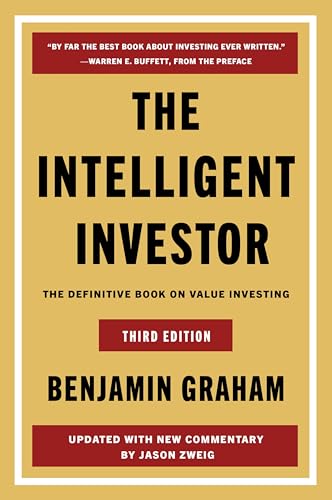
- 75th Anniversary Edition of Graham’s classic
- Buffett introduction plus Zweig commentaries
- Original text preserved with modern context
Best For: Readers who want the classic Graham book in a newer revised edition
Valuation-Focused Value Investing

- Updated guide to valuing companies and picking stocks
- Simple tools, formulas, and real examples
- Helps avoid common valuation mistakes
Best For: Investors who want a practical company-valuation framework
Classic Value Investing Framework
Value Investing (Second Edition)

- Covers Graham, Buffett, and the history of value investing
- Explains margin of safety and core techniques
- Updated to include newer trends and investors
Best For: Readers seeking a broad overview of value investing principles
Low-Risk Value Method

- Accessible guide to the Dhandho investing framework
- Focuses on low-risk, disciplined capital allocation
- Includes Kelly Formula and undervaluation concepts
Best For: Individual investors who want a simple, disciplined value method
Core Value Investing Guide
The Little Book of Value Investing

- Concise overview of proven value investing basics
- Covers valuation, financial statements, and disclosures
- Aims to help readers ignore market noise
Best For: Beginning retail investors and anyone wanting a compact value investing reference
Investor Journey Memoir
The Education of a Value Investor

- Mixes memoir, advice, and investing lessons
- Stresses mentors, partners, and self-directed learning
- Includes takeaways from both wins and losses
Best For: Readers who like personal finance stories with value investing insight
Graham Legacy Primer
Benjamin Graham on Value Investing

- Examines Graham’s theories in the context of his life
- Good for learning from a foundational value investor
- Older, overview-style title with historical perspective
Best For: Readers seeking context on Benjamin Graham and classic value investing
Classic Value Investing – The Intelligent Investor Rev Ed.
If you want one of the foundational value investing books, this revised edition of The Intelligent Investor is the classic place to start. Benjamin Graham’s original text is preserved, while Jason Zweig’s updated commentary helps connect the ideas to today’s market conditions and common investor mistakes.
Best For: Investors who want the most famous entry point into value investing and a long-term decision-making framework.
Pros:
- Revised edition preserves Graham’s original core teachings.
- Updated commentary helps apply the principles to modern markets.
- Built around value investing, long-term strategy, and error reduction.
- Strong credibility, with Warren Buffett’s well-known endorsement.
Cons:
- Best suited to readers who want a classic, principle-driven approach rather than a quick-start guide.
- At 17 hours and 48 minutes in audiobook form, it is a substantial commitment.
This is the most recognizable name in value investing books, and the updated annotations make an old classic easier to use in practice. It is a solid choice if you want a durable framework rather than a trendy market tactic.
Modern Value Investing – Value Investing: From Graham to Buffett and Beyond
This is a practical pick among value investing books if you want Graham’s ideas carried into a more modern framework. The notes emphasize that it expands on Graham and Dodd, incorporates newer advances, and is designed as a handbook for analyzing companies and selecting investments.
Best For: Serious investors who want a contemporary guide to value analysis with pro-level context.
Pros:
- Builds directly on Graham and Dodd’s fundamental security analysis.
- Described as a lively handbook for value investing.
- Includes glimpses of how professionals like Warren Buffett and Mario Gabelli practice it.
- Praised as essential reading for a fresh perspective on company analysis.
Cons:
- Geared toward serious investors rather than casual readers.
- At 320 pages, it is concise but still fairly dense.
If you already know the basics and want something that connects classic value ideas to modern investing, this title stands out. It works especially well as a bridge between the original Graham school and today’s practical application.
Business Quality Focus – Common Stocks and Uncommon Profits and Other Writings
Common Stocks and Uncommon Profits and Other Writings (Wiley Investment Classics)
Check Price On AmazonAmong value investing books, this one leans into understanding businesses deeply before making a commitment. Philip Fisher’s philosophies are described as influential, widely studied, and still applied today, with Warren Buffett noting the importance of thoroughly understanding the business.
Best For: Investors who want a quality-focused approach centered on understanding companies before buying.
Pros:
- Written by one of the most influential investors of all time.
- Investment philosophies are presented as still highly relevant today.
- Includes an expanded preface and introduction from Ken Fisher.
- Emphasizes deep business understanding before making investment commitments.
Cons:
- Not a Graham-style pure value manual; it leans more toward business quality and analysis.
- Readers looking only for screening rules or valuation formulas may find it less direct.
This is a strong complement to more traditional value investing books because it pushes you to think harder about the business itself. If your goal is better stock selection through deeper company understanding, it has lasting appeal.
Updated Classic – The Intelligent Investor Third Edition
This 75th Anniversary Edition belongs on any shortlist of value investing books if you want Graham’s classic with modern support material. The original text stays untouched, while Warren Buffett’s introduction and Jason Zweig’s updated chapter-by-chapter commentaries help explain how the timeless guidance fits a volatile market.
Best For: Readers who want the classic Graham text with extra modern commentary and a newer edition.
Pros:
- 75th Anniversary Edition with the original text preserved.
- Includes Warren Buffett’s introduction and appendix.
- Jason Zweig commentaries are added to every chapter.
- Strong focus on protecting investments and supporting lifetime strategy.
Cons:
- Overlap with other editions means some readers may already own similar content.
- Primarily a revised presentation of the same classic ideas rather than a brand-new framework.
If you want the best-supported modern edition of Graham’s work, this version is easy to justify. It is especially useful for readers who want updated context without losing the original foundation.
Valuation-Focused Value Investing – The Little Book of Valuation
If you want value investing books that go beyond general theory, this updated guide by Aswath Damodaran is built around practical valuation work. It walks you through how to assess a company’s value, avoid common mistakes, and use simple formulas and real examples to make more informed stock picks.
Best For: Investors who want a hands-on framework for valuing companies and choosing stocks with more confidence.
Pros:
- Step-by-step approach to valuing a company and picking a stock
- Includes simple valuation tools and formulas
- Uses stories and real examples to explain key concepts
- Focuses on avoiding common valuation pitfalls
Cons:
- Centered on valuation rather than broader investing strategy
- Best suited to readers willing to work through detailed analysis
Overall, this is a practical choice if you want a more analytical take on value investing and prefer learning how to form your own valuations instead of relying on third-party opinions.
Classic Value Investing Framework – Value Investing (Second Edition)
Among value investing books, this second edition is a strong pick if you want the philosophy and methods behind the approach, not just a quick stock screen. It covers the history of value investing, the ideas of Ben Graham and Warren Buffett, and the margin-of-safety mindset that helps investors focus on value over speculation.
Best For: Readers who want a broad, tradition-driven overview of value investing principles and techniques.
Pros:
- Covers the history and evolution of value investing
- Explains the margin of safety concept clearly
- Includes techniques used by well-known value investors
- Updated to reflect newer trends and investors
Cons:
- Available here as an audiobook listing, which may not suit every reader
- More framework-oriented than a quick, tactical guide
In short, this is a solid foundational title for investors who want to understand where value investing came from and how its core ideas still apply today.
Low-Risk Value Method – The Dhandho Investor
If you’re comparing value investing books for a more accessible framework, this one stands out for its low-risk, high-return mindset. Mohnish Pabrai lays out the Dhandho approach in a straightforward way, using practical concepts like “Heads, I win! Tails, I don’t lose that much!” and the Kelly Formula to help individual investors think about undervalued stocks.
Best For: Individual investors who want a simple, entertaining introduction to a disciplined value method.
Pros:
- Accessible explanation of the Dhandho capital allocation framework
- Focuses on low-risk thinking and disciplined position sizing
- Introduces memorable concepts like “Heads, I win! Tails, I don’t lose that much!”
- Includes discussion of the Kelly Formula for undervalued stocks
Cons:
- More specialized than a general value investing overview
- Best fit for readers comfortable with a framework-based approach
As a result, this is a useful choice if you want a concise, practical take on value investing that emphasizes risk control and smart capital allocation.
Core Value Investing Guide – The Little Book of Value Investing
If you want value investing books that get straight to the point, this one focuses on the core habits behind buying bargain stocks. Christopher Browne covers how to value securities, read public company financial statements and disclosures, and stay calm when market noise pushes other investors off course.
Best For: Beginning retail investors and experienced readers who want a concise reference on proven value investing basics.
Pros:
- Concise, practical overview of a time-tested investing strategy
- Explains how to find bargains and value securities
- Includes guidance on financial statement and disclosure analysis
- Helpful reminders on ignoring irrelevant market noise
Cons:
- At 208 pages, it is more of an introduction than a deep technical manual
- Geared toward broad principles rather than highly advanced tactics
The strength of this book is its focus: it distills value investing into clear, usable lessons without unnecessary complexity. That makes it a solid pick if you want a short guide you can actually finish and revisit.
Investor Journey Memoir – The Education of a Value Investor
The Education of a Value Investor: My Transformative Quest for Wealth, Wisdom and Enlightenment
Check Price On AmazonAmong value investing books, this one blends a memoir with practical lessons from Guy Spier’s path from Wall Street ambition to a more disciplined style of investing. The notes emphasize his lunch with Warren Buffett, the role of mentors and partners, and the idea that real learning starts when you are working on your own.
Best For: Readers who want a personal story with investing lessons and a look at how a successful value investor thinks.
Pros:
- Part memoir, part Wall Street advice, part how-to
- Highlights the importance of mentors and partners
- Includes lessons drawn from both winning and losing deals
- Offers inspiration for readers seeking a values-driven path
Cons:
- As an audiobook, it may suit listeners better than readers who prefer print
- Focuses as much on personal transformation as on technical investing detail
This is a strong pick if you want investing ideas wrapped in a real career story. It stands out for readers who care about both the mindset and the mechanics behind value investing.
Graham Legacy Primer – Benjamin Graham on Value Investing
If you are comparing value investing books, this title offers a straightforward look at Benjamin Graham’s theories through the lens of his life and work. The supplied notes position it as a lessons-based examination of the man widely seen as one of the most influential investors, making it useful for readers who want historical context alongside investing ideas.
Best For: Readers who want an overview of Benjamin Graham’s approach and the life behind his investing theories.
Pros:
- Focuses on Graham’s investment theories in context
- Connects his ideas to his life and work
- Useful for understanding a foundational figure in value investing
Cons:
- Publication dates to 1994, so it is an older title
- Short note set suggests a broader overview rather than a step-by-step workbook
This book makes sense if you want a classic, context-driven introduction to Graham’s influence. It is best treated as a background and theory book rather than a modern tactical manual.
How We Picked These Value Investing Books
We selected books that are well-regarded, widely cited, and useful for real-world investing decisions. Priority went to titles that explain core value investing principles clearly, offer durable frameworks, and remain relevant across different market conditions.
We also looked for a mix of foundational classics, practical how-to guides, and books that help readers apply valuation concepts to actual stock selection.
Quick Comparison
If you want the original principles, start with the classic Graham titles. If you want application and modern context, choose books that focus on valuation methods, portfolio discipline, and case-based investing. For a broader perspective, books on investor psychology and business quality can complement the core Value Investing Books in this list.
Key Buying Factors for Value Investing Books
Level of Experience
Beginners should look for clear explanations of margin of safety, intrinsic value, and financial statements. More advanced readers may prefer deeper valuation work, owner-earnings analysis, and discussions of business quality versus price alone.
Practicality
Some books are best for learning philosophy; others are better for building a repeatable process. If you want immediate application, prioritize books that show how to value companies, screen for opportunities, and avoid overpaying.
Writing Style and Focus
Value Investing Books vary from dense and academic to accessible and story-driven. Choose a style you’ll actually finish, especially if you’re new to annual reports, balance sheets, and cash flow analysis.
Timelessness
The best investing ideas age well. Favor books that emphasize principles over predictions, since market trends change but disciplined analysis and risk control remain useful.
Who Should Buy Which Value Investing Books?
New investors should start with foundational books that explain the mindset and basic rules of value investing. Readers who already know the basics may want valuation-focused titles that help with stock analysis and decision-making.
If you prefer a conservative, risk-aware style, choose books that stress margin of safety and downside protection. If you’re building a broader investing library, combine one classic, one practical valuation guide, and one modern perspective on investor behavior or business quality.
In short, the best Value Investing Books are the ones that match your current skill level while also stretching your thinking. Pick titles that teach you how to evaluate businesses, manage risk, and stay patient when markets get noisy.