The best adventure books transport you into shipwrecks, remote wilderness, dangerous climbs, unexplored ruins, and impossible missions. This selection combines gripping true stories with novels that deliver high-stakes journeys and memorable challenges.
Whether you want historical survival, outdoor danger, literary exploration, or page-turning science fiction, these recommendations offer distinct kinds of adventure for different reading tastes.
Best 10 Adventure Books Picks for 2026
Polar Survival Classic
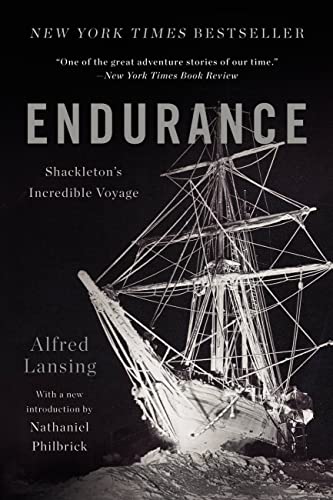
- True account of an Antarctic shipwreck
- Centers on leadership and crew rescue
- 416-page anniversary edition
Best For: Fans of polar exploration and survival history
Maritime Mutiny Thriller

- Shipwreck and survival at sea
- Mutiny, murder, and court martial
- Explores empire and human behavior
Best For: Readers who like historical nonfiction with thriller pacing
Leadership Under Siege

- Two crews face the same hostile island
- Highlights ingenuity and group leadership
- Based on journals and historical records
Best For: Readers of survival history and human-behavior stories
Young Wilderness Adventure

- Teen survives alone in the wilderness
- Features shelter, fire, and foraging skills
- Newbery Honor novel for ages 9+
Best For: Young readers seeking a practical survival adventure
Epic Canyon Journey

- 750-mile Grand Canyon traverse
- Wilderness, history, and conservation themes
- Award-winning outdoor nonfiction
Best For: Readers wanting immersive Grand Canyon adventure nonfiction
Wilderness Mystery

- Investigates McCandless's Alaska journey
- Psychological and biographical focus
- Concise 240-page narrative
Best For: Readers drawn to tragic wilderness stories and investigative nonfiction
K2 Disaster Account

- Sherpa perspective on 2008's K2 disaster
- High-altitude survival and mountaineering
- Includes maps and illustrations
Best For: Readers seeking intense, perspective-driven climbing nonfiction
Wilderness Survival Fiction

- Canoe journey through northern Canada
- Friendship tested by fire and violence
- Tense wilderness survival fiction
Best For: Readers who want atmospheric, high-stakes backcountry fiction
True Expedition Adventure
The Lost City of the Monkey God

- Real search for a rumored lost city
- Lidar, history, and rainforest exploration
- Suspenseful account of disease and discovery
Best For: Readers seeking fact-based exploration and archaeological adventure
Interstellar Science Adventure

- Lone astronaut on a last-chance mission
- Extinction-level threat and scientific mystery
- Suspenseful, humorous space survival story
Best For: Readers who want puzzle-driven science-fiction adventure
Polar Survival Classic – Shackleton's Endurance
For readers seeking adventure books rooted in real exploration, Endurance delivers a gripping account of Ernest Shackleton’s Antarctic expedition and the extraordinary effort to save his crew after their ship was trapped and crushed by ice.
Best For: Readers who enjoy true polar expeditions, leadership stories, and high-stakes survival at sea.
Pros:
- Compelling firsthand-style narrative of a legendary Antarctic ordeal
- Strong focus on Shackleton’s leadership and crew rescue
- Detailed 416-page account with a lasting historical perspective
Cons:
- The harsh conditions and dangers make for intense reading
- Its historical subject may feel less immediate than a modern adventure novel
Lansing’s account is a dependable choice when you want a classic true adventure with survival, endurance, and leadership at its center.
Maritime Mutiny Thriller – The Wager
The Wager is one of the most suspenseful adventure books for readers who like shipwrecks, survival, and courtroom revelations. David Grann follows a British warship’s wreck, the castaways’ desperate voyage, and the mutiny accusations that followed.
Best For: Readers who want historical nonfiction combining maritime survival, human conflict, and an investigative court-martial narrative.
Pros:
- Page-turning account of shipwreck and survival across storm-wracked seas
- Expands the adventure with competing survivor accounts and mutiny charges
- Connects the ordeal to questions about empire and authority
Cons:
- The multiple perspectives and historical context may require close attention
- Its themes of savagery, starvation, and murder can be grim
Choose this book for a layered maritime adventure in which survival is only the beginning; the later accusations and court martial add substantial suspense.
Leadership Under Siege – Island of the Lost
Island of the Lost: An Extraordinary Story of Survival at the Edge of the World
Check Price On AmazonAmong adventure books about survival, Island of the Lost stands out for comparing two groups facing the same forbidding island. Joan Druett recounts how one crew built tools, preserved order, and planned an escape while another descended into starvation and chaos.
Best For: Readers interested in survival history, leadership, group behavior, and difficult Southern Ocean expeditions.
Pros:
- Distinctive side-by-side comparison of two shipwrecked crews
- Shows practical ingenuity, including a cabin and homemade forge
- Uses survivors’ journals and historical records to build the account
Cons:
- The setting is relentlessly bleak and the survival details can be disturbing
- The comparative structure may appeal more to history readers than action-focused readers
This is a strong pick when the appeal of adventure lies not just in escape, but in how leadership and cooperation shape the odds of survival.
Young Wilderness Adventure – Brian's Hatchet
Hatchet is an accessible choice for young readers exploring adventure books. After a plane crash leaves thirteen-year-old Brian alone in the Canadian wilderness, he must learn to build shelter, find food, make fire, and recover from repeated setbacks.
Best For: Readers ages 9 and up, especially those looking for an engaging wilderness survival novel with a coming-of-age focus.
Pros:
- Fast-moving survival story with clear practical challenges
- Shows Brian developing patience, resourcefulness, and maturity
- Short 192-page format suits younger readers
- Newbery Honor recipient and first book in Brian’s Saga
Cons:
- The plane crash and wilderness danger may be intense for sensitive readers
- Its youth-focused perspective may feel simple to adult adventure readers
With a focused plot and concrete survival problems, Hatchet makes a strong introduction to wilderness adventure while giving readers a meaningful coming-of-age arc.
Epic Canyon Journey – A Walk in the Park
A Walk in the Park: The True Story of a Spectacular Misadventure in the Grand Canyon
Check Price On AmazonFor readers seeking adventure books rooted in real wilderness experience, A Walk in the Park delivers a vivid account of a 750-mile, end-to-end traverse of the Grand Canyon. Its mix of danger, landscape, Native American history, conservation concerns, and personal reflection makes it a substantial choice for readers who want more than a straightforward hiking narrative.
Best For: Grand Canyon enthusiasts, armchair hikers, and readers who enjoy immersive outdoor nonfiction with environmental and cultural context.
Pros:
- Follows an exceptionally ambitious 750-mile journey through the Grand Canyon.
- Combines survival challenges with reflections on history, conservation, and wonder.
- Acclaimed with the National Outdoor Book Award and Andrew Carnegie Medal for Excellence in Nonfiction.
Cons:
- At 512 pages, it requires a larger time commitment than a short adventure read.
- The story includes difficult themes involving peril, family loss, and threats to the canyon.
This is a strong all-around pick if you want adventure books that balance an intense physical journey with a deeper portrait of place. Choose it for a richly reported, reflective Grand Canyon experience rather than a quick, plot-only thrill.
Wilderness Mystery – Into the Wild
Into the Wild is a compelling option for readers browsing adventure books about extreme independence, wilderness travel, and the consequences of risk. Jon Krakauer reconstructs Christopher McCandless’s journey from a comfortable life to remote Alaska, creating a concise, investigative narrative rather than a conventional expedition guide.
Best For: Readers interested in true wilderness stories, enigmatic adventurers, and psychologically probing nonfiction.
Pros:
- Examines McCandless’s travels across the West, Southwest, and Alaska.
- Uses investigative storytelling to explore his motives and decisions.
- At 240 pages, it is a relatively accessible choice for a focused nonfiction read.
Cons:
- The story ends in McCandless’s death, so the subject matter is emotionally heavy.
- Readers seeking practical outdoor instruction will find biography and investigation instead.
- Its portrayal of wilderness ambition includes serious mistakes and irreversible consequences.
This remains a standout choice for readers who prefer adventure books driven by mystery and character rather than technical climbing or hiking detail. Its strongest appeal is Krakauer’s unsentimental effort to understand a controversial and tragic wilderness journey.
K2 Disaster Account – Buried in the Sky
Buried in the Sky: The Extraordinary Story of the Sherpa Climbers on K2's Deadliest Day
Check Price On AmazonAmong adventure books about mountaineering, Buried in the Sky stands out for telling K2’s deadliest day through the perspective of the two Sherpas who survived. It follows their paths from remote Nepalese villages toward the summit and combines a high-stakes disaster narrative with a perspective often missing from conventional climbing accounts.
Best For: Mountaineering readers, fans of high-altitude disaster nonfiction, and anyone seeking a Sherpa-centered perspective.
Pros:
- Recounts the 2008 K2 disaster, when eleven climbers died.
- Centers the astonishing survival story of two Sherpa climbers.
- Includes 16 pages of illustrations and 8 maps for added context.
- Won the National Outdoor Book Award and Banff Mountain Book Award for Mountain Literature.
Cons:
- The disaster-focused subject matter is intense and includes substantial loss of life.
- Its specialized high-altitude setting may be less accessible to readers uninterested in mountaineering.
Choose this book if you want a gripping climbing disaster narrative with a distinctive human perspective. The maps, illustrations, awards, and Sherpa-focused framing make it a particularly strong pick for readers building a serious adventure nonfiction shelf.
Wilderness Survival Fiction – The River
For readers seeking immersive adventure books, The River combines a canoe journey through northern Canada with escalating wilderness danger. Peter Heller’s novel follows two longtime friends as wildfire, a mysterious encounter, and the harsh landscape turn a planned outdoor trip into a fight for survival.
Best For: Readers who enjoy tense wilderness fiction, canoeing and backcountry settings, and stories centered on friendship under pressure.
Pros:
- Atmospheric Canadian wilderness setting with fire and white-water hazards
- Strong friendship-driven storyline
- Fast-moving survival suspense with mystery elements
Cons:
- The danger and violence may feel intense for readers seeking a relaxed outdoor adventure
- This is fiction rather than a practical wilderness guide
At 272 pages, The River is a focused, high-tension choice for anyone who wants an adventure novel where landscape, danger, and character relationships drive the story.
True Expedition Adventure – The Lost City of the Monkey God
Among adventure books based on real events, The Lost City of the Monkey God offers a vividly reported journey into the Honduran rainforest. Doug Preston chronicles the search for a rumored lost civilization, combining exploration, technology, history, and the expedition team’s dangerous medical aftermath.
Best For: Readers who prefer true adventure, archaeological discoveries, rainforest expeditions, and narrative nonfiction with scientific and historical context.
Pros:
- Based on a real search using lidar technology
- Rich mix of exploration, Indigenous history, science, and suspense
- Detailed rainforest hazards, including disease, insects, quickmud, jaguars, and snakes
Cons:
- The disease-related aftermath may be unsettling
- Its investigative and historical detail may be slower-paced than a conventional thriller
With 336 pages and an illustrated edition, this is a strong pick for readers who want a true expedition narrative that extends beyond discovery into the risks and consequences of exploration.
Interstellar Science Adventure – Project Hail Mary
Project Hail Mary brings the spirit of adventure books into deep space, following a lone astronaut who must recover his memories and solve a scientific mystery before an extinction-level threat destroys Earth. Andy Weir balances high stakes with humor, discovery, and practical problem-solving.
Best For: Readers who enjoy science fiction, solitary missions, space exploration, puzzles, and cinematic survival thrillers.
Pros:
- High-concept mission with immediate planetary stakes
- Science and problem-solving are central to the plot
- Mixes suspense, humor, discovery, and redemption
Cons:
- The 497-page length may be more than casual readers want
- Readers seeking realistic outdoor adventure may prefer one of the Earth-based selections
As the longest book in this group, Project Hail Mary suits readers ready for an expansive, puzzle-driven adventure built around science, isolation, and an impossible mission.
How We Picked These Adventure Books
We chose these Adventure Books for their combination of narrative momentum, memorable settings, credible stakes, and lasting reader appeal. The list includes nonfiction accounts of exploration and survival alongside novels, so you can compare real expeditions with imaginative journeys. We also looked for variety in setting, from polar ice and high-altitude mountains to the Grand Canyon, open water, remote islands, and outer space.
Because “adventure” can mean different things to different readers, the final selection balances action with history, character development, investigative detail, and emotional depth. Each title offers a clear reason to keep reading beyond its premise.
Quick Comparison
| Best For | Recommended Pick | Format |
|---|---|---|
| Classic survival leadership | Endurance | True story |
| Maritime disaster and investigation | The Wager | True story |
| Young wilderness readers | Hatchet | Novel |
| Mountain-climbing history | Buried in the Sky | True story |
| Science-fiction adventure | Project Hail Mary | Novel |
Key Buying Factors for Adventure Books
True Story or Fiction?
True accounts such as Into the Wild, The Lost City of the Monkey God, and A Walk in the Park offer real-world context and unpredictable outcomes. Fictional choices such as The River and Project Hail Mary provide more freedom for suspense, invention, and dramatic structure.
Setting and Type of Risk
Choose a setting that matches your interests. Polar expeditions and shipwrecks emphasize endurance, while climbing books focus on altitude, teamwork, and technical danger. Wilderness novels often center on self-reliance, whereas exploration stories add archaeology, history, or scientific discovery.
Reading Level and Tone
Some selections are accessible coming-of-age adventures, while others include complex historical background, adult themes, or detailed accounts of disaster. Check the tone before buying, especially when selecting a book for a younger reader or book club.
Who Should Buy Which Adventure Books?
- For classic expedition drama: Choose Endurance or Island of the Lost.
- For historical sea disasters: Choose The Wager.
- For younger or newer adventure readers: Choose Hatchet.
- For outdoor mishaps and survival humor: Choose A Walk in the Park.
- For reflective wilderness writing: Choose Into the Wild.
- For mountaineering history: Choose Buried in the Sky.
- For tense modern literary adventure: Choose The River.
- For archaeology and exploration: Choose The Lost City of the Monkey God.
- For an inventive space mission: Choose Project Hail Mary.