Choosing the right classic car restoration books can save time, money, and frustration before you ever pick up a wrench. The best guides match your car, your skill level, and the type of work you plan to do.
From bodywork and rust repair to model-specific restorations and beginner-friendly manuals, this roundup focuses on practical books that help you restore with confidence.
Best 10 Classic Car Restoration Books Picks for 2026
Bodywork Restoration Guide
How to restore Classic Car Bodywork

- Panel removal, fitting, and sectional repairs
- Covers welding and metal forming techniques
- Built for home restorers working on vintage cars
Best For: Home restorers focused on bodywork and metal repair
Originality Reference

- Factory-spec details for 1928-31 Model A cars
- Includes 275 color photos for reference
- Covers paint, trim, serial numbers, and chassis parts
Best For: Model A restorers checking originality and correct specifications
All-Around Restoration Manual
Classic Cars Restoration Manual

- Covers interiors, trim, bodywork, and mechanics
- Features more than 900 illustrations
- Includes workshop setup and a buyer's guide
Best For: Readers wanting a broad, illustrated restoration manual
Rust Repair Workshop Guide
Automotive Bodywork & Rust Repair

- Focused on rust repair and sheet-metal work
- Covers welding, patching, and panel fitting
- Includes finishing steps and a resource guide
Best For: DIY restorers dealing with rust and damaged body panels
Interior Restoration Guide
Classic Car Interior Restoration Manual

- Leather upholstery and trim guidance
- Seat frames, leaks, and vinyl recoloring
- Practical Haynes-style workshop format
Best For: DIY restorers focused on interior repairs and trim renewal
Mustang Build Guide

- For 1965-70 Mustang restoration projects
- Dozens of identification charts included
- More than 450 photos and drawings
Best For: Mustang owners restoring a 1965-70 car
Component Repair Guide
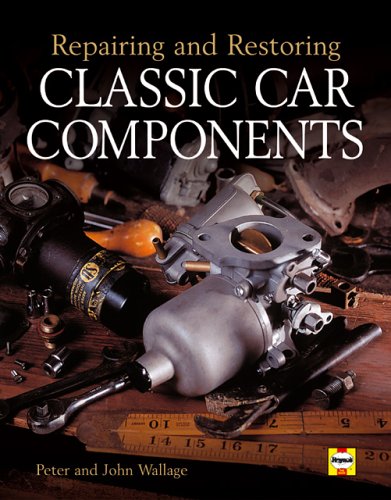
Repairing and Restoring Classic Car Components
- Covers welding, grinding, riveting, and soldering
- Repairs door locks, pumps, distributors, and speedometers
- Helps decide DIY vs professional jobs
Best For: Restorers who want to rebuild original components
Complete Illustrated Restoration Guide
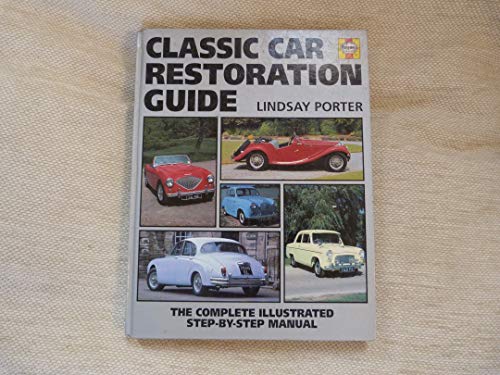
Haynes Restoration Manual: Classic Cars
- Step-by-step coverage from buying to finishing
- Includes bodywork, mechanical, and electrical repair
- Explains panel replacement, lead loading, and painting
Best For: DIY restorers needing a broad, practical restoration reference
Owner-Friendly Technique Guide
Classic Car Restorer's Handbook

- Covers engines, carburetors, upholstery, and chrome
- Practical help for common owner restoration jobs
- Compact 176-page guide for quick reference
Best For: Owners who want a concise, hands-on restoration handbook
Beginner Repair and Restoration Guide
The Classic Auto Repair for Beginners

- Built for novices learning vintage car repairs
- Covers no-start diagnosis, tuning, wiring, and rust
- Budget-focused approach with step-by-step logic
Best For: Beginners who want to learn maintenance and restoration basics
Bodywork Restoration Guide – How to restore Classic Car Bodywork
How to restore Classic Car Bodywork: New Updated & Revised Edition (Enthusiast's Restoration Manual)
Check Price On AmazonIf you’re comparing classic car restoration books for bodywork repair, this revised Veloce manual is aimed squarely at the home restorer. It focuses on practical metalwork tasks like panel removal and fitting, sectional repairs, sills, floors, outriggers, chassis members, welding, and metal forming techniques.
Best For: Home restorers who need a focused guide to classic car bodywork and metal repair.
Pros:
- Covers core body repair tasks from panel fitting to sectional repairs
- Includes welding, metal forming, and tricks of the trade
- Written for vintage and classic car home restoration projects
- Revised edition keeps the content current
Cons:
- Only 128 pages, so it is more focused than exhaustive
- Specializes in bodywork rather than full-car restoration
This is a strong pick if your project centers on rust, panels, and structural repair. It is especially useful when you want a practical, hands-on reference rather than a broad overview.
Originality Reference – Original Ford Model A
For buyers seeking classic car restoration books with an originality focus, this Model A guide stands out as a detailed factory-reference resource. It compiles specifications, equipment, paint, trim, serial numbers, and chassis details to help restore 1928-31 Ford Model A cars accurately.
Best For: Model A owners and restorers who want factory-correct details and authenticity guidance.
Pros:
- Detailed factory-spec and authenticity reference for 1928-31 Model A cars
- Includes 275 specially commissioned color photographs
- Covers paint, trim, serial numbers, options, and technical features
- Useful for confirming correct finishes and components
Cons:
- Highly specific to Ford Model A restorations
- Less useful for general repair or bodywork instruction
If authenticity matters more than general repair tips, this is a very solid reference. It is best treated as a model-specific guide to original details rather than a broad restoration manual.
All-Around Restoration Manual – Classic Cars Restoration Manual
This is one of the broader classic car restoration books for readers who want a practical all-around manual. Lindsay Porter covers interiors and trim, bodywork repairs, classic-car mechanical components, workshop setup, and a detailed buyer’s guide, all in an easy-to-read format with more than 900 illustrations.
Best For: Restorers who want a broad, illustrated guide covering many parts of the project.
Pros:
- Wide coverage of interiors, trim, bodywork, and mechanical components
- More than 900 illustrations make the content easy to follow
- Includes a highly detailed buyer’s guide
- Useful workshop setup section for project preparation
Cons:
- Not tied to a single make or model
- May be less specialized than a model-specific restoration guide
This book fits well if you want one practical manual that touches many parts of a restoration project. Its strength is breadth, backed by a large number of illustrations.
Rust Repair Workshop Guide – Automotive Bodywork & Rust Repair
If your project has rust, dents, or damaged sheet metal, this entry among classic car restoration books is built for exactly that kind of work. Matt Joseph walks through tools, sheet-metal prep, repair patches, welding options, panel fitting, smoothing, and finishing steps for collector cars, hot rods, and muscle cars.
Best For: DIY restorers tackling rust repair and bodywork on collector cars.
Pros:
- Strong focus on rust repair and bodywork fundamentals
- Covers tools, welding, patch fabrication, and panel fitting
- Includes metal finishing, lead filling, and sanding guidance
- Comes with a comprehensive resource guide
Cons:
- Primarily centered on body and rust repair rather than full restoration
- Less model-specific than some restoration books
This is a practical choice when the biggest challenge is sheet metal rather than trim or mechanical detail. It is especially helpful for owners who want to save money by handling minor repairs themselves.
Interior Restoration Guide – Classic Car Interior Restoration Manual
If you’re comparing classic car restoration books for cabin work, this Haynes-style manual focuses on the jobs that matter most inside the car. It covers leather care, seat frames, trim panels, water leaks, and vinyl recoloring in a practical format that makes interior restoration easier to plan and execute.
Best For: DIY restorers who want a hands-on guide to classic car interior repairs and trim renewal.
Pros:
- Covers leather upholstery care and maintenance
- Includes guidance on repairing seat frames and trim panels
- Explains how to cure water leaks and recolor vinyl trim
- Uses the practical Haynes manual format with helpful contact addresses
Cons:
- Focused on interiors rather than full-car restoration
- Best suited to readers who want a procedure-based manual
This is a strong pick if your project is centered on restoring the cabin rather than the body or drivetrain. The step-by-step approach and interior-specific coverage make it a useful bench reference for practical repairs.
Mustang Build Guide – Mustang Restoration Handbook
Among classic car restoration books aimed at a specific model, this handbook is built for 1965-70 Mustang projects. It walks through ground-up or section-by-section restoration, with identification charts, year-by-year equipment changes, and plenty of photos and drawings to help you stay organized.
Best For: Mustang owners restoring a 1965-70 car and needing model-specific reference material.
Pros:
- Covers 1965-70 Mustang restoration in detail
- Includes dozens of identification charts
- Features more than 450 photos and drawings
- Notes year-by-year equipment changes plus disassembly and assembly guidance
Cons:
- Limited to Mustang-specific restoration
- Not a broad classic-car guide for multiple makes
If you’re restoring a first-generation Mustang, this is the most targeted book in the group. The combination of visual references, charts, and change-by-year coverage makes it especially helpful when parts and trim details need to match the correct model year.
Component Repair Guide – Repairing and Restoring Classic Car Components
If you want classic car restoration books that go beyond cosmetics, this one focuses on rescuing and rebuilding old parts. It covers workshop techniques like welding, grinding, riveting, and soldering, plus practical repairs for items such as door locks, fuel pumps, distributors, and speedometers.
Best For: Hobbyists who need to repair and adapt classic car components instead of replacing them.
Pros:
- Explains basic workshop techniques such as welding and soldering
- Covers repairs for door locks, fuel pumps, distributors, and speedometers
- Shows how to adapt new parts to fit old components
- Helps you decide which jobs are DIY and which should go to a professional
Cons:
- More focused on component repair than full restoration flow
- Assumes some willingness to use tools and workshop methods
This is a smart choice if your project depends on keeping original parts working rather than swapping everything out. Its strength is practical repair knowledge, making it a useful companion when a restoration reveals parts that need rebuilding instead of replacement.
Complete Illustrated Restoration Guide – Haynes Restoration Manual: Classic Cars
Haynes Restoration Manual: Classic Cars : The Complete, Illustrated Step-By-Step Guide
Check Price On AmazonIf you want classic car restoration books that walk you through the full process, this Haynes manual is built for exactly that job. It covers everything from engine repair and bodywork to mechanical and electrical equipment, with practical guidance on buying a car to restore and tackling weld-on or bolt-on panels, lead loading, and painting.
Best For: DIY restorers who want a broad, step-by-step reference for body, mechanical, and electrical work.
Pros:
- Covers the restoration process from initial purchase through major repairs
- Includes bodywork methods like panel replacement, lead loading, and painting
- Addresses mechanical and electrical equipment repair
- Uses illustrated, step-by-step guidance
Cons:
- Published in 1994, so some guidance may feel dated
- Broad scope may be less focused than a marque-specific manual
This is a strong all-around choice if you want one of the more practical classic car restoration books for taking a project car from purchase to completion. It is especially useful when you need a single reference that spans bodywork, mechanical systems, and buyer advice.
Owner-Friendly Technique Guide – Classic Car Restorer's Handbook
For buyers comparing classic car restoration books, this handbook focuses on the most common owner-level jobs in a straightforward format. It covers rebuilding engines and carburetors, replacing upholstery, repairing fuel tanks, cleaning chrome, and restoring license plates, making it a handy reference for visible and mechanical refresh work.
Best For: Owners and restorers who want a compact, practical guide to common restoration tasks.
Pros:
- Touches both mechanical and cosmetic restoration tasks
- Includes engine and carburetor rebuilding guidance
- Useful coverage of upholstery, fuel tanks, chrome, and license plates
- Concise 176-page format may be easy to work through
Cons:
- Older 1994 publication may not reflect newer tools or methods
- Shorter length means less depth than larger restoration manuals
This handbook is a solid pick if you want classic car restoration books that stay focused on common repairs and finishing tasks rather than deep theory. Its strength is practical variety, especially for owners balancing mechanical fixes with cosmetic restoration.
Beginner Repair and Restoration Guide – The Classic Auto Repair for Beginners
If you’re shopping classic car restoration books because you need a beginner-friendly path into vintage ownership, this guide is aimed at exactly that problem. It promises step-by-step help with no-start diagnosis, carburetor and ignition tuning, wiring and multimeter use, brake and suspension overhauls, and rust repair, while keeping the focus on practical troubleshooting.
Best For: Beginners who want a straightforward, budget-conscious guide to maintenance and restoration basics.
Pros:
- Written for novices and explains how to think through repairs
- Covers troubleshooting, tuning, electrical basics, and rust repair
- Includes safety-focused brake and suspension guidance
- States a budget-minded approach to tools and repair choices
Cons:
- Newly published, so long-term reception is still limited
- General beginner focus may be less detailed for advanced restorers
This is the most approachable option here for readers who want classic car restoration books that teach fundamentals without overwhelming jargon. It looks especially useful if you are trying to handle common repairs yourself and build confidence before taking on bigger projects.
How We Picked These Classic Car Restoration Books
We selected books that are useful in real garage settings, not just interesting to read. Priority went to clear step-by-step instruction, strong visual support, broad restoration coverage, and titles that address common problem areas like rust, body panels, interiors, trim, and mechanical basics.
We also favored a mix of general references and model-specific manuals so readers can choose between a broad foundation and a book tailored to a particular vehicle.
Quick Comparison
Some Classic Car Restoration Books are best for complete beginners, while others are better as reference manuals once you already understand the basics. General restoration guides are ideal if you work on multiple makes. Model-specific books are better when accuracy matters, especially for Ford, Mustang, or other popular platforms.
If your project is heavily damaged, prioritize bodywork and rust repair titles. If the car is mostly complete, a handbook focused on components, interiors, or finishing details may be more valuable.
Key Buying Factors for Classic Car Restoration Books
Project Type
Match the book to the job. A bodywork book will not replace a mechanical repair guide, and a trim or interior manual will not be enough for a full frame-off restoration.
Skill Level
Beginners should look for books that explain tools, terms, and sequence clearly. More experienced restorers may prefer technical depth, specifications, and advanced techniques.
Vehicle Specificity
General Classic Car Restoration Books are flexible, but model-specific books often give better fitment guidance, authenticity tips, and part-by-part details.
Illustrations and Layout
Photos, diagrams, and organized chapters matter. In restoration work, visual references are often as important as the written instructions.
Coverage Depth
The best books balance enough detail to be useful without becoming overwhelming. Look for titles that cover planning, diagnosis, repair, and finishing in a logical order.
Who Should Buy Which Classic Car Restoration Books?
If you are a first-time restorer, choose a beginner-friendly handbook or a broad illustrated manual. If you are working on body shells, prioritize rust repair and bodywork titles. If your project is a specific marque or model, a dedicated restoration guide is usually the smartest buy.
For many readers, the best approach is to combine one general reference with one specialized book. That gives you both the big-picture process and the detailed guidance needed to get the job done right.