The right rhyming dictionary can turn a stalled verse into a finished lyric. These pocket-friendly references help writers find useful rhyme families quickly, whether they are drafting poems, songs, jingles, or classroom exercises.
Our 2026 roundup includes compact editions, broad general-purpose references, and songwriting-focused options, with attention to usability, coverage, portability, and value.
Best 10 Pocket Rhyming Dictionaries Picks for 2026
Best All-Around Pick
Merriam-Webster Pocket Rhyming Dictionary

- 55,000-word collection
- One-, two-, and three-syllable rhymes
- Compact 3.99-ounce format
Best For: Poets and language lovers seeking broad rhyme coverage
Best for Songwriters
Essential Songwriter's Rhyming Dictionary

- Geared toward contemporary songwriting
- 15,000 entries
- Simple format for fast reference
Best For: Songwriters working with familiar popular-music vocabulary
Best for Modern Word Choice
Hal Leonard Pocket Rhyming Dictionary

- Nearly 30,000 entries
- Alpha-phonetic organization
- Includes proper nouns and expressions
Best For: Writers seeking varied vocabulary and fewer cross-references
Best for Students
Webster's Rhyming Dictionary, Newest Edition

- Over 40,000 words
- Includes multi-syllable and multi-word rhymes
- Grade levels 3–12 listed
Best For: Students and young writers working on varied projects
Best Pocket Companion
The Penguin Pocket Rhyming Dictionary
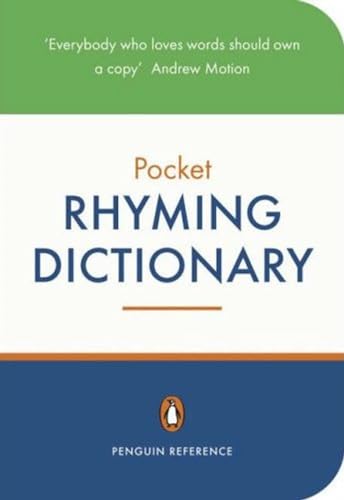
- More than 34,000 rhyming words
- Separate one-, two-, and three-syllable sections
- Compact format with unusual-word explanations
Best For: Portable everyday rhyme reference
Best for Broad Coverage

- More than 45,000 rhyming words
- Includes names, places, and foreign terms
- Sound-based organization with alphabetical index
Best For: Writers wanting extensive reference coverage
Best for Maximum Word Count
Random House Webster's Rhyming Dictionary

- Approximately 60,000 words
- Comprehensive cross-referencing
- Includes poetic glossary, names, and foreign phrases
Best For: High-volume rhyme searching and songwriting
Most Comprehensive
The Complete Rhyming Dictionary

- More than 60,000 entries
- Covers multiple rhyme types and syllable counts
- Includes poetic techniques and forms
Best For: Serious poets, songwriters, and performers
Best Sound Guidance
Merriam-Webster's Rhyming Dictionary

- More than 71,000 rhyming words
- Pronunciations included at every entry
- Includes multisyllabic and multi-word rhymes
Best For: Lyricists, poets, rappers, and copywriters
Best True Pocket Pick
Random House Webster's Pocket Rhyming Dictionary

- Compact 3-by-5.5-inch format
- More than 30,000 words
- Includes cross-references and foreign phrases
Best For: Writers who need a lightweight on-the-go reference
Best All-Around Pick – Merriam-Webster Pocket Rhyming Dictionary
For shoppers comparing pocket rhyming dictionaries, Merriam-Webster’s Pocket Rhyming Dictionary is a straightforward choice with 55,000 words and an alphabetical listing of rhyming sounds. Its compact 3.5-by-5.25-inch format makes it practical for a writing desk, classroom, or travel bag.
Best For: Poets and language lovers who want broad coverage in a small reference book.
Pros:
- Includes 55,000 words.
- Covers one-, two-, and three-syllable rhymes.
- Uses an easy-to-use alphabetical format.
- Compact and lightweight at 3.99 ounces.
Cons:
- Published in 2001, so it may not reflect newer vocabulary.
- Its focus is rhyming sounds rather than a broader songwriting guide.
With the largest stated word count in this group and support for multiple syllable lengths, this is a strong general-purpose option for rhyme discovery.
Best for Songwriters – Essential Songwriter's Rhyming Dictionary
Among pocket rhyming dictionaries, the Essential Songwriter’s Rhyming Dictionary is specifically geared toward contemporary songwriting. Its simple format and 15,000 entries are designed for quick reference when you need a usable rhyme without slowing down the writing process.
Best For: Songwriters who prioritize fast access to commonly used popular-music vocabulary.
Pros:
- Designed specifically for contemporary songwriters.
- Simple format supports fast reference.
- Contains 15,000 entries.
- Pocket-sized design is convenient for keeping nearby.
Cons:
- Has fewer entries than the larger 30,000- and 55,000-word alternatives.
- The supplied details list a 2.31-pound weight, which may be less convenient for carrying.
- Published in 1996.
This is the most purpose-built option for lyric writing, especially if a concise collection of familiar songwriting words matters more than maximum breadth.
Best for Modern Word Choice – Hal Leonard Pocket Rhyming Dictionary
The Hal Leonard Pocket Rhyming Dictionary is a useful middle ground for shoppers seeking pocket rhyming dictionaries with substantial coverage and a writer-focused layout. Its nearly 30,000 entries are organized alpha-phonetically to maximize word choice and reduce cross-referencing.
Best For: Singer-songwriters, poets, and writers who want varied vocabulary in a compact reference.
Pros:
- Contains nearly 30,000 entries.
- Alpha-phonetic organization is intended to minimize cross-referencing.
- Includes standard vocabulary, proper nouns, and popular expressions.
- Compact 4-by-5.5-inch format and 4.8-ounce weight.
Cons:
- Published in 2003, so its claim of contemporary coverage may not include recent terms.
- It has fewer entries than Merriam-Webster’s 55,000-word option.
Its combination of a moderate word count, specialized organization, and varied entry types makes it a practical choice when word selection matters as much as rhyme matching.
Best for Students – Webster's Rhyming Dictionary, Newest Edition
For students and general writers comparing pocket rhyming dictionaries, Webster’s Rhyming Dictionary, Newest Edition offers over 40,000 words arranged by rhyming sounds. It also includes multi-syllable and multi-word rhymes, supporting poetry, lyrics, slogans, jingles, and other writing projects.
Best For: Students, young writers, poets, and lyricists needing a broad school-friendly reference.
Pros:
- Includes over 40,000 words.
- Arranges words by rhyming sounds in an alphabetical format.
- Covers multi-syllable and multi-word rhymes.
- Lists a reading age of 8–18 and grade level of 3–12.
Cons:
- At 224 pages, it is shorter than several competing options.
- The supplied dimensions make it larger than the smallest pocket formats.
- It may be more educationally oriented than songwriting-specific.
This is a flexible choice for school-age users and general-purpose writing, pairing substantial coverage with clear applications across poetry, lyrics, advertising, and wordplay.
Best Pocket Companion – The Penguin Pocket Rhyming Dictionary
For writers who want pocket rhyming dictionaries that are easy to carry, The Penguin Pocket Rhyming Dictionary offers a practical balance of breadth and portability. It covers more than 34,000 words, distinguishes close from less exact rhymes, and organizes entries by syllable count.
Best For: Poets, lyricists, and casual writers who need a compact rhyme-finding reference.
Pros:
- Lists rhymes for more than 34,000 words.
- Separates one-, two-, and three-syllable rhymes.
- Distinguishes close rhymes from less exact matches.
- Provides concise explanations of unusual words.
Cons:
- Its pocket format offers fewer entries than some larger dictionaries.
- Published in 2007, so it may not reflect newer vocabulary.
This is a strong choice when portability matters most and you still want useful guidance for both common and obscure words.
Best for Broad Coverage – New Oxford Rhyming Dictionary
Among pocket rhyming dictionaries and larger desk references, the New Oxford Rhyming Dictionary stands out for extensive coverage and clear navigation. It includes rhymes for more than 45,000 words, with proper names, place names, and foreign terms used in English.
Best For: Serious poets, lyricists, and writers who prioritize range, organization, and creative guidance.
Pros:
- Covers more than 45,000 words.
- Includes proper names, place names, and foreign terms used in English.
- Groups words by sound and provides an alphabetical index.
- Offers usage notes, literary examples, and a rhyming introduction.
Cons:
- Its 9.2-by-6-inch format is less pocket-friendly than a true compact dictionary.
- At 1.76 pounds, it is comparatively heavy for carrying around.
This is the most feature-rich option here, making it better suited to a writing desk than a coat pocket.
Best for Maximum Word Count – Random House Webster's Rhyming Dictionary
If your priority in pocket rhyming dictionaries is finding the widest possible selection of entries, Random House Webster’s Rhyming Dictionary offers approximately 60,000 words. It also adds cross-referencing, a glossary of poetic terms, contemporary proper names, and foreign phrases.
Best For: Writers, poets, and songwriters who need a high-volume general rhyming resource.
Pros:
- Includes approximately 60,000 words.
- Provides comprehensive cross-referencing.
- Contains a glossary of poetic terms.
- Includes contemporary proper names and foreign phrases.
Cons:
- Its larger dimensions make it less pocketable than a compact edition.
- The supplied description gives less detail about rhyme organization than the other listed options.
Choose this edition when entry count and supporting reference material matter more than the smallest possible format.
Most Comprehensive – The Complete Rhyming Dictionary
For shoppers seeking pocket rhyming dictionaries with unusually broad coverage, The Complete Rhyming Dictionary is a substantial reference. Its 60,000-plus entries and coverage of multiple rhyme types make it a flexible choice for serious writing projects.
Best For: Songwriters, poets, teachers, students, speechmakers, and performers who want extensive rhyme options plus guidance on poetic techniques and forms.
Pros:
- More than 60,000 entries, including over 10,000 new entries in the updated edition
- Includes sight, vowel, consonant, and one-, two-, and three-syllable rhymes
- Covers proper names, slang, and scientific words
- Includes a guide to poetry techniques and forms
Cons:
- At 720 pages, it is less compact than a typical pocket reference
- Published in 1992, so some contemporary vocabulary may be limited
This is the strongest option here for maximum breadth and creative reference material, though its larger page count may make it better suited to a desk or writing space than a pocket.
Best Sound Guidance – Merriam-Webster's Rhyming Dictionary
Merriam-Webster’s Rhyming Dictionary is a strong choice among pocket rhyming dictionaries for writers who want extensive listings organized by sound. Pronunciations at every entry and more than 71,000 rhyming words support precise word selection.
Best For: Poets, lyricists, rappers, slogan writers, and anyone who needs multi-word, multisyllabic, name, brand, or trademark rhymes.
Pros:
- Features more than 71,000 rhyming words
- Includes thousands of multi-word and multisyllabic answers
- Groups words by rhyming sound and syllable count
- Provides pronunciations at every entry
Cons:
- At 352 pages and 5.75 by 8.5 inches, it is not the smallest pocket-format option
- Published in 2007, so newer terms may not be included
Its sound-based organization and entry pronunciations make this a practical pick when accuracy matters, while the broad coverage suits both traditional and contemporary writing formats.
Best True Pocket Pick – Random House Webster's Pocket Rhyming Dictionary
For shoppers specifically comparing pocket rhyming dictionaries, Random House Webster’s Pocket Rhyming Dictionary is the most compact option in this group. It packs more than 30,000 words into a 3-by-5.5-inch format and adds cross-referencing for easier navigation.
Best For: Writers, poets, and songwriters who want a lightweight reference for quick rhyme searches at home, in class, or on the go.
Pros:
- Compact 3-by-5.5-inch design and light 3.99-ounce weight
- Contains more than 30,000 words arranged by rhyme
- Includes new words and foreign phrases
- Features cross-referencing, poetic terms, and contemporary proper names
Cons:
- Has fewer entries than the two larger dictionaries in this roundup
- Published in 2006, so its vocabulary may not reflect the newest usage
This is the clearest choice when portability is the priority. Its coverage is more limited than the larger references, but the pocketable format makes it convenient for spontaneous writing and quick checks.
How We Picked the Best Pocket Rhyming Dictionaries
We compared these Pocket Rhyming Dictionaries by looking at the factors that matter during real writing sessions: word coverage, rhyme organization, portability, edition quality, and intended use. A compact dictionary should be easy to keep beside a notebook or keyboard, while a larger reference may be worthwhile when breadth and unusual word choices matter more than size.
We also considered whether each title is aimed at general writers, poets, songwriters, students, or users who want a more comprehensive reference. Because rhyme systems and layouts vary, the best choice depends on how quickly you need to search and how much creative range you expect from the book.
Quick Comparison
- Best for everyday portability: Pocket editions from Merriam-Webster, Random House, Penguin, and Hal Leonard.
- Best for songwriters: Essential Songwriter’s Rhyming Dictionary and other titles with lyric-focused organization or guidance.
- Best for broad reference use: The Complete Rhyming Dictionary, New Oxford Rhyming Dictionary, and full-size Webster’s or Random House editions.
- Best for familiar, straightforward lookup: Established dictionary brands with clearly arranged entries and conventional rhyme listings.
Key Buying Factors for Pocket Rhyming Dictionaries
Size and Portability
Check the book’s physical dimensions and page count before buying. A genuinely pocketable edition is convenient for travel, rehearsals, classes, and writing away from a desk. Larger books generally provide more entries but are better suited to a shelf or desktop.
Word Coverage
Look for the scope that matches your writing. A concise dictionary may cover common vocabulary efficiently, while a larger volume can help with names, uncommon terms, multisyllabic words, and more precise rhyme options.
Search and Rhyme Organization
Clear alphabetical indexing and well-grouped rhyme families reduce wasted time. If you write songs or perform, prioritize a layout that lets you scan several alternatives quickly rather than one that requires lengthy cross-referencing.
Extras for Writers
Some references include songwriting advice, poetic technique, pronunciation guidance, or a separate craft section. These features can be valuable for beginners, but experienced writers may prefer a simpler dictionary with maximum usable vocabulary.
Who Should Buy Which Pocket Rhyming Dictionaries?
Choose a pocket edition if you want a lightweight backup for a notebook, lyric folder, or travel bag. These are especially practical for students, performers, and writers who usually work with everyday vocabulary.
Choose a songwriter-focused title if you mainly write lyrics and want prompts or terminology selected for musical composition. Choose a full-size or complete reference if you write poetry professionally, need less-common words, or want the broadest possible search range.
Before ordering, confirm the edition, format, and dimensions. Older editions can differ in layout and coverage, while trade paperback versions may be easier to use at a desk than truly compact books. The best option is the one whose balance of portability, coverage, and speed fits your writing routine.