The right thesaurus can do more than provide a list of synonyms. It can help you sharpen character emotion, improve dialogue, strengthen imagery, refine word choice, and avoid repetitive prose.
We selected 10 useful references for different writing styles and budgets, from specialized fiction guides and rhyming dictionaries to trusted general-purpose language references.
Best 10 Thesauruses for Writers Picks for 2026
Best Emotion Reference

- 130 emotions with varied intensity levels
- Body-language, thought, and visceral cues
- Guidance for emotional subtext
Best For: Fiction writers developing distinctive character reactions
Best for Rhymes

- More than 60,000 rhyme entries
- Includes multiple rhyme types and syllable lengths
- Adds poetry techniques and forms
Best For: Poets, songwriters, and lyric-focused writers
Best Comprehensive Reference
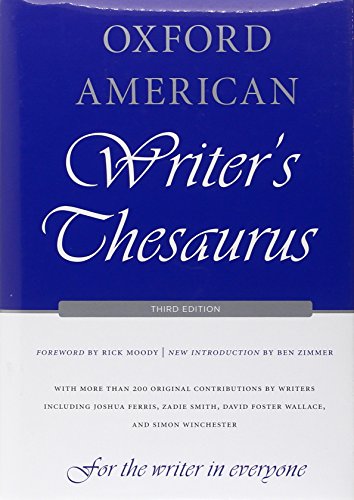
- Over 300,000 synonyms and 10,000 antonyms
- Examples and notes support precise word choice
- Includes Word Finder and graphical toolkit
Best For: Writers and editors seeking an extensive desk reference
Best Accessible Vocabulary Guide

- Organizes more than 200 words by category
- Provides definitions, synonyms, antonyms, and examples
- Helps reduce repetition and clichés
Best For: Writers and students expanding practical vocabulary
Best Overall
Merriam-Webster's Collegiate Thesaurus

- 275,000+ word choices and explanations
- Includes synonyms, antonyms, and idioms
- Alphabetical full-size reference
Best For: Comprehensive word selection and precise usage
Best for Fiction Dialogue

- 500+ dialogue and action tags
- 2,900+ speech-related adverbs
- Emotion and body-language vocabulary
Best For: Fiction writers shaping expressive dialogue
Best Pocket Reference
Webster's New Roget's Pocket Thesaurus

- Compact 3.5-by-5.5-inch format
- Explains differences among related words
- Includes thousands of example sentences
Best For: Portable synonym and antonym lookups
Best All-Around Reference Set
Everyday Language Reference Set

- Dictionary, thesaurus, and vocabulary builder included
- More than 150,000 thesaurus word choices
- Vocabulary builder includes quizzes and root words
Best For: Writers and students building a versatile print reference shelf
Best for Creative Word Choice

- Organized by meaning for idea-driven searches
- Includes synonyms, antonyms, and related terms
- Sample sentences support practical word selection
Best For: Creative writers seeking precise and evocative language
Best Compact Dictionary-Thesaurus Combo
Merriam-Webster Dictionary and Thesaurus

- Dictionary and thesaurus integrated in one volume
- More than 60,000 dictionary entries
- Includes over 13,500 thesaurus entries and usage examples
Best For: Writers wanting one practical paperback for everyday lookups
Best Emotion Reference – Character Expression Guide
For writers searching for thesauruses for writers focused on character emotion, The Emotion Thesaurus offers practical inspiration for replacing repetitive smiles, nods, and frowns. Its organized entries cover physical cues, thoughts, and visceral reactions while also addressing emotional subtext and consistency.
Best For: Fiction writers who want more individualized, believable character reactions and stronger show-don’t-tell prose.
Pros:
- Covers 130 emotions across varying intensity levels.
- Includes body-language cues, thoughts, and visceral responses.
- Explains how to portray hidden feelings through dialogue and nonverbal behavior.
Cons:
- Its specialized focus makes it less suitable as a general synonym dictionary.
- At 308 pages, it is more substantial than a quick pocket reference.
This is a focused writing aid rather than a conventional thesaurus, but its practical, easy-to-navigate format makes it especially useful during character development and revision.
Best for Rhymes – Complete Rhyming Dictionary
Among thesauruses for writers, The Complete Rhyming Dictionary is tailored to anyone who needs sound-based word choices rather than standard synonyms. It combines an extensive rhyme collection with guidance on poetry techniques and forms.
Best For: Poets, songwriters, speechmakers, performers, and students working with rhyme, rhythm, or verse.
Pros:
- Contains more than 60,000 entries, including over 10,000 new entries.
- Includes sight, vowel, consonant, and one-, two-, and three-syllable rhymes.
- Covers proper names, slang, scientific terms, and poetry techniques.
Cons:
- Its primary emphasis is rhyming, so it is not a broad general thesaurus.
- The 1992 publication date may make it less current than newer language references.
Choose this reference when rhyme possibilities are central to the project. Its broad coverage is particularly useful for verse and lyrics, while the included craft section adds technique-focused support.
Best Comprehensive Reference – Oxford Writer’s Thesaurus
For writers who want thesauruses for writers with depth beyond synonym lists, the Oxford American Writer’s Thesaurus combines extensive vocabulary coverage with examples, usage notes, and guidance for choosing between similar words.
Best For: Serious writers, editors, and students who want a detailed reference for precise word selection and usage.
Pros:
- Offers more than 300,000 synonyms and 10,000 antonyms.
- Includes real-life example sentences, usage notes, and a language guide.
- Features a subject-organized Word Finder and graphical word toolkit.
- Adds literary quotations and reflections from contemporary writers.
Cons:
- At 1,128 pages and 3.8 pounds, it is substantial and not especially portable.
- Its 2012 publication date means newer vocabulary developments may not be included.
This is the strongest all-purpose option in the group for detailed vocabulary work. Its examples and selection advice make it more useful for writers who need context, not merely a longer list of alternatives.
Best Accessible Vocabulary Guide – Well-Spoken Thesaurus
For writers looking for approachable thesauruses for writers, The Well-Spoken Thesaurus organizes vocabulary into practical categories and pairs definitions with synonyms, antonyms, and usage examples. It is designed to help make everyday language more precise and memorable.
Best For: Writers, college students, and communicators building vocabulary and avoiding repetition or clichés.
Pros:
- Arranges more than 200 words into easy-to-use categories.
- Each entry includes definitions, synonyms, antonyms, and usage examples.
- Focuses on positive emotions, negative emotions, intellectual terms, and descriptive language.
Cons:
- Its coverage is narrower than a large, comprehensive thesaurus.
- The first edition was published in 2011, so it may not reflect the newest language usage.
This is a straightforward choice for readers who prefer categorized guidance over an enormous reference volume. It works well as an accessible vocabulary-building supplement for everyday writing.
Best Overall – Merriam-Webster's Collegiate Thesaurus
Merriam-Webster's Collegiate Thesaurus - Synonyms, Antonyms, & More: Second Edition
Check Price On AmazonFor writers who want a comprehensive everyday reference, Merriam-Webster’s Collegiate Thesaurus is one of the most substantial thesauruses for writers in this roundup. Its 275,000 word choices, concise definitions, usage examples, and broad synonym coverage make it useful when precision matters.
Best For: Writers seeking a full-size thesaurus for choosing precise words and understanding distinctions among related terms.
Pros:
- Includes more than 275,000 word choices, examples, and explanations.
- Concise definitions help distinguish meanings shared by synonyms.
- Covers synonyms, related words, idiomatic phrases, near antonyms, and antonyms.
- Alphabetical organization supports quick lookups.
Cons:
- Its 1,162-page format is less portable than a pocket reference.
- At 2.9 pounds, it may be better suited to a desk than a writing bag.
This is the strongest all-purpose choice for writers who value breadth, context, and meaning-based guidance over portability.
Best for Fiction Dialogue – The Dialogue Thesaurus
The Dialogue Thesaurus: A Fiction Writer's Sourcebook of Dialogue Tags and Phrases
Check Price On AmazonDesigned specifically for storytellers, The Dialogue Thesaurus gives fiction writers specialized help with dialogue tags, speech description, emotion, and movement. Among these thesauruses for writers, it is the most targeted option for adding expressive detail to character conversations.
Best For: Fiction writers developing dialogue, character emotion, body language, and varied alternatives to “said.”
Pros:
- Offers more than 500 dialogue and action tags.
- Includes over 2,900 speech-related adverbs and thousands of emotion words.
- Provides about 1,000 body-language and movement phrases.
- Examples and alphabetical and category-based organization support brainstorming.
Cons:
- Its focus on dialogue and fiction makes it less useful as a general thesaurus.
- At 172 pages, it has a narrower scope than a comprehensive reference.
This compact sourcebook is a practical choice when the main challenge is making dialogue feel more expressive and varied.
Best Pocket Reference – Webster's New Roget's Pocket Thesaurus
Webster's New Roget's Pocket Thesaurus: The Essential Guide to Synonyms and Antonyms for Writers
Check Price On AmazonWebster’s New Roget’s Pocket Thesaurus is a compact option for writers who need useful word guidance while traveling or drafting away from a desk. It goes beyond synonym lists by explaining differences among related words and showing usage through thousands of example sentences.
Best For: Writers who want a lightweight, portable reference for synonyms, antonyms, word distinctions, and contextual examples.
Pros:
- Small 3.5-by-5.5-inch format is easy to carry.
- Explains important differences among related words.
- Includes thousands of example sentences to clarify meaning in context.
- Provides synonyms and antonyms in a quick-reference format.
Cons:
- Its 264-page pocket format offers less coverage than a full-size thesaurus.
- The 2008 publication date makes it older than some alternatives in this roundup.
Choose this edition when portability is a priority and you still want more guidance than a basic list of interchangeable words provides.
Best All-Around Reference Set – Everyday Language Reference Set
For writers who want more than a standalone thesaurus, this Merriam-Webster set combines three useful language references in one bookshelf-friendly package. It includes a dictionary, a thesaurus with more than 150,000 word choices and usage guidance, and a vocabulary builder for expanding word knowledge.
Best For: Writers, students, and households wanting a broad print reference set for definitions, synonyms, and vocabulary development.
Pros:
- Includes a dictionary, thesaurus, and vocabulary builder.
- The thesaurus provides more than 150,000 word choices plus usage guidance.
- The vocabulary builder includes 3,200 words, quizzes, and root-word instruction.
- Useful for home, office, or school.
Cons:
- Its three-book format is less compact than a single-volume reference.
- The set is broader than a writing-focused thesaurus, so it may include material casual writers do not need.
This is a strong choice if you are building a general writing reference shelf rather than seeking only synonym suggestions. Its combination of word lookup, vocabulary study, and extensive thesaurus coverage gives it wide practical value.
Best for Creative Word Choice – Roget's Thesaurus for Writers
Among thesauruses for writers, this Roget’s volume is designed specifically for finding expressive alternatives during drafting and revision. Entries are organized by meaning and include synonyms, antonyms, definitions, pronunciation guidance, and sample sentences.
Best For: Novelists, bloggers, and other writers looking for emotive, descriptive, and evocative word choices.
Pros:
- Organizes entries by meaning instead of relying only on alphabetical lookup.
- Includes more than 2,300 entries with synonyms, antonyms, and related terms.
- Provides definitions, pronunciation guidance, and a sample sentence for each listing.
- Built around writing use cases, from novels to blog posts.
Cons:
- Its 448-page length is more focused than the larger general-reference set.
- Writers seeking a dictionary alongside a thesaurus will need a separate reference.
This is the most directly writing-oriented option in the group. Its meaning-based organization and example sentences can help turn a vague idea into a more precise or engaging phrase.
Best Compact Dictionary-Thesaurus Combo – Merriam-Webster Dictionary and Thesaurus
This combined Merriam-Webster volume is a practical pick for writers who want definitions and synonym help without carrying separate books. It offers more than 60,000 dictionary entries and more than 13,500 thesaurus entries, with both reference types integrated alphabetically.
Best For: Writers who need a single paperback for quick definitions, synonyms, antonyms, and usage examples.
Pros:
- Combines dictionary and thesaurus entries in one volume.
- Includes more than 60,000 dictionary entries and over 13,500 thesaurus entries.
- Provides synonym and antonym lists along with usage examples.
- The revised edition adds words and senses from fields including technology and culture.
Cons:
- Its thesaurus coverage is smaller than the 150,000-plus word choices in the reference set.
- A combined alphabetical layout may be less specialized for brainstorming by meaning.
If desk space and portability matter, this paperback offers a convenient middle ground. It is especially useful when you regularly need to confirm a word’s meaning before choosing a synonym or antonym.
How We Picked These Thesauruses for Writers
We evaluated each reference for usefulness during real writing and editing sessions. Our criteria included the quality and range of entries, organization, clarity of definitions and examples, portability, specialization, and value for the price. Because writers have different needs, the list includes both traditional synonym references and focused guides for emotion, dialogue, poetic language, and expressive vocabulary.
We also considered whether a book helps you choose the right word rather than simply offering the largest possible list. Context, tone, register, connotation, and ease of navigation matter just as much as word count.
Quick Comparison
| Best For | Look For |
|---|---|
| Fiction writers | Emotion, dialogue, description, and character-focused examples |
| Poets and lyricists | Rhymes, word associations, sound, and poetic technique |
| General writing | Broad synonym coverage with antonyms and clear usage guidance |
| Students and editors | Reliable definitions, contemporary usage, and easy organization |
| Writers on the go | Compact size, durable binding, and fast alphabetical lookup |
Key Buying Factors for Thesauruses for Writers
Specialization
A general thesaurus is a strong all-purpose choice, but a specialized guide may save more time for a particular project. Fiction writers may benefit from references organized around emotional beats, physical reactions, dialogue tags, or descriptive language. Poets may prefer a rhyming dictionary with guidance on poetic craft.
Context and Connotation
Synonyms are rarely interchangeable. Favor books that explain shades of meaning, formality, emotional tone, and common usage. Examples and related terms can help you avoid choosing a technically correct word that sounds unnatural in context.
Coverage and Organization
Check whether you need synonyms only or also antonyms, phrases, idioms, definitions, and related concepts. Alphabetical entries are fast for known words, while thematic or evocative groupings can be better when you know the effect you want but not the exact term.
Format and Portability
A larger reference usually offers more coverage, while a pocket edition is easier to keep beside a notebook or laptop. If you prefer a single reference, a combined dictionary and thesaurus can reduce desk clutter and support both word discovery and verification.
Who Should Buy Which Thesauruses for Writers?
Choose a specialized emotion or dialogue guide if you write fiction and often need help showing character reactions or making conversations more varied. A rhyming dictionary is the natural fit for poets, lyricists, and anyone working with sound and meter.
For broad everyday writing, editing, or schoolwork, choose a respected general thesaurus from a major dictionary publisher. A combined dictionary-and-thesaurus set is especially practical if you regularly check both meaning and alternatives. Writers who value vivid, elevated phrasing may prefer an expressive or writer-focused thesaurus, while travelers and students may be happiest with a compact pocket edition.
Whichever format you choose, use these books as decision-making tools rather than replacement word banks. Read the definition, check the surrounding context, and select the word that matches your intended meaning, voice, and audience.