Wordless storytelling card sets give children and learners a visual way to build narratives without relying on printed text. They can support vocabulary, sequencing, conversation, speech therapy, creative writing, and cooperative play.
This roundup compares 10 options, from themed pre-literacy decks for young children to larger prompt collections and structured sequencing cards for classrooms, homeschool settings, and language work.
Best 10 Wordless Storytelling Card Sets Picks for 2026
Best for Animal-Themed Imagination

- 36 illustrated cards with animals, locations, and props
- Supports pre-literacy storytelling and narrative sequencing
- Uses recycled materials and vegetable-based inks
Best For: Preschoolers building vocabulary, imagination, and storytelling confidence
Best for Feelings and Cooperative Play
Creative Storytelling Card Game

- Uses emotion, problem, character, and setting prompts
- Supports empathy, creativity, and problem-solving
- Portable tin is suited to travel and screen-free play
Best For: Ages 4–12 exploring feelings and imaginative cooperation
Best for Fairytale Story Mixing

- 36 cards feature fairytale characters, places, and objects
- Encourages open-ended, non-competitive storytelling
- Supports language skills, sequencing, and creative play
Best For: Young fairytale fans and early narrative learners
Best for Structured Sequencing Practice
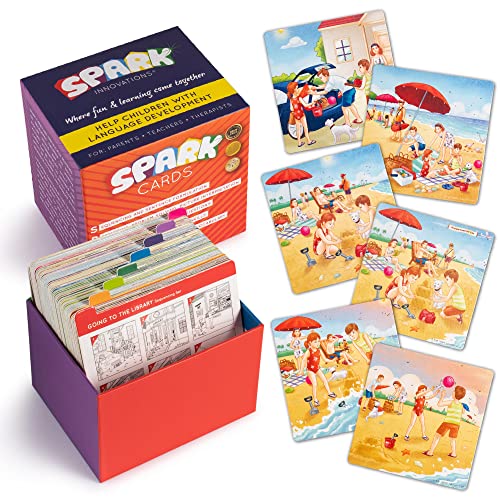
- Large laminated picture cards support hands-on sequencing
- Includes prompts for storytelling, WH questions, and conversation
- Adaptable for therapy, classrooms, homeschool, and home use
Best For: Learners practicing language, sequencing, and narrative skills
Mystery in the Forest

- 36 illustrated cards for open-ended story building
- Supports vocabulary, sequencing, and conversation
- Uses recycled materials and vegetable-based inks
Best For: Pre-literacy storytelling at home or in the classroom
Spark Cards Set 2

- Targets sequencing, language, and problem solving
- Includes therapist- and parent-friendly prompts
- Large laminated cards support dry-erase marking
Best For: Speech therapy and structured language practice
Volcano Island

- 36 cards feature island, animal, and adventure imagery
- Encourages flexible, screen-free storytelling
- Supports language, imagination, and conversation
Best For: Creative storytime for young children
Best Classroom Pick

- 80 illustrated and 20 customizable blank cards
- 65+ activities for language and SEL goals
- Durable, inclusive classroom design
Best For: ESL, speech therapy, and flexible classroom use
Best for Creative Variety
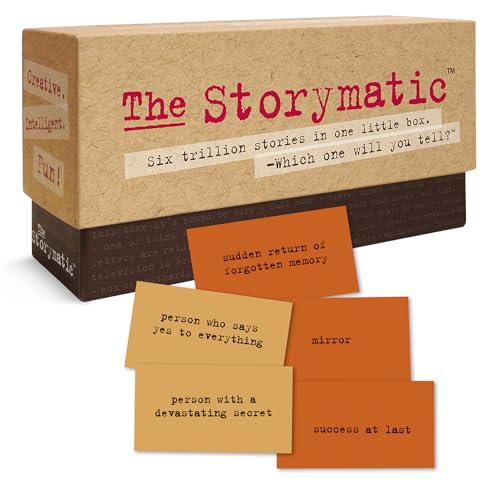
- 540 cards for extensive combinations
- Includes writing prompts and storytelling games
- Designed for ages 12 and up
Best For: Creative writing, teen groups, and adult storytellers
Best for Speech Sequencing

- 10 illustrated five-card story sequences
- Includes manual and sample WH-question cards
- Thick cards for repeated therapy use
Best For: Speech therapy and elementary language development
Best for Animal-Themed Imagination – Animal Village Create a Story
For younger children who enjoy character-driven play, this wordless storytelling card set uses colorful animal-village scenes, locations, and props to encourage open-ended narratives. The 36-card format supports solo play, family storytelling, or classroom conversations without requiring reading skills.
Best For: Preschoolers ages 3 and up who are developing vocabulary, narrative sequencing, and creative confidence.
Pros:
- Recurring characters, settings, and props create many story combinations.
- Illustrated prompts encourage verbal storytelling and conversation.
- Made with 90% recycled materials and vegetable-based inks.
- Suitable for solo, family, and classroom use.
Cons:
- The animal-village theme may be less appealing to children seeking broader subjects.
- At 36 cards, it offers fewer components than some larger storytelling systems.
Animal Village is a straightforward choice when you want a visually inviting, pre-literacy storytelling activity with a strong sustainability focus and flexible play possibilities.
Best for Feelings and Cooperative Play – Creative Storytelling Card Game
This wordless storytelling card set combines illustrated choices for characters, settings, problems, items, and emotions. Its cooperative format gives children room to create scenarios while practicing empathy, problem-solving, communication, and emotional intelligence.
Best For: Children ages 4–12 who benefit from screen-free group storytelling and discussion about feelings or diverse experiences.
Pros:
- Includes prompts involving emotions, problems, characters, items, and settings.
- Encourages empathy, critical thinking, and problem-solving through play.
- Promotes diversity, inclusivity, and self-acceptance.
- Compact tin makes it convenient for travel or outings.
Cons:
- The product details list two players, so it may be less suited to larger groups.
- Its broad mix of themes may provide less focused sequencing practice than a dedicated therapy set.
The Creative Storytelling Card Game stands out for families wanting portable, cooperative prompts that connect imaginative storytelling with emotional and social learning.
Best for Fairytale Story Mixing – Fairytale Mix Ups
Fairytale Mix Ups is a wordless storytelling card set for combining familiar fairytale characters, places, and objects into fresh narratives. The flexible, non-competitive format works for independent play, family storytime, or classroom discussions about characters and plot.
Best For: Children ages 3 and up who enjoy fairytale themes and are beginning to develop language, sequencing, and narrative skills.
Pros:
- Includes 36 illustrated cards featuring fairytale characters, locations, and objects.
- Supports countless combinations and screen-free storytelling.
- Works for solo play, family activities, and classroom use.
- Made with 90% recycled materials and vegetable-based inks.
Cons:
- The fairytale theme may feel limiting for children who prefer realistic or contemporary stories.
- It is designed for open-ended play rather than a structured, rules-based game.
Choose this set if recognizable fairytale imagery is likely to draw children into speaking, sequencing, and inventing stories without the pressure of a competitive game.
Best for Structured Sequencing Practice – Sequencing Cards Set 1
For buyers seeking wordless storytelling card sets with more instructional structure, this sequencing deck focuses on picture-based narratives, sentence building, and communication practice. Large laminated cards and included question prompts make it practical for home learning, classrooms, and speech or ABA therapy.
Best For: Children and learners working on sequencing, expressive and receptive language, WH questions, vocabulary, and social-pragmatic skills.
Pros:
- Large 4.5-inch picture cards are laminated for durability and dry-erase marking.
- Manual includes adaptable prompts for storytelling and conversation.
- Can be adjusted by using all cards or trimming the sequence to match skill level.
- Supports therapy, classroom, homeschool, and family activities.
Cons:
- The set is English-language based, which may not suit every learner.
- Its educational focus may feel less open-ended than purely creative story cards.
- Some product details give inconsistent age information, so buyers should confirm suitability for the specific child.
This is the most practical pick for guided language instruction, especially when an adult wants durable visuals, adjustable sequences, and ready-made questions for targeted practice.
Mystery in the Forest – Imagination Story Cards
For shoppers seeking wordless storytelling card sets, eeBoo Mystery in the Forest offers 36 illustrated cards that children can combine into open-ended stories. The colorful characters, locations, and props support screen-free creative play while encouraging narrative sequencing and conversation.
Best For: Preschool and pre-literacy learners ages 3 and up, family storytelling, solo play, and classroom discussions.
Pros:
- 36 cards support countless story combinations.
- Illustrations encourage vocabulary, sequencing, and imaginative storytelling.
- Made with 90% recycled materials and vegetable-based inks.
Cons:
- Open-ended play may work best with an adult or educator prompting younger children.
- The cards focus on creative storytelling rather than a structured game with fixed rules.
This is a strong choice for buyers who want flexible, reusable prompts for early language development and imaginative play, especially in group or classroom settings.
Spark Cards Set 2 – Sequence Storytelling Cards
Among wordless storytelling card sets, Spark Cards Set 2 is geared toward picture interpretation and sequence-based language practice. Its six large, laminated card sets cover familiar scenarios and include prompts for storytelling, sentence building, prediction, and problem solving.
Best For: Speech therapy, special education, classroom activities, and home practice for children ages 4 and up.
Pros:
- Targets expressive and receptive language, sequencing, and social-pragmatic skills.
- Includes a manual with adaptable questions and conversation prompts.
- Laminated cards can be marked with dry-erase markers to highlight details.
- Large 4.5-by-4.5-inch cards and dividers support organization.
Cons:
- Only six sequence-card sets are included, so the selection is smaller than a 36-card story deck.
- Its therapy and instructional focus may feel less like a casual game.
This set is particularly practical when storytelling is being used to target specific communication goals, since the included prompts help adults adjust activities to different skill levels.
Volcano Island – Adventure Story Cards
eeBoo Volcano Island is a wordless storytelling card set built around colorful island scenes, adventurous children, and tigers. The 36 cards can be linked in different ways, giving children a flexible, noncompetitive way to create stories while practicing language and narrative skills.
Best For: Children ages 3 and up, family storytime, independent creative play, and classroom narrative activities.
Pros:
- 36 cards provide many combinations for fresh stories.
- Supports imagination, conversation, vocabulary, and narrative development.
- Works for solo or shared, screen-free play without fixed competition.
- Made with 90% recycled materials and vegetable-based inks.
Cons:
- Because the cards are open-ended, younger children may benefit from adult guidance.
- It emphasizes imaginative storytelling rather than a defined progression or scoring system.
Volcano Island suits families and educators who want a themed deck that leaves the storytelling open to interpretation, with enough cards for repeated creative play.
Best Classroom Pick – OK Story Cards
For flexible wordless storytelling card sets in classrooms, ESL instruction, or speech support, OK Story Cards combines illustrated prompts with customizable blank cards. Its inclusive, language-neutral visuals make it easy to adapt activities for different ages, language levels, and learning goals.
Best For: Teachers, ESL learners, speech-language sessions, and inclusive classroom storytelling activities.
Pros:
- Includes 80 illustrated prompts plus 20 blank cards for customization.
- Supports vocabulary, grammar, narrative skills, empathy, and peer connection.
- Offers 65+ activities for quick brain breaks or full lessons.
- Linen-finish cardstock is designed for repeated classroom use.
Cons:
- The recommended age information spans young children through teens, so instructors may need to adapt activities by level.
- Blank cards require some teacher preparation to customize.
This is the most adaptable option for educators who want a durable, low-prep storytelling resource that can support multiple language and social-emotional objectives.
Best for Creative Variety – Storymatic Classic
Storymatic Classic – Creative Writing Prompts and Story Games – Storyteller Cards – Teacher Tool
Check Price On AmazonStorymatic Classic is a strong choice among wordless storytelling card sets for older students, writers, and groups that want extensive creative variety. Players combine character and complication cards, then use the included booklet for prompts, suggestions, and non-competitive storytelling games.
Best For: Teens, adults, creative writing classes, homeschool groups, improv clubs, and family storytelling.
Pros:
- Includes 540 cards for a broad range of writing and storytelling combinations.
- Works for solo creativity, classroom activities, remote learning, and group play.
- Booklet provides prompts, suggestions, and non-competitive games.
- Supports writing, speaking, listening, collaboration, and sequential thinking.
Cons:
- Its 12+ recommended age makes it less suitable for younger children.
- The emphasis on character and complication cards may require more interpretation than picture-sequencing sets.
Choose this set when prompt quantity and open-ended creativity matter more than structured speech practice or fixed visual sequences.
Best for Speech Sequencing – Story Cues
Story Cues is a practical option for buyers seeking wordless storytelling card sets with more structure. Its illustrated five-card sequences help children retell stories, build sentences, practice inferencing, and develop social-emotional and problem-solving skills.
Best For: Speech therapy, elementary classrooms, English language learners, and guided social-skills practice.
Pros:
- Provides 10 illustrated stories with five cards per story.
- Color-coded backs make sequencing and organization easier.
- Includes a 36-page manual with step-by-step guidance and sample WH-question cards.
- Thick cardboard cards are designed for repeated use.
Cons:
- With 50 cards, it offers less content variety than the larger 100- and 540-card sets.
- Its structured stories may provide less open-ended freedom for advanced writers.
This set is especially useful when the goal is guided retelling and language development rather than unrestricted story generation.
How We Picked These Wordless Storytelling Card Sets
We selected sets with clear visual prompts and practical uses across early literacy, speech therapy, special education, language learning, creative writing, and family activities. We also considered card quantity, stated age range, thematic variety, sequencing support, and whether a deck is better suited to open-ended storytelling or guided practice.
Because “wordless” can mean different things across products, check the listing carefully. Some decks use only pictures, while others combine visual prompts with written cues, game instructions, or activity suggestions.
Quick Comparison
| Best for | Look for |
|---|---|
| Early literacy | Simple illustrations, familiar settings, and age-appropriate themes |
| Speech therapy | Sequencing, picture interpretation, sentence-building, and retelling activities |
| Classrooms and ESL | Large decks with varied scenes and flexible group activities |
| Creative writing | Unexpected combinations, open-ended prompts, and broad thematic range |
| Family storytelling | Accessible rules, engaging artwork, and cooperative play options |
Key Buying Factors for Wordless Storytelling Card Sets
Age and Developmental Level
For preschoolers, choose recognizable images and a manageable number of cards. Older children and adults can handle ambiguous scenes, unusual combinations, and more complex narrative challenges.
Open-Ended Prompts Versus Sequencing
Open-ended decks encourage imagination and allow several possible stories. Sequencing cards are more structured, making them useful for beginning-middle-end practice, retelling, sentence building, and assessing narrative skills. If you need both, choose a versatile set or combine a themed deck with a sequencing-focused one.
Card Count and Variety
A compact deck can be easier for one child or a short therapy session, while 100-card collections offer more combinations for classrooms and repeated use. Variety matters if several learners will use the cards regularly.
Artwork, Durability, and Portability
Look for images that are easy to identify and discuss, with cards sturdy enough for frequent handling. A compact box or organized storage is helpful for therapists, teachers, and families who move between activities.
Group Use and Accessibility
For classrooms, select cards that can be seen from across a table and support multiple activity formats. Visual-only prompts can reduce reading barriers, but written guidance may benefit instructors who want ready-made games or lesson ideas.
Who Should Buy Which Wordless Storytelling Card Sets?
Choose a themed pre-literacy deck for preschool storytelling, imaginative play, and gentle introductions to narrative structure. Animal, fairy-tale, mystery, and adventure themes can help reluctant storytellers engage.
Choose sequencing or speech-therapy cards when your priority is ordering events, describing pictures, practicing grammar, retelling, or building social communication skills.
Choose a larger illustrated prompt deck for teachers, ESL instructors, homeschoolers, and groups that need many visual conversation starters.
Choose a creative-writing prompt game for older children, teens, adults, or mixed-age groups who want flexible storytelling challenges rather than strictly developmental exercises. The best set is the one that matches the learner’s age, the amount of structure needed, and whether stories will be created individually, with a partner, or in a group.