Great visual astronomy books turn the night sky into something you can actually read. Whether you want help identifying constellations, finding deep-sky targets, or understanding the Solar System, the right guide makes every observing session more rewarding.
Our roundup focuses on books that are practical, well-illustrated, and useful for beginners through experienced stargazers. Below, you’ll find options that emphasize charts, photos, object-finding tips, and clear explanations for real-world observing.
Best 10 Visual Astronomy Books Picks for 2026
Sky Guide

- Photography, graphics, and annotations make sky concepts easy to follow
- Includes 88 constellations, 100+ star charts, and a decade event almanac
- Practical advice for viewing with the naked eye, binoculars, or telescopes
Best For: Families and beginners wanting a broad visual astronomy reference
Night Sky Art

- More than 100 original artworks accompany the text
- Combines mythology, history, and science in one illustrated tour
- Covers constellations, planets, nebulae, and deep-space sights
Best For: Readers who want a beautiful, art-led introduction to the night sky
Observer's Classic
NightWatch: A Practical Guide to Viewing the Universe

- Updated fifth edition with clear, jargon-free observing advice
- Seasonal charts, photos, and modern gear guidance support practical use
- Includes Moon and planet sections plus events through 2035
Best For: Active stargazers who want a practical, long-lasting observing guide
Deep Sky Atlas
Visual Astronomy of the Deep Sky

- Deep-sky handbook focused on galaxies and nebulae
- Drawings and photos are presented on the same scale
- Designed for beginner through advanced telescope users
Best For: Telescope users who want a deep-sky identification atlas
Visual Sky Guide
The Stars: The Definitive Visual Guide to the Cosmos

- Stunning space photography and infographics
- Covers all 88 constellations
- Includes Hubble telescope imagery
Best For: Readers who want a richly illustrated overview of stars and constellations
Night Sky Atlas
National Geographic Stargazer's Atlas: The Ultimate Guide to the Night Sky

- 350+ photos plus 200 maps and graphics
- Sky maps for both hemispheres and star-hopping
- Covers constellations, planets, and moons
Best For: Stargazers who want a comprehensive, photo-rich atlas for observing the night sky
Solar System Visual Tour
The Planets: The Definitive Visual Guide to Our Solar System

- 3-D models plus NASA and ESA photography
- Covers all eight planets and more
- Explains extreme planetary conditions
Best For: Readers who want an illustrated introduction to the planets and solar system exploration
Biblical Stargazing Handbook
The Stargazer's Guide to the Night Sky

- 150 full-color star charts and illustrations
- Covers constellations, planets, and astrophotography
- Includes a free Stargazer's Planisphere
Best For: Families and beginner stargazers wanting a visual, practical guide
National Geographic Galaxy Tour
Visual Galaxy: The Ultimate Guide to the Milky Way and Beyond

- 350+ photos, illustrations, and graphics
- Covers the Milky Way from sun to exoplanets
- Uses detailed maps and mission imagery
Best For: Visual learners wanting a rich Milky Way overview
Illustrated Night-Sky Field Guide
100 Things to See in the Night Sky, Expanded Edition
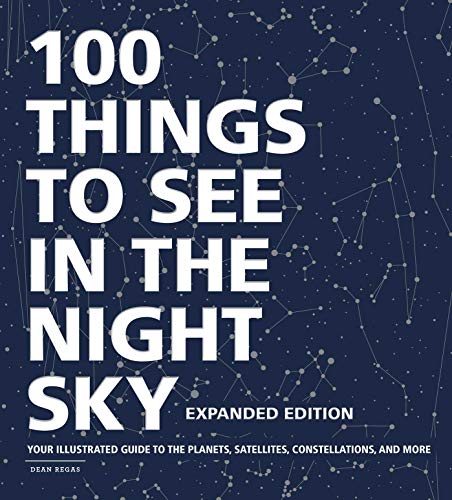
- Lists 100 night-sky objects and events
- Includes photos, star charts, facts, and myths
- Useful for naked-eye and telescope viewing
Best For: Amateur stargazers and casual observers seeking an illustrated guide
Sky Guide – Astronomy: A Visual Guide
If you want visual astronomy books that make the night sky feel approachable, this DK guide is built for that job. It combines striking photography, clear graphics, and annotations with practical observing advice, plus charts and an almanac to help you follow the sky across the year.
Best For: Families, beginners, and amateur astronomers who want a broad, easy-to-use visual reference for planets, constellations, and observing basics.
Pros:
- Includes stunning photography of the planets and clear visual explanations
- Offers a month-by-month guide to the night sky with 88 constellations and 100+ star charts
- Covers observing with the naked eye, binoculars, and telescopes
- Works as both a practical guide and a family-friendly reference
Cons:
- At 352 pages, it is substantial rather than a quick skim
- Its wide scope may be more general than some deep-sky specialists want
This is a strong all-around pick if you want a visually rich astronomy book that still teaches useful observing skills. The revised edition and decade-long event guide add lasting reference value for casual stargazers and hobbyists alike.
Night Sky Art – What We See in the Stars
Among visual astronomy books, this one stands out for readers who want art and skywatching side by side. It mixes more than 100 original illustrations with stories, legends, and scientific facts, giving you an attractive tour of constellations, planets, and other celestial sights.
Best For: Readers who enjoy mythology, original artwork, and a gentle introduction to the night sky.
Pros:
- More than 100 original art pieces create a highly visual experience
- Blends mythology, history, and science in an easy-to-read format
- Covers constellations, the moon, visible planets, nebulae, and deep space
- Compact 160-page format makes it approachable
Cons:
- Less focused on hands-on observing instructions than practical guidebooks
- Its emphasis on art and lore may not suit readers seeking a technical manual
This is a beautiful choice if you want a book that captures the wonder of stargazing as much as the science. It is especially appealing for readers who like a more atmospheric, gift-worthy astronomy book.
Observer's Classic – NightWatch: A Practical Guide to Viewing the Universe
If you’re comparing visual astronomy books for practical stargazing, NightWatch is one of the most useful picks here. This revised fifth edition focuses on clear, jargon-free guidance, updated seasonal star charts, and modern observing topics like digital astrophotography and computerized telescopes.
Best For: Stargazers of all levels who want an updated, practical reference for observing the night sky.
Pros:
- Seasonal star charts simulate the night sky and identify stars and constellations
- Updated throughout with revised text, redesigned pages, and newer photos
- Covers binoculars, telescopes, lunar features, eclipses, and conjunctions through 2035
- Includes a new chapter on digital astrophotography and modern gear
Cons:
- More reference-oriented than coffee-table style visual books
- Some readers may find the depth of information more than they need for casual browsing
This is the strongest choice if your priority is function over decoration. It combines visual charts with up-to-date observing advice, making it a dependable long-term guide for active amateurs.
Deep Sky Atlas – Visual Astronomy of the Deep Sky
For readers shopping visual astronomy books with a deep-sky focus, this handbook is aimed squarely at telescope users. It centers on a visual atlas of galaxies and nebulae, using drawings and photographs on the same scale to help with identification.
Best For: Beginner to advanced amateur astronomers who want a visual atlas for observing deep-sky objects through a telescope.
Pros:
- Focuses on important galaxies and nebulae observed by telescope users
- Uses a visual atlas as the core of the book
- Drawings and photographs on the same scale help with identification
- Suitable for both beginners and advanced amateurs
Cons:
- More specialized than general night-sky books
- Older publication may feel less current than newer guides
This is the best match if your interest is specifically deep-sky observing rather than a broad introduction. Its atlas-style approach makes it a practical companion for telescope sessions focused on galaxies and nebulae.
Visual Sky Guide – The Stars: The Definitive Visual Guide to the Cosmos
If you want visual astronomy books that make the night sky feel approachable, The Stars leans heavily on stunning space photography and easy-to-read infographics. It covers the cosmos from the Big Bang to hundreds of billions of stars, while also explaining all 88 constellations in a way that supports both casual browsing and practical sky identification.
Best For: Readers who want a richly illustrated overview of stars, constellations, and deep-sky imagery.
Pros:
- Uses stunning space photography and clear infographics throughout.
- Explains all 88 constellations, including well-known patterns like Orion and Ursa Major.
- Includes rare Hubble Space Telescope sights such as dust clouds and nebulae.
- Offers eye-catching facts that make the scale of the universe memorable.
Cons:
- At 256 pages, it is substantial rather than a quick skim.
- Its broad scope may be more visual overview than field guide.
This is a strong pick if your priority is a beautiful, big-picture astronomy book with enough explanation to make the imagery meaningful. It works well as a coffee-table reference for anyone who enjoys learning the sky through visuals.
Night Sky Atlas – National Geographic Stargazer's Atlas: The Ultimate Guide to the Night Sky
For shoppers comparing visual astronomy books, Stargazer’s Atlas stands out as a large-format, heavily illustrated reference that balances beauty with practical observing help. It pairs more than 350 photographs with 200 maps and graphics, plus star maps, star-hopping charts, and detailed coverage of the 88 constellations, planets, dwarf planets, and moons.
Best For: Stargazers who want a comprehensive, photo-rich atlas for learning and observing the night sky.
Pros:
- More than 350 photographs and 200 maps/graphics provide strong visual coverage.
- Includes sky maps for both hemispheres and star-hopping maps.
- Covers all 88 constellations with myths, ID tips, and key stars and galaxies.
- Also maps planets, dwarf planets, and several moons for a broader astronomy view.
Cons:
- Large format and 432 pages make it a heavy, substantial book.
- Its depth may be more than a casual reader needs.
This atlas is best if you want one of the most practical visual astronomy books for real-world stargazing. It combines reference value with presentation quality, making it especially useful for anyone who wants to identify what they see in the sky.
Solar System Visual Tour – The Planets: The Definitive Visual Guide to Our Solar System
If you prefer visual astronomy books focused on our own neighborhood, The Planets offers a lively tour of the Solar System with 3-D models and NASA and European Space Agency photography. It moves from Mercury to Jupiter and beyond, explaining the unusual conditions and scale of each world in a way that makes the subject easy to explore visually.
Best For: Readers who want an illustrated introduction to the planets and solar system exploration.
Pros:
- Uses 3-D models alongside NASA and ESA photography.
- Explores each planet with vivid, memorable examples of extreme conditions.
- Covers moons, dwarf planets, asteroids, comets, and space exploration.
- Edited by space scientist Maggie Aderin-Pocock for an informed presentation.
Cons:
- Focuses on the Solar System, so it is less broad than star or constellation atlases.
- At 256 pages, it is a visual guide rather than an exhaustive technical text.
This is a smart choice if you want a polished, image-driven planetary overview rather than a general sky atlas. It fits especially well for readers who like astronomy books that explain big ideas through striking visuals and concise science.
Biblical Stargazing Handbook – The Stargazer's Guide to the Night Sky
If you want one of the more practical visual astronomy books for learning the night sky, this guide keeps things approachable with 150 full-color star charts, diagrams, and clear summaries. It covers constellations, planets, celestial events, and even basic astrophotography, making it a solid pick for readers who want to identify what they see overhead and use that knowledge on real stargazing outings.
Best For: Families, homeschoolers, and beginner-to-intermediate stargazers who want a highly visual, easy-to-follow guide with a biblical perspective.
Pros:
- Includes 150 full-color star charts and many illustrations
- Covers practical topics like constellations, planets, telescope use, and camera settings
- Written to be easy to understand for ages 10-100
- Comes with a free Stargazer’s Planisphere for locating stars
Cons:
- Christian and creationist perspective may not suit every reader
- Focuses more on guided learning than deep technical astronomy
- Large hardcover format may be less convenient to carry outdoors
This is a strong choice if you want a hands-on night-sky reference that teaches by showing rather than overwhelming. Its combination of charts, diagrams, and step-by-step guidance makes it especially useful for practical backyard observing.
National Geographic Galaxy Tour – Visual Galaxy: The Ultimate Guide to the Milky Way and Beyond
For readers looking for visual astronomy books with a polished, magazine-style presentation, this National Geographic title delivers a dense mix of more than 350 photographs, illustrations, and graphics. It follows the Milky Way from the sun outward, explains where stars form and black holes appear, and finishes with the galaxy’s place in the broader universe, all alongside clear scientific information and detailed maps.
Best For: Visual learners who want a large, image-rich overview of the Milky Way and the wider cosmos.
Pros:
- More than 350 photos, illustrations, and graphics
- Tracks the Milky Way from the sun outward in a clear sequence
- Includes detailed maps and imagery from recent space missions
- Pairs visuals with authoritative scientific information
Cons:
- More of a broad visual tour than a hands-on observing guide
- Heavier, larger format may be less travel-friendly
- Best suited to readers interested in the Milky Way specifically
This book stands out if you want a visually rich, modern overview of our galaxy rather than a field guide for backyard use. It works well as a coffee-table style astronomy reference that is still grounded in clear science.
Illustrated Night-Sky Field Guide – 100 Things to See in the Night Sky, Expanded Edition
If you want visual astronomy books that help you spot what’s overhead right away, this expanded guide is built around 100 objects and events you can look for with a telescope or the naked eye. It combines practical skywatching tips with photographs, star charts, facts, and myths, giving you an easy way to decide what to look for on a given night.
Best For: Amateur stargazers, campers, and backyard observers who want an illustrated checklist of night-sky sights.
Pros:
- Organizes the sky into 100 things to see
- Includes photographs, star charts, facts, and traditional myths
- Works for both naked-eye viewing and telescope use
- Good for casual reading or planning an observing session
Cons:
- Less comprehensive than a full astronomy textbook
- Not as focused on deep technical explanation
- Expanded format still centers on selected highlights rather than the entire sky
This is a practical pick if you want a visually friendly reference that helps you actually find objects in the sky. Its mix of images and simple guidance makes it especially useful for casual, repeatable stargazing.
How We Picked These Visual Astronomy Books
We favored books that help readers observe, identify, and understand celestial objects rather than just admire them. That means strong visuals, accurate sky maps, clear organization, and content that works at the eyepiece or with binoculars.
We also looked for a useful mix of formats: broad night-sky guides, deep-sky references, Solar System books, and atlas-style books for navigation. The best Visual Astronomy Books balance inspiration with practical observing value.
Quick Comparison
If you want a single all-purpose starter, choose a broad beginner-friendly guide with charts and object descriptions. If you already know the constellations, an atlas or deep-sky reference may be more useful. For younger readers or casual observers, illustrated overviews can be easier to use than text-heavy manuals.
Key Buying Factors for Visual Astronomy Books
Level of Experience
Beginners should look for simple star maps, seasonal observing tips, and clear labels. Intermediate and advanced readers may prefer books with detailed object lists, finder charts, and more technical depth.
Type of Observing
Think about how you observe. Naked-eye stargazing, binocular scanning, telescope use, and astrophotography all call for different content. Some Visual Astronomy Books are best for learning the sky, while others are built for hunting specific targets.
Map and Image Quality
For visual astronomy, layout matters. Large charts, legible labels, and accurate illustrations are essential. If you plan to use the book outdoors, readability in low light is a real advantage.
Scope and Structure
Some books cover the entire cosmos, while others focus on the Moon, planets, Milky Way, or deep sky. Pick a book whose scope matches what you most want to see.
Who Should Buy Which Visual Astronomy Books?
Beginners usually get the most value from general guides and atlases that explain where to look and what to expect. Casual stargazers may prefer visually rich books with standout images and bite-sized explanations. Telescope owners often benefit from deeper observing references with object-by-object guidance. If you want a gift, choose a broadly appealing title with strong illustrations and accessible language.
For most buyers, the best choice is the one that matches both their current skill level and their preferred way of exploring the sky. A well-chosen visual astronomy book can serve as a night-by-night companion for years.