Whether you are learning tree identification, planning hikes, or building a reference shelf, the right field guide makes unfamiliar species easier to recognize.
These 10 tree field guide books cover Eastern forests, North America, beginner-friendly identification, bark-focused research, and compact trail use.
Best 10 Tree Field Guide Books Picks for 2026
Classic Regional Companion
Audubon Eastern Trees Field Guide

- Nearly 700 species covered
- Full-color identification photographs
- Compact eastern-region reference
Best For: Eastern-region beginners and experienced tree enthusiasts
Illustrated North American Reference

- Covers over 600 species
- More than 4,100 detailed paintings
- Includes over 500 range maps
Best For: Readers seeking detailed North American identification
Maximum Eastern Coverage
Trees of Eastern North America

- Covers 825 species
- Includes leaf and twig keys
- Features Quick ID summaries and maps
Best For: Eastern-region readers who prioritize comprehensive coverage
Bark-Based Specialist
Bark: Northeast Tree Field Guide

- Identifies trees by bark
- Covers 67 Northeast species
- Includes a practical ID key
Best For: Northeast hikes and identification outside leaf season
Comprehensive Reference
Audubon Trees of North America

- Covers 540+ North American tree species
- Nearly 2,500 photos show key features
- Includes conservation and climate information
Best For: Serious reference use at home or on planned outings
Classic Regional Guide

- Covers 455 eastern tree species
- Designed for eastern North America and Midwest users
- Combines plates, drawings, photos, and range maps
Best For: Field identification in the eastern United States and Canada
Beginner Pocket Pick
National Geographic Trees and Shrubs

- Compact 184-page beginner guide
- Weighs just 7.8 ounces
- Includes photos, art, graphics, and key facts
Best For: Portable identification for beginners and casual outings
Best Beginner Pick
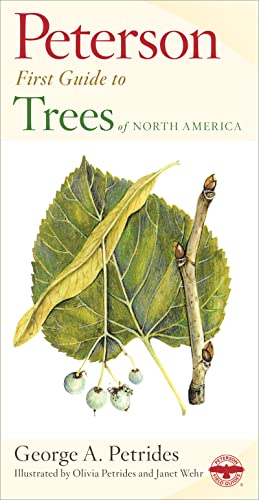
- Beginner-focused identification system
- 243 trees and 200 color illustrations
- Compact 128-page format
Best For: New naturalists and younger readers
Best All-Photographic Reference
National Wildlife Federation Trees

- More than 700 species and varieties
- Over 2,000 habitat and feature photos
- Waterproof cover for field use
Best For: Detailed outdoor identification across North America
Best Compact Species Coverage

- Over 730 species in 76 families
- 160 range maps and feature-based identification
- 12-ounce portable format
Best For: Trail walks and broad field identification
Classic Regional Companion – Audubon Eastern Trees Field Guide
For shoppers comparing tree field guide books, the Audubon Society Field Guide to North American Trees: Eastern Region offers a compact reference covering nearly 700 species across the eastern region, generally including states east of the Rocky Mountains. Its full-color photographs and practical coverage make it useful at home or in a day pack.
Best For: Beginners and experienced tree enthusiasts who want a broad eastern-region guide with photographic identification aids.
Pros:
- Covers nearly 700 eastern-region tree species.
- Uses full-color photographs of leaves, bark, flowers, fruit, and fall leaves.
- Compact format suits field trips and home reference use.
Cons:
- Its regional coverage is not intended for the Rocky Mountain states and areas farther west.
- At 714 pages, it may feel substantial for a lightweight day pack.
This is a versatile choice when you want photographic coverage in a traditional, comprehensive field-guide format. Confirm that the eastern-region scope matches your location before buying.
Illustrated North American Reference – The Sibley Guide to Trees
Among tree field guide books, The Sibley Guide to Trees stands out for its detailed illustrations, range maps, and structured approach to identifying more than 600 North American tree species. It combines visual detail with taxonomic organization, making it useful for careful comparison in the field or at home.
Best For: Naturalists, travelers, and tree lovers who prefer detailed artwork, range information, and grouped related species.
Pros:
- Features more than 4,100 detailed paintings.
- Covers leaves, bark, needles, cones, flowers, fruit, twigs, and silhouettes.
- Includes more than 500 range maps for nearly all species.
- Arranges related species taxonomically for comparison.
Cons:
- At 2.28 pounds, it is heavier than some compact field references.
- The 426-page guide may require more careful study than a quick photo-based guide.
Sibley’s guide is a strong pick for readers who want depth and visual precision rather than a minimal pocket reference. Its broad North American scope also makes it suitable for travel across regions.
Maximum Eastern Coverage – Trees of Eastern North America
For shoppers seeking comprehensive tree field guide books, Trees of Eastern North America covers 825 native and naturalized species from eastern Canada and the United States as far west as the Great Plains. Its Quick ID summaries, keys, illustrations, descriptions, and range maps support both quick checks and deeper study.
Best For: Eastern North American tree enthusiasts who want the broadest species coverage and an information-rich reference.
Pros:
- Covers 825 species, including overlooked small trees and shrubs.
- Provides Quick ID summaries, keys to leaves and twigs, and range maps.
- Includes detailed descriptions, thousands of color paintings, and updated taxonomy.
- Adds background on tree identification, ecology, and plant structure.
Cons:
- At 2.94 pounds and 720 pages, it is less convenient for lightweight hikes.
- Its geographic coverage does not extend throughout the western United States.
This is the strongest option here for breadth within the eastern region. Choose it if species coverage and identification tools matter more than carrying weight.
Bark-Based Specialist – Bark: Northeast Tree Field Guide
Unlike many tree field guide books, Bark: A Field Guide to Trees of the Northeast focuses on identifying trees by bark alone. Covering 67 native and naturalized species from Maine to New York, it is especially useful outside leaf season and includes an identification key plus more than 450 photographs, illustrations, and maps.
Best For: Hikers, families, and naturalists identifying northeastern trees when leaves are unavailable.
Pros:
- Supports identification by bark throughout the year.
- Includes an easy-to-use identification key.
- Explains bark structure, ecology, appearance, and evolutionary traits.
- Covers each tree’s lifecycle with more than 450 visual resources.
Cons:
- Its 67-species coverage is narrower than broad regional tree guides.
- Geographic scope is limited to the Northeast from Maine to New York.
- Leaf and other non-bark characteristics are supplemental rather than the central focus.
This guide fills a specific but valuable gap: identifying trees when foliage is absent. It works best as a focused Northeast companion or alongside a broader species guide.
Comprehensive Reference – Audubon Trees of North America
National Audubon Society Trees of North America (National Audubon Society Complete Guides)
Check Price On AmazonFor shoppers seeking comprehensive tree field guide books, the National Audubon Society Trees of North America stands out as a substantial reference for identifying trees across the continent. It covers more than 540 species with nearly 2,500 full-color photographs, including bark, fruit, flowers, leaf shape, and seasonal color.
Best For: Nature lovers, hikers, and home reference libraries that need broad North American coverage.
Pros:
- Covers more than 540 tree species across North America.
- Includes detailed photographs, range maps, physical descriptions, habitat information, and similar species.
- Adds conservation status, climate-change range information, a glossary, index, and ribbon marker.
Cons:
- At 592 pages and 2.62 pounds, it is less convenient for carrying on casual walks.
- Its depth may be more than beginners need for quick identification.
This is the strongest choice for readers who want an authoritative, richly illustrated reference rather than a lightweight pocket guide. Its broad coverage and expanded conservation information make it especially useful for serious study and repeated home use.
Classic Regional Guide – Peterson Eastern Trees
A Field Guide to Eastern Trees: Eastern United States and Canada, Including the Midwest
Check Price On AmazonAmong tree field guide books focused on the eastern United States and Canada, this Peterson guide offers detailed identification coverage in a more portable format. It describes 455 native tree species and combines color plates, text drawings, photographs, and range maps to highlight distinguishing features.
Best For: Hikers, students, and field users identifying native trees in eastern North America, including the Midwest and South.
Pros:
- Features detailed descriptions of 455 native eastern North American species.
- Includes 48 color plates, 11 black-and-white plates, and 26 text drawings.
- Provides color photographs and 266 color range maps.
Cons:
- Its regional coverage does not focus on western North America.
- Published in 1998, it is older than the other listed options.
This is a practical regional pick when your identification needs center on the East, Midwest, or South. Its mix of illustrations, photographs, and range maps makes it a focused alternative to larger continent-wide references.
Beginner Pocket Pick – National Geographic Trees and Shrubs
National Geographic Pocket Guide to Trees and Shrubs of North America | cycling-equipment
Check Price On AmazonFor beginners comparing compact tree field guide books, the National Geographic Pocket Guide to Trees and Shrubs of North America offers an easy-to-reference introduction. Its small, lightweight format combines descriptive information, key facts, selected photography, and commissioned art and graphics for identifying larger North American plants.
Best For: Beginners, casual nature lovers, tree-climbers, and anyone who wants a guide that fits easily in a pack.
Pros:
- Compact 184-page format weighs only 7.8 ounces.
- Uses concise descriptions, key facts, photography, art, and graphics.
- Suitable for field use or as an in-home beginner reference.
Cons:
- Provides less depth than the larger Audubon and Peterson guides.
- Its beginner-focused format may not satisfy readers seeking exhaustive species coverage.
This is the most convenient option for quick identification on walks or hikes. Choose it when portability and readability matter more than extensive descriptions, comprehensive imagery, or advanced reference detail.
Best Beginner Pick – Peterson First Guide to Trees
For shoppers seeking approachable tree field guide books, the Peterson First Guide to Trees is designed specifically for beginners. Its 243 trees are organized into six leaf-type and arrangement categories, helping new naturalists narrow down unfamiliar species without feeling overwhelmed.
Best For: Beginning naturalists, younger readers, and anyone who wants a compact introductory guide for learning tree identification.
Pros:
- Uses six leaf-based categories to simplify identification.
- Covers 243 trees with 200 color illustrations.
- Compact 128-page format is easy to carry.
- Written for beginners, with a listed reading age of 11 and up.
Cons:
- Covers fewer species than the two larger North American guides in this roundup.
- Its second edition was published in 1998.
This is the most accessible choice of the three, especially if a straightforward introduction matters more than maximum species coverage or extensive reference material.
Best All-Photographic Reference – National Wildlife Federation Trees
The National Wildlife Federation Field Guide to Trees of North America is a strong choice among tree field guide books for readers who want broad coverage and abundant visual detail. It includes more than 700 tree species and varieties, with more than 2,000 photographs showing leaves, bark, fruits, flowers, and trees in their habitats.
Best For: Hikers, outdoor educators, and serious field users who want extensive North American coverage, range maps, and photographic identification aids.
Pros:
- Covers more than 700 species and varieties.
- Includes over 2,000 images and a unique identification tip for each tree.
- Provides range maps, indexes, a glossary, and a tree-identification section.
- Waterproof cover is useful for field conditions.
Cons:
- At 528 pages and 1.9 pounds, it is the heaviest and most substantial option here.
- Published in 2008, so it is not the newest edition available by date.
Choose this guide when photographic coverage and supporting reference features are priorities. Its waterproof cover adds practical value for repeated use outdoors.
Best Compact Species Coverage – Trees of North America
For buyers comparing tree field guide books with extensive coverage in a lighter format, Trees of North America offers more than 730 species across 76 families. It places identification text, illustrations, and range maps together, while covering tree shape, bark, leaves, flowers, fruit, and twigs.
Best For: Trail walkers, students, and practical users who want broad coverage, quick visual comparisons, and a portable reference.
Pros:
- Covers over 730 species in one volume.
- Includes 160 range maps and both native and important introduced varieties.
- Shows text, maps, and illustrations together for quick identification.
- Includes common and scientific names plus convenient measuring rules.
Cons:
- The revised and updated edition was published in 2001.
- Its format is more reference-oriented than explicitly beginner-focused.
This Golden Field Guide balances wide species coverage with a 12-ounce, 280-page format, making it a practical middle ground between a beginner guide and a larger photographic reference.
How We Picked the Best Tree Field Guide Books
We focused on field guides that combine reliable species coverage with practical identification tools. The selection represents major regional references, continent-wide guides, beginner-oriented books, and specialized options for identifying trees by bark, leaves, habitat, or range.
We also considered portability, illustration and photo quality, organization, geographic usefulness, and how well each book serves its intended reader. Because no single guide is ideal for every forest or experience level, the final list includes complementary choices rather than one universal winner.
Quick Comparison
- Best for Eastern-region coverage: Audubon Society Field Guide to North American Trees: Eastern Region
- Best for detailed illustrations: The Sibley Guide to Trees
- Best for serious regional study: Trees of Eastern North America
- Best for bark identification: Bark: A Field Guide to Trees of the Northeast
- Best for broad North American coverage: National Audubon Society Trees of North America
- Best for beginners: Peterson First Guide To Trees
- Best pocket option: National Geographic Pocket Guide to Trees and Shrubs of North America
Key Buying Factors for Tree Field Guide Books
Geographic Coverage
Start with location. A guide focused on Eastern North America may provide more useful detail for forests in that region than a broad continental book. Check whether the guide covers your state, province, or usual hiking area before buying.
Identification Method
Look for the features you are most likely to observe. Leaf shape and arrangement are common starting points, while bark, twigs, fruit, buds, habitat, and range can help confirm difficult identifications. A bark-centered guide is especially useful when leaves are absent.
Images and Organization
Clear illustrations, color photographs, comparison charts, indexes, and visual groupings can significantly speed up identification. Beginners often benefit from simple leaf-type categories, while experienced users may prefer diagnostic detail and comprehensive species accounts.
Size and Durability
A compact guide is easier to carry on day hikes, but larger books usually offer more images and information. Consider binding, paper quality, weather exposure, and whether you plan to use the book outdoors or primarily at home.
Who Should Buy Which Tree Field Guide Books?
Choose a beginner guide such as Peterson First Guide To Trees if you are learning basic tree characteristics and want a less intimidating starting point.
Choose a regional reference such as the Audubon, Princeton, or eastern-tree guides if you regularly explore forests in the eastern United States or Canada and want more local detail.
Choose a North American guide from Audubon, National Geographic, National Wildlife Federation, or the Golden Field Guide series if you travel widely or need one general reference for multiple regions.
Choose a specialist option such as Bark: A Field Guide to Trees of the Northeast if you often identify trees outside the growing season. For readers who prioritize artwork and detailed visual comparison, The Sibley Guide to Trees is a strong fit.