The best sequencing storytelling card sets turn picture prompts into hands-on practice with ordering, vocabulary, sentence building, and narrative thinking. They can support speech therapy, preschool readiness, special education, ESL instruction, homeschooling, and open-ended play.
This roundup compares 10 options with different story lengths, themes, card formats, and learning goals, so you can choose a set that fits the learner, setting, and level of guidance available.
Best 10 Sequencing Storytelling Card Sets Picks for 2026
Best for Guided Practice
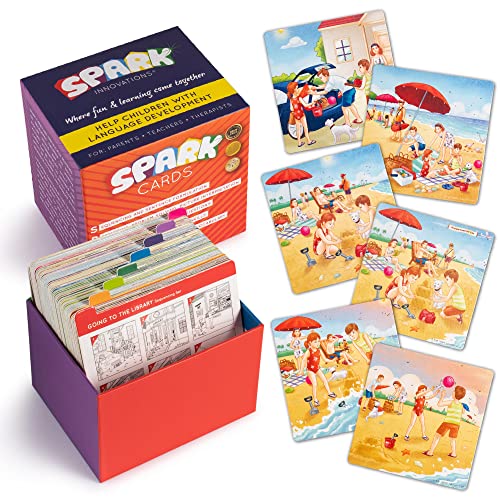
- Targets sequencing and expressive language
- Large laminated cards with dividers
- Includes adaptable storytelling prompts
Best For: Speech therapy, special education, and structured home practice
Best for Animal-Themed Creativity
eeBoo Animal Village Story Cards

- 36 illustrated characters, places, and props
- Encourages open-ended narrative play
- Made with recycled materials and vegetable inks
Best For: Preschool storytelling, family play, and early narrative development
Best for Speech-Themed Variety

- Uses everyday and imaginative activity themes
- Supports language, sequencing, and problem solving
- Large laminated cards include adult prompts
Best For: Speech therapy and guided language practice for children 4+
Best for Fairytale Story Play

- 36 cards create flexible fairytale combinations
- Encourages creativity and narrative confidence
- Suitable for solo, family, or classroom play
Best For: Screen-free fairytale storytelling for children ages 3+
Versatile Therapy Combo
JR Sequencing & Storytelling Cards

- Includes story and question cards
- Supports sequencing and WH questions
- Suitable for therapy, homeschool, and ESL use
Best For: Multi-purpose language and sequencing practice
Creative Story Builder
Mystery in the Forest Story Cards

- 36 illustrated story-building cards
- Encourages open-ended narratives
- Uses 90% recycled materials
Best For: Imaginative preschool storytelling and conversation
Structured Learning Set
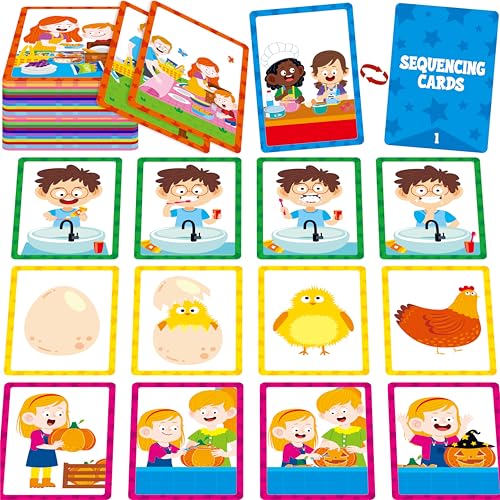
- 72 cards form 18 four-step stories
- Color-coded with numbered self-checking backs
- Supports therapy, ESL, and early learning
Best For: Structured preschool sequencing and logic practice
Creative Volcano Storytelling
Volcano Island Create a Story Cards

- 36 illustrated cards for open-ended narratives
- Builds imagination, vocabulary, and sequencing
- 90% recycled materials with vegetable-based inks
Best For: Preschool storytime and imaginative, screen-free play
Therapy-Ready Sequencing Practice
Story Cues Skilled Sequencing Cards

- 50 cards across 10 five-card stories
- Supports retelling, inferencing, and sentences
- Includes a 36-page instructional manual
Best For: Speech therapy and structured elementary language practice
Community Helper Learning
Large Community Helper Sequence Cards

- 12 four-card stories about community helpers
- Large, durable, laminated cards
- Supports sequencing, WH questions, and sentences
Best For: Preschool learning centers and adjustable storytelling practice
Best for Guided Practice – Spark Cards Sequencing Set 1
For structured sequencing storytelling card sets, Spark Cards Set 1 combines large picture cards with prompts that help children build stories, answer WH questions, and practice language skills. Its laminated finish and included dividers make it practical for therapy, classrooms, or home use.
Best For: Speech therapy, special education, homeschooling, and guided storytelling practice for children starting around age 4.
Pros:
- Targets sequencing, vocabulary, sentence structure, predicting, and inferencing.
- Large, colorful 4.5-by-4.5-inch cards are laminated for dry-erase highlighting.
- Includes a manual with adaptable questions and stand-up tab dividers.
Cons:
- The structured therapy focus may feel less open-ended than creative story cards.
- The listing gives limited detail about the specific story themes in Set 1.
This is a strong choice when the goal is measurable language practice rather than free-form play. The adaptable card use lets adults adjust difficulty for individual learners or small groups.
Best for Animal-Themed Creativity – eeBoo Animal Village Story Cards
eeBoo Animal Village is a creative option among sequencing storytelling card sets, using illustrated characters, locations, and props to encourage children to connect ideas into original narratives. The open-ended format works well for screen-free storytelling without a fixed solution.
Best For: Preschoolers, family storytelling, solo creative play, and classroom conversations about characters and narrative structure.
Pros:
- Includes 36 cards with recurring animal characters, locations, and props.
- Supports imagination, vocabulary, conversation, and early narrative skills.
- Uses 90% recycled materials and vegetable-based inks.
Cons:
- Open-ended cards may require an adult to provide more structure for sequencing practice.
- The cards are smaller than the large-format Spark Cards sets.
Choose this set when creative storytelling matters more than formal speech drills. Its flexible combinations can keep family or classroom sessions varied while introducing basic story-building concepts.
Best for Speech-Themed Variety – Spark Cards Sequencing Set 2
Spark Cards Set 2 is a practical pick for sequencing storytelling card sets when you want familiar everyday situations to support picture interpretation and language practice. Its themes include activities such as shopping, baking, visiting a vet, and building an igloo.
Best For: Children age 4 and up, speech therapy, classroom activities, sentence building, and guided problem-solving practice.
Pros:
- Covers sequencing, verbal communication, vocabulary, sentence structure, and reasoning.
- Large colorful cards have a laminated surface suitable for dry-erase highlighting.
- Includes prompts for storytelling, conversation starters, and early learning activities.
Cons:
- The supplied details describe six pieces while also listing multiple themes, so exact set contents may need verification.
- Its guided format may be less suitable for children seeking purely imaginative play.
This set fits buyers who want therapy-friendly practice with varied real-world and imaginative scenarios. Adults can use all the cards or adjust the activity level for different learners.
Best for Fairytale Story Play – eeBoo Fairytale Mix Ups
eeBoo Fairytale Mix Ups brings a playful fantasy angle to sequencing storytelling card sets. Children combine illustrated fairytale characters, settings, and objects to invent narratives, making it useful for imaginative language practice and screen-free storytime.
Best For: Children ages 3 and up, family storytelling, solo play, and classroom discussions about characters and story structure.
Pros:
- Includes 36 cards for creating many fairytale combinations.
- Builds imagination, creativity, vocabulary, conversation, and storytelling confidence.
- Supports flexible, non-competitive play and includes English and Spanish language details.
Cons:
- The open-ended design does not provide the same explicit sequencing structure as therapy-focused cards.
- Fantasy themes may be less relevant for practicing everyday event sequences.
This is a good match for families and educators who want children to experiment with narrative structure through familiar fairytale elements. It favors creativity and conversation over formal skill drills.
Versatile Therapy Combo – JR Sequencing & Storytelling Cards
This combo set is a practical choice for buyers seeking sequencing storytelling card sets for speech therapy, homeschooling, ESL/ELL practice, or classroom activities. It includes story cards, question cards, and instructions designed to support sequencing, WH questions, memory, and critical-thinking exercises.
Best For: Families, therapists, and educators who want a multi-purpose card set for sequencing and question-based language activities.
Pros:
- Includes 8 story cards, 8 question cards, and game instructions.
- Supports sequencing, memory, critical thinking, and problem-solving practice.
- Useful for visual prompting, social skills, WH questions, homeschooling, and ESL/ELL activities.
Cons:
- The supplied notes do not specify the themes or detailed content of the individual stories.
- The set is described as cardboard, so storage and handling may matter with frequent use.
Choose this option if you want one combo package that combines story sequencing with guided questions. Its broad educational focus makes it more flexible than a set centered only on creative storytelling.
Creative Story Builder – Mystery in the Forest Story Cards
For buyers comparing sequencing storytelling card sets that encourage open-ended narration, eeBoo’s Mystery in the Forest offers 36 illustrated cards for building flexible stories. Children can connect characters, locations, and props in different combinations while practicing conversation, vocabulary, and narrative skills.
Best For: Preschoolers, families, and classrooms focused on imagination, creative storytelling, and early narrative development.
Pros:
- Includes 36 illustrated cards with characters, scenes, and story prompts.
- Supports imagination, vocabulary, conversation, narrative sequencing, and character development.
- Designed for solo play, family storytelling, and classroom discussions.
- Made with 90% recycled materials and vegetable-based inks.
Cons:
- This is an open-ended story-building set rather than a fixed, step-by-step sequence activity.
- The supplied notes do not identify a self-checking feature for story order.
This set is a strong fit when creative combinations matter more than completing predetermined four-card sequences. It gives children freedom to invent narratives while still reinforcing early storytelling and language skills.
Structured Learning Set – 4-Scene Sequencing Cards
This set suits shoppers looking for sequencing storytelling card sets with clearly defined story order. It provides 18 four-card sequences covering everyday events and logical actions, with color coding and numbered backs to help children group cards and check their answers independently.
Best For: Preschool learning, speech therapy, autism support, ESL instruction, and social-skills activities that benefit from structured visual practice.
Pros:
- Includes 72 cards arranged into 18 four-scene sequences.
- Color coding helps children identify matching cards, while numbered backs support self-checking.
- Bright illustrations support vocabulary, sentence building, cause-and-effect understanding, and storytelling.
- Double-sided lamination is designed for repeated use at home, in classrooms, or in therapy sessions.
Cons:
- The listed manufacturer age range is 36 months to 5 years, so older learners may find the activities basic.
- The cards are paper-based, despite the stated laminated finish.
Consider this option when predictable, hands-on sequencing practice is the priority. Its fixed four-step format and self-checking design make it especially practical for guided instruction and independent early learning.
Creative Volcano Storytelling – Volcano Island Create a Story Cards
For imaginative, screen-free sequencing storytelling card sets, eeBoo Volcano Island uses colorful island scenes, animals, and adventurous children as open-ended prompts. Children can arrange the 36 illustrated cards into different narratives while practicing vocabulary, conversation, and basic narrative structure.
Best For: Preschoolers ages 3 and up, family storytime, solo creative play, and classroom discussions focused on early storytelling.
Pros:
- 36 illustrated cards encourage flexible, non-competitive storytelling.
- Supports imagination, vocabulary, conversation, and narrative sequencing.
- Made with 90% recycled materials and vegetable-based inks.
- Features artwork by Alex Barrow and has received an Oppenheim Gold Best Toy Award.
Cons:
- Open-ended play may provide less structured sequencing practice than numbered story cards.
- The set is recommended for ages 3 and up, so it may be too advanced for younger toddlers.
This is a strong choice when you want creative sequencing storytelling card sets that prioritize imagination and conversation over a single correct story order.
Therapy-Ready Sequencing Practice – Story Cues Skilled Sequencing Cards
Story Cues is a more structured option among sequencing storytelling card sets, with 10 picture-based stories and five cards per story. Created by a speech therapist, it is designed to support sentence building, retelling, inferencing, problem solving, and social-emotional learning in guided practice.
Best For: Children ages 6 and up, speech therapy sessions, elementary classrooms, counselors, and English language learners needing structured language activities.
Pros:
- Includes 50 cards covering 10 brightly colored stories.
- Supports vocabulary, sentence construction, retelling, and critical thinking.
- Color-coded backs and a 36-page manual make activities easier to organize.
- Thick cardboard cards are designed for repeated use.
Cons:
- The advanced story level may not suit younger children or beginning language learners.
- Its strongest fit is guided educational or therapy use rather than completely open-ended play.
Choose this set if you want sequencing storytelling card sets with explicit guidance and skills practice for speech, classroom, or social-language work.
Community Helper Learning – Large Community Helper Sequence Cards
These large community-helper cards offer a practical entry point to sequencing storytelling card sets for children ages 3 and up. With 12 stories containing four cards each, the set lets adults adjust the activity by using fewer cards for simpler practice or expanding the sequence for more advanced sentence and narrative work.
Best For: Preschool and early elementary learners, homeschooling, classroom centers, parent-child conversation, and lessons about community jobs.
Pros:
- Includes 12 community-helper stories with four cards each.
- Large, thick, laminated cards are designed for repeated use.
- Supports event order, sentence building, storytelling, WH questions, and narratives.
- Requires no preparation and accommodates one to four players.
Cons:
- The community-helper theme may be narrower than a general storytelling card set.
- Cards are large and may require more storage space than standard-sized sets.
This is a useful pick for hands-on sequencing practice when you want durable visuals, adjustable difficulty, and a familiar community-helper theme.
How We Picked These Sequencing Storytelling Card Sets
We focused on sets that use illustrated or picture-based prompts to help learners arrange events, explain what happened, and build complete stories. The selection includes dedicated sequencing games, pre-literacy story cards, speech therapy materials, social-skills tools, and flexible classroom or homeschool resources.
Key differences include the number of cards, story complexity, age guidance, theme variety, and whether the set is designed for independent play or adult-led instruction. Because product contents and recommended ages can vary, check the current listing before purchasing, especially when choosing materials for a therapy program or classroom.
Quick Comparison
| Best For | Look For | Typical Advantage |
|---|---|---|
| Preschool beginners | Three- or four-step scenes and clear illustrations | Simple ordering and vocabulary practice |
| Speech therapy | Reusable picture prompts and multiple response options | Practice with describing, sentence building, and retelling |
| ESL and language learners | Familiar themes with visually obvious actions | Conversation prompts without requiring advanced reading |
| Advanced storytellers | Open-ended or mixed-up story formats | More creative interpretation and narrative detail |
| Classrooms and groups | Large cards, durable stock, and enough cards to share | Easier demonstrations and small-group activities |
Key Buying Factors for Sequencing Storytelling Card Sets
Story Length and Difficulty
Short sequences are usually easier for young children or learners who need highly structured support. Longer sequences can build memory, planning, temporal language, and more detailed retelling. If several learners will use the set, a mix of simple and challenging stories offers more flexibility.
Picture Clarity and Theme
Choose images with an obvious beginning, middle, and end when the goal is basic sequencing. Familiar settings, animals, daily routines, and community helpers may encourage faster participation. Fantasy or mystery themes can be more engaging for creative storytelling but may require additional discussion.
Learning Goals and Adult Support
For therapy or special education, look for cards that support prompts such as “first,” “next,” “then,” and “finally,” as well as describing who, what, where, and why. For independent play, prioritize intuitive layouts and simple instructions. Laminated or sturdy cards are useful when materials will be handled frequently.
Format, Quantity, and Portability
Review the total card count, number of stories, card size, storage method, and whether cards are sold as a complete kit or a smaller activity set. Large cards help group instruction, while compact sets are easier to carry between home, school, and therapy sessions.
Who Should Buy Which Sequencing Storytelling Card Sets?
Choose a simple four-scene set for preschoolers learning basic order and logic. Pre-literacy story collections are a strong fit for imaginative play and early language development. Speech therapists and special educators may prefer versatile prompt cards that support sentence expansion, retelling, problem solving, and social communication. ESL and homeschool users should look for clear visuals and themes that can generate conversation without heavy reading demands.
For classrooms or therapy rooms serving multiple ability levels, consider combining a straightforward sequencing set with a more open-ended storytelling deck. That pairing makes it easier to adjust the activity from arranging pictures to explaining motives, predicting outcomes, and creating alternative endings.