The best reading journals for children make it easier for young readers to remember books, share opinions, and build a consistent reading habit. The right journal should feel enjoyable to use while matching a child’s age, writing ability, and preferred level of structure.
We’ve gathered 10 engaging options, including simple reading logs, guided review journals, and larger formats with interactive prompts. Use the guide below to narrow the choices by design, functionality, and everyday practicality.
Best 10 Reading Journals for Children Picks for 2026
Best for Reading Routines

- Records titles, authors, and ratings
- Perforated bookworm progress feature
- Designed for shared reading routines
Best For: Young readers ages 6–8 and their parents
Best for Reading Exploration
- Tracks finished and planned books
- Includes genre and interest recommendations
- Adds creative reading activities
Best For: Children seeking new reading ideas
Best for Detailed Book Reviews

- Includes 55 two-page book reviews
- Adds trackers, index, and reading lists
- Hardcover with lay-flat binding and accessories
Best For: Readers ready for structured book analysis
Best All-in-One Planner

- Combines tracking, planning, and reviews
- Includes library loans and due dates
- Hardback with room for 52 reviews
Best For: Children managing varied reading activities
Best Spacious Elementary Log

- 100 wide-ruled record pages
- Includes ratings, vocabulary, and loan tracking
- Thick paper and child-friendly layout
Best For: Elementary readers who need generous writing space
Best Guided Review Journal

- Two pages for each of 50 book reviews
- Prompts cover summaries, quotes, and vocabulary
- Adds awards, coloring, and reading-list pages
Best For: Ages 7–12 who enjoy structured reflection
Best Yearlong Tracker

- Tracks a full year of reading activity
- Includes minutes, pages, and color-coded progress
- Provides 56 reviews plus challenges and lists
Best For: Ages 6–12 building a consistent reading routine
Best for Early Readers

- 100 interactive book review pages
- Prompts for story details and recommendations
- For ages 6–11 and grades 1–4
Best For: Young readers who need structured prompts and drawing space
Best for Detailed Reviews

- Two-page spread for each book
- Includes vocabulary, quotes, and summaries
- For ages 7–12 and grades 2–6
Best For: Girls who want room for thorough reviews and creative extras
Best for Favorite-Book Tracking

- 100 guided review pages
- Tracks favorite books, authors, and series
- For ages 6–11 and grades 2–5
Best For: Children who enjoy organizing their favorite reading discoveries
Best for Reading Routines – Bookworm Journal
For families looking for reading journals for children, the Bookworm Journal makes logging finished stories a simple shared activity. Children can record a book’s title, author, and rating, then tear off each page’s perforated corner to let the illustrated bookworm “eat” through the journal.
Best For: Young readers ages 6–8 and parents building a regular reading routine.
Pros:
- Encourages children to record each completed book.
- Includes space for the title, author, and rating.
- The tear-off bookworm feature adds a playful progress element.
- Works for bedtime, playtime, naptime, or other reading routines.
Cons:
- The journal is focused on basic logging rather than detailed reviews.
- Its suggested reading range is narrower than some options in this roundup.
This is a particularly approachable choice for children who enjoy visual progress markers and parents who want a low-pressure way to make reading time consistent.
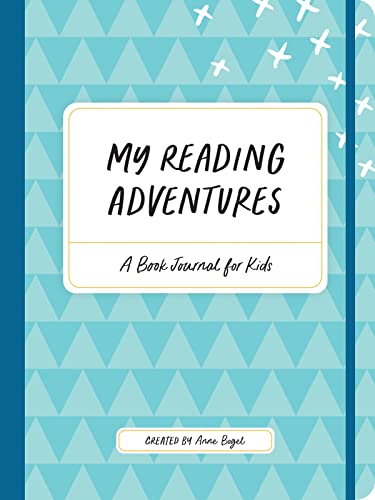
Best for Reading Exploration – My Reading Adventures
Among reading journals for children, My Reading Adventures stands out for combining book tracking with recommendations and creative activities. It gives children places to record what they have read, note what they want to read next, and explore suggested books across different genres and interests.
Best For: Children ages 8–10 who want ideas for what to read next and more than a basic reading log.
Pros:
- Includes space for completed and planned reading.
- Offers book recommendations organized around genres and interests.
- Adds creative reading-related activities.
- Designed to support a lasting interest in reading.
Cons:
- The recommendation lists and activities may be less useful to children who only want a simple tracker.
- It is aimed at older children than preschool and early-grade readers.
This is a strong pick for an enthusiastic junior bookworm who benefits from curated inspiration, reflection space, and a broader reading-project format.
Best for Detailed Book Reviews – Clever Fox Reading Journal
For older children or families wanting more structured reading journals for children, the Clever Fox Reading Journal provides dedicated review pages and reading-management tools. Its format includes an index, reading log, tracker, books-to-read list, and 55 two-page book-review spreads with prompts and customizable space.
Best For: Children who are ready to analyze books in detail and keep an organized long-term record.
Pros:
- Provides 55 book reviews with two pages per book.
- Uses prompts to guide book information and reflection.
- Includes an index, reading tracker, and books-to-read list.
- Has a lay-flat hardcover design with bookmarks, a pen loop, pocket, stickers, and guide.
Cons:
- The detailed format may feel demanding for children who prefer quick entries.
- The supplied notes do not specify a recommended child age range.
Its substantial A5 hardcover construction and review-focused layout make it better suited to committed readers than to children seeking a lightweight, purely playful log.
Best All-in-One Planner – For the Love of Books
For families comparing reading journals for children, For the Love of Books combines daily tracking, planning, library organization, and book reviews in one colorful hardback. Children can maintain a reading checklist, create a literary bucket list, track library loans and due dates, and review up to 52 books.
Best For: Children ages 7–11 who want one journal for daily reading habits, book planning, library loans, and reviews.
Pros:
- Includes a daily reading tracker and books-to-read bucket list.
- Provides a library loans checklist with due dates.
- Offers layouts for reviews, favorite quotes, and extra notes.
- Sturdy hardback design is suitable for backpacks or bookshelf storage.
Cons:
- The many sections may be more than a child needs for simple book logging.
- It provides room for 52 reviews, which may be less capacity than dedicated high-volume logs.
This is a versatile option for children who enjoy checking off progress and recording several kinds of reading information, especially when library use is part of their routine.
Best Spacious Elementary Log – Book Worm Reading Journal
For families comparing reading journals for children, this large softback log offers a straightforward format with plenty of room for young readers to record 100 books. Its wide-ruled pages, simple vocabulary, ratings, and creative prompts make it practical for elementary-age children building reading and writing habits.
Best For: Elementary readers who want generous writing space and a classic book-log format.
Pros:
- Includes 100 spacious reading-record pages with wide ruling.
- Tracks titles, authors, dates, page counts, book types, ratings, and favorite lines.
- Adds a “New Words” log, loan record, index, and children’s fiction checklist.
- Uses thick white paper designed to minimize ink bleed-through.
Cons:
- The 8-by-10-inch softback format may be larger than some children prefer to carry.
- Its simpler layout may feel less game-like than highly interactive journals.
This is a strong choice when the priority is capacity and easy handwriting rather than elaborate activities. The bookshelf-themed cover and child-friendly prompts add personality without crowding the core tracking pages.
Best Guided Review Journal – Interactive Kids’ Book Log
Reading Log: A Book Review Journal For Kids - With Interactive Writing Prompts - Ages 7-12
Check Price On AmazonThis guided option stands out among reading journals for children because each of its 50 book entries uses a two-page spread for reflection. Designed for ages 7–12 and grades 2–6, it combines review prompts with creative activities that encourage children to explain, rate, and personalize their reading.
Best For: Children who benefit from structured book reviews, prompts, and creative extras.
Pros:
- Provides two pages per book for summaries, characters, quotes, vocabulary, questions, and recommendations.
- Includes an index for up to 50 books and a “Books I Want to Read” section.
- Features book awards, coloring pages, an “About Me” section, and opinion prompts.
- Large 8-by-10-inch softback format is suitable for intermediate reading and writing levels.
Cons:
- Capacity is limited to 50 book reviews.
- The guided prompts may be more involved than a child wants for quick reading entries.
Choose this journal when reflection matters as much as record-keeping. Its prompts give children a clear path from basic reading details to summaries, opinions, and recommendations, while the creative pages help keep the process engaging.
Best Yearlong Tracker – Full-Year Kids’ Reading Log
For parents seeking reading journals for children that combine daily tracking with review practice, this 8.5-by-11-inch journal covers a full year and up to 56 book reviews. Monthly progress trackers, reading challenges, and spaces for minutes and pages read make it useful for monitoring consistency as well as comprehension.
Best For: Children ages 6–12 who need a yearlong reading routine with progress tracking.
Pros:
- Tracks a full year of dates, book names, minutes read, and pages read.
- Includes color-coded monthly trackers for a visual view of progress.
- Offers 56 book-review spaces for fiction and nonfiction reading.
- Adds reading challenges, book lists, favorite quotes, facts, and a custom table of contents.
Cons:
- The 8.5-by-11-inch size is less compact than a standard notebook.
- The journal asks children to maintain both reading logs and detailed reviews, which may require regular supervision for younger users.
This is the most tracking-focused choice of the three. Its combination of daily metrics, monthly visualization, challenges, and reviews suits families or educators who want to make reading progress easy to see over time.
Best for Early Readers – Guided Reading Log Journal
This reading journal for children is designed for ages 6–11 and early to intermediate reading and writing levels. Its guided pages give young readers a simple way to record book details, reflect on stories, and practice written expression.
Best For: Children in grades 1–4 who benefit from straightforward prompts, drawing space, and a structured reading routine.
Pros:
- Includes 100 guided book review pages.
- Prompts cover titles, authors, page counts, dates, ratings, characters, settings, and recommendations.
- Customizable index tracks up to 50 books.
- Large 8 x 10-inch format supports writing and doodling.
Cons:
- Its stated reading range is primarily early to intermediate levels.
- The journal is designed for up to 50 indexed books, despite providing 100 review pages.
This is a practical choice for younger children who need clear structure rather than open-ended journaling. The mix of review prompts and creative response space can make regular reading reflection feel approachable.
Best for Detailed Reviews – Reading Log for Girls
My Book Review Journal: A Reading Log for Girls - With Interactive Writing Prompts - Kids Ages 8-12
Check Price On AmazonThis reading journal for children offers a two-page spread for each review, giving ages 7–12 more room to summarize books and respond creatively. It combines reading records with vocabulary, quotes, questions, wish-list pages, and book-themed activities.
Best For: Girls in grades 2–6 who want a more expansive journal for detailed book responses and reading-related activities.
Pros:
- Two-page reviews provide space for summaries, characters, quotes, vocabulary, ratings, and opinions.
- Customizable index tracks up to 50 books.
- Includes a “Books I Want To Read” section and book awards pages.
- Coloring pages, an “About Me” section, and a durable matte softback cover add variety.
Cons:
- The format is specifically positioned as a journal for girls.
- Its 50-book capacity may be limited for children who read extensively.
Choose this option when the child is ready to write more than a brief reaction to each book. Its broader set of activities makes it feel like both a reading log and a personal book journal.
Best for Favorite-Book Tracking – Interactive Book Journal
This reading journal for children is aimed at ages 6–11 and grades 2–5, with 100 guided review pages for early to intermediate writers. Along with basic book logs, it helps children organize favorite books, authors, and series.
Best For: Children who want a simple review format plus dedicated tracking for favorite books, authors, and series.
Pros:
- Provides 100 kid-friendly book review pages.
- Prompts cover book details, star ratings, favorite parts, characters, settings, and recommendations.
- Customizable index tracks up to 50 books.
- Includes sections for favorite books, authors, and series.
Cons:
- The stated age range is limited to 6–11 years.
- It is intended for early to intermediate reading and writing levels rather than advanced reviewers.
This journal is a good middle ground for children who want guided reviews without an especially elaborate activity section. The favorite-book and author trackers add a useful way to organize reading interests over time.
How We Picked These Reading Journals for Children
We focused on journals designed specifically for young readers rather than generic notebooks. Our comparison considered the clarity of the layout, age suitability, writing prompts, space provided for each book, portability, and usefulness for developing reading and reflection habits.
We also included a range of formats. Some children may prefer a straightforward log for recording titles and authors, while others will engage more with review questions, creative prompts, ratings, and space to write about characters or favorite moments.
Quick Comparison
| Best for | Look for |
|---|---|
| New or younger readers | Large writing areas, simple prompts, and uncluttered pages |
| Children building review skills | Questions about plot, characters, opinions, and recommendations |
| Frequent readers | Many record pages and a compact, durable format |
| Gifts | Appealing covers, flexible prompts, and room for personalization |
| Parent-child reading | Sections that support discussion and shared reflections |
Key Buying Factors for Reading Journals for Children
Age and Writing Ability
Check the recommended age range and the complexity of the questions. Ages 6–8 often benefit from short prompts, generous writing space, and room for drawings. Older children may prefer structured reviews that encourage longer answers and more detailed opinions.
Prompt Style
Interactive prompts can help children move beyond recording a title, but too many questions may feel like homework. Choose a guided journal for a child who enjoys sharing thoughts about stories, or a simpler log for someone who mainly wants to track progress.
Page Layout and Capacity
Look at how much space is provided for each book and how many entries the journal contains. A large format can be easier for developing handwriting, while a smaller book is more convenient to carry. Consider whether the child is likely to write a few sentences or a full review.
Format and Durability
Softback journals are usually lightweight and affordable, but they may need more care in a backpack. Check the dimensions, binding, and cover finish if the journal will travel between home, school, and the library.
Personal Appeal
A journal is more likely to be used regularly if the cover and tone match the child’s interests. Gendered designs may suit some gift recipients, while neutral or flexible designs can work better when preferences are unknown.
Who Should Buy Which Reading Journals for Children?
Choose a simple reading log for a child who needs an easy, low-pressure way to record books. Pick a prompt-based review journal for ages roughly 7–12 when the goal is to develop comprehension, vocabulary, and written expression. For younger children or those with developing handwriting, prioritize spacious pages and short questions. Frequent readers should choose a journal with a high entry count, while parents seeking a shared activity may prefer a format that encourages discussion and personal recommendations.
Before buying, match the journal’s age range and page design to the child’s actual reading habits—not just their grade level. The most effective option is the one they can understand quickly, enjoy completing, and use consistently after finishing each book.