The best pocket thesauruses make it easier to find precise, varied wording without opening an app or carrying a full-size reference book. The right choice depends on whether you prioritize portability, school support, writing depth, or a combined dictionary-and-thesaurus format.
We compared 10 compact print references from Merriam-Webster, Oxford, Roget’s, Webster’s New World, and Langenscheidt to help you choose a dependable match for your desk, backpack, or travel bag.
Best 10 Pocket Thesauruses Picks for 2026
Compact Word Choice
Merriam-Webster's Pocket Thesaurus

- More than 110,000 word choices
- Synonyms, related words, and antonyms
- Compact alphabetical reference
Best For: Portable, broad synonym coverage
Dictionary-Thesaurus Combo
Oxford Mini Dictionary and Thesaurus

- Dictionary and thesaurus in one volume
- 65,000 synonyms and antonyms
- Includes spelling and grammar help
Best For: All-purpose everyday language reference
Confident Word Choices
Webster's New World Pocket Thesaurus

- Expanded second edition
- Includes synonyms, antonyms, and idioms
- Slim format for quick lookups
Best For: Straightforward portable word searches
Expanded Classic Reference
New American Roget's College Thesaurus

- 912-page revised and expanded volume
- Adds words, phrases, and categories
- Includes quotations and colloquial terms
Best For: Deep home or office reference use
Best Compact Classic
Langenscheidt's Merriam-Webster Pocket Thesaurus

- Alphabetical word arrangement
- Vinyl cover for portability
- 648-page reference
Best For: Portable synonym searches
Best Comprehensive Reference
Roget's International Thesaurus, 8th Edition

- Meaning-based organization
- Updated with new expressions
- 1,200 pages of coverage
Best For: Deep vocabulary exploration
Best All-in-One Portable
Pocket Oxford American Dictionary & Thesaurus

- Dictionary and thesaurus combined
- Synonyms and antonyms in entries
- Includes usage tips and reference section
Best For: Portable all-in-one word help
Top Student Pick
Merriam-Webster’s School Thesaurus
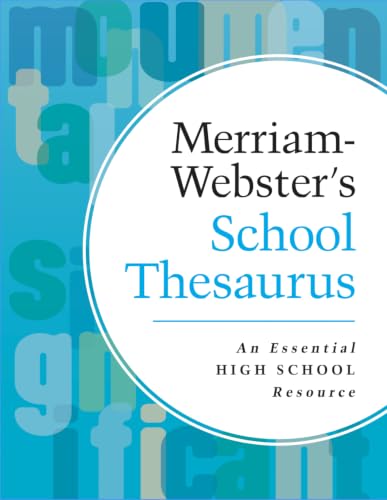
- More than 154,000 word choices
- 37,000 contextual usage examples
- Useful for SAT and ACT preparation
Best For: High school students and standardized-test preparation
Best Portable Writers’ Reference
Pocket Oxford American Thesaurus

- Over 350,000 synonyms and antonyms
- Synonyms ordered by frequency of use
- Sample sentences for virtually every sense
Best For: Writers seeking accurate contemporary American English
Best for Middle School
Merriam-Webster’s Intermediate Thesaurus

- Designed for grades 5–8
- Over 150,000 word choices
- Updated vocabulary for technology and social media
Best For: Middle school vocabulary building and homework
Compact Word Choice – Merriam-Webster's Pocket Thesaurus
Merriam-Webster's Pocket Thesaurus, Newest Edition, (Flexi Paperback) (Pocket Reference Library)
Check Price On AmazonFor shoppers seeking practical pocket thesauruses, Merriam-Webster’s Pocket Thesaurus offers a compact reference for quick word searches. It includes more than 110,000 word choices, with synonyms, related words, and antonyms arranged alphabetically.
Best For: Writers, students, and professionals who want extensive synonym coverage in a palm-sized reference.
Pros:
- More than 110,000 word choices
- Includes synonyms, related words, and antonyms
- Compact 3.5-by-5.38-inch format
- Alphabetical organization supports quick lookups
Cons:
- Published in 2002
- Paperback format may offer less durability than a hardcover
This is a strong choice when portability and broad word coverage matter most. Its small size makes it easy to keep nearby without sacrificing a substantial selection of alternatives.
Dictionary-Thesaurus Combo – Oxford Mini Dictionary and Thesaurus
Among versatile pocket thesauruses, the Oxford Mini Dictionary and Thesaurus combines dictionary definitions with integrated synonym and antonym entries. It covers more than 40,000 words, phrases, and definitions alongside 65,000 synonyms and antonyms.
Best For: Readers who want one compact book for definitions, word alternatives, spelling, grammar, and vocabulary help.
Pros:
- Combines a dictionary and thesaurus
- Includes over 40,000 words, phrases, and definitions
- Offers 65,000 synonyms and antonyms
- Includes a center section on spelling, grammar, and vocabulary
Cons:
- At 800 pages and 15.2 ounces, it is less lightweight than some pocket references
- Published in 2012
The integrated format makes this a practical all-purpose reference for users who frequently switch between checking a definition and finding a stronger word. Its extra language-help section adds further utility.
Confident Word Choices – Webster's New World Pocket Thesaurus
Webster’s New World Pocket Thesaurus is a convenient option for anyone comparing pocket thesauruses for quick, dependable lookups. Its expanded second edition adds entries for synonyms, antonyms, and idioms in an alphabetically organized format.
Best For: Writers and everyday users who want a slim, straightforward thesaurus with added idiom coverage.
Pros:
- Small 3.5-by-5.62-inch format
- Expanded with new synonym, antonym, and idiom entries
- Alphabetical organization is easy to use
- Designed for quick lookups
Cons:
- Only 320 pages
- Published in 2016, so it is not the newest available edition by publication date
This model favors convenience and direct use over a large page count. It is a sensible pick for carrying in a bag or keeping at a desk when you need fast word-choice support.
Expanded Classic Reference – New American Roget's College Thesaurus
The New American Roget’s College Thesaurus is a larger option for readers comparing pocket thesauruses with more extensive reference volumes. Its alphabetically arranged entries include synonyms and antonyms, along with added words, phrases, categories, quotations, and colloquial terms.
Best For: Home or office users who prioritize depth, cross-referencing, and vocabulary-building features over the smallest possible size.
Pros:
- 912-page expanded and revised edition
- More than 5,000 new words and phrases
- Includes 2,000 new synonym entry words and 30 new categories
- Features quotations, phrases, colloquial terms, and slang
Cons:
- At 6.96 inches tall and 12.8 ounces, it is less pocket-friendly than smaller models
- Published in 2002
- Its larger format may be more than casual users need
This is the depth-focused choice in the group. Although it is marketed as a compact reference compared with full-size volumes, its 912 pages make it better suited to a desk, home, or office than everyday carry.
Best Compact Classic – Langenscheidt's Merriam-Webster Pocket Thesaurus
For shoppers seeking pocket thesauruses for quick word searches on the go, Langenscheidt’s Merriam-Webster Pocket Thesaurus emphasizes straightforward access and everyday portability. Its alphabetical arrangement helps you find words quickly, while the vinyl cover is designed for convenient carrying and storage.
Best For: Writers, students, and readers who want a durable, easy-to-carry synonym reference.
Pros:
- Alphabetical arrangement supports fast lookups.
- Vinyl cover is suited to carrying and stashing in different places.
- 648 pages provide substantial reference coverage in a pocket-oriented format.
Cons:
- Published in 1998, so it may not reflect newer vocabulary.
- It is a thesaurus rather than an all-in-one dictionary and thesaurus.
Choose this edition when portability, a durable cover, and simple alphabetical searching matter more than the newest lexical updates.
Best Comprehensive Reference – Roget's International Thesaurus, 8th Edition
Roget’s International Thesaurus, 8th Edition is a strong choice for shoppers who want a broad, current reference rather than a small carry-along volume. Its meaning-based organization groups related words and phrases by concept, and this updated edition includes thousands of new words, phrases, slang terms, and everyday expressions.
Best For: Writers, students, and speakers who need extensive vocabulary-building and idea-finding support.
Pros:
- Meaning-based organization helps users explore related language by concept.
- Updated eighth edition includes thousands of new words and phrases.
- Its 1,200 pages offer comprehensive coverage.
Cons:
- At 3 pounds and 9.25 inches tall, it is less convenient for pocket or travel use.
- Its nearly 2-inch thickness may be bulky for quick carry.
This is the most expansive option in the group, but its size makes it better suited to a desk, study area, or writing workspace than a pocket.
Best All-in-One Portable – Pocket Oxford American Dictionary & Thesaurus
For shoppers comparing pocket thesauruses that also provide dictionary support, the Pocket Oxford American Dictionary & Thesaurus combines both references in one portable volume. Definitions, synonyms, and antonyms appear together in entries, while updated lexical content and usage tips add practical help for writing.
Best For: Students, writers, and general readers who want dictionary and thesaurus functions in one carry-friendly book.
Pros:
- Combines a dictionary and thesaurus in one volume.
- Meanings, synonyms, and antonyms are available within the same entry.
- Includes updated vocabulary, usage tips, and a center reference section.
Cons:
- At 1.45 pounds and 1.82 inches thick, it is less pocketable than a very small reference book.
- Published in 2010, so later language developments may not be included.
This option offers the broadest everyday convenience when you prefer one portable reference for definitions and word alternatives instead of carrying separate books.
Top Student Pick – Merriam-Webster’s School Thesaurus
For students looking for pocket thesauruses or a dependable study reference, Merriam-Webster’s School Thesaurus offers extensive coverage tailored to grades 9–12. It combines a large word bank with contextual guidance for writing assignments and standardized-test preparation.
Best For: High school students, SAT and ACT preparation, and young writers who need detailed word-choice support.
Pros:
- Includes more than 154,000 word choices, including synonyms, antonyms, related words, and idiomatic phrases.
- Provides 37,000 usage examples to clarify words in context.
- Designed for ages 14 and up, with concise explanations of shared meanings among synonyms.
Cons:
- At 1,024 pages and 2.95 pounds, it is more substantial than a typical pocket reference.
- Its high school focus may be more advanced than younger students need.
This is a strong choice when depth matters more than ultra-light portability. Its extensive entries and test-prep relevance make it especially useful for high school coursework and formal writing.
Best Portable Writers’ Reference – Pocket Oxford American Thesaurus
Among pocket thesauruses, the Pocket Oxford American Thesaurus stands out for writers who want a portable reference organized around contemporary American English. Its frequent-use ordering and sample sentences help you select words accurately without relying on obscure alternatives.
Best For: Writers, editors, and anyone seeking a compact American English thesaurus with extensive synonym coverage.
Pros:
- Contains more than 15,000 main entries and over 350,000 synonyms and antonyms.
- Lists synonyms by frequency of use to make common choices easier to identify.
- Includes sample sentences or phrases for virtually every sense and uses a readability-focused page layout.
Cons:
- Its 2008 publication date may make it less current than newer references.
- The paperback is portable, but its 992 pages may still feel bulky for some users.
This is the best fit for word-conscious writers who value usage context and frequency guidance. It offers substantial coverage in a paperback format while remaining easier to carry than many full-size desk references.
Best for Middle School – Merriam-Webster’s Intermediate Thesaurus
Merriam-Webster's Intermediate Thesaurus - Middle School Thesaurus - Newest Edition
Check Price On AmazonFor younger readers comparing pocket thesauruses, Merriam-Webster’s Intermediate Thesaurus provides age-appropriate vocabulary support for grades 5–8. Its definitions, usage examples, and updated coverage can help students with homework, reading, and everyday writing.
Best For: Middle school students ages 10–14 who are building vocabulary and improving written communication.
Pros:
- Offers more than 150,000 word choices across synonyms, related words, antonyms, and near antonyms.
- Includes over 32,000 usage examples and definitions for multiple senses.
- Adds vocabulary relevant to social media, technology, and entertainment.
Cons:
- At 944 pages and 2.31 pounds, it is better suited to a backpack or desk than a small pocket.
- Its middle school focus may not provide the test-prep emphasis older students want.
This updated edition is a practical choice for students who need more than a basic synonym list. The age-targeted vocabulary and plentiful examples make it approachable for developing writers while still offering broad coverage.
How We Picked the Best Pocket Thesauruses
We focused on reference books that are genuinely portable while still offering useful synonym coverage and clear organization. Our comparison considered publisher reputation, edition freshness, intended audience, format, and how easily each title can support real writing, studying, editing, or everyday word searches.
We also included several audience-specific options. Some are better suited to younger students or standardized-test preparation, while others provide broader vocabulary development for college students, authors, editors, and professionals. Combined dictionary-and-thesaurus editions were considered for shoppers who want more than synonym lookup in one compact volume.
Quick Comparison
| Best For | Look For |
|---|---|
| Everyday carry | Flexi or compact paperback construction and straightforward alphabetical access |
| Students | Accessible definitions, school-appropriate vocabulary, and test-prep usefulness |
| Writers | Broad synonym coverage, nuanced distinctions, and strong vocabulary-building value |
| Dictionary-and-thesaurus shoppers | A combined reference that reduces the need to carry two books |
Key Buying Factors for Pocket Thesauruses
Size and Durability
Check the binding and physical dimensions before buying. A truly pocket-friendly book should fit comfortably in a backpack pocket, desk drawer, or small travel bag. Flexible covers are convenient for daily carrying, while sturdier bindings may better withstand frequent classroom or workplace use.
Organization and Lookup Speed
Alphabetical entries are usually fastest for quick synonym searches. A dictionary-form layout can be especially helpful when you want definitions, usage context, and alternatives together. Consider whether the intended user prefers a simple lookup experience or a more extensive vocabulary-building format.
Audience and Vocabulary Level
A school thesaurus may use clearer explanations and age-appropriate word choices, while a college- or writer-focused reference may offer greater range and nuance. Match the book to the reader’s level rather than assuming the largest vocabulary is automatically the most useful.
Edition and Purpose
Newer editions can provide updated language and refreshed editorial content, but the best value depends on your needs. Test-prep buyers should prioritize school relevance, writers may want breadth, and casual users may benefit most from a compact combined reference.
Who Should Buy Which Pocket Thesauruses?
Choose a compact Merriam-Webster or Oxford title if you want a dependable everyday companion with quick access to common alternatives. Students should focus on school-oriented editions, particularly those designed for middle school, high school, or exam preparation. Writers and advanced vocabulary learners may prefer a broader Roget’s or college-level reference with more extensive synonym groupings.
If you regularly need definitions as well as synonyms, select a pocket dictionary-and-thesaurus combination. For travel, commuting, or limited desk space, prioritize the lightest format that still offers sufficient coverage. Before ordering, verify the listed edition, binding, and dimensions so the book matches your expectations for portability and durability.