Choosing the right workbook can make early reading feel clear, structured, and rewarding. The best phonics workbooks for children reinforce letter sounds, blending, and word recognition with age-appropriate practice.
Below, you’ll find a focused roundup of ten options for preschool through early elementary learners, with choices for beginners, review, and bridge-to-first-grade practice.
Best 10 Phonics Workbooks for Children Picks for 2026
Grade 1 All-in-One Practice

- Phonics plus spelling, vocabulary, and comprehension
- 300+ colorful illustrations keep pages engaging
- Perforated pages and easy directions aid practice
Best For: First graders who need a broad skills workbook
Phonics Lessons & Reading Start

- 101 cumulative phonics lessons
- Fun mix of coloring, mazes, and word searches
- Parent and teacher scripts included
Best For: Preschool and early readers starting phonics
Focused First-Grade Phonics Practice
Phonics for First Grade Workbook
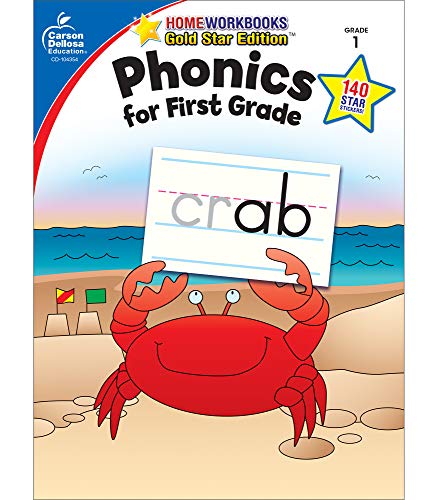
- Covers consonants, vowels, blends, and digraphs
- Includes stickers, incentive chart, and answer key
- Hands-on tracing, writing, and puzzle activities
Best For: First graders needing focused phonics practice
Pre-K Skills Starter
Get Ready for Preschool Workbook

- Phonics plus rhyming, patterns, and matching
- Easy directions support independent practice
- Small, tear-out format for portability
Best For: Preschoolers just starting phonics and pre-reading
Full-Year First Grade

- 220+ activities across phonics, reading, spelling, and math
- Lessons progress throughout the book for steady practice
- Includes parent tips and an answer key
Best For: First graders ages 6-7 needing broad daily practice
School-Ready Starter

- 320 spiral-bound pages with 300+ colorful exercises
- Covers primary phonics, alphabet, pre-writing, and early math
- Activities progress from easy to more difficult
Best For: Preschoolers ages 3-5 who need broad readiness practice
Summer Bridge Practice
The Summer Before First Grade Workbook

- 75+ activities for kindergarten-to-first-grade review
- Covers phonics, reading, writing, and basic math
- Includes parent notes and an answer key
Best For: Kindergarteners needing a lighter summer bridge
Preschool Reusable Pick
Wipe Clean Preschool Workbook for Ages 3-5

- Wipe-clean pages support repeat practice
- Includes first phonics, tracing, and letter sounds
- Also covers counting, shapes, colors, and early math
Best For: Preschoolers ages 3 to 5 needing reusable early-learning practice
Elementary Phonics Review

- Covers vowels, spelling, contractions, and letter combinations
- Uses puzzles and activities to keep practice engaging
- Slim, perforated format works well for travel
Best For: First- through third-graders needing focused phonics review
Kindergarten All-in-One Workbook
Kindergarten Big Workbook Ages 5-6

- More than 220 activities for repeat practice
- Includes phonics, reading, writing, and language arts
- Also covers counting, addition, subtraction, and number writing
Best For: Kindergartners ages 5 to 6 who need broad skill practice
Grade 1 All-in-One Practice – Big First Grade Workbook
If you want phonics workbooks for children that go beyond reading alone, this big first-grade workbook gives you a broad, page-by-page skills mix. It combines phonics with reading comprehension, spelling, vocabulary, writing, and early math, so it works well for steady at-home practice or classroom reinforcement.
Best For: First graders who need a wide range of practice in one workbook, including phonics plus other core skills.
Pros:
- Covers phonics, spelling, vocabulary, reading comprehension, and more
- 300+ colorful illustrations help keep lessons engaging
- Large 8″ x 11″ format with perforated pages for easy tear-out
- Easy directions and visual clues support independent work
Cons:
- Only a portion of the book is focused specifically on phonics
- Best suited to grade 1 level rather than early preschool learners
This is a practical pick if you want a single workbook that supports reading development and other first-grade basics at the same time. The built-in structure and mixed activities make it useful for consistent practice without feeling repetitive.
Phonics Lessons & Reading Start – Learn to Read Activity Book
For families looking for phonics workbooks for children that focus directly on teaching reading, this activity book centers on 101 cumulative phonics lessons. It uses coloring, mazes, word searches, and other interactive exercises to help children recognize letters, sound them out, and build complete words and sentences.
Best For: Preschoolers and early readers who benefit from a structured, activity-based phonics approach.
Pros:
- Includes 101 phonics lessons in a cumulative sequence
- Interactive activities such as mazes, coloring, and word searches
- Includes parent and teacher scripts for guidance
- Based on a research-backed teaching model
Cons:
- Heavier than some smaller workbooks at 2.31 pounds
- More focused on early reading than broader academic subjects
This is a strong choice if your main goal is to build reading foundations step by step. The lesson variety helps keep young children engaged while still staying centered on phonics skills.
Focused First-Grade Phonics Practice – Phonics for First Grade Workbook
If you want phonics workbooks for children that stay tightly focused on letter sounds and early word building, this first-grade workbook is a straightforward option. It covers consonants, blends, digraphs, vowels, and word families through tracing, writing, games, and puzzles.
Best For: First graders who need hands-on phonics and writing practice with simple reward-based motivation.
Pros:
- Covers consonants, vowels, blends, digraphs, and word families
- Hands-on format includes tracing, writing, games, and puzzles
- Includes 140 motivational stickers and an incentive chart
- Answer key helps parents and teachers check work
Cons:
- Only 64 pages, so it is relatively short
- Designed mainly for grade 1 rather than older readers
This workbook is a good fit when you want focused phonics practice without a lot of extra material. The stickers and progress tools may help keep younger learners moving through the pages.
Pre-K Skills Starter – Get Ready for Preschool Workbook
For younger children, this is one of the more approachable phonics workbooks for children because it pairs letter-sound practice with early learning activities. The pages also cover rhyming, patterns, matching, counting, and basic fine-motor work, making it a gentle introduction to workbook time.
Best For: Preschoolers ages 3 and up who are just beginning to practice letter sounds and basic pre-reading skills.
Pros:
- Includes phonics, rhyming, patterns, matching, and counting
- Easy directions and visual clues support self-directed learning
- Perforated, top-bound pages are easy to tear out
- Small size makes it convenient for on-the-go use
Cons:
- Only 48 pages, so practice is limited
- More of a preschool readiness book than a dedicated phonics workbook
This workbook works well as an early introduction to page-based learning. It keeps activities simple and varied, which is helpful for short attention spans and first workbook experiences.
Full-Year First Grade – First Grade Big Workbook
If you’re shopping for phonics workbooks for children in first grade, this large workbook stands out for breadth and pacing. It includes 220+ activities across phonics, spelling, reading, language arts, and math, with lessons that progress throughout the book so kids can keep building on earlier work.
Best For: First graders ages 6-7 who need a broad, year-round workbook with phonics and core classroom skills.
Pros:
- Offers 220+ activities spanning phonics, spelling, reading, language arts, and math.
- Exercises progress throughout the workbook to support skill retention.
- Colorful illustrations and games help make practice feel more engaging.
- Includes parent tips and tricks plus an answer key at the back.
Cons:
- More of a broad first-grade workbook than a phonics-only resource.
- Larger format and 320 pages may feel substantial for some families.
- Best suited to children already in or entering first grade.
This is the strongest pick if you want one workbook that can support a full range of first-grade practice. Its mix of phonics and additional subjects makes it practical for daily reinforcement at home.
School-Ready Starter – Big Preschool Workbook
If you’re comparing phonics workbooks for children, this preschool option is a solid place to start. It uses 320 colorful, spiral-bound pages to introduce readiness basics in a gradual way, with lessons that move from simple to more challenging so young learners can build confidence as they go.
Best For: Ages 3-5 who need a broad preschool workbook that includes primary phonics along with early learning basics.
Pros:
- Includes primary phonics, alphabet, pre-writing, colors, shapes, numbers, and early math.
- Spiral binding helps the workbook lay flat for easier practice.
- Activities progress in order of increasing difficulty to support skill building.
- Bright illustrations and visual clues help keep little ones engaged.
Cons:
- Phonics is only one part of a very broad preschool curriculum.
- Reading age range is younger than the first-grade workbook options.
- May be more workbook than needed if you only want a focused phonics book.
This is a practical pick for families who want a gentle introduction to phonics alongside other preschool fundamentals. The mix of colorful exercises, fine-motor practice, and step-by-step progression makes it easy to use at home.
Summer Bridge Practice – The Summer Before First Grade Workbook
For families looking at phonics workbooks for children before first grade, this summer bridge workbook offers a compact way to review key skills. It focuses on the alphabet, phonics, reading, writing, and basic math through 75+ activities that gradually build on what children already know.
Best For: Kindergarten graduates who need a lighter bridge workbook to practice first-grade readiness skills.
Pros:
- Targets phonics, reading, writing, and language arts for the transition to first grade.
- Includes more than 75 activities with colorful illustrations.
- Exercises progress through the book to reinforce new concepts.
- Helpful parent notes and an answer key support guided practice.
Cons:
- Shorter than the 220+ activity first-grade workbook.
- Less extensive for families wanting a full-year workbook.
- Best suited as a bridge resource rather than a comprehensive curriculum.
This workbook makes sense if you want a focused summer review rather than a heavy school-year book. It keeps the pace manageable while still covering core early literacy and math skills that matter before first grade.
Preschool Reusable Pick – Wipe Clean Preschool Workbook for Ages 3-5
If you want phonics workbooks for children that feel more like play than drills, this wipe-clean preschool workbook is a practical pick. It combines first phonics with early math, letter and number tracing, pen control, counting, rhyming, shapes, colors, and more in one reusable book designed for ages 3 to 5.
Best For: Preschoolers who need a reusable all-in-one workbook for early phonics and foundational learning.
Pros:
- Wipe-clean pages let kids write, erase, and reuse the activities.
- Covers first phonics along with letters, letter sounds, rhymes, and sight words.
- Includes a broad mix of preschool topics like counting, shapes, colors, and early math.
- Comes with a dry erase marker and helpful parent tips plus an answer key.
Cons:
- Best suited to preschool-level learning rather than more advanced phonics practice.
- Only 48 pages, so it is lighter than larger workbook options.
This workbook stands out for families who want repeated practice without wasting pages. Its mix of phonics and readiness skills makes it a flexible option for daily preschool learning.
Elementary Phonics Review – Phonics Review 1-3 Workbook
For phonics workbooks for children in the early elementary years, this School Zone title offers focused review in a travel-friendly format. It gives first- through third-graders practice with vowels, spelling, contractions, letter combinations, compound words, and other reading fundamentals through puzzles and activities.
Best For: Early elementary students who need compact phonics review and extra reading practice.
Pros:
- Targets core phonics skills like vowels, consonants, letter combinations, and compound words.
- Uses puzzles, riddles, and playful activities to keep practice engaging.
- Includes answer keys so kids can check their work.
- Perforated pages and a slim format make it easy to use on the go.
Cons:
- Phonics review is the main focus, so it is not a full all-subject workbook.
- Best for ages 6 to 9, so it is less suitable for preschoolers.
This is a good choice if you want a straightforward phonics refresher with low-prep activities. Its compact size and skill focus make it useful for homework support, travel, or short daily practice.
Kindergarten All-in-One Workbook – Kindergarten Big Workbook Ages 5-6
If you are shopping for phonics workbooks for children entering kindergarten, this big workbook offers a broad mix of early academics in one place. Along with phonics, it includes reading, writing, language arts, counting, math, the alphabet, and rhyme-based activities, making it a strong everyday practice book for ages 5 to 6.
Best For: Kindergarteners who need a large, varied workbook with phonics plus early literacy and math.
Pros:
- Includes more than 220 activities for extended practice.
- Covers phonics, reading, writing, alphabet skills, and language arts.
- Also adds counting, addition, subtraction, and number writing.
- Progressive exercises and parent tips help guide learning.
Cons:
- Large 320-page format may be more than some families want for a single skill.
- Not as compact or portable as smaller workbook options.
This workbook is a strong all-around option if you want more than basic phonics review. Its size and variety make it especially useful for steady kindergarten skill-building across literacy and math.
How We Picked the Best Phonics Workbooks for Children
We focused on workbooks that support real early-reading progress without overwhelming young learners. Strong picks combine phonics practice with clear sequencing, age-fit activities, and enough repetition to build confidence.
We also looked for workbook formats that suit different teaching styles, including tracing, matching, sound recognition, blending, and review pages. For families and teachers shopping for Phonics Workbooks for Children, usability matters just as much as content.
Quick Comparison: Preschool, Kindergarten, and Early Grade Levels
Preschool workbooks usually emphasize alphabet familiarity, rhyming, beginning sounds, and pre-writing. Kindergarten options add more letter-sound work, simple decoding, and early reading tasks. First-grade and review books tend to push into consonant blends, digraphs, vowel patterns, and more independent practice.
If your child is just starting out, choose a gentler workbook with large activities and broad readiness skills. If they already know many letters and sounds, move toward books that strengthen blending and word families.
Key Buying Factors for Phonics Workbooks for Children
Skill Level and Pacing
Match the workbook to what your child can already do. A book that is too easy can feel boring, while one that moves too fast can create frustration. Look for a clear progression from simple sounds to more advanced decoding.
Practice Style
Some children learn best through tracing and repetition, while others respond to games, cut-and-paste tasks, or visual matching. The best Phonics Workbooks for Children offer enough variety to keep practice engaging.
Scope of Phonics Coverage
Check whether the workbook covers the skills your child needs most: alphabet sounds, short vowels, consonants, blends, digraphs, and word families. For early readers, broad coverage is helpful, but targeted review can be just as valuable.
Durability and Independent Use
Spiral binding, wipe-clean pages, and simple instructions can make a workbook easier for kids to use on their own. That matters if you want quiet practice time, summer review, or extra at-home support.
Who Should Buy Which Phonics Workbooks for Children?
Choose preschool-level books for children who are learning letters, sounds, and basic pre-reading readiness. Kindergarten workbooks are a good fit for kids beginning to connect letters and sounds in a more structured way. First-grade and bridge books work best for learners who are ready to read short words, blend sounds, and practice spelling patterns.
If your child needs extra reinforcement, a review-focused workbook can fill gaps without replacing a full curriculum. For families seeking flexible home practice, a larger all-in-one workbook may be the most practical choice.
In the end, the best option is the one that matches your child’s current stage and keeps practice consistent. With the right workbook, phonics becomes less of a chore and more of a steady path toward confident reading.