The best nonfiction graphic novels turn complex history, science, and civic ideas into engaging visual narratives without losing sight of important context. They can help readers understand major events, systems, and lived experiences through a format that feels approachable but remains substantial.
This roundup brings together ten notable graphic works covering human evolution, war, the Holocaust, technology, constitutional history, and political movements. Whether you are shopping for a student, an educator, or a curious adult reader, these titles offer different levels of depth, maturity, and subject focus.
Best 10 Nonfiction Graphic Novels Picks for 2026
Big-Picture History

- Explores human evolution and the Cognitive Revolution.
- Blends history, biology, maps, photos, and diagrams.
- Looks ahead at the future of humanity.
Best For: Readers seeking a broad, visually engaging history of humankind
Complete Graphic Memoir

- Follows Satrapi’s life through revolution and exile.
- Connects family and adolescence with Iranian history.
- Collects the memoir in one 341-page volume.
Best For: Readers wanting a comprehensive political coming-of-age memoir
Everyday Infrastructure

- Explains water, electricity, and the internet.
- Uses maps, diagrams, and visual storytelling.
- Links historical choices to present and future systems.
Best For: Students and curious readers exploring everyday technology
Coming-of-Age History
Persepolis: The Story of a Childhood

- Covers Satrapi’s life from ages six to fourteen.
- Views revolution and war through a child’s eyes.
- Tells a personal story in black-and-white panels.
Best For: Readers seeking a focused, personal introduction to Iranian history
Political History Pick

- Eisner Award winner
- Covers activism and community programs
- Includes key-figure profiles
Best For: Readers exploring civil rights and political history
Holocaust Literature Adaptation

- Faithful to the original diary
- Includes extensive quotations
- Authorized by the Anne Frank Foundation
Best For: Students and adults reading Holocaust literature
Science and Ethics Selection
Trinity: The First Atomic Bomb

- Covers the Manhattan Project
- Explains atomic fission visually
- Examines moral and global consequences
Best For: Readers exploring science, war history, and ethics
Best Faith-and-Courage Biography
The Hiding Place Graphic Novel

- True Corrie ten Boom World War II biography
- More than 1,500 full-color illustrations
- Designed for ages 8–12
Best For: Young readers exploring courage, faith, and Holocaust-era history
Best Civic-Education Pick
The United States Constitution

- Explains articles and amendments visually
- Adds historical context and background
- Addresses rights and constitutional development
Best For: Students and readers building a foundation in American civics
Best Survivor-Testimony Collection
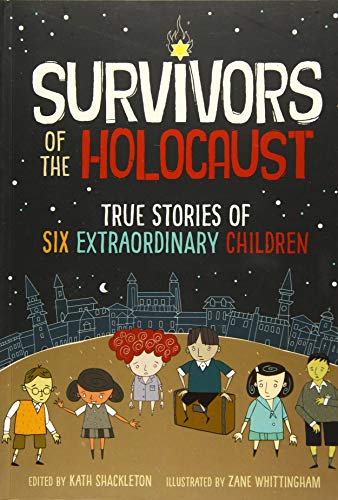
- Six true stories of Jewish survivors
- Includes photographs, glossary, and timeline
- Recommended reading age 10–14
Best For: Students learning Holocaust history through personal testimony
Big-Picture History – Sapiens: A Graphic History
For readers seeking nonfiction graphic novels with an ambitious scope, Sapiens: A Graphic History examines human evolution, the Cognitive Revolution, and the development of societies. Its full-color format combines narrative history with photographs, maps, illustrations, and diagrams.
Best For: Readers who want an accessible, wide-ranging introduction to human history and the forces that shaped Homo sapiens.
Pros:
- Covers biology, history, and human evolution in one narrative.
- Uses full-color illustrations, photographs, maps, and diagrams.
- Connects ancient developments with questions about humanity’s future.
Cons:
- Its broad subject matter may provide less depth on individual historical events.
- The provocative interpretations may invite debate rather than agreement.
This is a strong choice when you want nonfiction graphic novels that turn large historical and scientific questions into a visually engaging overview.
Complete Graphic Memoir – The Complete Persepolis
The Complete Persepolis is a landmark choice among nonfiction graphic novels, collecting Marjane Satrapi’s account of growing up in Iran during the Islamic Revolution. It follows her childhood in Tehran, adolescence in Vienna, return home, and eventual self-imposed exile.
Best For: Readers looking for a personal memoir shaped by political upheaval, family life, adolescence, and cultural displacement.
Pros:
- Collects the complete memoir in one volume.
- Balances historical context with personal and family experiences.
- Combines candid observations, humor, heartbreak, and political insight.
Cons:
- Includes difficult material involving repression, war, and political upheaval.
- The 341-page collection may be more commitment than readers seeking a brief introduction want.
Choose this edition if you want one substantial volume rather than a split presentation of Satrapi’s widely acclaimed graphic memoir.
Everyday Infrastructure – Hidden Systems
Hidden Systems stands out among nonfiction graphic novels by explaining the water, electricity, and internet systems people use every day. Through art, maps, and diagrams, it traces their development, present-day implementation, and possible future.
Best For: Curious students and general readers who want an approachable introduction to infrastructure, technology, and the hidden history behind everyday utilities.
Pros:
- Explains water, electricity, and internet systems in an accessible format.
- Includes history, science, maps, and diagrams.
- Addresses how past decisions affect present use and future change.
Cons:
- Its broad coverage may not satisfy readers seeking a deep technical treatment of one system.
- The book’s listed reading and grade guidance may make it feel especially classroom-oriented for some adults.
This is a practical pick for readers who enjoy learning how familiar systems work and why their design matters beyond the technology itself.
Coming-of-Age History – Persepolis: The Story of a Childhood
Persepolis: The Story of a Childhood is a focused entry among nonfiction graphic novels, portraying Marjane Satrapi’s life in Tehran from ages six to fourteen. Her childhood unfolds alongside the Islamic Revolution, political repression, and the Iran-Iraq War.
Best For: Readers who prefer a shorter, intensely personal memoir that introduces Iranian history through a child’s perspective.
Pros:
- Offers a personal view of major political and historical events.
- Uses clear black-and-white comic-strip artwork.
- Balances humor, family life, fear, and the human cost of repression.
Cons:
- This edition is only the first book of the two-part story.
- The subject includes war, state violence, and political repression.
Pick this volume when you want the opening half of Satrapi’s memoir or a concise, emotionally direct introduction to her childhood and Iran’s recent history.
Political History Pick – The Black Panther Party
For readers seeking nonfiction graphic novels about social movements and American history, The Black Panther Party: A Graphic Novel History offers an illustrated account of the organization’s origins, programs, conflicts, and lasting influence. Its comic-style retellings and profiles make a complex political history approachable without reducing its scope.
Best For: Readers interested in civil rights history, political movements, and the Black Panther Party’s community programs and legacy.
Pros:
- Covers social, educational, and healthcare initiatives alongside political conflict.
- Explores police brutality, citizen patrols, and FBI opposition.
- Includes illustrated profiles of key figures and major events.
- Winner of the Eisner Award.
Cons:
- Its focus on political history may not suit readers seeking a purely personal narrative.
- The 192-page format provides an overview rather than an exhaustive history.
This is a strong choice when you want nonfiction graphic novels that connect activism, community organizing, and U.S. political history in a visually engaging format.
Holocaust Literature Adaptation – Anne Frank's Diary
Among nonfiction graphic novels, Anne Frank’s Diary: The Graphic Adaptation stands out as a faithful visual interpretation of a foundational Holocaust account. It incorporates extensive quotations from the definitive edition while using illustrations to add immediacy and visual meaning.
Best For: Young readers and adults studying Anne Frank’s story, Holocaust literature, or graphic adaptations of classic works.
Pros:
- Remains faithful to the original diary.
- Uses extensive quotations from the definitive edition.
- Illustrations add visual layers and emotional immediacy.
- Authorized by the Anne Frank Foundation in Basel.
Cons:
- The subject matter is emotionally difficult.
- As an adaptation, it is not a replacement for the complete diary.
With its authorized adaptation, substantial original quotations, and accessible illustrated format, this edition is well suited to readers approaching Anne Frank’s diary for the first time or revisiting it in a new form.
Science and Ethics Selection – Trinity: The First Atomic Bomb
Trinity: A Graphic History of the First Atomic Bomb is a compelling option for readers looking for nonfiction graphic novels that combine scientific history with moral reflection. It follows the development of the atomic bomb from early atomic research through the Manhattan Project, Trinity test, and consequences of Hiroshima and Nagasaki.
Best For: Readers seeking an introduction to the atomic bomb’s scientific, political, environmental, and psychological history.
Pros:
- Traces the story from nineteenth-century European laboratories to Los Alamos.
- Highlights J. Robert Oppenheimer and the Manhattan Project.
- Explains atomic fission through visual storytelling.
- Addresses the moral implications and long-term effects of the bomb.
Cons:
- The subject includes devastating wartime events and their aftermath.
- Its 160-page length makes it an introduction rather than a comprehensive account.
This compact graphic history works particularly well for readers who want the basics of the atomic bomb’s development alongside serious consideration of its human and ethical consequences.
Best Faith-and-Courage Biography – The Hiding Place Graphic Novel
For readers seeking nonfiction graphic novels for ages 8–12, The Hiding Place presents Corrie ten Boom’s true World War II story through more than 1,500 full-color illustrations. It follows her family’s efforts to hide Jews from the Nazis, their capture, and Corrie’s perseverance in the concentration camps.
Best For: Ages 8–12, family and classroom libraries, and readers interested in biographies of courage, faith, and resistance during World War II.
Pros:
- Adapted from a bestselling true story and World War II biography.
- More than 1,500 engaging full-color illustrations support visual reading.
- Offers themes of sacrifice, bravery, hope, and love.
- Includes 240 pages for a substantial reading experience.
Cons:
- The concentration-camp subject matter may be emotionally difficult for some readers.
- Its faith-centered perspective may not suit every audience.
This is a strong choice when you want a visually accessible nonfiction graphic novel that introduces younger readers to a serious historical biography while emphasizing moral courage and hope.
Best Civic-Education Pick – The United States Constitution
Among nonfiction graphic novels, The United States Constitution: A Graphic Adaptation stands out as an illustrated introduction to the nation’s governing document. It moves article by article and amendment by amendment, explaining historical context, key principles, and continuing relevance.
Best For: Students, civics learners, and readers who want a more approachable visual guide to the Constitution and its development.
Pros:
- Covers the Constitution article by article and amendment by amendment.
- Explains topics including the electoral college and the document’s historical limitations.
- Uses spirited, visually witty storytelling to make a complex subject memorable.
- Its 160-page format offers a focused introduction.
Cons:
- It is an adaptation and introduction rather than the complete governing document alone.
- Readers seeking a current textbook-style civics guide may want additional resources.
This graphic adaptation is a practical pick for readers who need context as well as text, particularly when studying how the Constitution was created, changed, and interpreted.
Best Survivor-Testimony Collection – Survivors of the Holocaust
For readers comparing nonfiction graphic novels about Holocaust history, Survivors of the Holocaust offers six true accounts from Jewish children and young people. The stories span experiences in Auschwitz, hiding in wartime Paris, and sheltering during the Blitz, with photographs, updates, a glossary, and a timeline.
Best For: Ages 10–14, school and library collections, and readers studying personal Holocaust testimony with supporting historical materials.
Pros:
- Centers six firsthand survivor stories from different wartime experiences.
- Includes current photographs and updates about each contributor.
- A glossary and timeline support comprehension and historical context.
- Recognized by the School and Library Association Information Books Awards in 2017.
Cons:
- The 96-page length provides a concise overview rather than an extensive history.
- Holocaust testimony and wartime persecution may be intense for younger or sensitive readers.
This is an especially useful nonfiction graphic novel for guided learning because the personal narratives are paired with reference features that help readers place each experience within the broader period.
How We Picked These Nonfiction Graphic Novels
We selected books that use sequential art to explain real events, people, systems, or ideas rather than presenting fiction with a historical setting. The list spans biography, memoir, political history, science, civics, and World War II, with options for both adults and younger readers. We also considered subject clarity, educational value, visual storytelling, accessibility, and the range of perspectives represented.
Because Nonfiction Graphic Novels vary widely in tone and reading level, the best choice depends on the reader’s age, interests, and tolerance for difficult material. Check the intended audience and content warnings before buying for children or classroom use.
Quick Comparison
| Best For | Recommended Starting Point | Format Strength |
|---|---|---|
| Human history | Sapiens: A Graphic History | Broad visual overview |
| Memoir and cultural history | The Complete Persepolis | Personal perspective |
| Science and infrastructure | Hidden Systems | Explains everyday technology |
| Young readers | The Hiding Place | Accessible biography |
| Civics | The United States Constitution | Visual introduction to government |
Key Buying Factors for Nonfiction Graphic Novels
Subject and Scope
Some books provide a sweeping overview, while others focus on one person, event, or system. Choose a broad survey for introductory learning and a focused memoir or history for deeper emotional or historical context.
Age Range and Sensitive Content
Holocaust narratives, war histories, racism, political violence, and nuclear weapons may include distressing images or descriptions. Age labels are useful starting points, but adults should review a book’s themes when buying for younger readers.
Accuracy and Context
Visual storytelling compresses information, so look for books that identify sources, explain terminology, and distinguish personal testimony from broader historical interpretation. Graphic adaptations can be excellent introductions, but they may work best alongside additional reading.
Edition and Format
Compare paperback, hardcover, collected, and adapted editions. A complete collection may offer better value for an adult reader, while a shorter or age-specific edition can be more suitable for classrooms and independent reading.
Who Should Buy Which Nonfiction Graphic Novels?
Choose Sapiens for readers interested in big-picture human history, Hidden Systems for science-minded readers who want to understand infrastructure, and Trinity for a focused account of the atomic bomb’s development. Persepolis and its childhood volume suit readers seeking memoir, Iranian history, and cultural perspective.
For Holocaust education, Anne Frank’s Diary, The Hiding Place, and Survivors of the Holocaust offer different approaches and age ranges, so match the title carefully to the reader. Political and civics-focused readers may prefer The Black Panther Party or The United States Constitution. If you are unsure, start with the subject the reader already cares about, then use the visual format to build toward more detailed historical reading.