Learning the basics of music can feel overwhelming at first, especially if you are starting from zero. The right book can turn confusing terms, symbols, and patterns into a clear path forward.
Our roundup of the best music theory books for beginners focuses on simple explanations, practical exercises, and formats that help new musicians build confidence fast.
Best 10 Music Theory Books for Beginners Picks for 2026
Step-by-Step Starter Guide

- 30-day guided beginner plan
- 150+ examples with exercises
- Includes online audio support
Best For: Beginners who want a structured start to reading music
Workbook-Style Fundamentals
Master Theory Beginning Theory (Book 1)

- Logical lessons and review pages
- Covers staff, notes, rests, and meters
- Compact 32-page beginner workbook
Best For: Students who prefer a concise workbook for core theory
Friendly All-Around Guide

- Approachable, chunked explanations
- Covers scales, intervals, and notation
- Broad beginner-to-college level scope
Best For: Beginners who want a broad, readable theory overview
Kid-Friendly First Lessons
Theory Made Easy for Kids, Level 1

- Made for ages 4-7
- Colorful illustrations and stickers
- Gentle first theory introduction
Best For: Young children starting music theory
Core Starter
Alfred's Essentials of Music Theory, Bk 1
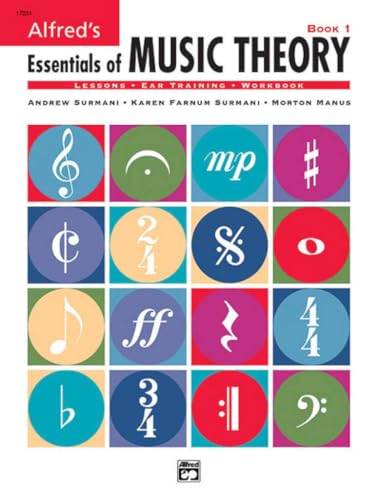
- All-in-one beginner theory course
- Covers notation, rhythm, and key basics
- Exercises and unit reviews reinforce learning
Best For: Beginners of any age who want a structured first theory book
Step-by-Step Guide

- Beginner-friendly 30-day structure
- Hundreds of exercises and examples
- Online audio and listening challenges included
Best For: Self-study beginners who want an active, guided course
Kid-Friendly Introduction

- Colorful introduction for young learners
- Uses imaginative characters and exercises
- Designed for first-time theory students
Best For: Younger students and new instrumentalists
Deep-Dive Starter Guide
Music Theory: From Beginner to Expert

- Step-by-step guide from basics to advanced topics
- Includes exercises, visuals, and audio examples
- Works as a lasting reference for many instruments
Best For: Beginners who want a comprehensive theory book that scales with their progress
Structured Self-Study Course
Alfred's Essentials of Music Theory

- 75 concise lessons with exercises and reviews
- Includes ear training CDs and answer keys
- Built for guided self-study across instruments
Best For: Beginners who want a structured, lesson-based course with ear training
Friendly Basics Primer

- Simple, beginner-friendly explanations from the start
- Covers notation, scales, keys, and chords
- Aims to build a solid foundation for new learners
Best For: Absolute beginners who want a simple, unintimidating introduction
Step-by-Step Starter Guide – How to Read Music in 30 Days
If you want music theory books for beginners that focus on reading notation without overwhelming jargon, this 30-day program is built for that exact need. It walks you through the essentials in a clear order, with exercises, listening experiences, and online audio to help the basics sink in.
Best For: Beginners who want a practical, structured path to reading sheet music and understanding core notation.
Pros:
- 30-day step-by-step lesson format
- Over 150 music examples and 100 written exercises
- Includes 10 listening experiences and online audio examples
- Covers rhythm, notes, notation, symbols, and fundamental theory
Cons:
- Not intended to make you an expert sight-reader in 30 days
- Focused on fundamentals rather than advanced theory
- May feel too guided for readers who want a loose reference book
As an entry-level choice, this book is strongest when you want a hands-on path from absolute scratch. It’s a solid fit for any beginner musician who wants to build a foundation for reading music across instruments.
Workbook-Style Fundamentals – Master Theory Beginning Theory (Book 1)
If you’re comparing music theory books for beginners and want a workbook that covers the essentials in a straightforward format, this first Master Theory volume is a strong option. It uses lessons and review pages to introduce core notation topics in a logical sequence.
Best For: Students who learn best through a compact, structured workbook covering basic theory topics.
Pros:
- Comprehensive workbook-style approach
- Lessons and review pages reinforce learning
- Covers staff, clefs, note values, rests, and time signatures
- Introduces accidentals, ties, slurs, and repeat signs
Cons:
- Only 32 pages, so coverage is introductory
- Older publication date may matter to some buyers
- No audio or multimedia support mentioned
This book is best treated as a focused fundamentals workbook rather than a broad, modern course. It’s a practical pick if you want concise lessons and plenty of notation basics in one slim volume.
Friendly All-Around Guide – Music Theory For Dummies
For buyers looking for music theory books for beginners with a broader, more traditional guidebook feel, this For Dummies title is designed to make the subject approachable. It breaks concepts into manageable chunks and tracks to a typical college-level course while staying friendly for students, performers, and casual readers.
Best For: Beginners who want a broad, approachable theory book with a clear classroom-style structure.
Pros:
- Breaks difficult concepts into manageable chunks
- Covers notes, scales, intervals, notation, tempo, and dynamics
- Includes melodies, chords, progressions, and phrases
- Friendly guide for students, performers, and music fans
Cons:
- Longer and more textbook-like than a quick starter guide
- May go beyond what a casual beginner needs right away
- Less of a hands-on workbook than some alternatives
This is a strong all-purpose choice if you want one beginner-friendly book that explains a lot of ground in a readable way. Its breadth makes it useful for readers who want both fundamentals and a path toward more complete understanding.
Kid-Friendly First Lessons – Theory Made Easy for Kids, Level 1
Among music theory books for beginners, this title is clearly aimed at young children who need a gentle first introduction. It uses colorful illustrations and fun sticker sheets, making early theory concepts more approachable for ages 4 to 7.
Best For: Young children ages 4-7 who need a playful introduction to music theory.
Pros:
- Designed specifically for ages 4-7
- Colorful illustrations help keep lessons engaging
- Includes fun musical sticker sheets
- Introductory level suited to first exposure
Cons:
- Too basic for older beginners
- Primarily aimed at children, not teens or adults
- No audio or broader theory depth mentioned
This is the most age-specific option in the group, so it makes sense when you’re shopping for a young learner rather than a general beginner. It’s best viewed as an early musical foundation book instead of a comprehensive theory course.
Core Starter – Alfred's Essentials of Music Theory, Bk 1
If you’re comparing music theory books for beginners, this all-in-one lesson book is built for students of any age who want a clearer grasp of how music works. Book 1 moves through the fundamentals in short lessons and practice exercises, so it suits learners who want a structured, step-by-step start.
Best For: Beginners of any age who want a straightforward introduction to note reading, rhythm, and basic theory terms.
Pros:
- Covers core beginner topics like staff, clefs, note values, and time signatures.
- Includes exercises plus review sections to check understanding after each unit.
- Supports listening practice with available ear-training CDs sold separately.
- Part of a broader theory series with extra practice tools available.
Cons:
- Ear-training CDs and software are not included with the book.
- Only Book 1, so it stops at the early fundamentals.
This is a practical pick if you want a classic beginner text that stays focused on essential theory skills without feeling overwhelming.
Step-by-Step Guide – Music Theory in 30 Days
For shoppers looking at music theory books for beginners, this guide is aimed at learners who want a clear, fast-moving path through the basics. It uses hundreds of exercises, examples, listening challenges, and online audio access to walk you through music theory in a practical sequence.
Best For: Self-directed beginners who want a modern, exercise-heavy introduction with online companion material.
Pros:
- Built around a step-by-step system that covers the essentials of music theory.
- Includes hundreds of exercises and examples for hands-on practice.
- Uses listening challenges and online audio files to support ear training.
- Touches on scales, key signatures, chords, analysis, and tonal music.
Cons:
- Focused on beginners, so advanced readers may outgrow it quickly.
- Online companion access may matter more if you prefer fully offline study.
This is a solid option if you want a workbook-style theory book that combines reading, listening, and practice in one beginner-friendly package.
Kid-Friendly Introduction – My First Music Theory Book
If you want music theory books for beginners that feel approachable for younger learners, this colorful introduction is designed with the young instrumentalist in mind. It uses imaginative characters and entertaining exercises to make early theory concepts feel less intimidating.
Best For: Younger students and first-time instrumentalists who need a colorful, engaging theory introduction.
Pros:
- Designed as an easy introduction to music theory for young students.
- Uses colorful presentation and imaginative characters to keep interest high.
- Includes exercises that support hands-on early learning.
Cons:
- Tailored mainly to younger learners rather than older beginners.
- No detailed topic list is provided in the supplied notes.
This is a smart pick for children or early instrumental students who learn best with visual appeal and a lighter, more playful tone.
Deep-Dive Starter Guide – Music Theory: From Beginner to Expert
If you want music theory books for beginners that still grow with you, this guide is built as a step-by-step path from the first basics to more advanced concepts. It covers notes, intervals, scales, chords, rhythm, harmony, composition, improvisation, tuning, and sound, with clear visuals, exercises, and audio examples to make the ideas easier to follow.
Best For: Beginners who want a broad, practical theory book they can keep using as their skills improve.
Pros:
- Step-by-step structure that starts with fundamentals and moves into advanced topics.
- Includes exercises, visual aids, and interactive audio examples.
- Designed as a practical reference for multiple instruments and styles.
- Covers both theory basics and deeper topics like voice leading and altered chords.
Cons:
- May feel more expansive than a very simple first primer.
- Not the most minimal option if you only want a quick overview.
This is a strong choice if you want one book that explains the logic behind music without staying overly basic. Its real strength is that it works as both an entry point and a longer-term reference.
Structured Self-Study Course – Alfred's Essentials of Music Theory
Alfred's Essentials of Music Theory: A Complete Self-Study Course for All Musicians (Book & 2 CDs)
Check Price On AmazonFor shoppers comparing music theory books for beginners, this one stands out as a structured self-study course with 75 concise lessons and built-in ear training. It is designed to help you practice reading, writing, and listening skills through exercises, review sections, and included CDs, making it a very guided learning option.
Best For: Beginners and self-learners who want a lesson-based course with ear training built in.
Pros:
- 75 concise lessons provide a clear, organized learning path.
- Includes ear training CDs to support listening development.
- Exercises, reviews, and answer keys make self-study easier.
- Suitable for many musicians, including pianists, guitarists, vocalists, and composers.
Cons:
- The format is more course-like than casual reading.
- Focused on essentials, so it may not go far into advanced topics.
This is a practical pick if you prefer a textbook-style approach with clear units and checks for understanding. It is especially useful when you want theory plus ear training in one package.
Friendly Basics Primer – Music Theory For Beginners
Music Theory For Beginners: A Beginner’s Guide To Learning The Basics Of Music Theory
Check Price On AmazonIf you are looking for music theory books for beginners that keep things simple, this guide focuses on making the basics easy to understand. It starts from the very beginning and covers notation, pitch, note values, time signatures, scales, key signatures, chords, and more in a friendly, unintimidating style.
Best For: Absolute beginners who want a straightforward, easy-to-follow introduction to music theory.
Pros:
- Begins with fundamentals and explains concepts in simple language.
- Covers key beginner topics like notation, scales, keys, and chords.
- Designed to be friendly and motivating for new learners.
- Helps readers build a foundation for composing or improvising.
Cons:
- Ebook format may not suit buyers who want a print workbook.
- Less course-like than options with exercises or audio support.
This is a good fit if you want a gentle introduction without a lot of jargon. It keeps the focus on core concepts, which makes it a solid first theory book for new musicians.
How We Picked the Best Music Theory Books for Beginners
We focused on books that are genuinely beginner-friendly: clear language, gradual pacing, real practice exercises, and a structure that supports self-study. We also favored titles that cover core fundamentals without assuming prior training.
Quick Comparison: What to Look for
Some Music Theory Books for Beginners are best for absolute newcomers, while others work better as workbook-style courses or reference guides. The right choice depends on whether you want step-by-step lessons, extra exercises, audio support, or a more compact overview of the basics.
Key Buying Factors for Music Theory Books for Beginners
Clarity and Pacing
Look for books that explain notation, rhythm, intervals, scales, and key signatures in small, manageable lessons. A good beginner book should build one concept at a time.
Practice Support
Exercises, answer keys, audio examples, and companion resources can make a big difference. They help you apply what you read instead of just memorizing terms.
Learning Format
Some readers prefer a workbook they can complete in order; others want a reference-style book they can revisit as they learn an instrument. Choose the format that matches your study style.
Age and Experience Level
Kids, adult self-learners, and students taking formal lessons may need different levels of detail. Simpler books are ideal for absolute beginners, while more structured courses may suit learners who want broader coverage.
Who Should Buy Which Music Theory Books for Beginners?
If you want a fast, approachable introduction, choose a book built around short lessons and exercises. If you learn best with guided structure, a self-study course or workbook may be the best fit. For families or younger learners, look for titles written with kid-friendly language and visuals. If you want a long-term reference, pick a more comprehensive guide that can grow with you as your skills improve.
Overall, the best Music Theory Books for Beginners are the ones that make the subject feel practical, not intimidating. A clear, well-paced book can help you understand the language of music and use it with confidence.