If you want to grow mushrooms with more confidence and fewer mistakes, the right book can save you time, money, and frustration. The best mushroom cultivation books explain everything from sterile technique and substrate prep to fruiting, harvesting, and troubleshooting.
This roundup focuses on books that are useful at different skill levels, whether you are starting a first indoor grow or looking for more advanced methods, medicinal species guidance, or small-scale business advice.
Best 10 Mushroom Cultivation Books Picks for 2026
Comprehensive Classic
Growing Gourmet and Medicinal Mushrooms

- Covers 31 mushroom species with precise growth parameters
- Includes lab setup, recipes, and troubleshooting
- Features 500+ photos, illustrations, and charts
Best For: Growers who want a deep, all-purpose cultivation reference
Eco-Focused Advanced Guide
Organic Mushroom Farming and Mycoremediation

- Covers indoor, outdoor, and advanced cultivation methods
- Includes lab setup, spawn generation, and procedures
- Explores mycoremediation and other fungal applications
Best For: Readers who want organic growing plus experimental fungal uses
Home Grower Staple

- Covers 15 mushroom species in detail
- Strong on strain selection and substrate prep
- Addresses 40 genera of contaminants and pests
Best For: Home growers wanting a technical, hands-on manual
Beginner-Friendly Overview
Mushroom Cultivation: 12 Ways to Become the MacGyver of Mushrooms

- Beginner-focused guide to home mushroom growing
- Covers 12 growing methods and the cultivation process
- Includes troubleshooting for pests, disease, and contamination
Best For: New growers who want a simple, practical starting point
Indoor Starter Guide

- Step-by-step indoor growing basics
- Covers sterile technique and contamination control
- Includes fruiting chambers, harvest, and storage
Best For: Beginners and home growers starting indoors
Business-Focused Grow Manual

- Covers home and farm mushroom growing
- Includes business strategies and success stories
- Built from 20 years of grower experience
Best For: Readers who want to grow mushrooms and explore a business
Grow Log Companion

- 50 batch templates and daily logs
- Quick-reference charts for 10+ species
- Tracks recipes, contamination, and yields
Best For: Growers who want to document and refine each batch
Beginner’s Step-by-Step Pick
Mushroom Cultivation for Beginners

- Clear instructions for indoor and outdoor growing
- Covers substrate prep, spawn, fruiting, and storage
- Includes 10 beginner-friendly DIY projects
Best For: First-time growers seeking an easy all-in-one introduction
Low-Tech Home Grower Pick
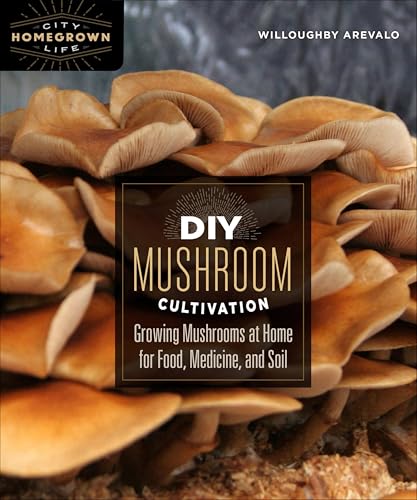
- Low-cost methods that avoid a clean-air lab setup
- Step-by-step guidance with full-color photos
- Covers indoor, outdoor, and waste-stream growing
Best For: Growers who want an affordable, small-space-friendly guide
Two-in-One Grow-and-Health Pick
Mushroom Cultivation and Medicinal Mushrooms

- Bundles cultivation basics with medicinal mushroom coverage
- Explains indoor and outdoor growing with common materials
- Includes preparation methods like teas, tinctures, and meals
Best For: Readers who want both cultivation and medicinal mushroom coverage
Comprehensive Classic – Growing Gourmet and Medicinal Mushrooms
If you want a serious reference for mushroom cultivation books, this classic is built for growers who want depth, precision, and a broad species range. It covers cultivation for 31 mushroom species, plus lab and growing-room setup, troubleshooting, recipes, and visual guides that make it useful at home or in a more commercial setting.
Best For: Readers who want an all-in-one cultivation manual with detailed species-by-species guidance.
Pros:
- Covers precise growth parameters for 31 species
- Includes lab, growing room, and troubleshooting guidance
- Has 500+ photos, illustrations, and charts
- Useful for both home growers and commercial growers
Cons:
- Large and detailed, so it may feel dense for beginners
- More technical than a quick-start guide
This is the kind of book you buy when you want one of the most thorough mushroom cultivation books available, not just a beginner overview. Its scope and visual support make it especially strong for growers planning to build skills over time.
Eco-Focused Advanced Guide – Organic Mushroom Farming and Mycoremediation
Among mushroom cultivation books, this title stands out for combining indoor and outdoor growing with organic methods and experimental applications. It goes beyond basic production to cover spawn generation, lab procedures, and innovative uses like mycoremediation, so it suits readers who want practical growing advice with a wider fungal perspective.
Best For: Growers interested in organic methods, spawn work, and experimental mushroom applications.
Pros:
- Explores simple to advanced indoor and outdoor cultivation
- Covers basic lab construction, equipment, and procedures
- Includes spawn generation and a wide range of practical projects
- Discusses mycoremediation and other innovative fungal uses
Cons:
- More ambitious than a basic beginner handbook
- Some material is experimental rather than standard growing practice
This is a strong pick if you want a cultivation book that treats mushrooms as both a food crop and a tool for broader ecological work. It offers a lot of value for readers ready to move beyond the basics.
Home Grower Staple – The Mushroom Cultivator
If you’re comparing mushroom cultivation books for a home setup, this practical guide remains a major reference. It covers 15 mushroom species, strain selection, compost and bulk substrate preparation, and control measures for 40 genera of contaminants, making it especially useful when you want a technical manual for reliable indoor growing.
Best For: Home growers who want a detailed, technical cultivation manual with strong contamination control coverage.
Pros:
- Guides cultivation of 15 mushroom species
- Covers strain selection and development
- Includes compost and bulk substrate preparation methods
- Addresses 40 genera of contaminants, molds, pathogens, and pests
Cons:
- Highly technical, which may be intimidating for casual beginners
- Black-and-white visuals may feel less approachable than color photos
This is a strong choice if you want a book that functions like a true working manual rather than a general introduction. Its depth on contamination and cultivation fundamentals makes it especially practical for serious home growers.
Beginner-Friendly Overview – Mushroom Cultivation: 12 Ways to Become the MacGyver of Mushrooms
For readers browsing mushroom cultivation books with a beginner-first angle, this one focuses on easy entry and practical home growing. It explains mushroom structure, life cycle, 12 growing methods, and common issues like moisture problems, contamination, pests, and disease, making it a straightforward starting point for home harvests.
Best For: Beginners who want a broad, easy-to-follow introduction to growing mushrooms at home.
Pros:
- Designed for beginners and home cultivation
- Explains mushroom structure, life cycle, and cultivation stages
- Covers 12 different indoor and outdoor growing methods
- Includes troubleshooting for contamination, moisture, pests, and disease
Cons:
- Shorter and less detailed than advanced reference books
- Does not offer the species-by-species depth of larger manuals
This is a practical pick if you want a manageable first book rather than an encyclopedic resource. It gives new growers enough structure to get started while still touching on the most common problems they’re likely to face.
Indoor Starter Guide – Grow Mushrooms Indoors
If you’re looking for mushroom cultivation books that focus on getting started at home, this guide is built for practical indoor growing. It walks through the full life cycle from spore to flush and covers sterile technique, substrates, fruiting chambers, and post-harvest handling in a clear step-by-step format.
Best For: Beginners, apartment growers, and home gardeners who want a simple indoor cultivation roadmap.
Pros:
- Covers spores, cultures, cloning, and contamination prevention.
- Explains how to build fruiting chambers and manage humidity, airflow, and light.
- Includes guidance on harvesting, drying, preserving, and troubleshooting.
- Mentions common species like oyster mushrooms and lion’s mane.
Cons:
- Short at 46 pages, so it’s more of a practical starter guide than an exhaustive reference.
- Focused on indoor home cultivation rather than larger farm-scale systems.
This is a solid pick if you want a concise, hands-on introduction with actionable growing steps and beginner-friendly structure.
Business-Focused Grow Manual – Family Mushroom Farm
Among mushroom cultivation books, this one stands out for combining home growing with business planning. It’s aimed at readers who want practical instruction for growing gourmet and medicinal mushrooms, plus advice on turning that knowledge into a profitable mushroom business.
Best For: Growers who want a hands-on cultivation guide with an entrepreneurial angle.
Pros:
- Written by professional growers with 20 years of experience.
- Includes step-by-step instructions for growing mushrooms at home and on farms.
- Offers profitable business strategies and real success stories.
- Features 300 photos and simple technological solutions.
Cons:
- Broader business focus may be more than a casual hobbyist needs.
- The title and scope are ambitious, so readers may want to compare it with a more specialized beginner book.
If you want one book that covers both cultivation and monetization, this is a strong practical option with experience-driven advice.
Grow Log Companion – Mushroom Growing Log Book
If your mushroom cultivation books shelf already has a how-to guide, this log book is the practical companion that helps you track what actually happens in each batch. It’s designed for home cultivators who want to document conditions, compare results, and improve outcomes over time.
Best For: Home growers who want a structured way to track batches and learn from each grow.
Pros:
- Includes 50 batch templates and daily observation logs.
- Provides quick-reference charts for 10+ popular species.
- Tracks substrate recipes, contamination issues, and harvest summaries.
- Helps growers identify patterns and replicate successful batches.
Cons:
- It’s a log book, not a full instructional cultivation manual.
- Best used alongside a separate growing guide rather than on its own.
This is a smart add-on for anyone serious about improving yields through better documentation and repeatable process tracking.
Beginner’s Step-by-Step Pick – Mushroom Cultivation for Beginners
If you want mushroom cultivation books that walk you through the whole process without assuming prior experience, this beginner-friendly guide is built for exactly that. It covers indoor and outdoor growing, substrate selection, spawn preparation, fruiting conditions, and troubleshooting in a straightforward format, with extra DIY projects for low-investment setups.
Best For: First-time growers who want a clear, practical introduction to growing gourmet and medicinal mushrooms at home.
Pros:
- Covers the full growing cycle from substrate prep to harvesting and storage
- Explains common substrates, pasteurization, and sterilization in simple terms
- Includes DIY fruiting chamber ideas and 10 beginner-friendly projects
- Touches on both gourmet and medicinal mushroom growing
Cons:
- Best suited to beginners rather than readers looking for advanced technique
- Broad scope may be more than you need if you only want one specific method
This is a solid starter option if you want a single book that covers the basics, setup, and common mistakes in one place. The emphasis on low-cost, hands-on growing makes it especially useful for home growers who want to begin with confidence.
Low-Tech Home Grower Pick – DIY Mushroom Cultivation
Among mushroom cultivation books, this one stands out for its low-tech, budget-conscious approach to growing at home. It combines mushroom biology and ecology with practical, step-by-step methods for making culture, grain spawn, indoor fruiting, outdoor gardens, and even mushroom use in cooking and tinctures.
Best For: Home growers who want a low-cost, practical guide that works in small spaces and without a lab setup.
Pros:
- Offers proven low-cost techniques for home-scale cultivation
- Includes full-color photos and step-by-step instructions
- Covers indoor and outdoor growing, logs, and waste-stream growing
- Explains harvesting, processing, tinctures, and cooking
Cons:
- Focuses on low-tech methods, so it may not satisfy readers seeking advanced lab-based approaches
- Some growers may want a more specialized book for medicinal uses alone
This is a practical pick if you value accessibility and hands-on experimentation over fancy equipment. It is especially appealing for apartment dwellers or anyone looking for a flexible guide that fits different budgets, spaces, and growing goals.
Two-in-One Grow-and-Health Pick – Mushroom Cultivation and Medicinal Mushrooms
If you want mushroom cultivation books that cover both growing and medicinal use, this two-in-one bundle offers a broad overview in one package. It combines practical cultivation guidance with a separate section on medicinal mushrooms, including growing methods, mushroom profiles, preparation ideas, and health-condition references.
Best For: Readers who want one book bundle for home cultivation basics and an overview of medicinal mushroom uses.
Pros:
- Combines cultivation guidance with medicinal mushroom information
- Covers indoor and outdoor growing methods using common materials
- Includes growth stages, moisture control, and harvest timing
- Provides preparation methods like tinctures, decoctions, teas, and meals
Cons:
- As a bundle, it may be broader than readers who only want cultivation tips
- Medicinal claims are presented as part of the book’s content and may not be the main focus for all buyers
This bundle makes sense if you want one purchase that spans practical growing and medicinal mushroom education. It is a good fit for readers who prefer a wider reference rather than a tightly focused how-to manual.
How We Picked the Best Mushroom Cultivation Books
We prioritized clarity, practical instruction, and usefulness for real-world cultivation. The strongest Mushroom Cultivation Books in this list cover core grow skills, offer dependable species-specific guidance, and help readers avoid common errors like contamination, poor humidity control, and inconsistent fruiting. We also favored titles that serve different goals, including home growing, gourmet mushrooms, medicinal mushrooms, and small-scale production.
Quick Comparison
If you are new to the subject, choose a beginner-friendly guide with step-by-step fundamentals and visual explanations. If you already know the basics, look for deeper coverage of substrate recipes, environmental control, and advanced techniques. For readers focused on business or recordkeeping, a more specialized title may be a better fit than a broad general guide.
Key Buying Factors for Mushroom Cultivation Books
Skill Level
Match the book to your experience. Beginners need simple language, safety guidance, and clear setup instructions. Intermediate growers may want more detail on spawn production, contamination control, and yield improvement.
Indoor Vs. Outdoor Methods
Some Mushroom Cultivation Books emphasize indoor growing, while others include outdoor beds, logs, or garden-style cultivation. Choose based on where you plan to grow and how much space you have.
Species Coverage
Check whether the book focuses on gourmet mushrooms, medicinal mushrooms, or both. A broader title can be helpful if you want to experiment, but a species-specific approach may be better if you are growing one type repeatedly.
Practical Depth
Look for books that go beyond inspiration and explain usable steps: sterilization, inoculation, incubation, fruiting conditions, harvesting, and post-harvest handling. The best guides also include troubleshooting advice for contamination, low yields, and slow colonization.
Who Should Buy Which Mushroom Cultivation Books?
Beginners should start with a straightforward, beginner-oriented guide that explains the full growing cycle without assuming prior lab skills. Hobby growers who want to level up may prefer a more technical book with advanced methods and broader species coverage. If you are interested in regenerative growing, outdoor production, or turning cultivation into income, choose a title that speaks to those goals directly.
In short, the best Mushroom Cultivation Books are the ones that match your current skill level, your growing setup, and your end goal. A focused, practical guide will usually be more valuable than a general title that tries to cover everything without enough depth.