Choosing Montessori phonics books can make early reading feel calm, structured, and engaging. The best options build sound awareness, letter recognition, blending, and simple word reading in a clear progression.
Below, you’ll find a focused roundup of 10 picks for preschoolers, kindergarteners, and beginning readers, plus a practical guide to help you choose the right fit.
Best 10 Montessori Phonics Books Picks for 2026
Phonics Practice Workbook
Science of Reading-Aligned Skills
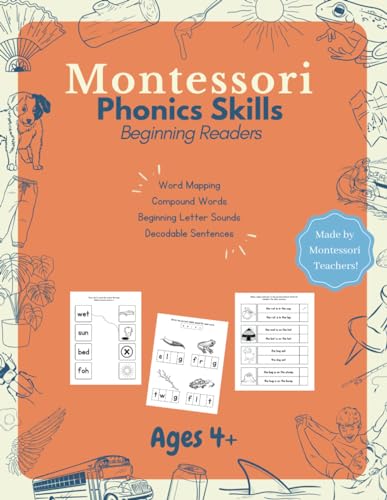
- 100+ pages of phonics activities
- Covers phonological awareness and sentence reading
- Best for children with some CVC/CCVC experience
Best For: Pre-K to first grade learners ready for structured phonics practice
Montessori Green Series
Phonograms and Spelling Patterns

- Covers silent e, digraphs, and r-controlled vowels
- Simple pages with realistic imagery
- Fits a Montessori language sequence
Best For: Children ready to learn common spelling patterns
Classic Decodables
Bob Books Set 1 Beginning Readers

- Uses very controlled decodable text
- Gradually adds letter sounds
- Includes a parent guide
Best For: Beginning readers ages 4+ who need simple phonics stories
Montessori Board Book
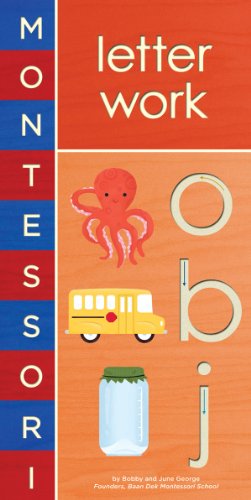
- Teaches letters by sound and shape
- Includes textured traceable letters
- Uses familiar objects for sound matching
Best For: Toddlers and preschoolers starting with letter sounds
Word Families Starter Workbook
Montessori Language Workbook Word Families

- 80+ pages on CVC word families
- Tracing, cut-and-paste, writing, and review
- Realistic images with simple Montessori-style layout
Best For: Ages 4+ beginners practicing rhyme and CVC patterns
Reusable Phonics Learning Kit
Montessori Phonics Set 20 Stages

- 73 double-sided flash cards and workbook
- Wipe-clean, reusable tracing practice
- Includes storage box and Velcro learning pieces
Best For: Ages 3–6 kids who need a hands-on, reusable phonics system
Blends Workbook for Early Readers
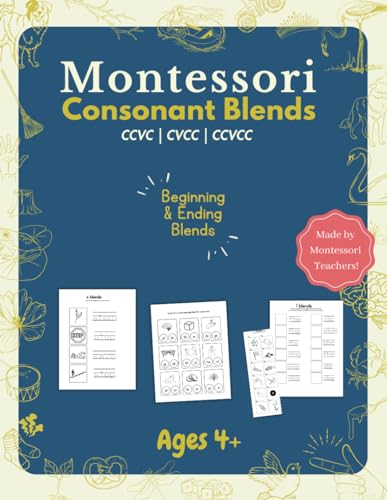
- 90+ pages on beginning and ending consonant blends
- Tracing, cut-and-paste, fill-in, and writing tasks
- Montessori-aligned with realistic images
Best For: Ages 4+ readers ready to move past CVC words
Montessori Phonics Blocks

- Rotating wooden rods build 60+ CVC words.
- 30 double-sided flashcards support self-correction.
- Includes tote bag and 25-page worksheet download.
Best For: Ages 3-6 practicing hands-on phonetic decoding.
Montessori Reading Workbook

- Covers phonics, CVC words, digraphs, and sentence building.
- Includes 26 alphabet tracing worksheets and cut-out tools.
- Good for home or classroom use across ages 3-7.
Best For: Families and homeschoolers wanting an all-in-one reading workbook.
Phonics Sticker Book
Smart Stickers Find It Activity Book

- Covers beginning letters, blends, endings, and digraphs.
- Over 100 reusable 3-D stickers encourage repeat play.
- Built-in handle makes it travel-friendly.
Best For: Ages 4+ who like hands-on sticker phonics activities.
Phonics Practice Workbook – Science of Reading-Aligned Skills
If you want Montessori phonics books that go beyond simple letter recognition, this workbook offers structured practice in the skills beginning readers need next: phonological awareness, phonemic manipulation, syllables, beginning sounds, and decodable sentences. It is geared toward children who already have some experience with CVC and CCVC words.
Best For: Children in Pre-K through first grade who are ready for guided phonics practice after learning basic sound patterns.
Pros:
- 100+ pages of foundation phonics activities
- Science of Reading aligned skill practice
- Includes phonological awareness and decodable sentence work
- Designed for learners with some CVC and CCVC experience
Cons:
- Not ideal as a very first introduction to letters
- Requires some prior phonics familiarity
This is a strong pick if you want a more practice-heavy supplement that supports decoding and sound work in a Montessori-friendly, skill-building format.
Montessori Green Series – Phonograms and Spelling Patterns
This is a focused option among Montessori phonics books if you want to teach spelling patterns in a clear, visual way. It introduces silent e, digraphs, vowel digraphs, and r-controlled vowels with realistic imagery and straightforward pages, making it a useful companion to Montessori language work.
Best For: Kids learning spelling patterns who are ready to move beyond basic letter sounds.
Pros:
- Introduces silent e, digraphs, vowel digraphs, and r-controlled vowels
- Uses realistic imagery and simple page layouts
- Designed to complement the Montessori approach
- Good bridge from phonics to spelling patterns
Cons:
- Not a full beginner letter-sounds primer
- Best suited to children who are already past the earliest phonics stage
If your child is ready to recognize common phonograms and spelling patterns, this workbook offers a clean, methodical path that fits well with Montessori-style instruction.
Classic Decodables – Bob Books Set 1 Beginning Readers
When people look for Montessori phonics books that help children actually start reading, Bob Books Set 1 is a proven decodable option. The stories use very limited sounds at first, gradually add more letter sounds, and keep the text simple so new readers can sound out words with confidence.
Best For: Ages 4 and up who are just beginning to read and need very controlled decodable text.
Pros:
- First books are built around just a few letter sounds
- Decodable two- and three-letter words with short vowels
- Very simple stories that build confidence
- Includes a parent guide for support
Cons:
- Not a Montessori-specific title, though it aligns with phonics learning
- Some families may want more hands-on activity pages alongside it
This is a dependable starter set for early readers who need repetitive, highly decodable practice rather than a broad phonics workbook.
Montessori Board Book – Letter Work for Early Reading
For families seeking Montessori phonics books for the earliest stage of literacy, Montessori: Letter Work focuses on sounds first, then shapes, using tactile tracing and familiar objects tied to each letter sound. It is designed to support prereading learning with a concrete, hands-on approach.
Best For: Toddlers and preschoolers who are learning letter sounds through touch, tracing, and naming objects.
Pros:
- Teaches letters by sound and shape first
- Features textured letters for touch-and-trace learning
- Pairs each letter with a familiar object sharing its sound
- Includes pronunciation spelling guides for caregivers
Cons:
- Only 24 pages, so it is more of an introductory board book than a full workbook
- Best for very early learners rather than children already reading
This is a well-matched Montessori choice for the earliest phonics exposure, especially if you want a tactile, sound-first introduction instead of a drill-heavy format.
Word Families Starter Workbook – Montessori Language Workbook Word Families
If you’re comparing Montessori phonics books for a beginning reader, this workbook focuses on word families and CVC words with a simple, realistic style. It offers 80+ pages of tracing, cut-and-paste, writing, and review activities to help children notice rhyming patterns and build early reading readiness.
Best For: Parents and teachers looking for a Montessori-aligned CVC and rhyme workbook for ages 4+.
Pros:
- 80+ pages focused on word families and CVC words
- Includes tracing, cut-and-paste, writing, and review sections
- Uses realistic images and simple aesthetics
- Designed for children ages 4+ or any beginning reader
Cons:
- Centers on word families rather than a full phonics system
- Printed workbook format may not suit kids who need reusable pages
This is a solid choice if you want a straightforward, low-distraction workbook that reinforces rhyme awareness and the patterns behind early spelling and reading.
Reusable Phonics Learning Kit – Montessori Phonics Set 20 Stages
This Montessori phonics books option is really a full early-learning kit, combining 73 double-sided flash cards with a reusable activity workbook. It’s built to support children ages 3 to 6 with letter recognition, tracing, matching, and screen-free practice in one structured set.
Best For: Families who want a reusable, all-in-one phonics kit for independent early learning.
Pros:
- Includes 73 double-sided phonics flash cards plus an activity workbook
- Uses Velcro matching and tracing for hands-on practice
- Wipe-clean workbook can be used repeatedly
- Comes with a storage box, marker, and punch-out activity boards
Cons:
- Bulkier than a simple workbook because it includes multiple components
- Best fit is limited to the stated 3–6 age range
If you want a more complete Montessori-style phonics system instead of a single practice book, this set stands out for its reusable materials and child-led format.
Blends Workbook for Early Readers – Beginning Blends Workbook
For shoppers narrowing down Montessori phonics books beyond basic CVC words, this workbook moves into beginning and ending consonant blends. It offers 90+ pages of tracing, cut-and-paste, writing, and review activities with the same realistic images and simple Montessori-friendly style.
Best For: Children ages 4+ who are ready to practice consonant blends after CVC word work.
Pros:
- 90+ pages focused on beginning and ending consonant blends
- Includes tracing, draw or cut-and-paste, fill-in-the-blanks, and writing
- Montessori aligned with realistic images and simple aesthetics
- Recommended as a follow-up to word families practice
Cons:
- Assumes some familiarity with 3-letter CVC words
- Less suitable as a first phonics book for complete beginners
This workbook is a strong next step for early readers who need more challenge after mastering word families, especially if you want a calm, low-clutter learning format.
Montessori Phonics Blocks – Spin-and-Read CVC Reading Set
If you want Montessori phonics books–style learning with a hands-on twist, this spin-and-read set focuses on decodable CVC practice in a very tactile format. The movable wooden rods, matching flashcards, and downloadable worksheet set make it a practical choice for preschoolers who are ready to sound out simple three-letter words.
Best For: Early readers ages 3-6 who learn best through manipulatives, self-correction, and simple CVC word building.
Pros:
- Teaches 60+ three-letter CVC words with rotating wooden letter blocks.
- Includes 30 double-sided phonics flashcards with real-life images for self-checking.
- Travel-friendly with a tote bag, ring-bound cards, and phonics game ideas.
- Comes with a downloadable 25-page worksheet set for extra practice.
Cons:
- Focused mainly on CVC words, so it is not a full reading curriculum.
- Best suited to children who are ready for phonetic decoding, not letter introduction alone.
This is a strong buy if you want a compact, durable, and Montessori-aligned phonics tool that keeps learning active. It leans practical rather than flashy, which makes it a solid option for home use, classrooms, or travel.
Montessori Reading Workbook – Learn-to-Read Activity Book
This Montessori phonics books workbook is designed like a practical at-home reading toolkit, mixing tracing, phonics, and cut-and-paste activities in one place. It covers letter sounds, CVC words, digraphs, sight words, and sentence building, so it works well as a budget-friendly supplement for early reading practice.
Best For: Families and homeschoolers who want a printable-style Montessori reading workbook for ages 3-7.
Pros:
- Includes 26 alphabet tracing worksheets for letter shape and sound practice.
- Covers pink series, blue series, movable alphabet, and sentence-building activities.
- Offers many cut-out tools that can be laminated and reused.
- Works for both adult-guided younger learners and more independent older children.
Cons:
- Black-and-white format may feel less engaging for children who prefer colorful books.
- Requires cutting, pasting, and optional laminating for the full experience.
This workbook is a useful all-in-one option if you want structured Montessori reading practice without buying multiple separate materials. It is especially appealing for families who like hands-on, low-cost resources they can adapt at home or in the classroom.
Phonics Sticker Book – Smart Stickers Find It Activity Book
For shoppers looking for Montessori phonics books that feel playful and portable, this reusable sticker activity book keeps the focus on early literacy through hands-on matching. It covers beginning letters, blends, endings, and digraphs with themed pages and over one hundred reusable 3-D stickers.
Best For: Preschoolers and kindergarteners ages 4+ who enjoy sticker-based phonics practice on the go.
Pros:
- Targets beginning letters, blends, endings, and digraphs in one activity book.
- Includes over 100 reusable puffy stickers for repeated play.
- Built-in handle and sticker storage make it easy to carry.
- Supports fine motor development alongside phonics practice.
Cons:
- Includes only 3 sticker sheets, so activity variety depends on reuse.
- Less text-heavy than a workbook, so it may not suit children needing more written practice.
This is a smart choice if you want an easy-to-pack phonics activity that feels more like play than drill. It is especially useful for quiet time, travel, or quick literacy sessions at home.
How We Picked These Montessori Phonics Books
We looked for books and learning sets that support a true beginning-reader pathway: letter-sound practice, phonograms, CVC words, blends, and early sentence reading. We also favored options that are easy to use at home or in the classroom, age-appropriate for young learners, and aligned with Montessori-friendly hands-on learning.
Because families use Montessori Phonics Books in different ways, we included a mix of workbooks, reusable activity books, decodable-style readers, and interactive materials.
Quick Comparison: Which Type Fits Your Child?
If your child is just starting, choose simpler sound and letter work first. If they already know many sounds, move toward word families, digraphs, blends, and short reading passages. Hands-on learners often do best with reusable books, flashcards, or manipulatives, while children who like worksheets may prefer workbook-style practice.
Best for Absolute Beginners
Look for letter-sound focus, tracing, and matching activities.
Best for Children Ready to Blend
Choose books that introduce CVC words, word families, and short decoding practice.
Best for Multi-Sensory Learning
Select reusable pages, flash cards, or tactile reading tools.
Key Buying Factors for Montessori Phonics Books
Skill level: Match the book to your child’s current reading stage. Too advanced can cause frustration, while too easy may not hold interest.
Phonics sequence: Good Montessori Phonics Books should follow a logical progression from sounds to letters, then to blending and reading.
Hands-on value: Montessori materials should invite active learning. Write-and-wipe pages, cut-and-paste tasks, and phonetic blocks can strengthen retention.
Clarity and repetition: Young readers benefit from simple layouts, consistent directions, and enough review to build confidence without overload.
Durability and reusability: For frequent use, reusable pages or sturdy components can be more practical than disposable worksheets.
Who Should Buy Which Montessori Phonics Books?
Choose beginner phonics workbooks if you want step-by-step practice at home or in a classroom.
Choose decodable readers and simple first books if your child is ready to apply sounds to real reading.
Choose interactive Montessori tools if your learner thrives on movement, touch, and visual matching.
Choose mixed-format sets if you want one resource that can support several stages of early literacy.
Overall, the best Montessori Phonics Books are the ones that meet your child where they are and make each next step in reading feel manageable.