Choosing the right Korean book set can make the difference between steady progress and a shelf full of unused study materials. The best options bundle structure, repetition, and practical exercises so you can build skills without guessing what to study next.
Below, we focus on Korean language learning book sets that help with the most common beginner goals: learning Hangul, understanding grammar, expanding vocabulary, and speaking with confidence.
Best 10 Korean Language Learning Book Sets Picks for 2026
Beginner Korean Starter

- 20 lessons with 1,000+ words and phrases
- Built-in practice sections with answer keys
- Free audio plus culture and history coverage
Best For: New learners wanting a broad beginner foundation
Grammar Focus Pick
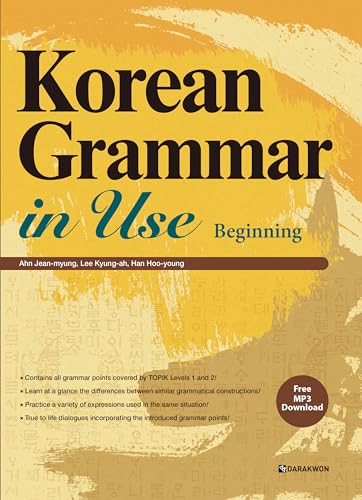
Korean Grammar in Use - Beginning
- Dedicated focus on Korean grammar
- Authentic dialogues and illustrations
- Works as a learner reference
Best For: Learners who want a beginning grammar reference
Vocabulary Builder
My First 500 Korean Words Book 1

- Teaches 500 everyday Korean words
- Stories, related expressions, and review exercises
- Free online audio included
Best For: Beginners building everyday vocabulary through context
Practice Workbook Choice

- 600+ questions across core language areas
- Ascending difficulty for gradual practice
- Useful supplement to a main textbook
Best For: Beginners wanting lots of reinforcement exercises
Traditional Folktales for Learners
Korean Stories in Bilingual Form

- 42 Korean/English folktales
- Cultural notes and exercises included
- Free online native-speaker audio
Best For: beginners who want reading practice with cultural context
Conversation Starter Pack
1,400+ Everyday Korean Expressions

- 1,400+ expressions in 21 topics
- Audio plus romanization for practice
- Includes Hangul and sentence basics
Best For: beginners focused on quick speaking practice
Hangul Mastery Workbook
All-in-One Korean Writing Package

- Focuses heavily on Hangul and script
- 400+ writing exercises included
- Videos plus 360+ flashcards reinforce learning
Best For: beginners who want an intensive start with Korean writing
7-Book Korean Starter Bundle
Learn Korean for Adult Beginners

- 7 books cover Hangul, grammar, vocabulary, dialogues, and advanced patterns.
- Includes bonuses like video courses, flashcards, audio pronunciations, and a study plan.
- Practical focus on travel, social, and everyday conversation skills.
Best For: adult beginners who want a broad all-in-one starter bundle
Vocabulary-First Korean Package
Your First 840 Words in Korean
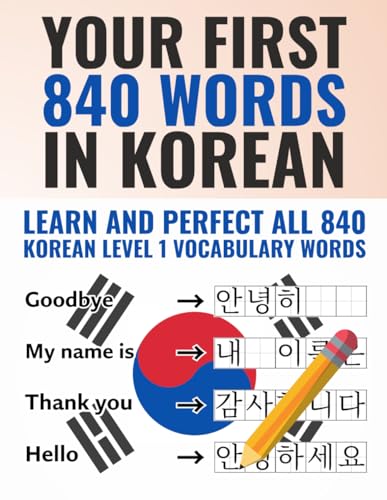
- Covers all 840 TOPIK I Level 1 vocabulary words with examples.
- Includes flashcards, writing exercises, and beginner learning guides.
- Built around a weekly study method and smartphone app practice.
Best For: beginners who want a clear vocabulary roadmap and review system
Sentence-Based Korean Grammar Set
Your First 100 Sentences in Korean
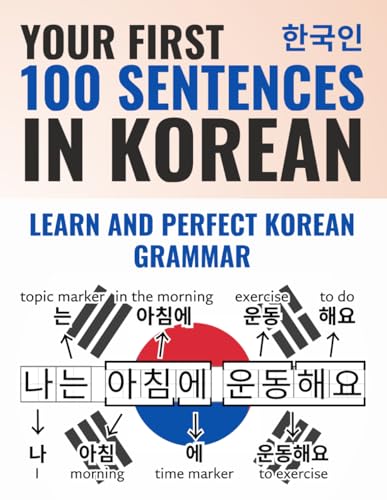
- Uses 100 example sentences to teach core Korean grammar in context.
- Includes audio, writing exercises, and a large online practice platform.
- Designed to help beginners build simple conversation skills and TOPIK I knowledge.
Best For: beginners who want grammar taught through real sentences and audio
Beginner Korean Starter – Korean Made Simple
If you’re comparing Korean language learning book sets and want a beginner-friendly starting point, Korean Made Simple offers a structured introduction to reading, writing, speaking, and understanding Korean. It also covers Korean culture and history, making it useful for learners who want more than just vocabulary lists.
Best For: New learners who want a broad, all-in-one foundation with audio support.
Pros:
- 20 in-depth lessons with over 1,000 vocabulary words and phrases
- Practice sections and answer keys built into every chapter
- Includes Korean writing system, culture, and history
- Free audio files available for download
Cons:
- Focused on beginners, so advanced learners may only use it as a review
- Single-volume format may not feel as expansive as a multi-book set
Overall, this is a practical first book for learners who want a guided path through the basics with built-in practice and audio. The added advanced notes and appendix make it a little more versatile than a pure starter text.
Grammar Focus Pick – Korean Grammar in Use – Beginning
For shoppers comparing Korean language learning book sets with a strong grammar focus, Korean Grammar in Use – Beginning is built to help learners concentrate on grammar first. The book uses authentic dialogues and illustrations to make grammar study more approachable while serving as a reference for both students and instructors.
Best For: Learners who want a dedicated beginning grammar reference with real-world examples.
Pros:
- Designed specifically to focus on Korean grammar
- Includes authentic dialogues and illustrations
- Useful as a reference book for learners and instructors
- English and Korean edition supports bilingual study
Cons:
- Grammar-centered approach may feel narrow if you want broader skills practice
- Not organized like a full multi-topic course
This is a strong choice if your priority is understanding Korean grammar in a structured way. It works best alongside other materials when you want more vocabulary, reading, or speaking practice.
Vocabulary Builder – My First 500 Korean Words Book 1
If you want Korean language learning book sets that emphasize practical vocabulary, My First 500 Korean Words Book 1 is centered on essential everyday words taught through stories. It pairs related words and expressions with review exercises, which makes it a useful option for beginners who learn best through context.
Best For: Beginners who want to build everyday vocabulary with story-based practice.
Pros:
- Covers 500 essential Korean words through stories
- Includes related words and expressions for each unit
- Built-in review exercises for beginners
- Free online audio is available
Cons:
- Vocabulary-focused format may not be enough for grammar-heavy study
- Best suited to beginner-level learners
As a vocabulary-first resource, this book is a practical pick for learners who want to expand everyday word knowledge without jumping into a dense grammar text. The story format and audio support make it easy to fit into a daily study routine.
Practice Workbook Choice – Let's Study Korean
Among Korean language learning book sets, Let’s Study Korean stands out as a practice workbook built for drilling grammar, spelling, vocabulary, and reading comprehension. With over 600 questions arranged from easier to more challenging, it is designed to reinforce what you already know and help expose common mistakes.
Best For: Beginners who want a high-volume practice workbook to reinforce core skills.
Pros:
- Over 600 questions across multiple skill areas
- Covers grammar, spelling, vocabulary, and reading comprehension
- Questions are arranged in ascending difficulty
- Built to help avoid common student mistakes
Cons:
- Primarily a workbook, so it is not a stand-alone course
- Best used as a supplement to a main learning book
This workbook is a solid companion if you already have a core textbook and want more practice. Its question-heavy format makes it especially useful for learners who improve through repetition and review.
Traditional Folktales for Learners – Korean Stories in Bilingual Form
If you want Korean language learning book sets that combine reading practice with cultural context, this bilingual folktale collection is a strong pick. It pairs 42 traditional Korean stories in Korean and English, then adds glossaries, cultural notes, discussion questions, and exercises to help beginners build vocabulary step by step.
Best For: Beginners, first- and second-year Korean students, and readers who want language practice tied to Korean culture.
Pros:
- 42 bilingual folktales in facing-page Korean and English
- Includes cultural notes, discussion questions, and language exercises
- Helpful Hangul introduction plus glossaries in both languages
- Free online native-speaker audio supports pronunciation and listening
Cons:
- Centered on reading and cultural learning rather than fast conversation practice
- Story complexity increases over time, so it may be less even-paced for absolute beginners
This is a practical choice if you want a book that teaches Korean through stories instead of isolated drills. The built-in audio and gradual difficulty make it a well-rounded companion for early study.
Conversation Starter Pack – 1,400+ Everyday Korean Expressions
For shoppers comparing Korean language learning book sets with a focus on speaking, this phrasebook-style guide is built for quick use. It offers more than 1,400 expressions across 21 topics, with romanization, grammar guide marks, and audio so you can listen, repeat, and start using useful lines right away.
Best For: Beginners who want practical speaking phrases for travel, daily situations, or pop-culture motivation.
Pros:
- Over 1,400 expressions across 21 everyday topics
- Native-speaker audio files for each expression
- Romanized text and grammar guide marks make pronunciation easier
- Includes Hangul reading basics and sentence-structure tips
Cons:
- Designed mainly for speaking and listening, not deep reading study
- Less comprehensive for grammar than a full textbook
If your priority is usable Korean fast, this book is very straightforward and focused. It works best as a conversation starter and practical reference rather than a complete language course.
Hangul Mastery Workbook – All-in-One Korean Writing Package
If you are narrowing down Korean language learning book sets and want a strong foundation in Hangul, this workbook is built for repetition and retention. It focuses heavily on the alphabet and script, with over 400 writing exercises, pronunciation support, linked videos, and digital flashcards to reinforce what you learn.
Best For: Beginners who want an intensive, workbook-style start to Hangul and Korean writing.
Pros:
- Dedicated focus on mastering Hangul before moving on
- Over 400 writing exercises for letters, syllables, words, and sentences
- Linked videos and pronunciation aids support correct reading
- Includes Quizlet flashcards with over 360 digital cards and audio
Cons:
- Strongly centered on Hangul, so it is not a full all-skill Korean course
- Best for learners who like repetitive practice and workbook structure
This is a focused starter package if your first goal is to read and write Korean accurately. The heavy practice load makes it especially useful for learners who want a slower, more thorough beginning.
7-Book Korean Starter Bundle – Learn Korean for Adult Beginners
If you’re comparing Korean language learning book sets, this 7-book bundle is built to take a beginner from Hangul through grammar, vocabulary, dialogues, and more advanced structures in one structured path. It emphasizes practical phrases, real-world usage, and cultural context, with extra bonuses like video courses, flashcards, audio pronunciations, and a 30-day study plan.
Best For: Adult beginners who want an all-in-one Korean starter set with broad coverage and lots of bonus learning material.
Pros:
- Covers the full learning path from Hangul and beginner grammar to conversations and advanced fluency.
- Focuses on practical vocabulary and phrases for travel, dining, shopping, and everyday use.
- Includes a large bonus package with video courses, flashcards, audio, and study tools.
- Built around cultural context and real-world communication, not just memorization.
Cons:
- The bundle is broad, so learners who want a single focused topic may prefer a narrower book.
- The amount of included material may feel overwhelming for very casual learners.
Overall, this is a strong pick if you want Korean language learning book sets that try to cover everything in one purchase. It suits beginners who like a step-by-step structure and value extra multimedia support alongside the books.
Vocabulary-First Korean Package – Your First 840 Words in Korean
For shoppers looking at Korean language learning book sets, this title stands out by focusing on vocabulary first rather than overwhelming beginners with grammar-heavy lessons. It packages all 840 TOPIK I Level 1 words with example sentences, writing exercises, a clear learning guide, and a flashcard-style system designed to help learners build momentum week by week.
Best For: Beginners who want a structured vocabulary roadmap and a clear method for building Korean word knowledge quickly.
Pros:
- Centers on all 840 TOPIK I Level 1 vocabulary words with example sentences and exercises.
- Includes a learning guide for complete beginners and for learners who already read Hangul.
- Uses a 4-step guide and the “deck” method to support steady weekly progress.
- Offers 840 flashcards plus smartphone app practice for review on the go.
Cons:
- Vocabulary-first learners will get the most value; it is less about broad grammar coverage.
- Best suited to serious beginners rather than casual dabblers.
This is a practical choice if your priority is building a usable Korean word base before moving deeper into grammar. It is especially appealing for learners who want a clear system, frequent small wins, and materials they can keep reviewing over time.
Sentence-Based Korean Grammar Set – Your First 100 Sentences in Korean
If you want Korean language learning book sets that help you move beyond isolated words, this grammar-focused package uses 100 real sentences to teach structure in context. It combines theory chapters, writing exercises, audio recordings, and an online platform so beginners can practice grammar while working toward simple conversations and TOPIK I-level understanding.
Best For: Beginners who want to learn Korean grammar through real sentences, listening practice, and guided exercises.
Pros:
- Teaches grammar through 100 example sentences rather than random memorization.
- Includes 7 theory chapters, 100 audio recordings, and 100+ optional writing exercises.
- Offers an online learning platform with 40+ modules and 1,050+ exercises.
- Provides learning plans for both complete beginners and learners who already read Hangul.
Cons:
- More grammar-centered than a general-purpose Korean bundle.
- The focus on sentence structure may feel intense if you only want casual phrase practice.
This set is a solid fit if you learn best by seeing grammar used in full sentences and then practicing it right away. It gives beginners a practical bridge from alphabet study to usable conversation patterns.
How We Picked These Korean Language Learning Book Sets
We looked for sets that are beginner-friendly, clearly organized, and useful for self-study. Priority went to books with step-by-step lessons, practice questions, vocabulary building, pronunciation support, and formats that encourage consistent review rather than one-and-done reading.
We also favored sets that suit different learning styles. Some buyers want grammar-first instruction, others need high-volume vocabulary, and many want a mix of speaking, reading, and writing practice in one place.
Quick Comparison
If you want the fastest route to usable Korean, choose a set that balances Hangul, core grammar, and everyday words. If you prefer structured progression, grammar workbooks and sentence-building sets are usually better. If your goal is more conversational, expression-focused material can help you speak sooner, while story-based books make reading practice less repetitive.
Key Buying Factors for Korean Language Learning Book Sets
Skill Focus
Match the set to your main goal. Hangul-focused books are best for absolute beginners, grammar sets help with sentence formation, vocabulary sets build word recognition, and workbook-heavy sets are stronger for active practice.
Practice Format
Look for answer keys, audio support, writing exercises, and review sections. Korean Language Learning Book Sets that include repeated practice are usually more effective than reference-only books.
Lesson Progression
Good beginner sets introduce concepts in a logical order: alphabet, pronunciation, basic grammar, then high-frequency words and sentences. Avoid sets that move too fast unless you already know the basics.
Reading Vs. Speaking Balance
Some learners want to read and write first; others want conversation. Choose accordingly. Sentence banks and expression-based sets support speaking, while stories and comprehension exercises strengthen reading fluency.
Extras and Accessibility
Audio files, digital videos, and clear pronunciation guidance can be especially helpful. These extras make it easier to hear natural pacing and reinforce what you study on the page.
Who Should Buy Which Korean Language Learning Book Sets?
Absolute beginners: Start with a Hangul or introductory all-in-one set that explains the alphabet, basic grammar, and core words.
Grammar-focused learners: Choose a grammar workbook or sentence-building set if you want structure and clear rules.
Vocabulary builders: Pick a high-frequency word set if your main goal is reading common words quickly and expanding recall.
Speaking-first learners: Look for expression-heavy sets with pronunciation support and repeat-after-me style learning.
Self-study learners: Korean Language Learning Book Sets with exercises, answer keys, and audio or video support are usually the safest choice because they reduce confusion and keep you accountable.
In the end, the best set is the one you’ll actually use consistently. Focus on a format that matches your current level, your study time, and the skill you want to improve first.