The best illustrated rhyming dictionaries do more than list matching words. They help poets, lyricists, teachers, and young writers discover sound patterns, expand vocabulary, and find unexpected creative directions.
We compared 10 options ranging from traditional reference books to specialized guides for songwriting, poetic technique, and Cockney rhyming slang. Use the guide below to choose the right fit for your writing style and audience.
Best 10 Illustrated Rhyming Dictionaries Picks for 2026
Best Overall

- 45,000+ rhyming words
- Sound-based organization and alphabetical index
- Includes notes and writing guidance
Best For: Poets, lyricists, and creative writers
Best for Young Writers
The Scholastic Rhyming Dictionary

- More than 15,000 entries
- Arranged by syllable count
- Includes slang, idioms, and proper nouns
Best For: Students in grades 4–6
Best Comprehensive Reference
The Complete Rhyming Dictionary

- More than 60,000 entries
- Covers multiple rhyme types and syllable lengths
- Includes a Poet's Craft Book
Best For: Serious poets, songwriters, and teachers
Best for Lyrics and Wordplay
Merriam-Webster's Rhyming Dictionary

- More than 71,000 rhyming words
- Pronunciations at every entry
- Includes multi-word and multisyllabic answers
Best For: Lyricists, rappers, poets, and copywriters
Classic Writer's Reference
New Rhyming Dictionary and Poets' Handbook

- 480-page rhymes-and-rhythms reference
- Positioned as a thesaurus-like writing aid
- 1991 Collins Reference reprint
Best For: Poets and writers wanting a substantial traditional handbook
Student-Friendly Choice

- Over 40,000 words by rhyming sounds
- Includes multisyllable and multi-word rhymes
- Compact 224-page alphabetical format
Best For: Students and writers seeking an accessible everyday reference
Creative Lyricists' Pick

- 150,000-plus solutions across 1,400 rhyme sounds
- Focuses on unexpected near and false rhymes
- 624 pages for songs and poetry
Best For: Writers seeking adventurous, less predictable rhymes
Classic Reference
Random House Webster's Rhyming Dictionary

- Approximately 60,000 words
- Cross-references and poetic glossary
- Includes names and foreign phrases
Best For: General writing, poetry, and songwriting reference
Songwriting Specialist
Songwriter's Rhyming Dictionary
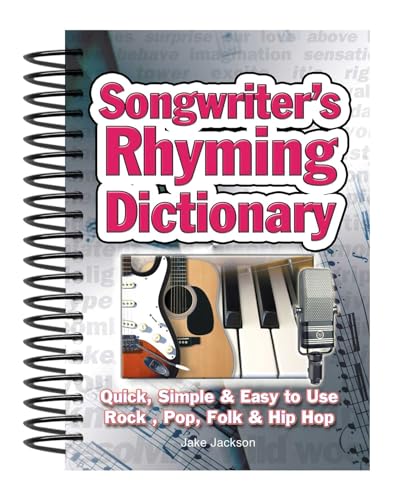
- Phonetic organization
- Multiple rhyme and assonance types
- Rock, pop, folk, and hip-hop focus
Best For: Lyric writing and overcoming writer’s block
Illustrated Slang Guide
Cockney Rhyming Slang Dictionary

- 110 illustrated slang entries
- Meanings, examples, and usage labels
- Quizzes, indexes, and worksheets
Best For: Learning Cockney rhyming slang visually
Best Overall – New Oxford Rhyming Dictionary
For writers seeking illustrated rhyming dictionaries with broad coverage and an easy-to-navigate format, the New Oxford Rhyming Dictionary is a versatile reference. It includes rhymes for more than 45,000 words, with proper names, place names, and foreign terms used in English.
Best For: Poets, lyricists, card writers, and anyone who enjoys exploring language.
Pros:
- More than 45,000 rhyming words and phrases
- Words grouped by sound, with a complete alphabetical index
- Includes usage notes, literary examples, and creative-writing guidance
- Updated with more than 200 newer words
Cons:
- At 448 pages, it is less compact than a pocket reference
- Its emphasis is on written guidance rather than illustrations
This is a strong all-purpose choice when organization, context, and extensive word coverage matter more than portability.
Best for Young Writers – The Scholastic Rhyming Dictionary
The Scholastic Rhyming Dictionary is a straightforward option for readers looking for illustrated rhyming dictionaries aimed at school-age users. It provides more than 15,000 rhyming words and phrases, including slang, idioms, and proper nouns.
Best For: Students in grades 4–6, classroom activities, and young writers learning to build rhymes.
Pros:
- Designed for a grade 4–6 reading level
- Includes more than 15,000 rhyming words and phrases
- Entries are arranged by number of syllables
- Covers slang, idioms, and proper nouns
Cons:
- Smaller word collection than the larger adult-focused dictionaries here
- The supplied details do not indicate an illustration program
Its accessible scope and syllable-based organization make it a practical starting point for younger students rather than a comprehensive professional reference.
Best Comprehensive Reference – The Complete Rhyming Dictionary
For buyers comparing illustrated rhyming dictionaries with deep reference coverage, The Complete Rhyming Dictionary stands out for its more than 60,000 entries. It also includes a Poet’s Craft Book with guidance on poetic techniques and forms.
Best For: Serious poets, songwriters, teachers, speechmakers, and performing-arts users.
Pros:
- More than 60,000 entries, including over 10,000 new additions
- Covers sight, vowel, consonant, and one-, two-, and three-syllable rhymes
- Includes proper names, slang, and scientific words
- Adds guidance on poetry techniques and forms
Cons:
- The extensive 720-page format may be more than casual users need
- The supplied details do not mention illustrations
This is the strongest fit for users who want maximum variety and specialized rhyme types, along with practical instruction on poetic craft.
Best for Lyrics and Wordplay – Merriam-Webster's Rhyming Dictionary
Merriam-Webster’s Rhyming Dictionary is a capable choice for shoppers exploring illustrated rhyming dictionaries for poetry, lyrics, rap, slogans, and other wordplay. It offers more than 71,000 rhyming words, including multi-word answers and multisyllabic words.
Best For: Poets, lyricists, rappers, copywriters, and writers who need pronunciation support.
Pros:
- More than 71,000 rhyming words
- Includes multi-word and multisyllabic answers
- Features pronunciations at every entry
- Covers names, brands, and trademarks
Cons:
- The supplied details do not identify illustrations
- Its 2007 publication date may make it less current than newer references
With extensive coverage and pronunciations throughout, this is a particularly useful pick when sound accuracy and modern creative applications are priorities.
Classic Writer's Reference – New Rhyming Dictionary and Poets' Handbook
New Rhyming Dictionary and Poets' Handbook: Rhymes and Rhythms for Writers―As Handy as a Thesaurus
Check Price On AmazonFor shoppers seeking illustrated rhyming dictionaries, this 480-page reference offers a substantial storehouse of rhymes and rhythms. Its thesaurus-like positioning makes it a practical choice for writers who want a broad, traditional resource in book form.
Best For: Poets and writers who want an extensive rhymes-and-rhythms handbook rather than a compact student reference.
Pros:
- Provides 480 pages of rhymes and rhythms.
- Designed as a writer’s tool comparable in usefulness to a thesaurus.
- Published by Collins Reference.
Cons:
- Published in 1991, so it is an older edition.
- The supplied details do not indicate illustrations.
This is a straightforward, substantial choice for writers who value page count and a classic reference format. Its age is worth considering if you want newer vocabulary or contemporary presentation.
Student-Friendly Choice – Webster's Rhyming Dictionary
Among illustrated rhyming dictionaries, Webster’s Rhyming Dictionary is a compact, accessible option for students and newer writers. It organizes more than 40,000 words by rhyming sounds and includes multisyllable and multi-word rhymes.
Best For: Students in grades 3–12, poets, lyricists, and writers who want an easy-to-use alphabetical reference.
Pros:
- Includes over 40,000 words arranged by rhyming sounds.
- Covers multisyllable and multi-word rhymes.
- Compact 224-page format with an alphabetical layout.
- Created in cooperation with Merriam-Webster editors.
Cons:
- Its 224 pages provide less space than the larger alternatives here.
- The supplied details do not indicate illustrations.
With a recent 2017 publication date and a clear focus on usability, this is the most approachable pick for classroom, homework, and everyday lyric-writing needs. Its smaller format also makes it easier to keep nearby while writing.
Creative Lyricists' Pick – Surprising Rhyming
For writers exploring illustrated rhyming dictionaries, Surprising Rhyming takes a deliberately unconventional approach. It offers more than 150,000 rhyming solutions across about 1,400 rhyme sounds, emphasizing false, half-, near-, and other less predictable rhymes.
Best For: Songwriters, lyricists, and poets who want to avoid clichés and develop more unexpected rhyme choices.
Pros:
- Contains 624 pages and over 150,000 rhyming solutions.
- Covers approximately 1,400 different rhyme sounds.
- Includes alternative options such as near-, half-, and false rhymes.
- Designed for pop, rock, country, folk, hip-hop, and poetry writing.
Cons:
- Its unconventional approach may be less suitable for writers seeking only perfect rhymes.
- The supplied details do not indicate illustrations.
This is the specialist choice for creative brainstorming rather than basic rhyme lookup. Its extensive alternatives can help writers create fresher lines, although readers wanting conventional rhymes may prefer a traditional dictionary.
Classic Reference – Random House Webster's Rhyming Dictionary
For writers, poets, and songwriters seeking illustrated rhyming dictionaries, this expanded Random House Webster’s reference offers approximately 60,000 words in a compact 368-page format. Comprehensive cross-referencing, a glossary of poetic terms, contemporary proper names, and foreign phrases make it a versatile general-purpose choice.
Best For: Writers, poets, and songwriters who want broad rhyming coverage and helpful reference material.
Pros:
- Includes approximately 60,000 words.
- Provides comprehensive cross-referencing.
- Includes a glossary of poetic terms.
- Covers contemporary proper names and foreign phrases.
Cons:
- The supplied description does not indicate that the book is illustrated.
- Its general-purpose format may be less specialized for particular musical styles.
This is a strong all-around reference for users who value breadth and traditional dictionary features over a specialized songwriting approach or illustrations.
Songwriting Specialist – Songwriter's Rhyming Dictionary
Songwriter's Rhyming Dictionary: Quick, Simple & Easy to Use; Rock, Pop, Folk & Hip Hop
Check Price On AmazonAmong illustrated rhyming dictionaries, this songwriter-focused guide stands out for its practical emphasis on lyrics, rhyme types, and musical styles. It is arranged phonetically and covers end rhymes, last-syllable rhymes, double rhymes, beginning rhymes, and first-syllable rhymes across rock, pop, folk, and hip-hop.
Best For: Budding songwriters and experienced lyricists working through writer’s block or exploring different rhyme patterns.
Pros:
- Arranged phonetically for quick access.
- Covers several rhyme and assonance types.
- Addresses rock, pop, folk, and hip-hop styles.
- Includes songwriting tips.
Cons:
- The supplied description does not indicate that the book is illustrated.
- Its focus on popular music may be narrower than a general rhyming dictionary.
- At 2.31 pounds, it is relatively heavy for its compact dimensions.
Choose this edition when songwriting utility matters most. Its phonetic organization and genre-aware guidance are particularly useful for lyric development.
Illustrated Slang Guide – Cockney Rhyming Slang Dictionary
For shoppers specifically seeking illustrated rhyming dictionaries, this Cockney reference is the most visually focused option in the roundup. It explains 110 London expressions through full-page illustrations, meanings, short forms, examples, usage labels, indexes, a decoder quiz, and a Cockney conversation.
Best For: Readers curious about London’s rhyming slang, British language, and playful illustrated reference books.
Pros:
- Includes 110 illustrated entries in all.
- Offers meanings, examples, short forms, and usage labels.
- Includes indexes, a quiz, conversation, and worksheet.
- Clearly marks grown-up and rude expressions.
Cons:
- It focuses on Cockney rhyming slang rather than general rhyming-word lookup.
- The cheeky adult entries may not suit every reader.
- Its 132-page format is narrower in scope than a comprehensive rhyming dictionary.
This is a specialized, highly visual choice rather than a conventional writing tool. It is best for learning and enjoying London slang through illustrations and interactive extras.
How We Picked These Illustrated Rhyming Dictionaries
We selected books that offer practical value for finding rhymes, developing lines, and exploring language. The list includes established general-purpose dictionaries, writer-focused handbooks, songwriting references, and a specialized illustrated guide to Cockney rhyming slang.
Our comparison emphasizes organization, breadth of vocabulary, usefulness for different kinds of writing, supplemental guidance, and audience. Because these books serve different purposes, the “best” choice depends on whether you need quick rhyme lookup, poetic instruction, classroom-friendly exploration, or inspiration beyond obvious matches.
Quick Comparison
- Best general reference: New Oxford Rhyming Dictionary or Merriam-Webster’s Rhyming Dictionary, Second Edition.
- Best for young writers and classrooms: The Scholastic Rhyming Dictionary.
- Best for poets: The Complete Rhyming Dictionary: Including The Poet’s Craft Book.
- Best for songwriting: Songwriter’s Rhyming Dictionary.
- Best for unexpected ideas: Surprising Rhyming.
- Best for language and culture: COCKNEY RHYMING SLANG: A CHEEKY ILLUSTRATED DICTIONARY OF LONDON’S LANGUAGE.
Key Buying Factors for Illustrated Rhyming Dictionaries
Rhyme Coverage and Organization
Look for clear alphabetical listings and a useful approach to sound matching. Some books focus on exact rhymes, while others include near rhymes, rhythm guidance, or related wordplay. A broad vocabulary is helpful, but easy navigation matters just as much when you are working under a deadline.
Writing-Specific Features
Poets may benefit from sections on meter, poetic forms, and technique. Songwriters often need accessible layouts and words suited to lyric writing across multiple genres. If the book is for children, readable explanations, visual elements, and engaging examples can make it more useful than a dense professional reference.
Portability and Format
Trade paperbacks are convenient for desks, classrooms, and writing sessions, while larger editions may provide more room for extensive entries. Check the page count, binding, print size, and whether the layout supports fast scanning.
Specialized Vocabulary
Consider the kind of language you want to find. General dictionaries support everyday poetry and wordplay; specialized books may focus on songwriting, unusual rhymes, regional expressions, or literary craft. A niche reference can be more inspiring than a larger general volume for the right project.
Who Should Buy Which Illustrated Rhyming Dictionaries?
Choose a comprehensive general dictionary if you want one dependable reference for poems, classroom activities, and everyday wordplay. Pick a poetry handbook if you also want help with rhythm, form, and revision. Songwriters should prioritize a fast, approachable guide organized around lyric-writing needs.
For children, teachers, or families, a Scholastic-style reference is likely the most approachable option. Writers seeking less predictable results should consider a book built around surprising rhymes. Finally, readers interested in British wordplay and visual cultural context will find the illustrated Cockney rhyming slang guide the most distinctive choice.