The best field guide books for children turn outdoor walks, backyard discoveries, and bedtime questions into hands-on learning. This roundup covers approachable guides for identifying birds, insects, animals, plants, rocks, dinosaurs, and more.
Use the comparison and buying advice below to choose a guide that matches your child’s interests, reading level, and favorite way to explore.
Best 10 Field Guide Books for Children Picks for 2026
Best Hands-On Nature Starter

- Interactive look-and-find nature activities
- Includes magnifying glass, stickers, and journal
- Designed for young outdoor explorers
Best For: Ages 4–8 and first nature walks
Best for Young Birders

- Covers 150 North American bird species
- Features maps, photos, and habitat snapshots
- Adds birding activities and crafts
Best For: Children beginning bird identification
Best Backyard Insect Guide
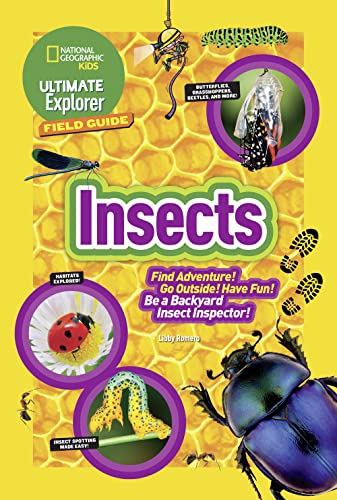
- Photo-filled guide to crawling and flying insects
- Includes spotting tips and interactive prompts
- Compact format for pockets and backpacks
Best For: Ages 8–12 studying backyard insects
Best Dinosaur Reference
The Ultimate Dinosaur Field Guide

- Spans five major prehistoric periods
- Includes size, diet, and appearance notes
- Features detailed watercolor illustrations
Best For: Dinosaur fans ages 7 and up
Backyard Wildlife Detective

- Photo-filled guide to turtles, geckos, snakes, and toads
- Includes spotting tips and safe-distance guidance
- Portable 160-page format for outdoor trips
Best For: Kids ages 8–12 who enjoy searching for backyard reptiles and amphibians
Rock-Hunting Companion

- Helps kids identify rocks and minerals
- Uses photos, facts, and interactive prompts
- Compact design suits field trips and camping
Best For: Kids ages 8–12 who enjoy collecting and examining rocks
Backyard Stargazer

- Covers stars, planets, meteor showers, and satellites
- Explains when and where to look
- Portable guide with interactive prompts
Best For: Young stargazers exploring the sky from backyards or campsites
Backyard Tree Trekker

- Covers maple, birch, pine, cherry, and more
- Includes interactive prompts and colorful photos
- Portable 160-page guide for ages 8–12
Best For: Backyard tree identification and outdoor trips
Wildflower Discovery Companion

- Identifies blooms from buttercups to pitcher plants
- Adds prompts, tips, stats, and jokes
- Portable 160-page guide for ages 8–12
Best For: Hands-on backyard wildflower exploration
Backyard Mammal Tracker

- Covers chipmunks, bats, badgers, mountain lions, and more
- Includes spotting guidance and safe-distance advice
- Portable 160-page guide for ages 8–12
Best For: Backyard mammal watching and wildlife trips
Best Hands-On Nature Starter – On the Nature Trail
For families seeking field guide books for children ages 4 to 8, Backpack Explorer: On the Nature Trail combines simple nature learning with activities kids can complete outdoors. Its look-and-find challenges, stickers, scavenger hunts, crafts, and pull-out journal make it especially practical for walks, parks, preserves, and backyard exploring.
Best For: Young children who benefit from interactive activities and a take-along introduction to plants, animals, fungi, lichen, and other everyday nature.
Pros:
- Includes 12 interactive field guides, seven outdoor games and crafts, and three scavenger hunts.
- Comes with three sticker sheets, a real magnifying glass, and a pull-out trail-map journal.
- Covers accessible subjects such as worms, birds, spiders, trees, flowers, and clouds.
Cons:
- At 48 pages, it offers a shorter introduction than more specialized field guides.
- The activities and reading level are aimed primarily at younger explorers.
This is a strong pick when you want field guide books for children to encourage observation and outdoor play rather than provide an extensive species reference.
Best for Young Birders – Bird Guide of North America
National Geographic Kids Bird Guide of North America is a substantial choice among field guide books for children who want to identify birds and learn where they live. It combines range maps, photographs, habitat snapshots, species descriptions, activities, and crafts in a format suited to children discovering birding.
Best For: Children ages 6 to 9 who want a broad introduction to North American birds and practical tips for spotting, hearing, and attracting them.
Pros:
- Profiles 50 popular North American birds and provides mini-profiles of 100 more, covering 150 species.
- Includes range maps, detailed drawings, photography, habitat information, and fun facts.
- Interactive birding activities and crafts add an engaging learning component.
Cons:
- Its bird-specific focus makes it less useful for children seeking a general nature guide.
- At 208 pages and over a pound, it is less lightweight than a pocket field guide.
Choose this guide when bird identification is the main goal and you want more coverage than a short activity book can provide.
Best Backyard Insect Guide – Ultimate Explorer Insects
For children drawn to bugs, Ultimate Explorer Field Guide: Insects is one of the more focused field guide books for children. The photo-filled, fact-packed guide encourages kids to inspect bees, beetles, walking sticks, inchworms, and other insects in backyards, on field trips, or while camping.
Best For: Children ages 8 to 12 who want a portable insect reference with prompts about where, when, and how to look safely.
Pros:
- Focuses on insects children can encounter throughout the United States.
- Uses photographs, facts, and interactive prompts to support backyard biology.
- Its compact, durable format fits in a pocket or backpack.
Cons:
- The specialized insect focus will not meet the needs of children wanting broad nature coverage.
- Some insects require keeping a safe distance, so exploration still needs adult guidance.
This is a practical match for young investigators who want to turn backyard observations, field trips, and camping outings into hands-on insect study.
Best Dinosaur Reference – The Ultimate Dinosaur Field Guide
The Ultimate Dinosaur Field Guide: The Prehistoric Explorer's Handbook (Ultimate Field Guides)
Check Price On AmazonThe Ultimate Dinosaur Field Guide brings a prehistoric angle to field guide books for children, presenting dinosaurs and related creatures as though a paleontologist recorded observations during journeys through major geological periods. Detailed watercolor illustrations and notes on appearance, size, diet, and more make it an inviting visual reference.
Best For: Children ages 7 and up who are fascinated by dinosaurs and want a period-spanning guide to familiar and lesser-known prehistoric animals.
Pros:
- Covers creatures from the Permian, Triassic, Jurassic, Cretaceous, and Cenozoic periods.
- Includes observations about each species’ appearance, size, diet, and other traits.
- Detailed watercolor illustrations create a distinctive paleontologist-handbook presentation.
Cons:
- It focuses on prehistoric life rather than animals children can identify outdoors today.
- At 96 pages, it provides less overall content than a longer reference volume.
For dinosaur enthusiasts, this guide offers a visually engaging way to explore prehistoric landscapes and compare herbivores, carnivores, and other ancient animals.
Backyard Wildlife Detective – Reptiles and Amphibians
For children interested in field guide books for children and backyard wildlife, this National Geographic Kids guide offers a portable way to identify reptiles and amphibians. Its photos, facts, and interactive prompts cover creatures such as turtles, geckos, snakes, and toads, while also explaining where and when to look and how to keep a safe distance.
Best For: Children ages 8–12 who enjoy backyard exploring, camping, field trips, and learning about reptiles and amphibians.
Pros:
- Photo-filled identification guide covering a broad range of reptiles and amphibians.
- Includes practical guidance on where and when to spot animals.
- Portable, durable format fits a pocket or backpack.
- Interactive prompts encourage outdoor observation.
Cons:
- Focused specifically on reptiles and amphibians rather than general wildlife.
- Its suggested reading range may not suit younger children who need simpler text.
Choose this guide when your child’s curiosity centers on scaly and slimy backyard discoveries. The compact 160-page format makes it a practical companion for outdoor adventures.
Rock-Hunting Companion – Rocks and Minerals
Among field guide books for children, this National Geographic Kids title is a practical pick for young rock hounds. It combines photographs, facts, and interactive prompts to help children identify rocks and minerals they discover in backyards, on field trips, while camping, or during vacations.
Best For: Children ages 8–12 who like collecting, examining, and identifying rocks and minerals outdoors.
Pros:
- Designed to help children identify a wide variety of rocks and minerals.
- Photo-filled and fact-packed for accessible learning.
- Interactive prompts support hands-on exploration.
- Compact, durable design is convenient for a pocket or backpack.
Cons:
- Its subject is limited to rocks and minerals, so it may not appeal to children seeking broader nature coverage.
- The supplied details do not specify a waterproof design for wet-weather use.
This is a strong match for children who naturally stop to inspect what they find underfoot. Its portable format encourages them to turn outdoor discoveries into identification activities.
Backyard Stargazer – Night Sky
For children drawn to field guide books for children about space, this National Geographic Kids night-sky guide turns backyard looking into a year-round activity. It covers stars, planets, meteor showers, constellations, and satellites, with information on what to spot, where to look, and when to observe it.
Best For: Young stargazers who want a portable guide for backyards, camping trips, vacations, and other evening outings.
Pros:
- Covers varied sights, including Mars, meteor showers, Scorpius, and satellites.
- Explains how, where, and when to look for night-sky phenomena.
- Photo-filled, fact-packed format includes interactive prompts.
- Portable design fits easily in a pocket or backpack.
Cons:
- Focused on observing the night sky rather than broader astronomy instruction.
- Some children may need adult help planning nighttime observations.
This guide suits families looking for an easy way to encourage outdoor observation after dark. Its compact 160-page format makes it convenient to bring along for camping and vacation stargazing.
Backyard Tree Trekker – Trees
For families comparing field guide books for children, this portable tree guide offers a practical way for kids ages 8–12 to identify trees during backyard exploring, camping, vacations, or field trips. Its photo-filled pages cover familiar varieties such as maple, birch, pine, and cherry.
Best For: Children who enjoy identifying trees and exploring outdoors with a compact guide.
Pros:
- Photo-filled, fact-packed coverage of trees found across the United States.
- Interactive prompts encourage kids to observe and participate.
- Portable, durable format fits a pocket or backpack.
- 160 pages provide substantial exploration material.
Cons:
- Its focus is specifically trees, so it is not a general nature guide.
- The listed reading age is 8–12 years, which may not suit younger children.
This is a strong choice when the goal is hands-on tree identification rather than broad wildlife coverage. The compact format makes it especially practical for taking outdoors.
Wildflower Discovery Companion – Wildflowers
Among field guide books for children, this wildflower edition stands out for its hands-on approach to spotting and identifying blooms. Designed for ages 8–12, it covers flowers from buttercups and primroses to bladderworts and pitcher plants, with tips and prompts for exploring nearby.
Best For: Budding botanists who want to investigate wildflowers in backyards, neighborhoods, or on trips.
Pros:
- Explains how, where, and when to spot wildflowers.
- Includes interactive prompts, botanist tips, super stats, and jokes.
- Photo-filled 160-page format supports visual identification.
- Durable and portable for field trips, camping, or vacations.
Cons:
- The subject is limited to wildflowers rather than broader plant life.
- The recommended reading age of 8–12 may be less suitable for younger readers.
This guide is a good fit for children who learn best by looking closely and getting involved. Its combination of facts, humor, and activities makes flower spotting feel like an outdoor project.
Backyard Mammal Tracker – Mammals
For kids who would rather track animals than plants, this mammal guide is a practical pick among field guide books for children. It helps ages 8–12 learn how, where, and when to spot animals ranging from chipmunks and bats to badgers and mountain lions.
Best For: Young wildlife enthusiasts exploring mammals around home, on field trips, while camping, or on vacation.
Pros:
- Covers common mammals found in and around backyards.
- Includes information on spotting animals and keeping a safe distance when needed.
- Photo-filled pages and interactive prompts make it hands-on.
- Compact, durable design is easy to carry outdoors.
Cons:
- Its focus on mammals does not cover plants, insects, or birds.
- Some featured animals, such as mountain lions, may not be encountered in every area.
This is the most suitable option for children motivated by animal sightings and backyard tracking. The safety guidance is a useful addition when the guide introduces larger or potentially distant wildlife.
How We Picked the Best Field Guide Books for Children
We selected books that encourage observation and independent exploration while covering distinct areas of nature and science. The lineup includes broad outdoor guides, focused identification references, and subject-specific books for children interested in birds, insects, reptiles, amphibians, dinosaurs, rocks, minerals, trees, wildflowers, mammals, and the night sky.
We also considered practical usefulness: clear organization, kid-friendly language, visual appeal, portability, and whether a book works equally well at home, on a hike, or during a family nature outing. Because children develop different interests and reading skills, the best choice depends on the subject and level of guidance they need.
Quick Comparison
| Best For | Recommended Type | What It Covers |
|---|---|---|
| General outdoor exploration | Nature trail guide | Common discoveries across multiple categories |
| Birdwatching | Regional bird guide | Birds found throughout North America |
| Backyard investigation | Insect, tree, or wildflower guide | Frequently encountered living things |
| Science-focused interests | Dinosaur, rocks, or minerals guide | Prehistoric life and earth science |
| Nighttime activities | Night sky guide | Stargazing and basic sky observation |
| Animal lovers | Mammal or reptile guide | Animal identification and natural history |
Key Buying Factors for Field Guide Books for Children
Choose a Focus That Matches the Child
Start with genuine curiosity. A bird guide is useful for a child who watches feeders, while a rocks and minerals guide may be a better fit for a collector. Broad nature guides offer variety, but specialized books can sustain deeper interest.
Consider Reading Level and Independence
Look for short explanations, labeled illustrations, visual identification clues, and layouts children can use without constant adult help. Younger children may benefit from activity-oriented pages, while older readers may prefer more detailed facts and terminology.
Check Portability and Durability
A field guide should be easy to carry on walks. Compact formats are convenient outdoors, while larger books can provide clearer images and more detailed reference material at home. Consider whether the book will be used carefully indoors or taken into muddy, wet, or active environments.
Match the Guide to Your Location
Regional relevance matters most for birds, mammals, plants, reptiles, and amphibians. A broadly useful book can introduce concepts, but local parks, school projects, and family trips may be better served by a guide covering species found in your area.
Who Should Buy Which Field Guide Books for Children?
Choose a general trail guide for a child who is just beginning to explore nature. Birdwatchers should start with the North American bird guide, while backyard detectives may get the most use from the insect, tree, or wildflower guides. Dinosaur fans will likely prefer the prehistoric field guide, and rock collectors should choose the rocks and minerals edition.
For animal-focused children, select the mammals guide for familiar wildlife or the reptiles and amphibians guide for pond, garden, and woodland discoveries. Stargazers should choose the night sky guide, especially if the family plans evening observation sessions. When in doubt, pick the subject the child already asks about most often; sustained curiosity is the best predictor that a field guide will become a regularly used learning tool.