Choosing among existentialism book collections can feel overwhelming because the category ranges from compact introductions to dense philosophical classics.
This roundup makes the decision easier by focusing on scope, readability, and value so you can find the right collection for study, personal reading, or gifting.
Best 10 Existentialism Book Collections Picks for 2026
Classic Anthology
Existentialism from Dostoevsky to Sartre

- Broad anthology of key existentialist thinkers
- Includes some previously untranslated selections
- Walter Kaufmann provides an introductory essay
Best For: Readers seeking a foundational primary-text anthology
Literary-Philosophical Essays

- One-volume collection of Murdoch’s key essays
- Covers Sartre, Camus, de Beauvoir, and more
- Links existentialism with literature and ethics
Best For: Murdoch readers and philosophy-literate literature fans
Sartre Essentials
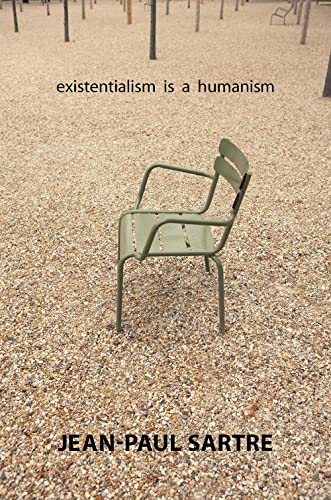
- New English translation of Sartre’s lecture
- Includes analysis of Camus’s The Stranger
- Annotated with biographical and editorial context
Best For: Readers wanting a concise Sartre-focused introduction
Modern Canon Anthology
The Penguin Book of Existentialist Philosophy

- Broad anthology of existentialist and precursor texts
- Includes Beauvoir, Sartre, Fanon, Kierkegaard, and Nietzsche
- Highlights relevance to race, colonialism, and feminism
Best For: Readers wanting a modern, socially aware anthology
Essential Anthology
Basic Writings of Existentialism

- Single-volume anthology of key existentialist thinkers
- Includes Sartre, Camus, Kierkegaard, Nietzsche, and more
- Edited by Gordon Marino with an introduction
Best For: Readers who want a broad, course-friendly existentialism collection
Foundational Sartre

- New English translation of Sartre’s seminal work
- Focuses on freedom, choice, consciousness, and values
- Substantial 928-page philosophy text
Best For: Readers who want a major Sartre title in their existentialism collection
Concise Classic

- Compact 160-page edition of Camus’s classic essay
- Addresses suicide, despair, and meaning in life
- A strong shorter addition to a collection
Best For: Readers who want a shorter Camus classic for their existentialism bookshelf
Classic Existentialism Anthology
The Existential Literature Collection

- Broad mix of philosophy and literature
- Includes Kierkegaard, Nietzsche, Kafka, and more
- Substantial 872-page Kindle collection
Best For: Readers seeking a wide-ranging primary-text anthology
Essential Sartre Plays

- Four seminal plays in one volume
- Includes Sartre’s best-known existential portrayal of Hell
- Shorter 275-page reissue
Best For: Readers wanting a concise Sartre-focused play collection
Concise Existentialism Guide

- Covers Kierkegaard, Sartre, Camus, and de Beauvoir
- Explains core ideas like bad faith and the absurd
- Adds modern topics such as AI and climate change
Best For: Beginners and students wanting a structured overview
Classic Anthology – Existentialism from Dostoevsky to Sartre
Existentialism from Dostoevsky to Sartre, Revised and Expanded Edition, Book Cover May Vary
Check Price On AmazonIf you want an existentialism book collection that covers the movement’s core voices in one place, this revised and expanded anthology is a strong starting point. Walter Kaufmann gathers essential writings from Dostoevsky, Kierkegaard, Nietzsche, Rilke, Kafka, Ortega, Jaspers, Heidegger, Sartre, and Camus, with some texts not previously translated and an introductory essay to frame the selections.
Best For: Readers who want a foundational, historically broad existentialism anthology with major primary texts.
Pros:
- Includes basic writings from many of the movement’s most important thinkers
- Features some selections not previously translated
- Walter Kaufmann’s introductory essay adds useful context
- Revised and enlarged edition for a wider survey
Cons:
- More of an anthology than a guided modern overview
- Best suited to readers comfortable with primary philosophical texts
This is a practical pick if your goal is breadth and direct access to the original writings that shaped existentialism. It works especially well as a reference collection for serious readers who want the movement’s classic voices in one volume.
Literary-Philosophical Essays – Existentialists and Mystics
For buyers looking for existentialism book collections with a strong literary and ethical angle, this one-volume gathering of Iris Murdoch’s essays stands out. It brings together her most influential philosophical and literary writing, including work on Sartre, Camus, Simone de Beauvoir, and Elias Canetti, plus essays on love, the sublime, and literature’s role in philosophy.
Best For: Readers interested in Iris Murdoch’s essays on existentialism, literature, ethics, and aesthetics.
Pros:
- Collects Murdoch’s most influential literary and philosophical essays in one volume
- Includes evaluations of Sartre, Camus, Simone de Beauvoir, and others
- Explores love, the sublime, and literature’s role in addressing philosophy’s limits
- Helps illuminate the intellectual background of Murdoch’s novels
Cons:
- Less of a general existentialist anthology and more of a Murdoch-focused collection
- Likely best for readers already interested in philosophy, literature, or Murdoch’s work
This volume is a smart choice if you want existentialism filtered through a major novelist’s ethical and aesthetic thinking. It offers depth rather than breadth, making it ideal for readers who value essays that connect philosophy to literature.
Sartre Essentials – Existentialism Is a Humanism
If you’re comparing existentialism book collections and want a focused, accessible Sartre volume, this annotated Yale edition is a compact pick. It presents a new English translation of Sartre’s 1945 lecture, adds his analysis of Camus’s The Stranger, and includes discussion by biographer Annie Cohen-Solal, plus material from the French edition.
Best For: Readers who want a short, annotated introduction to Sartre’s existentialism and related commentary.
Pros:
- New English translation of Sartre’s seminal 1945 lecture
- Includes Sartre’s analysis of Camus’s The Stranger
- Annotated edition with discussion by Annie Cohen-Solal
- Compact format makes it easy to read and revisit
Cons:
- Much narrower in scope than a full anthology
- Short length means it is not a broad survey of the movement
This is the best fit if you want a concentrated Sartre selection rather than a wide-ranging collection. Its strength is clarity and context, making it useful for readers who want a manageable entry point into existentialist thought.
Modern Canon Anthology – The Penguin Book of Existentialist Philosophy
For shoppers seeking existentialism book collections with a broader, more contemporary angle, this Penguin Classics anthology is especially appealing. It gathers key existentialist texts alongside nineteenth-century precursors and includes writers such as Simone de Beauvoir, Jean-Paul Sartre, Frantz Fanon, Kierkegaard, Nietzsche, Freud, and Heidegger, with an emphasis on questions of existence, commitment, racism, colonialism, and feminism.
Best For: Readers who want a wide-ranging anthology that connects existentialism to modern social and political questions.
Pros:
- Gathers key existentialist texts and important precursors in one anthology
- Expands the usual canon with Frantz Fanon and other neglected works
- Frames existentialism around relevance to racism, colonialism, and feminism
- Penguin Classics edition with authoritative-text presentation
Cons:
- Publication date listed for 2026, so availability may differ from older editions
- Readers wanting only classic French existentialists may find the scope broader than expected
This anthology is a strong choice if you want existentialism presented as a living conversation rather than a closed historical movement. Its broader selection and thematic focus make it useful for modern readers who want both depth and relevance.
Essential Anthology – Basic Writings of Existentialism
If you want an existentialism book collection that gives you the field’s core voices in one place, this anthology is the most straightforward pick. Edited by Gordon Marino, it gathers widely taught writings from major nineteenth- and twentieth-century thinkers and is built for readers who want a broad overview rather than a single-author deep dive.
Best For: Readers who want a course-friendly collection of foundational existentialist texts in one volume.
Pros:
- Brings together influential works by Sartre, Camus, Kierkegaard, Nietzsche, Heidegger, de Beauvoir, Dostoevsky, Ellison, and Unamuno
- Designed as a single-volume anthology of the movement’s most commonly taught writings
- Includes an introduction by Gordon Marino for added context
- Large 530-page print length gives it strong coverage for a survey-style collection
Cons:
- As an anthology, it is less focused than a single-author edition
- Best suited to readers seeking breadth over a dedicated study of one thinker
This is the most practical choice if your goal is to compare the major existentialist names side by side. It works well as a starter collection or a compact reference for readers building a serious philosophy shelf.
Foundational Sartre – Being and Nothingness
For readers focused on one of the most important books in existentialism, this new English translation of Sartre’s Being and Nothingness is a major pickup. It is a substantial philosophical work that lays out Sartre’s account of freedom, choice, consciousness, and how we create meaning, making it a strong anchor text for more serious existentialism book collections.
Best For: Readers who want a definitive Sartre volume as the centerpiece of a philosophy collection.
Pros:
- New English translation, described as the first in more than 60 years
- Seminal treatise that helped establish Sartre’s legacy in twentieth-century philosophy
- Explores freedom, choice, consciousness, and the creation of values
- Extensive 928-page print length offers deep treatment of the subject
Cons:
- Very long and likely demanding for casual readers
- Single-author focus means it is not a broad anthology
If you want the heavyweight classic rather than a sampler, this edition stands out. It is best for readers ready to commit to a detailed and influential existentialist text that rewards careful reading.
Concise Classic – The Myth of Sisyphus
If you want an existentialism book collection that includes a shorter, highly readable classic, Camus’s The Myth of Sisyphus is an excellent choice. This Vintage International edition presents the famous essay collection in a compact format, beginning with the question of suicide and arguing toward the value of existence in a universe without inherent meaning.
Best For: Readers who want a shorter Camus classic that is easier to fit into a broader collection.
Pros:
- Compact 160-page edition that is easier to read than longer philosophical works
- Shows Camus’s influential response to despair and meaninglessness
- Widely recognized twentieth-century existentialist text
- Vintage International translation edition with a classic presentation
Cons:
- Much narrower in scope than a full anthology
- Essay-based format may not suit readers looking for a textbook-style overview
This is the best pick when you want a compact, essential Camus title without committing to a massive volume. It adds depth to a collection while staying approachable for readers who prefer a shorter philosophical read.
Classic Existentialism Anthology – The Existential Literature Collection
If you want existentialism book collections that show the movement through major literary and philosophical texts, this anthology gives you a wide-ranging starting point. It gathers works by Kierkegaard, Nietzsche, Dostoyevsky, Kafka, Thoreau, James, and others, so you can compare how different writers approach freedom, choice, faith, alienation, and meaning.
Best For: Readers who want a broad, primary-text collection spanning philosophy and literature.
Pros:
- Includes many foundational names associated with existential thought.
- Mixes philosophy, fiction, essays, and plays for a varied reading experience.
- Large 872-page print length offers substantial depth.
- Enhanced typesetting, Word Wise, and screen reader support add convenience for Kindle reading.
Cons:
- Not a focused single-author or single-theme volume.
- Some included texts are adjacent to existentialism rather than pure existentialist works.
- The sheer size may feel overwhelming if you want a quick introduction.
As a roundup pick, this collection stands out for breadth more than brevity. It’s a practical choice if you want one volume that touches the literary roots and philosophical edges of existentialism book collections.
Essential Sartre Plays – No Exit and Three Other Plays
For shoppers comparing existentialism book collections, this compact Sartre set is a strong pick if you want drama instead of a survey text. It centers on four seminal plays, including his best-known existential portrayal of Hell, plus other thought-provoking works that cover conflict, ideology, and racism.
Best For: Readers who want a shorter, play-focused introduction to Sartre’s existential themes.
Pros:
- Contains four seminal plays in one volume.
- Best-known play offers a clear existential starting point.
- Includes works that explore intellectual conflict and social issues.
- Compact 275-page reissue is easier to tackle than a large anthology.
Cons:
- Focuses on Sartre rather than the broader existentialist tradition.
- Readers wanting philosophy essays will need a different title.
- The play format may not suit those seeking a textbook-style overview.
This is the most focused option in the group if you want existential ideas expressed through theater. It’s a smart buy when your priority is Sartre’s voice and a manageable reading length.
Concise Existentialism Guide – EXISTENTIALISM Summarized
If you’re browsing existentialism book collections and want a clear entry point, this concise guide is built for quick understanding. It explains major existential ideas through thinkers like Kierkegaard, Nietzsche, Heidegger, Sartre, Camus, and Simone de Beauvoir, while also covering topics such as authenticity, bad faith, the absurd, and existential ethics.
Best For: Newcomers and students who want a structured, easy-to-follow overview of existential philosophy.
Pros:
- Summarizes key existential thinkers in a single guide.
- Covers core concepts like freedom, responsibility, anxiety, and the absurd.
- Includes modern applications such as AI, climate change, and everyday life.
- Designed for both curious beginners and more advanced readers.
Cons:
- Summarized format may not satisfy readers wanting primary texts.
- Less literary and less anthology-like than other collection options.
- Depth is limited by its concise, guide-style approach.
This title is the most practical pick if you want a guided overview rather than a sourcebook. It works well as a foundation before moving into longer existentialism book collections or original philosophical works.
How We Picked These Existentialism Book Collections
We looked for collections that balance authority, accessibility, and breadth. The strongest options include recognized philosophers, curated excerpts or complete works, and editions that make sense for different reading goals. We also favored books that help readers understand the major themes of existentialism without unnecessary repetition.
Quick Comparison
Think of these picks in three broad groups: beginner-friendly summaries and anthologies, essential primary texts for serious study, and literary or mixed collections for readers who want philosophy with broader cultural context. That makes it easier to match the book to your experience level and purpose.
Key Buying Factors for Existentialism Book Collections
Readability
If you are new to the subject, start with a collection that offers introductions, excerpts, or concise explanations rather than a dense standalone treatise.
Scope
Some Existentialism Book Collections emphasize one thinker, while others cover multiple voices. Choose a wider survey if you want context, or a focused volume if you want to study a specific philosopher deeply.
Primary Texts Vs. Secondary Commentary
Primary texts are best for direct engagement with existentialist thought, but commentary-driven collections can make the ideas easier to absorb. Many readers benefit from beginning with a hybrid approach.
Format and Purpose
For coursework, you may want complete works or standard classroom anthologies. For personal reading, a shorter or more curated collection may be more enjoyable. For gifting, presentation and clarity matter as much as depth.
Who Should Buy Which Existentialism Book Collections?
Beginners should prioritize collections that summarize core ideas clearly and avoid the most demanding texts at first. Students and dedicated readers should choose broader anthologies that include major thinkers and enough material for comparison. If you want literary drama alongside philosophy, look for collections that connect existential themes to plays, essays, and fiction. If your goal is a deep dive into the tradition, select a collection built around canonical primary texts and major authors.
In short, the best choice depends on how much background you already have and whether you want an introduction, a study aid, or a lasting reference volume. The right pick will make existentialism feel less abstract and more usable in real reading life.