The right workbook can turn a vague story idea into a workable plot, layered characters, and a repeatable writing practice. These guided books offer prompts, exercises, readings, and planning tools for novelists at different stages.
Our roundup covers focused options for plotting and character development alongside broader workbooks for improving craft, generating ideas, and building writing momentum.
Best 10 Creative Writing Workbooks for Novelists Picks for 2026
Best All-in-One Novel Planner

- Plans a novel from concept through pitch
- Includes goals, calendars, and milestone tracking
- Adds revision, query, and agent worksheets
Best For: Writers wanting a comprehensive, organized novel workbook
Best Character-Building Journal
A Writer's Journal for Creating Characters

- Uses 40-plus prompts per character
- Develops up to 15 characters
- Adaptable across genres and storytelling formats
Best For: Writers who need fast, detailed character brainstorming
Best for Flexible, Nonlinear Planning
The Novel Workbook For Messy Writers

- Supports lists, doodles, maps, and collage
- Builds a detailed novel blueprint
- Balances prompts with creative freedom
Best For: Nonlinear planners who want a flexible novel workspace
Best Course-Style Writing Guide
The Creative Writing Coursebook

- Uses a three-stage learning structure
- Features advice from 40 authors
- Covers craft, workshops, and publication
Best For: Writers seeking broad instruction and practical exercises
Best Plot-Planning Workbook

- 10 plotting methods in one workbook
- Timeline, calendar, and plot-thread pages
- 55 worksheets for developing scenes
Best For: Novelists who want detailed story-arc and scene planning
Best Creative Idea Generator

- More than 50 creativity-focused exercises
- Covers character, world, stakes, and structure
- Useful for stalled projects and fresh ideas
Best For: Writers seeking playful prompts and craft practice
Best Character Psychology Workbook
Realistic Characters and Conflict

- Applies psychology to fiction writing
- Pairs character and story worksheets
- Focuses on believable behavior and conflict
Best For: Novelists developing layered characters and realistic conflict
Complete Course

- Structured course with readings and exercises
- Covers fiction plus poetry and life writing
- Includes guidance from ideas to publication
Best For: Writers wanting comprehensive, multi-genre instruction
Character Archive

- Dedicated profiles for fictional characters
- Includes relationship webs and character index
- Adds pages for notes and plot possibilities
Best For: Novelists organizing complex casts and relationships
Daily Practice
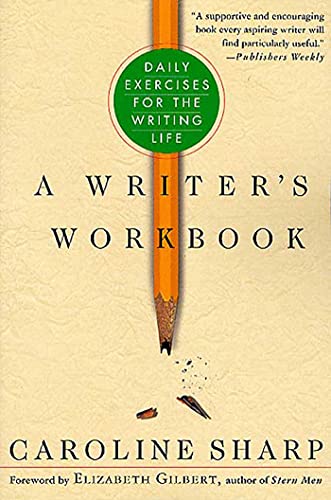
- Exercises to inspire and jump-start writing
- Addresses creative blocks with humor
- Designed to keep ideas and drafting moving
Best For: Writers seeking regular prompts and motivation
Best All-in-One Novel Planner – The Storyteller's Workbook
The Storyteller's Workbook: An Inspirational, Interactive Guide to the Craft of Novel Writing
Check Price On AmazonFor writers seeking creative writing workbooks for novelists, The Storyteller’s Workbook offers a structured place to plan, draft, revise, and prepare a book for submission. Its calendars, prompts, worksheets, and tracking pages support a start-to-finish writing process without requiring multiple notebooks.
Best For: Novelists who want one organized workbook covering story development, progress tracking, revision, and pitching.
Pros:
- Covers outlining, characters, world-building, revision, and polishing.
- Includes calendars, word-count trackers, milestone pages, and goal-setting tools.
- Extends beyond drafting with pitch, synopsis, query, and agent-tracking worksheets.
Cons:
- Its broad, highly guided format may feel more structured than some writers prefer.
- At 224 pages, it is less compact than a simple character or idea journal.
This is a strong choice when organization and momentum matter as much as inspiration. The customizable outline and generous planning tools make it especially useful for writers who want a physical command center for a novel project.
Best Character-Building Journal – A Writer's Journal for Creating Characters
Among creative writing workbooks for novelists, A Writer’s Journal for Creating Characters focuses specifically on turning initial ideas into detailed, usable characters. Its quick prompts move from everyday details to motivations, relationships, thoughts, and backstory, making it a practical brainstorming tool.
Best For: Novelists and other storytellers who need to develop casts quickly or overcome a character-creation block.
Pros:
- Offers more than 40 short prompts for each character.
- Provides space to develop up to 15 unique characters.
- Works across genres and also suits screenwriters, playwrights, roleplayers, and game designers.
Cons:
- Its narrow focus leaves outlining, revision, and pitching outside the workbook’s scope.
- Writers seeking long-form exercises may find the quick-prompt format limited.
This journal is best viewed as a character-development companion rather than a complete novel planner. It is a particularly convenient pick for short creative sessions, recurring character sketches, or building a large ensemble.
Best for Flexible, Nonlinear Planning – The Novel Workbook For Messy Writers
The Novel Workbook for Messy Writers stands out among creative writing workbooks for novelists by making room for nonlinear, mixed-media planning. Writers can combine lists, doodles, collage, prose, maps, diagrams, and other notes while building a detailed blueprint for a novel.
Best For: Novelists who resist rigid planning systems and want a flexible workspace for collecting ideas in different forms.
Pros:
- Provides structure while preserving freedom in how writers develop ideas.
- Accommodates visual and written material, including maps, lyrics, diagrams, and collages.
- Covers practical blueprint details such as characters, settings, props, genre, and world-building.
Cons:
- The intentionally open-ended format may require more self-direction.
- It is designed around planning and idea collection rather than a full revision or publishing workflow.
This workbook is a good match for writers whose ideas arrive out of order or through multiple creative channels. It offers enough prompts and page-level guidance to support progress without forcing a strictly linear method.
Best Course-Style Writing Guide – The Creative Writing Coursebook
The Creative Writing Coursebook: 40 Authors Share Advice and Exercises for Fiction and Poetry
Check Price On AmazonFor readers comparing creative writing workbooks for novelists, The Creative Writing Coursebook provides a broader instructional approach than a project planner. Forty authors contribute advice and exercises organized around gathering ideas, shaping fiction, and finishing work, with coverage of structure, point of view, character, setting, critique, workshops, and publication.
Best For: Beginning writers and developing authors who want guided instruction and exercises for fiction or poetry.
Pros:
- Organizes practice into Gathering, Shaping, and Finishing stages.
- Includes perspectives, advice, and exercises from 40 authors.
- Addresses both creative craft and practical steps such as workshops and finding publishers.
Cons:
- It is a coursebook rather than a dedicated fill-in planning workbook.
- Its fiction-and-poetry scope may be broader than a novelist seeking only novel-specific tools.
This is the strongest option here for writers who want to learn craft concepts while practicing them. Its 416 pages offer substantial reference material, making it well suited to self-study or use within a writing group.
Best Plot-Planning Workbook – Story Arc Journal
The Only Plotting Workbook You'll Ever Need: Your Story Arc Journal (Series Bibles for Writers)
Check Price On AmazonFor novelists comparing creative writing workbooks for novelists, The Only Plotting Workbook You’ll Ever Need is a structured choice for planning, tracking, and reviewing a story. It combines 10 plotting methods with timelines, calendars, scene worksheets, and space for notes, making it useful across multiple stages of a novel.
Best For: Novelists who want a comprehensive paper-based system for organizing plot threads, scenes, timelines, and story arcs.
Pros:
- Includes worksheets for 10 different plotting methods.
- Provides timeline charts, yearly, monthly, and weekly calendar sheets.
- Offers 55 scene worksheets for developing purposeful scenes.
- Can support planning, drafting, and plot-focused editing.
Cons:
- Its 161 pages and many planning sections may feel extensive for writers who prefer a lightweight notebook.
- It focuses primarily on plotting rather than broader character or world-building development.
This is the most planning-intensive option in the group. Choose it if you want a dedicated story-management journal with plenty of guided structure and flexible worksheet space.
Best Creative Idea Generator – Creative Writing Exercises
Creative Writing Exercises: Improve Your Craft Through Play (Screen and fiction writing craft)
Check Price On AmazonAmong creative writing workbooks for novelists, Creative Writing Exercises takes a playful, skills-focused approach. Its 50-plus exercises cover ideas, characters, story worlds, stakes, structure, technique, and the writer’s mindset, so it can help writers refresh a stalled process or experiment with new approaches.
Best For: Beginner and experienced fiction writers who want varied prompts and craft exercises to generate ideas or shake up their routine.
Pros:
- Includes more than 50 exercises designed around creative play.
- Covers both fiction and screenwriting-related craft areas.
- Addresses ideas, character and motivation, world-building, stakes, structure, and technique.
- Includes general tips related to the writer’s mental health.
Cons:
- It is exercise-led rather than a comprehensive workbook for tracking one complete novel.
- Its compact 5.25-by-8-inch format may provide less room for handwritten responses.
This is a flexible choice for writers who need inspiration more than an extensive planning system. It suits regular creative practice, idea generation, and craft experimentation.
Best Character Psychology Workbook – Realistic Characters and Conflict
The Psychology Workbook for Writers: Tools for Creating Realistic Characters and Conflict in Fiction
Check Price On AmazonFor writers looking beyond plot mechanics, The Psychology Workbook for Writers is a focused addition to the creative writing workbooks for novelists category. It applies psychological theory to character development and story conflict, using chapter explanations and paired worksheets to turn concepts into practical fiction decisions.
Best For: Novelists who want tools for creating layered characters, believable behavior, and stronger interpersonal conflict.
Pros:
- Connects psychological theory with fiction-writing applications.
- Provides two worksheets per chapter: one for characters and one for the story.
- Targets realistic characterization and conflict development.
- Uses the author’s background in psychology, counselling, and fiction writing.
Cons:
- At 90 pages, it is narrower in scope than a full novel-planning workbook.
- Its psychology-centered approach may be less useful for writers primarily seeking plotting prompts or scene maps.
This compact workbook is a targeted tool rather than an all-purpose novel bible. It is a strong fit when character motivation and psychologically grounded conflict are central to your revision or development process.
Complete Course – Creative Writing Workbook
For writers seeking creative writing workbooks for novelists, Creative Writing: A Workbook with Readings offers a broad, structured course. It combines technique discussions, contemporary readings, and exercises covering fiction alongside poetry and life writing, with guidance that extends from generating ideas to presenting work to agents and publishers.
Best For: Writers who want a comprehensive, course-style workbook with readings and exercises for developing technique and an individual voice.
Pros:
- Covers the full creative-writing process, from inspiration to submission.
- Includes fiction, poetry, autobiography, biography, and travel writing.
- Uses contemporary readings and exercises to encourage experimentation.
Cons:
- Its broad genre coverage may be less focused for novelists seeking fiction-only instruction.
- At 648 pages, it is a substantial commitment rather than a quick-reference workbook.
This is the strongest all-around choice for readers who want an extensive, guided study resource. Novelists will find relevant fiction instruction, while the additional genres provide wider creative practice.
Character Archive – The Figment Files
The Figment Files: A Character Development Journal for Novelists and Fiction Writers
Check Price On AmazonAmong creative writing workbooks for novelists, The Figment Files is designed specifically for organizing fictional characters. Its profiles, relationship maps, index, and extra notes pages give novel and series writers a dedicated place to track details, motivations, secrets, and connections.
Best For: Novelists and fiction writers building casts of recurring or interconnected characters.
Pros:
- Two-page profiles cover identity, appearance, personality, history, motivations, and relationships.
- Relationship webs help map alliances, rivalries, conflicts, and other connections.
- A character index and notes pages make ideas easier to organize and retrieve.
Cons:
- It focuses on character development rather than broader plotting, prose, or revision instruction.
- With 91 pages, it is a specialized journal rather than a complete writing course.
This is a practical companion for writers who lose track of character details across notebooks or drafts. It is especially useful when consistency and relationship tracking matter more than general writing exercises.
Daily Practice – A Writer's Workbook
A Writer’s Workbook takes a practice-focused approach to creative writing workbooks for novelists. Its exercises are intended to inspire, warm up, and jump-start writers, while addressing common creative blocks with encouraging suggestions, humor, and activities that help keep ideas moving.
Best For: Writers who want regular prompts and low-pressure exercises to build momentum and stay creatively active.
Pros:
- Provides exercises for warming up, generating ideas, and restarting stalled work.
- Addresses writing anxieties and “can’t-write” days in an encouraging, humorous style.
- Includes varied prompts such as “The Rewrite Rut” and “End Well.”
Cons:
- It is centered on exercises and writing practice rather than a step-by-step novel course.
- Its 176 pages offer less extensive coverage than a large reference workbook.
This compact workbook suits writers who value consistency and creative warm-ups. Choose it for prompt-driven practice and motivation, rather than detailed character or story-structure worksheets.
How We Picked the Best Creative Writing Workbooks for Novelists
We selected workbooks based on the usefulness of their exercises, clarity of structure, relevance to long-form fiction, and flexibility across genres. We also considered whether each book supports a specific need—such as plotting, character development, conflict, or daily practice—or provides a broader course of study.
A strong workbook should do more than provide inspirational advice. It should give you practical prompts, space or systems for developing ideas, and exercises you can return to during revision. Because writers work differently, this list includes both highly organized planning tools and looser, exploratory journals.
Quick Comparison
| Best For | Look For |
|---|---|
| Plot planning | Story-arc guidance, scene prompts, and structural checkpoints |
| Character development | Questions about goals, fears, relationships, history, and contradictions |
| Improving craft | Lessons, examples, readings, and targeted fiction exercises |
| Creative discovery | Playful prompts that encourage experimentation and original ideas |
| Writing consistency | Short daily exercises and manageable routines |
Key Buying Factors for Creative Writing Workbooks
Structure and Writing Stage
Choose a structured workbook if you are outlining a new novel or trying to diagnose a stalled draft. A more open-ended journal may be better if you discover stories through freewriting and exploration. Also check whether the exercises suit planning, drafting, revision, or a combination of stages.
Focus and Depth
Plot-focused books can help with turning points, pacing, and cause-and-effect scenes, while character workbooks are useful for building believable motivation and conflict. General coursebooks may cover more topics but provide less depth in any one area.
Exercise Style and Format
Consider whether you prefer concise prompts, detailed lessons, readings, checklists, or repeatable daily activities. If you plan to write directly in the book, confirm that it provides enough space; otherwise, use a separate notebook or digital document.
Genre and Flexibility
Many exercises work across genres, but some approaches may lean toward literary fiction, screenwriting, or conventional story structure. Favor adaptable prompts if you write fantasy, romance, mystery, science fiction, or multiple formats.
Who Should Buy Which Creative Writing Workbooks for Novelists?
New novelists may benefit most from a broad workbook that explains craft while providing guided practice. Writers with a rough premise but no clear direction should prioritize a plotting workbook. If your story feels technically sound but emotionally flat, a character or psychology-focused option can help deepen motivation and conflict.
Writers who already understand structure may prefer playful exercises for generating fresh material, while busy authors seeking consistency should choose a workbook built around short, repeatable sessions. For the best results, use one primary workbook for your current goal rather than trying to complete several at once.