Choosing the right commercial aviation books depends on whether you want technical depth, pilot fundamentals, aircraft history, or a broad visual overview.
This roundup highlights ten strong picks for enthusiasts, students, and working aviation readers who want reliable reference material without wasting time on fluff.
Best 10 Commercial Aviation Books Picks for 2026
Aviation Safety Reference
Commercial Aviation Safety, Sixth Edition

- Current U.S. and international safety regulations
- Covers accident investigations and SMS
- Includes review questions and incident examples
Best For: Pilots, safety teams, and aviation students
Visual Aircraft History
Aircraft: The Definitive Visual History

- More than 800 aircraft models covered
- Strong photo-led layout with specs
- Includes major commercial and military aircraft
Best For: Aircraft enthusiasts and visual learners
Pilot Experience Collection
101 Lessons From The Sky: Commercial Aviation

- 101 true stories from commercial aviation
- Practical lessons on safety and operations
- First-person accounts from multiple crew roles
Best For: Aspiring pilots and story-driven learners
Aircraft Reference Guide
Modern Civil Aircraft: Airliners, Regional Jets, Turboprops

- Illustrated guide to modern civil aircraft
- 120 artworks with specs and captions
- Covers airliners, regional jets, and turboprops
Best For: Modelers and aircraft enthusiasts
Boeing 727 deep-dive
Encyclopedia 727: The Jet That Changed Commercial Aviation

- Focuses on the Boeing 727’s development, design, and marketing
- Includes 150+ pictures plus profiles, maps, and infographics
- Volume 1 in a planned two-book series
Best For: Readers who want a detailed reference on the Boeing 727
FAA training reference
Pilot's Handbook of Aeronautical Knowledge
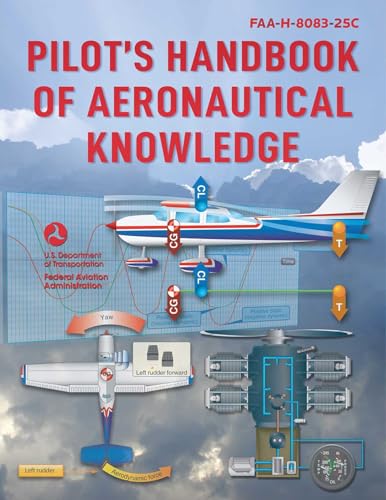
- Official FAA handbook updated for 2026 and beyond
- Covers aerodynamics, weather, navigation, and airport ops
- Designed for exam prep and pilot training
Best For: Student pilots and readers who need an FAA reference
Compact airliner reference
The Vital Guide to Commercial Aircraft and Airliners

- Profiles major passenger aircraft and the airlines that fly them
- Includes full specs, photos, and color livery drawings
- Portable pocket-guide format for quick reference
Best For: Readers who want a concise visual guide to passenger aircraft
Commercial Pilot Theory Pick
Aerodynamics for the Commercial Pilot

- Covers commercial-level aerodynamics
- Follows aviation authority syllabi
- Practical focus links theory to flying
Best For: Commercial pilot students and pilots who want an aerodynamic refresher
Aircraft Reference Standout

- Covers major civil aircraft in service
- Over 600 color photos and artworks
- Includes design, capability, and operator info
Best For: Readers who want a broad visual guide to current civil aircraft types
Historic Fleet Snapshot

- Focuses on a pivotal airline decade
- Over 300 color photos with captions
- Covers Airbus, Boeing, and Concorde-era change
Best For: Aviation enthusiasts interested in the commercial airliner landscape of the 2000s
Aviation Safety Reference – Commercial Aviation Safety, Sixth Edition
If you want commercial aviation books that focus on real-world risk management, this updated safety reference is built for practical use. It covers commercial aviation safety from accident investigations to Safety Management Systems, with current U.S. and international regulations, incident examples, and review questions.
Best For: Pilots, safety professionals, and students who need a detailed, current reference on airline safety and regulatory practice.
Pros:
- Covers ICAO, FAA, EPA, TSA, and OSHA regulations
- Includes accident investigation processes, HFACS, CRM, TEM, ASRS, and FDM
- Addresses newer threats such as drones, cyberattacks, lasers, icing, and software bugs
- Features chapter outlines, review questions, and real incident examples
Cons:
- Geared toward technical safety study rather than casual reading
- At 560 pages, it is a substantial time commitment
This is the strongest choice here if your goal is an up-to-date, systems-level look at airline safety practices and regulations. It reads like a hands-on professional resource rather than a general aviation overview.
Visual Aircraft History – Aircraft: The Definitive Visual History
Among commercial aviation books, this one stands out for readers who want a broad visual tour of aircraft development. It traces the history of military and commercial aircraft with more than 800 models, combining photos, specs, and concise background on major manufacturers and landmark designs.
Best For: Readers who want an image-heavy aircraft history book with strong appeal for enthusiasts and gift buyers.
Pros:
- Covers more than 800 aircraft models across military and commercial aviation
- Includes specifications, features, and decade-by-decade history
- Has showcase sections on notable aircraft like Concorde and the Supermarine Spitfire
- High-quality visual format from DK’s Definitive Visual History series
Cons:
- Focuses more on visual reference than deep technical analysis
- Broader aircraft history angle may be less targeted for airline operations readers
If you want a coffee-table style reference that makes aircraft history easy to browse, this is a very polished option. It is especially appealing if you value photos, facts, and model-by-model comparison.
Pilot Experience Collection – 101 Lessons From The Sky: Commercial Aviation
If you prefer commercial aviation books built around firsthand experience, this title delivers a collection of true stories from working pilots and aviation professionals. The focus is on safety lessons drawn from accidents, near misses, and day-to-day operational realities, with practical takeaways on checklist discipline, fatigue, load planning, and staying focused.
Best For: Aspiring pilots and aviation readers who learn best from real cockpit stories and practical safety lessons.
Pros:
- Contains 101 true stories from commercial pilots and other aviation professionals
- Highlights practical safety takeaways such as fatigue management and checklist use
- Includes perspectives from cockpit crew, cabin crew, engineers, and co-pilots
- Uses an authentic first-person storytelling style
Cons:
- Less structured as a technical reference than a textbook
- Best suited to readers interested in narrative learning
This book is a good pick if you want safety insight in a more readable, story-driven format. It works well as a companion to more technical aviation study materials.
Aircraft Reference Guide – Modern Civil Aircraft: Airliners, Regional Jets, Turboprops
Modern Civil Aircraft: Airliners * Regional Jets * Turboprops (Technical Guides)
Check Price On AmazonFor readers shopping commercial aviation books with a strong reference angle, this guide concentrates on modern civil aircraft used by regional and international airlines. It is organized by aircraft type and combines detailed artwork, captions, and specifications for airliners, regional jets, turboprops, and business aircraft.
Best For: Aviation enthusiasts and modelers who want a compact illustrated guide to modern passenger aircraft.
Pros:
- Focuses on modern civil aircraft in airline service over the last 30 years
- Includes 120 vivid artworks with authentic markings and paint schemes
- Covers airliners, regional jets, turboprops, and business aircraft
- Provides exhaustive captions and specifications for each featured model
Cons:
- Only 128 pages, so coverage is compact rather than exhaustive
- More of a visual reference than a deep operational or safety study
This is a smart choice if you want a focused, modern aircraft reference that is easy to browse and visually rich. It should especially appeal to collectors, model builders, and anyone who likes comparing aircraft by type.
Boeing 727 deep-dive – Encyclopedia 727: The Jet That Changed Commercial Aviation
If you’re comparing commercial aviation books and want a deep dive into one aircraft type, this volume focuses on the Boeing 727 and its place in airline history. It covers the aircraft’s development, technical features, marketing strategy, major operators, and its operation in Brazil, supported by a large collection of pictures, profiles, maps, and infographics.
Best For: Readers who want an in-depth reference on the Boeing 727 and its role in commercial aviation history.
Pros:
- Dedicated, chapter-by-chapter coverage of the Boeing 727 story
- Includes more than 150 pictures plus profiles, maps, and infographics
- Strong mix of technical, historical, and airline-operations content
- Available in English and Portuguese
Cons:
- Narrow focus may not suit buyers looking for a broad airliner overview
- Volume 1 only, so the full series is not complete in a single book
This is a specialized pick for aviation readers who want more than a general overview. If the Boeing 727 is the aircraft you want to study closely, this book offers substantial detail and visual reference material.
FAA training reference – Pilot's Handbook of Aeronautical Knowledge
Among commercial aviation books, this FAA handbook stands out as a practical training reference for pilots at multiple stages. It covers core subjects such as aerodynamics, aircraft systems, weather theory, airport operations, navigation, aeromedical factors, and aeronautical decision-making, with full-color illustrations and updated FAA information.
Best For: Student pilots, current pilots, and readers who need an official FAA knowledge reference.
Pros:
- Official FAA handbook with current information for 2026 and beyond
- Covers major training topics, from flight controls to weather and airspace
- Includes dozens of full-color illustrations, photos, diagrams, graphs, and charts
- Useful for preparing for knowledge exams and practical tests
Cons:
- Very broad and instructional, so it is not a narrative aviation read
- Best suited to training and reference use rather than casual browsing
If you want a foundational aviation manual instead of an aircraft-history book, this is the most practical option here. It is best treated as a study tool and long-term reference for pilot training and recurrent review.
Compact airliner reference – The Vital Guide to Commercial Aircraft and Airliners
The Vital Guide to Commercial Aircraft and Airliners: The World's Current Major Civil Aircraft
Check Price On AmazonIf you want a compact, visual guide among commercial aviation books, this revised edition focuses on the world’s main passenger aircraft and the airlines that fly them. Each aircraft entry includes a full specification and at least one photograph, while color drawings highlight airline markings and liveries.
Best For: Readers who want a concise, visual reference to current major civil aircraft.
Pros:
- Covers the world’s main passenger aircraft and the airlines that operate them
- Includes full specifications for every aircraft listed
- Uses color drawings plus at least one photograph per aircraft
- Compact size makes it easy to use as a quick reference
Cons:
- Shorter and less detailed than a deep reference work
- Published in 2000, so it reflects an older snapshot of the fleet
This is a good choice if you want a portable airliner guide with clear visuals and basic specs. It is less specialized than the 727 title and far less instructional than the FAA handbook, but that makes it easy to browse and compare aircraft quickly.
Commercial Pilot Theory Pick – Aerodynamics for the Commercial Pilot
Aerodynamics for the Commercial Pilot (Aviation Books Commercial Pilot Series)
Check Price On AmazonIf you want commercial aviation books that explain the why behind flight, this title is a focused choice. It takes the reader deeper into aerodynamics and follows the syllabi used by aviation authorities around the world, with an emphasis on practical aviation rather than theory alone.
Best For: Commercial pilot students and working pilots who want a practical aerodynamics refresher.
Pros:
- Built around aerodynamics for the commercial pilot level
- Links science to real-world flying scenarios
- Useful for both newer pilots and experienced commercial pilots
- Compact 171-page format
Cons:
- Stays narrowly focused on aerodynamics rather than broader aviation topics
- Independently published, so it may have a more specialized presentation than a mainstream textbook
Overall, this is a practical study aid if your goal is to strengthen aerodynamic understanding rather than browse a general aviation reference. Its syllabus-aligned approach makes it especially relevant for structured learning.
Aircraft Reference Standout – Civil Aircraft Today
Among commercial aviation books, this one works well as a visual reference to major civil aircraft types still in service. It covers aircraft from Airbus to Tupolev and pairs the entries with more than 600 color photographs and artworks, making it useful when you want design, capability, and operator information in one place.
Best For: Readers who want a broad visual guide to current civil aircraft types.
Pros:
- Comprehensive coverage of major civil aircraft in service
- More than 600 color photographs and artworks
- Includes design, capabilities, and operator details
- Large-format presentation suits browsing and identification
Cons:
- Published in 2008, so some current fleet details may be dated
- At 192 pages, it is more of a guide than an exhaustive technical encyclopedia
This is a strong pick if you want a richly illustrated overview rather than a training manual. It is best used as a fleet and type reference for quick comparisons and general commercial aircraft knowledge.
Historic Fleet Snapshot – Airliners of the 2000s
If you’re building a collection of commercial aviation books, this title offers a compact look at a pivotal decade in air transport. It highlights major changes in the 2000s, including Airbus overtaking Boeing, the decline of early jets in passenger roles, and the end of Concorde services, with more than 300 color photographs and informative captions.
Best For: Aviation enthusiasts interested in the commercial airliner landscape of the 2000s.
Pros:
- Focused on a clearly defined decade in commercial aviation
- Over 300 color photographs with extended captions
- Covers aircraft changes from small jets to the A380
- Includes global airline and air transport context
Cons:
- Strongly tied to one decade, so it is not a broad history of civil aviation
- At 160 pages, it is a concise overview rather than a deep technical study
This book is a good fit if you want a visually driven recap of a specific era in airline development. It works best as a companion volume for readers who enjoy historical aircraft snapshots and caption-rich coverage.
How We Picked These Commercial Aviation Books
We focused on books that offer real value for readers of Commercial Aviation Books: clear subject focus, strong reputation, useful reference depth, and a mix of technical, historical, and training-oriented titles. We also looked for variety so the list serves both newcomers and more advanced readers.
Quick Comparison
If you want safety and operations insight, choose a title centered on commercial aviation systems and procedures. For visual learners, a photo-heavy aircraft guide is usually the easiest entry point. For pilots and serious students, FAA-style knowledge references and aerodynamics texts offer more practical learning. History-minded readers will get more from books focused on specific airliners, eras, or design evolution.
Key Buying Factors for Commercial Aviation Books
Subject Depth
Some Commercial Aviation Books are broad overviews, while others are narrow technical references. Decide whether you need a general introduction or a specialized book on safety, aircraft types, or performance.
Audience Level
Match the book to your experience. Beginners usually benefit from visual guides and foundational handbooks. More advanced readers may prefer technical guides, aerodynamics, or detailed aircraft encyclopedias.
Format and Usability
Look for clear layouts, diagrams, photos, and concise explanations if you plan to use the book as a reference. Dense technical books can be excellent, but only if you are comfortable with aviation terminology.
Current Relevance
For operational topics, newer editions matter because procedures, regulations, and aircraft fleets change over time. For aircraft history and legacy airliners, older or retrospective titles can still be highly valuable.
Who Should Buy Which Commercial Aviation Books?
Buyers focused on safety and real-world operations should prioritize Commercial Aviation Books with a training or systems emphasis. Enthusiasts who want to recognize aircraft and understand fleet types should lean toward visual histories and current civil aircraft references. Students and aspiring pilots will usually get the most from foundational books on aeronautical knowledge and aerodynamics. Collectors and history fans may prefer titles centered on classic jets, iconic models, and airline-era coverage.
In short, the best choice depends on whether you want to study, reference, or simply enjoy the world of commercial aviation from the ground up.