Accurate color matters for student photographers, designers, filmmakers, and artists, but professional calibration equipment can be expensive and confusing to choose.
This roundup compares 10 practical color calibration tools for students, including monitor calibrators, camera reference charts, white-balance targets, and portable color sensors.
Best 10 Color Calibration Tools for Students Picks for 2026
Portable Video Color Control

- Combines color, white-balance, and video targets
- Useful for matching multiple cameras
- Portable case supports field use
Best For: Students learning photography or video production
Camera Color Consistency

- Provides 48 color targets plus a gray card
- Creates HSL presets for supported editing software
- Designed for studio and location photography
Best For: Photography students managing varied cameras and lighting
Instant Surface Color Matching

- Matches surfaces to 300,000+ paint colors
- Returns RGB, HEX, and CMYK values
- IPX4-resistant and requires no calibration
Best For: Students working with paint, interiors, or physical color samples
Portable Camera Color Reference

- 24 engineered color targets plus a gray target
- Supports cameras, smartphones, drones, and action cams
- Compact sleeve for location and classroom use
Best For: Photography students standardizing color during capture
Easy Monitor Calibration

- Guided 1-2-3 calibration workflow
- Supports up to two displays
- Includes before-and-after accuracy check
Best For: Students editing photos or video on one or two monitors
Dual Gray Reference Charts
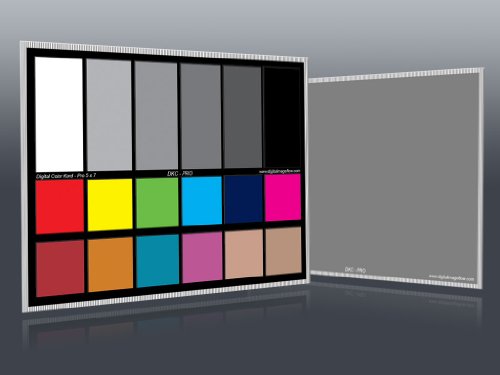
- Two charts with 12% and 18% gray references
- Each chart includes 18 color patches
- Includes tabletop stands and user guide
Best For: Students practicing white balance and digital color correction
Travel-Ready Reference
Calibrite ColorChecker Classic Mini

- 24-patch target for white balance and grading
- Pocket-size design for shoots and classes
- Supports DNG and ICC profiles with PROFILER
Best For: Portable photo and video color references
Classroom Value Pick
DKK White Balance Calibration Chart Set

- Two 5-by-7-inch calibration charts
- Includes 12% and 18% gray references
- Frame stand and user guide included
Best For: Accessible video calibration practice
Complete Editing Workflow
Calibrite Photo Kit with Display Pro HL

- Combines monitor and camera calibration
- Supports mini LED, OLED, and Apple XDR displays
- Includes Passport Photo 2 and PROFILER software
Best For: RAW photography and display-focused coursework
High-Brightness Display Calibration – Display Pro HL
For students working in photography, design, or HDR-focused coursework, the Calibrite Display Pro HL is one of the more advanced color calibration tools for students. Its high-luminance sensor supports modern bright displays, while the included software provides both straightforward and detailed calibration controls.
Best For: Students using LCD, mini-LED, OLED, Apple XDR, or compatible projector displays for photo and design work.
Pros:
- Measures displays up to 3000 nits, including brighter HDR-capable panels.
- Works with Mac and Windows through USB-C, with a USB-A adapter included.
- Includes validation, uniformity, flare-correction, and multi-monitor tools.
- Supports custom presets and custom patch sets for more targeted profiling.
Cons:
- Its advanced feature set may be more than beginners need.
- Display calibration requires using the included PROFILER software on a compatible computer.
This is a strong long-term choice for students whose assignments depend on dependable screen matching and accurate tone reproduction. It is especially useful when working across multiple displays or with high-brightness and HDR hardware.
Portable Video Color Control – ColorChecker Passport Video 2
The ColorChecker Passport Video 2 is a compact option among color calibration tools for students learning photography or video production. It combines a classic color target, white-balance target, and video targets in a protective portable case for use during shooting or editing.
Best For: Students matching cameras, setting white balance, and maintaining consistent color in still-image or video projects.
Pros:
- Includes a 24-patch ColorChecker Classic target and dedicated white-balance target.
- Provides two video targets for in-camera use or post-production editing.
- Helps match multiple cameras across varied or mixed lighting conditions.
- Portable protective case supports multiple positions and includes a lanyard.
Cons:
- It is designed for camera and video color control rather than monitor calibration.
- Camera-profile software is specifically described for photo users working with raw images.
For media students who need a field-ready reference, this Passport offers a practical way to establish repeatable color and white balance. Its small format makes it easier to keep available during shoots and production exercises.
Camera Color Consistency – Datacolor Spyder Checkr
The Datacolor Spyder Checkr focuses on camera-side color consistency, making it a practical choice among color calibration tools for students who photograph under changing conditions. Its 48 color targets and gray card provide reference data for white balance and editing adjustments.
Best For: Photography students who need repeatable color across cameras, locations, and lighting setups.
Pros:
- Offers 48 spectrally engineered targets, including added skin-tone and near-white colors.
- Includes a gray chart for in-camera white balance and scene-light information.
- Software creates HSL presets for Lightroom Classic, Adobe Camera Raw, and Hasselblad Phocus.
- Self-casing construction, larger targets, and a tripod mount support studio or location work.
Cons:
- It is intended for camera color calibration, not monitor profiling.
- The target cards require monitoring because the Fade Checkr indicates when replacement is needed.
- It is less compact than a small passport-style target.
This tool suits students building a repeatable photography workflow, particularly when assignments involve multiple cameras or inconsistent lighting. The software-based HSL preset workflow can also make color corrections more consistent during editing.
Instant Surface Color Matching – Nix Mini 3 Color Sensor
The Nix Mini 3 is a portable color sensor for students who need to identify physical colors rather than calibrate a display or camera. It scans surfaces for paint matches and digital values such as RGB, HEX, and CMYK, making it useful for design, interiors, and color-selection projects.
Best For: Students comparing paint colors, identifying surface colors, or translating physical colors into digital values.
Pros:
- Matches scans to more than 300,000 brand-name paints.
- Provides RGB, HEX, CMYK, and other digital color values.
- Supports premium Pantone, RAL, and NCS databases.
- Dust- and splash-resistant with an IPX4 rating, and requires no calibration.
Cons:
- It is a surface color-matching tool, not a monitor or camera calibration device.
- Paint libraries vary by country or region.
- Results are better suited to matte samples.
Students working with physical materials may find the Nix Mini 3 more relevant than a traditional display colorimeter. Its portable design and broad paint-library support make it convenient for quickly connecting real-world samples with digital color workflows.
Portable Camera Color Reference – SpyderCheckr 24
The Datacolor SpyderCheckr 24 is a practical choice for students who need color calibration tools for students’ photography workflows. Its 24 engineered color targets and gray target help provide consistent references across cameras, lenses, and lighting conditions, while its compact sleeve makes it easy to carry to class or a location shoot.
Best For: Photography students working with RAW files, multiple cameras, or changing lighting environments.
Pros:
- Supports consistent color from shot to shot across cameras, lenses, and lighting.
- Includes 24 color targets plus a gray target for visual comparison and custom white balance.
- Works with DSLR cameras, smartphones, drones, and action cameras.
- Compact design and protective sleeve suit location work and classroom use.
Cons:
- It is a camera reference chart rather than a monitor calibration device.
- Software-based HSL presets are used to streamline the calibration workflow.
Choose the SpyderCheckr 24 when your priority is creating a dependable in-camera color reference and simplifying batch RAW processing across different shooting setups.
Easy Monitor Calibration – Calibrite Display 123
The Calibrite Display 123 is designed for students who want straightforward color calibration tools for students’ photo-editing and creative work. Its guided 1-2-3 software workflow, USB-C connection, and before-and-after comparison make monitor calibration approachable without requiring complicated settings.
Best For: Students editing photos or video on one or two monitors who want more reliable on-screen color and contrast.
Pros:
- Guided workflow makes setup fast and approachable.
- Supports calibration of up to two displays for more consistent multi-screen viewing.
- Before-and-after checking helps confirm the visible effect of calibration.
- Includes brightness targets such as Native or Photo and connects through USB-C.
Cons:
- Its primary focus is monitor calibration, not camera white balance.
- The supplied details do not indicate support beyond two displays.
For students who edit on a monitor and want a simple, repeatable process, Display 123 offers a focused hardware-and-software workflow with useful comparison and dual-display support.
Dual Gray Reference Charts – DKC-Pro 5×7 Set
The DKC-Pro set provides a hands-on option for students seeking color calibration tools for students’ photography and editing assignments. Each 5-by-7-inch chart combines precision 12% and 18% gray references with 18 color patches, giving students practical targets for white balance and digital color correction in Photoshop or Lightroom.
Best For: Photography students who want reusable tabletop charts for white balance and software-based color correction.
Pros:
- Includes two charts, each with 12% and 18% gray references.
- Provides 18 color patches for digital color correction.
- n-Chrome coating is designed for increased saturation, luminance, and accuracy while reducing metamerism.
- Includes a frame stand and user guide for convenient tabletop use.
Cons:
- The 5-by-7-inch format is less compact than a pocket-sized reference card.
- It is a physical chart set, so it does not directly calibrate a monitor.
This set is a solid classroom-friendly choice when students need clear gray references and color patches for capture decisions and subsequent Photoshop or Lightroom correction.
Travel-Ready Reference – Calibrite ColorChecker Classic Mini
For students seeking color calibration tools for students, the Calibrite ColorChecker Classic Mini offers a compact reference for photo and video assignments. Its 24 color patches support white balance, exposure evaluation, and color grading while fitting easily into a camera bag.
Best For: Students who need a portable reference target for location photography, video work, and camera profiling.
Pros:
- Compact pocket-size design for travel and production days
- Supports white balance and exposure evaluation under changing lighting
- Can support custom DNG and ICC profiles with Calibrite PROFILER
- Provides an objective reference for consistent color grading
Cons:
- Requires compatible calibration software for profile creation
- Provides a camera reference target rather than monitor calibration hardware
The ColorChecker Classic Mini is a practical choice when portability matters most. It can help students establish more consistent capture and editing results without adding much weight to their kit.
Classroom Value Pick – DKK White Balance Calibration Chart Set
Among color calibration tools for students, this DKK two-chart set provides a straightforward way to check white balance, exposure, and image consistency during video projects. The 5-by-7-inch charts include 12% and 18% gray references, a color bar, and a grayscale combination.
Best For: Students building an affordable, portable video calibration kit for class projects and location shoots.
Pros:
- Includes two compact 5-by-7-inch calibration charts
- Provides 12% and 18% gray references for exposure control
- Includes a frame stand and user guide for easier setup
- Designed for use with various cameras and video editing software
Cons:
- Focuses on chart-based calibration rather than monitor profiling
- Supplied notes provide limited information about advanced workflow features
This set suits students who want a simple physical reference for video work. Its included stand and guide may make it easier to use during practice sessions, shoots, and coursework without requiring a more complex calibration system.
Complete Editing Workflow – Calibrite Photo Kit with Display Pro HL
For students working across photography capture and editing, this Calibrite kit combines a monitor colorimeter with a ColorChecker Passport Photo 2. It is one of the more complete color calibration tools for students who need both accurate displays and custom camera profiles for RAW workflows.
Best For: Photography students editing RAW files on modern laptop or desktop displays, including mini LED, OLED, and Apple XDR screens.
Pros:
- Combines monitor calibration with camera profiling in one kit
- Display Pro HL supports modern high-luminance display technologies
- ColorChecker Passport Photo 2 supports custom RAW camera profiles
- PROFILER software offers presets and adjustable white point and gamma targets
Cons:
- More involved and potentially less portable than a standalone chart
- Designed primarily for photo capture and editing workflows
This kit is a strong fit for students building a repeatable capture-to-edit process. It addresses both what the camera records and what the display shows, making it better suited to serious photo coursework than a chart alone.
How We Picked the Best Color Calibration Tools for Students
We selected tools that address the most common student workflows: editing photos and video, preparing images for print, matching colors across cameras, and identifying paint or material colors. We considered calibration accuracy, compatibility, portability, setup difficulty, included accessories, software requirements, and overall value.
The selection includes both electronic colorimeters and passive reference targets. A colorimeter measures and profiles a display, while a chart or card gives your camera and editing software a known color reference. These products solve different problems, so the right choice depends on where color errors occur in your workflow.
Quick Comparison
| Tool Type | Best For | Main Advantage |
|---|---|---|
| Monitor colorimeter | Photo, design, and video editing | Creates a display profile for more consistent on-screen color |
| Camera color chart | Photography and filmmaking | Helps correct color and white balance during editing |
| Gray and white-balance card | Fast exposure and white-balance checks | Simple, affordable, and portable |
| Portable color sensor | Paint and physical color matching | Reads colors directly from real-world surfaces |
Key Buying Factors for Color Calibration Tools for Students
Choose the Correct Calibration Type
If your monitor looks different from other screens or printed output, choose a display colorimeter such as a Calibrite Display model. If your images have inconsistent white balance, a camera chart or gray card may be more useful. A portable sensor is better suited to paint and surface matching than creative-display calibration.
Check Display and Software Compatibility
Before buying a monitor calibrator, confirm support for your operating system, monitor type, connection, and editing applications. Newer LCD, Mini LED, and OLED displays can have different brightness and contrast characteristics, so check whether the device and software support your screen. Also verify whether your computer uses USB-C or requires an adapter.
Consider Portability and Durability
Students who work between home, campus, and client locations should favor compact tools with protective cases or durable construction. Charts and cards are lightweight but can become inaccurate if they fade, crease, or get dirty. A sensor designed for splash and debris resistance may be preferable for field color matching.
Look at the Complete Cost
Compare the included software, charts, stands, cases, and accessories—not just the device price. A bundled monitor-and-chart kit may offer better value if you need both capture and editing control. For occasional assignments, a simple reference card can be enough.
Who Should Buy Which Color Calibration Tools for Students?
- For photo or graphic-design students: Choose a monitor colorimeter to establish a reliable editing baseline.
- For filmmaking and video students: Use a video color chart for consistent exposure, white balance, and grading references.
- For photography beginners: A compact classic color chart or gray card offers an inexpensive way to improve camera consistency.
- For students matching paint or physical samples: Choose a portable color sensor designed for surface scanning.
- For students building a complete workflow: Consider a kit combining monitor calibration with a camera reference target.
For most creative students, the best first purchase is the tool that fixes the largest source of inconsistency: a display colorimeter for screen problems, or a reference chart for camera and lighting problems.