Choosing the right business management books can help you make better decisions, lead teams with confidence, and turn strategy into consistent results.
This roundup focuses on practical, buyer-friendly picks for entrepreneurs, managers, and anyone looking to build stronger business fundamentals in 2026.
Best 10 Business Management Books Picks for 2026
Business Fundamentals Made Simple
Business Made Simple: 60 Days to Master Leadership

- 60 short daily readings
- Covers leadership, sales, marketing, and management
- Includes accompanying videos
Best For: Professionals and owners who want a clear business basics refresher
Manager’s Practical Playbook
The Essential Manager's Handbook

- Step-by-step management advice
- Covers communication, leadership, and negotiation
- Includes remote and hybrid work guidance
Best For: New managers needing a practical everyday reference
All-in-One Business Training
The Personal MBA 10th Anniversary Edition

- Covers entrepreneurship, finance, marketing, and operations
- Includes business frameworks and mental models
- Designed as a broad business foundation
Best For: Readers wanting a single-volume overview of core business concepts
Beginner Growth Guide
Business Management Guide for Beginners and Entrepreneurs
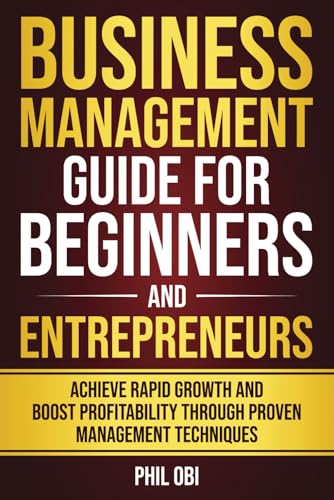
- Aims at beginners and entrepreneurs
- Covers cash flow, delegation, and communication
- Focuses on practical growth and profitability
Best For: New founders wanting an easy-to-follow business starter guide
Essential Management Classics

- Six-title HBR collection
- Covers strategy, leadership, change, and people management
- Curated from Harvard Business Review archives
Best For: Readers who want a curated all-in-one management library covering the fundamentals.
Strategy-First Pick

- Five-move framework for business thinking
- Focuses on clarity, growth tactics, team building, and leverage
- Written for entrepreneurs and executives
Best For: Entrepreneurs and executives who want a practical strategy guide for making smarter business decisions.
Management Staple

- Practical handbook from Intel’s former CEO
- Focuses on productive teams and motivation
- Useful for managers, founders, and other professionals
Best For: Managers, founders, and professionals who want a practical guide to building and running productive teams.
EOS Business Growth System
Traction: Get a Grip on Your Business

- Practical EOS framework for business execution
- Covers six key components of a business
- Aims to reduce conflict and improve follow-through
Best For: Entrepreneurs and leadership teams wanting a practical operating system
Academic Management Textbook

- Built for advanced high school business courses
- Covers finance, marketing, HR, and management
- Includes case studies and assessment support
Best For: Advanced high school classes and business teachers
IB Diploma Business Guide
NEW DP Business Management Course Book 2022

- Matches the latest IB SL and HL syllabus
- Adds case studies, toolkit skills, and assessment support
- Includes online digital resources
Best For: IB Diploma students and teachers using the latest syllabus
Business Fundamentals Made Simple – Business Made Simple: 60 Days to Master Leadership
If you want a practical starting point for business management books, this 60-day guide breaks core business skills into short daily readings. It focuses on the essentials behind leadership, sales, marketing, execution, management, productivity, and strategy, making it useful for professionals who want clear, applied business knowledge.
Best For: Professionals, new managers, and business owners who want a straightforward overview of the main moving parts of a business.
Pros:
- Covers nine key areas, including leadership, management, sales, and execution
- Short daily readings make it easy to work through consistently
- Includes free videos mentioned in the book description for added support
- Aims to explain how business really works in practical terms
Cons:
- More of a broad business primer than a deep technical manual
- Readers looking for highly specialized management tactics may want a narrower title
Overall, this is a strong choice if you want an approachable business management book that helps connect big-picture business concepts with day-to-day performance. It is especially appealing if you prefer a structured, bite-sized format.
Manager’s Practical Playbook – The Essential Manager's Handbook
For shoppers comparing business management books, this handbook stands out as a compact, practical guide to managing yourself and others with confidence. It organizes advice around core management skills like people management, leadership, communication, presenting, negotiating, and high performance, with an emphasis on easy-to-follow steps and visual breakdowns.
Best For: New and developing managers who want a hands-on reference for everyday management situations.
Pros:
- Step-by-step guidance in a clear how-to format
- Covers six major management areas, from people skills to negotiation
- Includes self-reflection questions and interactive tools
- Addresses remote and hybrid working management issues
Cons:
- Broad overview may not satisfy readers seeking deep theory
- Heavier reference-style format than a quick read
This is a solid choice if you want a practical management manual you can revisit as situations come up. Its accessible layout and subject-by-subject approach make it useful for day-to-day decision-making.
All-in-One Business Training – The Personal MBA 10th Anniversary Edition
This is one of the most comprehensive business management books here if you want a broad foundation without attending business school. It covers entrepreneurship, marketing, sales, finance, productivity, leadership, systems design, operations, and more, while also presenting key frameworks like the five parts of every business and the four methods to increase revenue.
Best For: Readers who want a broad, concept-driven business education in one volume.
Pros:
- Wide coverage across major business topics
- Includes mental models and named frameworks for decision-making
- Updated, expanded, and revised anniversary edition
- Useful for both career growth and building a business
Cons:
- Large scope may feel less focused than niche management books
- Readers wanting a task-by-task handbook may prefer a more tactical title
If you want one book that maps the essentials of modern business in a structured way, this is a strong option. It is especially appealing for readers who value big-picture models and foundational thinking.
Beginner Growth Guide – Business Management Guide for Beginners and Entrepreneurs
If you are looking for business management books aimed at newer founders, this guide focuses on practical growth and profitability basics. It promises approachable advice on time management, delegation, cash flow, communication, networking, conflict resolution, leadership, and adapting to market trends.
Best For: Beginners and entrepreneurs who want an accessible, action-oriented introduction to running a business.
Pros:
- Targets early-stage entrepreneurs and business owners
- Covers a wide range of practical management topics
- Emphasizes actionable steps and real-world examples
- Includes guidance on cash flow, delegation, and team productivity
Cons:
- Positioned as a broad beginner guide rather than an advanced manual
- Some sections may overlap with common business advice
This book is a fit if you want a straightforward, growth-focused introduction to business management. Its strength is breadth and practicality for readers who need a starting point rather than a specialized deep dive.
Essential Management Classics – HBR's 10 Must Reads Boxed Set
If you want business management books that put the core ideas of strategy, leadership, change, and people management in one place, this HBR’s 10 Must Reads boxed set is built for that job. It curates the most important articles from Harvard Business Review’s archives, so you get a concentrated collection of enduring advice without having to sort through hundreds of pieces yourself.
Best For: Readers who want a curated all-in-one management library covering the fundamentals.
Pros:
- Collects six HBR Must Reads titles in one boxed set
- Covers strategy, managing people, leadership, change, and managing yourself
- Features classic thinking from names like Peter Drucker, Michael Porter, and Clayton Christensen
- Good option if you want the most critical articles already selected for you
Cons:
- More of an article-based collection than a single narrative framework
- Best suited to readers seeking foundational management ideas rather than a specialized niche
This set works well as a reference-style purchase for anyone building a business management books shelf. It is especially useful if you want timeless concepts you can revisit across different management situations.
Strategy-First Pick – Your Next Five Moves
For business management books that focus on clearer thinking and practical strategy, Your Next Five Moves stands out. Patrick Bet-David frames the book around anticipating the next steps in business, using lessons on clarity, growth tactics, team building, and leverage to help you move with more purpose.
Best For: Entrepreneurs and executives who want a practical strategy guide for making smarter business decisions.
Pros:
- Teaches a five-move framework for thinking ahead in business
- Includes guidance on clarity, strategy, growth tactics, and team building
- Draws on the author’s own rise to CEO status
- Aims to help readers reason more effectively in the board room and war room
Cons:
- Leans heavily toward strategy and execution rather than broad management theory
- Best fit for readers open to an entrepreneurial style of advice
This is a strong pick if you want a business management books option that feels action-oriented and tactical. It is most valuable for readers looking to sharpen decision-making and map out what comes next.
Management Staple – High Output Management
If you’re comparing business management books and want a classic handbook for how companies actually run, High Output Management is a smart choice. Andy Grove’s book is built from his Intel experience and focuses on practical management techniques, productive teams, and motivation methods that aim to raise performance.
Best For: Managers, founders, and professionals who want a practical guide to building and running productive teams.
Pros:
- Written by former Intel CEO Andy Grove
- Offers practical advice for real-world business scenarios
- Explains how to create highly productive teams
- Useful for a wide range of roles, from sales managers to startup founders
Cons:
- More of a classic management manual than a modern business narrative
- Its compact 272-page format may feel dense for readers wanting a lighter overview
As a business management books pick, this one earns its reputation through hands-on guidance and broad applicability. It is a strong addition if you want advice that can be used across different jobs and company stages.
EOS Business Growth System – Traction: Get a Grip on Your Business
If you’re comparing business management books to help fix day-to-day frustration, Traction: Get a Grip on Your Business focuses on a practical operating system for running a company with more structure and follow-through. It centers on the Entrepreneurial Operating System and covers the six key components of a business in a straightforward, non-theoretical way.
Best For: Entrepreneurs and leadership teams that want a practical framework for better focus, growth, and implementation.
Pros:
- Built around a practical Entrepreneurial Operating System for business execution
- Targets common issues like personnel conflict, profit woes, and weak follow-through
- Focuses on strengthening six key components of the business
- Used by more than 2,000 companies, according to the description
Cons:
- Geared toward managing an existing business rather than teaching basics
- May be less useful if you want a broad academic overview of management
Overall, this is a strong pick if you want business management books that emphasize action, clarity, and implementation over theory. It’s especially appealing for owners who want a simpler system for improving results and reducing friction.
Academic Management Textbook – Business Management
For shoppers looking at business management books for classroom use, Business Management is a textbook-style option aimed at more advanced high school business courses. It covers core topics such as finance, marketing, human resources, technology, communication, and data analysis in a lesson-based format.
Best For: Advanced high school business students and teachers who want a structured management textbook.
Pros:
- Designed for advanced high school business courses
- Covers finance, marketing, human resources, and management topics
- Includes case studies, research opportunities, and assessment features
- Addresses data analysis, decision-making, technology, and communication
Cons:
- Textbook format may be more academic than casual readers want
- Best suited to course use rather than general business reading
This is a solid choice if you need a curriculum-friendly business management book with broad topical coverage and classroom-oriented structure. It appears built to support instruction, practice, and business fundamentals in an educational setting.
IB Diploma Business Guide – NEW DP Business Management Course Book 2022
If you’re shopping for business management books tied to the IB curriculum, this course book is built to reflect the latest SL and HL syllabus first taught in 2022. It combines globally contextual case studies, revised key concepts, toolkit skill support, and full assessment support, with digital resources included through an online subscription.
Best For: IB Diploma students and teachers following the latest Business Management syllabus.
Pros:
- Aligned with the latest IB Business Management SL and HL syllabus
- Includes globally contextual case studies and revised key concepts
- Provides toolkit skills and full assessment support
- Supported by digital resources through an online subscription
Cons:
- Highly specialized for the IB Diploma Programme
- Less relevant for readers outside the IB curriculum
For IB-focused buyers, this is the most syllabus-specific option in the group and looks well suited to structured study and exam preparation. Its value is strongest when you need a current course book rather than a general-purpose management title.
How We Picked These Business Management Books
We prioritized books that offer actionable frameworks, clear explanations, and broad usefulness for real-world business settings. Selection also considered credibility, readability, and whether the book is useful for both new and experienced readers.
Quick Comparison
Some Business Management Books are built for beginners who want a broad foundation, while others focus on leadership, operations, strategy, or execution. If you want an all-purpose starting point, choose a title with practical systems and plain-language guidance. If you already manage people or processes, a more specialized book may be the better fit.
Key Buying Factors for Business Management Books
Scope and Depth
Look for the right balance of overview and detail. Beginner-friendly books should cover core management concepts without overwhelming jargon, while advanced readers may want deeper coverage of leadership, operations, or strategic planning.
Actionability
The best Business Management Books do more than explain ideas. They should give you frameworks, checklists, or repeatable methods you can apply immediately in your role or business.
Audience Fit
Some books are aimed at entrepreneurs, others at team leaders, and some at students or first-time managers. Matching the book to your current stage matters more than choosing the most popular title.
Business Model Relevance
Consider whether the advice fits your context. A startup founder may value growth and execution, while a corporate manager may need people management and operational consistency.
Who Should Buy Which Business Management Books?
If you want a practical all-rounder, choose a book with broad coverage of leadership, management, and execution. If your priority is strategy, look for titles that focus on decision-making and business planning. For new managers or students, beginner-oriented Business Management Books are often the best place to start because they build confidence quickly and reduce guesswork.
For experienced readers, a more specialized title can fill a specific gap, such as productivity, traction, or high-output team management. In general, the best choice is the one that solves your current business problem, not just the one with the widest reputation.