Behavioral psychology books can help you understand why people think, choose, and act the way they do. Whether you want foundational theory, practical therapy tools, or insight into persuasion and emotion, the right book depends on your goal.
In this roundup, we focused on titles that balance credibility, clarity, and real-world usefulness so you can choose a book that fits your reading level and interests.
Best 10 Behavioral Psychology Books Picks for 2026
Foundational Behavior Analysis

- Classic behaviorist text from B. F. Skinner
- Detailed case for predicting and controlling behavior
- Strong fit for readers seeking theory and foundations
Best For: Readers who want a classic, rigorous introduction to behaviorism
Persuasion Made Practical

- Updated bestseller on the psychology of persuasion
- Covers seven key principles, including unity
- Built on 35 years of peer-reviewed research
Best For: Readers who want an accessible, research-backed guide to ethical persuasion
Big-Picture Human Behavior Science
Behave: The Biology of Humans at Our Best and Worst

- Interdisciplinary study of why humans act as they do
- Covers tribalism, hierarchy, competition, and peace
- Large, ambitious science-based synthesis
Best For: Readers who want a sweeping, science-rich exploration of human behavior
Decision-Making Classic

- Introduces Kahneman's two-systems model of thought
- Influential in behavioral economics and psychology
- Practical insights into bias and decision-making
Best For: Readers who want a landmark book on judgment, bias, and how people actually think
Emotion Science Pick

- Constructed-emotion theory from Lisa Feldman Barrett
- Links emotion science to health care, law, and culture
- Research-driven and highly original perspective
Best For: Readers who want a cutting-edge, science-forward take on emotions and the mind.
Skills-Based Therapy Bundle

- Three therapy approaches in one workbook
- Practical tools for anxiety, depression, and resilience
- Includes DBT, CBT, and ACT exercises
Best For: Readers who want a single workbook covering DBT, CBT, and ACT skills for everyday mental health support.
Trauma Recovery Classic
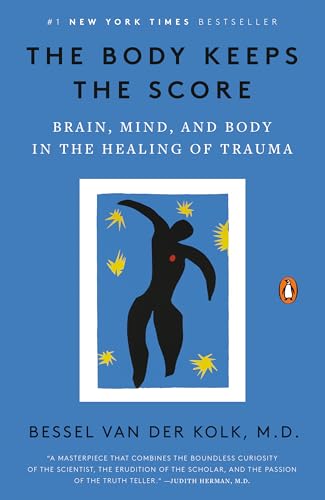
- Examines how trauma reshapes brain and body
- Offers healing paths like yoga, meditation, and neurofeedback
- A major bestseller in trauma and recovery
Best For: Readers looking for a widely respected, research-based book on trauma, healing, and neuroplasticity.
Habit Change Guide
Behavioural Psychology Summarized
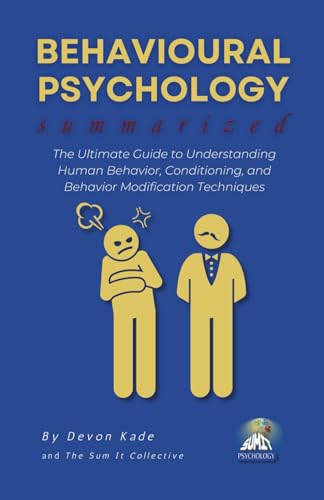
- Focuses on habit change and behavior modification
- Includes practical exercises and real-world examples
- Explains environment design, motivation, and identity shifts
Best For: Readers who want a practical, action-focused guide for building better habits and changing patterns.
CBT Workbook
Cognitive Behavioral Therapy - 32 Strategies to Master Your Mind

- 32 CBT strategies with step-by-step guidance
- Includes worksheets and practical exercises
- Targets negative thoughts, overthinking, and motivation
Best For: Beginners who want a guided CBT workbook for improving mindset and emotional resilience.
Reading People Audiobook

- Focuses on body language, emotions, and intentions
- Uses observation and simple questions to analyze people
- Short audiobook with practical social insight
Best For: Listeners who want a concise audiobook on reading people, body language, and motivation.
Foundational Behavior Analysis – Science And Human Behavior
If you want behavioral psychology books with a classic, theory-driven approach, this one is a cornerstone. Skinner lays out a detailed case for predicting and controlling human behavior through a natural science lens, making it especially useful if you want the foundational ideas behind behaviorism rather than a quick modern overview.
Best For: Readers who want a classic, rigorous introduction to behaviorism and the scientific study of human behavior.
Pros:
- Seminal work by one of the most influential behaviorists of the 20th century
- Strong, logically consistent argument for a natural science of human behavior
- Detailed and substantial at 461 pages
- Useful for readers interested in theory, not just application
Cons:
- Very much rooted in behaviorist thinking, so some readers will disagree with its premise
- Less of a modern, research-heavy survey and more of a classic argument
As a roundup pick, this is the best choice when you want to understand the roots of behavioral psychology books and see how behaviorism makes its case in a serious, book-length treatment.
Persuasion Made Practical – Influence, New and Expanded
Among behavioral psychology books, this is the practical pick for understanding why people say yes. Cialdini combines peer-reviewed research, memorable stories, and updated examples to explain the psychology of persuasion in business and everyday settings, while also showing how to defend against unethical influence.
Best For: Readers who want an accessible, research-backed guide to ethical persuasion and influence.
Pros:
- Revised edition with new research, insights, examples, and online applications
- Explains the principles of reciprocation, commitment, social proof, liking, authority, scarcity, and unity
- Grounded in 35 years of evidence-based, peer-reviewed research
- Useful both for applying influence and spotting manipulation
Cons:
- Available here as an audiobook, which may not suit readers who prefer print
- Focused more on persuasion than broader behavior theory
If you want a highly usable behavioral psychology book, this one stands out for turning established principles into everyday decision-making tools without losing the scientific backbone.
Big-Picture Human Behavior Science – Behave: The Biology of Humans at Our Best and Worst
If you’re looking for behavioral psychology books with a wide scientific scope, Behave is a standout. Sapolsky moves across neuroscience, primatology, and other disciplines to explain why people act the way they do, with special attention to tribalism, hierarchy, competition, war, and peace.
Best For: Readers who want a sweeping, science-rich exploration of human behavior across disciplines.
Pros:
- Written by a neuroscientist and primatologist with broad interdisciplinary reach
- Explores major themes like tribalism, xenophobia, hierarchy, and competition
- Widely praised as highly readable and a major science book
- Substantial 800-page treatment for deep study
Cons:
- Long and detailed, so it demands real reading commitment
- More of a broad scientific synthesis than a narrow practical guide
This is the pick for readers who want behavioral psychology books that connect biology and behavior in a big, ambitious way, rather than focusing on just one topic or technique.
Decision-Making Classic – Thinking, Fast and Slow
For behavioral psychology books that explain how choices really get made, Thinking, Fast and Slow is essential. Kahneman breaks thinking into two systems—one fast and intuitive, the other slower and more deliberative—then shows how those systems shape judgment, bias, and everyday decisions.
Best For: Readers who want a landmark book on judgment, bias, and how people actually think.
Pros:
- Seminal work from Nobel laureate Daniel Kahneman
- Clear two-system model of thought and decision-making
- Influential in cognitive psychology, behavioral economics, and happiness studies
- Offers practical insight into avoiding mental glitches
Cons:
- Available here as an audiobook, which may not fit every preference
- More focused on thinking and decisions than on broader behavior change tactics
This remains one of the strongest behavioral psychology books for understanding the mental shortcuts and biases that shape everyday life, business choices, and personal judgment.
Emotion Science Pick – How Emotions Are Made
If you’re comparing behavioral psychology books that go beyond common-sense advice, this one stands out for its big thesis: emotions are constructed in the moment through brain, body, and culture. Lisa Feldman Barrett’s book is a strong fit for readers who want a research-driven, paradigm-shifting look at how emotion science connects to psychology, medicine, the legal system, and everyday self-understanding.
Best For: Readers who want a cutting-edge, science-forward take on emotions and the mind.
Pros:
- Introduces a bold new theory of emotion grounded in brain science.
- Connects psychology to real-world fields like health care and law.
- Written as a lucid, accessible report from the forefront of emotion research.
- Offers a fresh perspective on the mind-body-culture connection.
Cons:
- More theoretical than workbook-style or step-by-step guidance.
- Best suited to readers interested in scientific ideas rather than quick self-help tips.
For anyone building a list of behavioral psychology books, this is the kind of title that challenges assumptions and rewards careful reading. It’s especially compelling if you want a deeper understanding of how emotions work, not just how to manage them.
Skills-Based Therapy Bundle – DBT, CBT, and ACT Workbook
For shoppers browsing behavioral psychology books with practical takeaways, this workbook bundle is built around action. It combines DBT, CBT, and ACT into one collection, offering evidence-based techniques for anxiety, depression, stress, overwhelm, emotional regulation, and relationship support in a format that’s clearly designed for hands-on use.
Best For: Readers who want a single workbook covering DBT, CBT, and ACT skills for everyday mental health support.
Pros:
- Combines three major therapy approaches in one volume.
- Focuses on actionable tools for anxiety, depression, and emotional resilience.
- Includes structured content such as an 8-week DBT program and CBT/ACT techniques.
- Designed as an evidence-based, practical guide rather than a theory-heavy read.
Cons:
- The broad scope may feel less focused than a single-therapy workbook.
- Most useful for readers seeking exercises and strategies, not academic depth.
This is a solid choice if you want behavioral psychology books that emphasize usable skills over concepts alone. The all-in-one format makes it convenient, especially if you’re exploring which therapy style fits your needs.
Trauma Recovery Classic – The Body Keeps the Score
If your behavioral psychology books shortlist includes trauma and recovery, this bestseller is one of the most influential options available. Bessel van der Kolk explains how trauma reshapes both body and brain and highlights a range of approaches—from neurofeedback and meditation to yoga, sports, and drama—that may help support healing.
Best For: Readers looking for a widely respected, research-based book on trauma, healing, and neuroplasticity.
Pros:
- Explains the impact of trauma on both brain and body.
- Draws on decades of clinical experience and research.
- Highlights multiple healing paths, including meditation, yoga, and neurofeedback.
- Shows how relationships can both harm and help recovery.
Cons:
- Heavier subject matter than general-purpose psychology books.
- Best for readers interested in trauma specifically, not broad behavior theory.
This is a cornerstone title for readers who want behavioral psychology books with real clinical depth and lasting influence. It’s especially strong if you’re interested in how trauma affects functioning and what recovery can look like in practice.
Habit Change Guide – Behavioural Psychology Summarized
If you want behavioral psychology books that focus on turning insight into action, this one is built around habit change, conditioning, and behavior modification. It aims to help readers who understand the basics of cues and rewards but still struggle to make changes stick, with practical exercises and a step-by-step framework grounded in behavioral psychology and cognitive science.
Best For: Readers who want a practical, action-focused guide for building better habits and changing patterns.
Pros:
- Focuses on rewiring habits through environment design and behavior modification
- Includes a 5-minute daily technique for tackling bad habits
- Explains motivation, willpower, and identity change in practical terms
- Built around exercises and real-world examples rather than theory alone
Cons:
- Targets habit-building more than broader clinical psychology topics
- Best suited to readers looking for a summarized, streamlined approach
- Some techniques may feel familiar if you have read multiple habit books
This is a useful pick if you want a concise behavioral psychology book with a strong self-improvement angle. It stands out for its emphasis on automatic success, identity shifts, and practical habit engineering.
CBT Workbook – Cognitive Behavioral Therapy – 32 Strategies to Master Your Mind
Among behavioral psychology books, this CBT workbook is geared toward readers who want structured tools for managing negative thoughts, overthinking, and unhelpful behaviors. It presents Cognitive Behavioral Therapy as an evidence-based approach, then breaks it down into strategies, exercises, and worksheets that are designed for at-home use.
Best For: Beginners who want a guided CBT workbook for improving mindset and emotional resilience.
Pros:
- Offers 32 strategies with step-by-step guidance
- Includes practical exercises and worksheets for active use
- Focuses on reframing thoughts, coping with stress, and boosting motivation
- Grounded in CBT principles and the science behind the method
Cons:
- More workbook-oriented than narrative or case-study driven
- Primarily centered on CBT rather than broader behavioral psychology topics
- Best suited to self-guided readers who want to practice techniques consistently
This is a strong choice if you want a hands-on behavioral psychology resource with a clear therapeutic structure. The workbook format makes it especially useful for readers who prefer exercises over theory-heavy explanations.
Reading People Audiobook – Think Like a Psychologist
If you are comparing behavioral psychology books for understanding people better, this audiobook leans into observation, motivation, and body language analysis. It focuses on drawing conclusions from small cues, helping you make sense of emotions, behavior, and intentions using psychology concepts, social skills insight, and practical listening.
Best For: Listeners who want a concise audiobook on reading people, body language, and motivation.
Pros:
- Covers emotions, body language, behavior, and intentions
- Uses simple questions and observation to analyze people
- Touches on motivation theories, personality methods, and social cues
- Short audiobook format makes it easy to fit into a busy schedule
Cons:
- More focused on interpersonal analysis than self-help habit change
- Best experienced in audio format, with a companion PDF included
- Readers wanting a deep academic treatment may find it broad rather than exhaustive
This audiobook works well if your goal is to improve social awareness and interpret behavior more effectively. It is especially appealing for readers who want a fast, practical introduction to reading people through a behavioral psychology lens.
How We Picked These Behavioral Psychology Books
We prioritized books with strong subject relevance, clear explanations, and lasting value for readers who want to understand behavior rather than skim popular trends. We also looked for a mix of classic works, modern bestsellers, and practical workbooks so there is something here for beginners, students, and self-directed learners alike.
Quick Comparison
Some of these books are built for theory and research, while others are designed for application. If you want the academic foundation, choose the classic texts and broad overviews. If you want tools you can use right away, look at the workbooks and therapy-oriented titles. If your interest is persuasion or decision-making, the books on social influence and cognitive bias will be the best fit.
Key Buying Factors for Behavioral Psychology Books
Depth Versus Accessibility
Some Behavioral Psychology Books are dense and research-heavy, while others are written for general readers. If you are new to the topic, a more accessible book may help you build confidence before moving into advanced texts.
Practical Use
Think about whether you want concepts, exercises, or strategies. Books centered on CBT, DBT, ACT, or trauma recovery usually include structured practices, while theory-driven books are better for learning the science behind behavior.
Specific Topic Focus
Behavior is a broad field. Narrow your choice based on what you want to learn most: persuasion, emotion, habits, decision-making, mental health, or clinical change. The best Behavioral Psychology Books match the reader’s intent instead of trying to cover everything at once.
Credibility and Perspective
Look for authors with recognized expertise and books that draw from psychology, neuroscience, or evidence-based therapeutic models. That matters especially if you are reading for self-help, professional development, or academic study.
Who Should Buy Which Behavioral Psychology Books?
Buy a classic theory book if you want the roots of behavior science. Choose a persuasion or decision-making title if you want to understand influence in everyday life. Pick a therapy workbook if you want guided exercises and coping skills. And if you want a broad, modern overview of human behavior, go for a general audience bestseller that connects brain science, emotion, and social context.
For most readers, the best approach is to choose one foundational behavioral psychology book and one practical title so you get both understanding and application.