Looking for anatomy coloring books that actually help you learn? The best options turn complex body systems into clear, memorable visuals you can study at your own pace.
From beginner-friendly guides to more detailed medical study tools, this roundup highlights books that balance accuracy, usability, and value for different learning goals.
Best 10 Anatomy Coloring Books Picks for 2026
Classic System-by-System Study Aid

- 162 two-page spreads organized by body systems
- Color-keyed labels support visual recall
- Updated 4th edition with enlarged art and clearer text
Best For: students and self-learners wanting a proven anatomy review tool
Concise Interactive Workbook
Anatomy Coloring Workbook, 4th Edition

- 126 coloring plates with clear anatomical renderings
- Glossary, terminology intro, and coloring suggestions included
- Useful across anatomy, nursing, biology, and more
Best For: learners who want a compact workbook with built-in study aids
Budget-Friendly Foundations Guide

- Affordable anatomy study aid with accurate line art
- 43 pages focused on major organs and systems
- Labeled, numbered color key supports learning
Best For: beginners and budget-minded students needing a simple study aid
Most Detailed Test-Prep Option

- More than 450 realistic illustrations for deep study
- Built-in quizzes and same-page answer keys
- Spacious layout designed to help limit bleed-through
Best For: pre-health students and serious learners who want intensive review
Yoga Anatomy Practice Companion
Pose by Pose: Learn the Anatomy and Enhance Your Practice

- 50 yoga poses with anatomy-focused illustrations
- Labeled drawings plus notes on muscles, bones, tendons, and ligaments
- Includes 48 perforated flash cards for study and review
Best For: Yogis who want a pose-by-pose anatomy study aid
Detailed Human Body Study Guide
The Human Body Coloring Book: The Ultimate Anatomy Study Guide
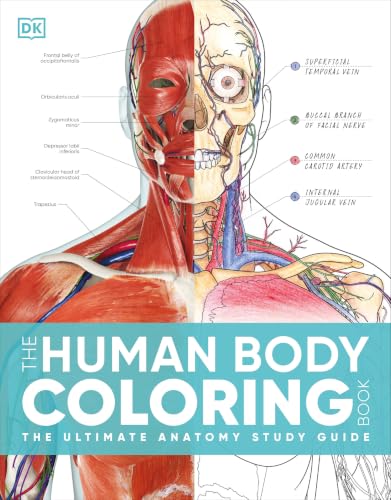
- More than 200 detailed anatomical drawings
- Clear keys, labels, and cross-references on every page
- Strong choice for studying body systems and self-testing
Best For: Medical students and learners needing a broad anatomy review
Clinical Anatomy Review Favorite
Netter's Anatomy Coloring Book

- Cross-referenced to Netter’s Atlas of Human Anatomy
- Two-page spreads with high-yield notes and coloring outlines
- Includes tables, clinical notes, review questions, and online access
Best For: Anatomy students who want a study-heavy coloring companion
Detailed Systems Learning
Human Anatomy Coloring Book for Adults & Students
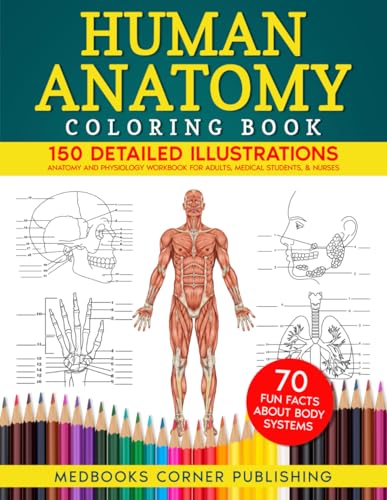
- 150 detailed anatomy illustrations
- 70 facts plus labeling practice
- Covers major body systems
Best For: Medical students, nurses, and serious anatomy learners
Revised Classic Study Aid
Complete Anatomy Coloring Book

- 150+ anatomically accurate diagrams
- One-sided, extra-thick pages
- Includes palette tips and examples
Best For: Students and professionals who want a structured anatomy study aid
Study-Heavy Visual Learning
Human Anatomy Coloring Book and Study Guide
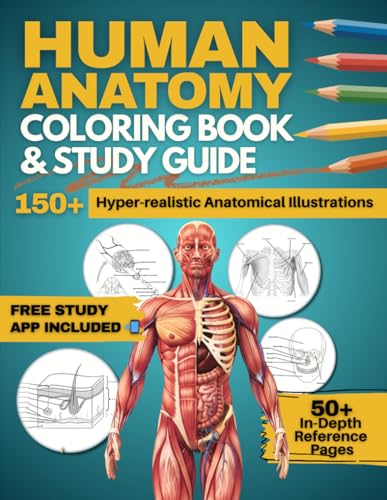
- 150+ hyper-realistic illustrations
- 50+ study pages and 500+ questions
- Includes free MEDSTUDY app
Best For: College, medical, and nursing students preparing for exams
Classic System-by-System Study Aid – The Anatomy Coloring Book
If you want anatomy coloring books that emphasize steady, visual learning, this long-running classic is built for exactly that. Organized by body systems with color-keyed terminology and precise hand-drawn figures, it helps turn memorization into an active study session.
Best For: Students and self-learners who want a proven, system-by-system anatomy review with clear illustrations.
Pros:
- 162 two-page spreads organized by body systems
- Color-key system links terms to detailed illustrations
- Enlarged art and clearer text in the 4th edition
- Strong fit for kinesthetic, visual study habits
Cons:
- Uses a classic study-book style rather than flashy modern design
- May feel more detailed than a casual coloring book
This is a solid pick if you want a widely used anatomy coloring book that balances structure, readability, and hands-on learning. Its updated layout makes the familiar format easier to use without changing the core strengths that made it a bestseller.
Concise Interactive Workbook – Anatomy Coloring Workbook, 4th Edition
Anatomy Coloring Workbook, 4th Edition: An Easier and Better Way to Learn Anatomy
Check Price On AmazonThis anatomy coloring book is designed to make studying feel more efficient than rote memorization. With 126 coloring plates, clear explanations, and a glossary, it gives anatomy, physiology, and related students a structured way to review key concepts.
Best For: Learners who want a straightforward workbook with extra reference material and quick-study support.
Pros:
- 126 coloring plates with easy-to-follow renderings
- Includes terminology introduction, glossary, and coloring suggestions
- Covers major systems plus injury and ailment appendices
- Broadly useful for anatomy, nursing, biology, and related study areas
Cons:
- Fewer plates than some more illustration-heavy competitors
- More workbook-like than art-focused
For buyers who want a compact but practical anatomy coloring book, this edition focuses on clarity and study efficiency. It’s especially appealing if you want a mix of coloring, explanations, and quick reference tools in one place.
Budget-Friendly Foundations Guide – Human Anatomy Coloring Book
If you’re shopping anatomy coloring books on a tighter budget, this Dover title offers a straightforward, affordable way to study the human body. Its accurate line drawings and labeled color key are aimed at helping readers build a basic understanding of major systems and structures.
Best For: Students, homeschoolers, and beginners who want an inexpensive, no-frills anatomy study tool.
Pros:
- Affordable entry point for anatomy study
- Scientifically accurate line renderings of major body systems
- Color key is labeled and numbered for guided learning
- Useful for EMT, nursing, biology, and homeschool use
Cons:
- Only 43 coloring pages
- Older format with less content than larger workbooks
This is a practical pick if your priority is low cost and clear fundamentals rather than a large, feature-packed workbook. It works best as an introductory study aid for learners who want simple diagrams they can work through system by system.
Most Detailed Test-Prep Option – Kaplan Anatomy Coloring Book
Among anatomy coloring books, this Kaplan edition leans heavily into detail and structured review. With more than 450 realistic medical illustrations, same-page answer keys, and quiz-style prompts, it is built for learners who want a more intensive study experience.
Best For: Pre-health students and serious anatomy learners who want dense coverage and self-quizzing support.
Pros:
- More than 450 detailed, realistic medical illustrations
- Self-quizzing format with convenient same-page answer keys
- Color guides on every 2-page spread
- Spacious page design helps reduce bleed-through
Cons:
- Likely more intense than a casual coloring book
- Best suited to focused study rather than light browsing
If you want a modern anatomy coloring book with a strong test-prep feel, this one stands out for depth and structure. Its detailed illustrations and built-in quizzes make it a strong option for learners who need to study actively and retain information.
Yoga Anatomy Practice Companion – Pose by Pose: Learn the Anatomy and Enhance Your Practice
Pose by Pose: Learn the Anatomy and Enhance Your Practice (Volume 2) (Anatomy Coloring Books)
Check Price On AmazonIf you’re shopping for anatomy coloring books that connect body knowledge to movement, this yoga-focused volume is a strong pick. It walks through 50 poses with detailed black-and-white drawings, labels to color, and clear explanations of how muscles, bones, tendons, and ligaments work together, making it useful for both learning and practice refinement.
Best For: Yogi readers who want a pose-by-pose anatomy guide with study flash cards.
Pros:
- Covers 50 yoga poses with anatomy tied directly to each one
- Includes labeled illustrations to color and reinforce learning
- Offers 48 perforated flash cards for self-quizzing and on-the-go study
- Written by a yoga instructor, licensed massage therapist, and anatomy teacher
Cons:
- Geared more toward yoga anatomy than broad human body study
- May be more useful for aspiring or experienced yogis than casual colorers
Overall, this is a practical anatomy coloring book for anyone who wants to understand alignment and safe engagement in yoga poses while studying in an interactive format.
Detailed Human Body Study Guide – The Human Body Coloring Book: The Ultimate Anatomy Study Guide
Among anatomy coloring books, this DK title stands out for breadth and structure. It includes more than 200 detailed drawings, clear keys for labeling and coloring, and cross-references on every page, making it a practical option if you want a guided way to learn the human body from cells to body systems.
Best For: Medical students and anatomy learners who want a broad, interactive study guide.
Pros:
- More than 200 anatomical drawings covering the body from cell to system
- Clear keys and page cross-references help guide study
- Includes new pages for complex areas like the shoulder, hip, wrist, and foot
- Designed to help with self-testing and recall
Cons:
- At 264 pages, it may feel substantial for casual coloring
- Its study-guide style may be more academic than relaxing
If you want one of the most comprehensive anatomy coloring books for structured learning, this second edition offers depth, organization, and plenty of material to work through.
Clinical Anatomy Review Favorite – Netter's Anatomy Coloring Book
If you want anatomy coloring books with a more clinical edge, this Netter edition is built for active review. It is cross-referenced to Netter’s Atlas of Human Anatomy and uses two-page spreads, high-yield notes, tables, and review questions to help reinforce structures, pathways, relationships, and muscle details.
Best For: Anatomy students who want a cross-referenced, study-heavy coloring book.
Pros:
- Cross-referenced to Netter’s Atlas of Human Anatomy for reliable anatomy content
- Two-page spreads combine coloring outlines with high-yield information
- Includes tables, clinical notes, summary exercises, and review questions
- Online access and an enhanced eBook are included
Cons:
- More study-oriented than purely recreational
- The detailed review format may be heavier than a beginner-friendly coloring book
For learners who want anatomy coloring books that double as exam prep, this Netter title is especially useful because it connects coloring with structured review and clinical context.
Detailed Systems Learning – Human Anatomy Coloring Book for Adults & Students
If you want anatomy coloring books that make dense material easier to absorb, this edition focuses on detailed body-system study with a practical, hands-on format. It combines 150 illustrations, labeling prompts, and anatomy facts to help learners move from passive reading to active recall.
Best For: Medical students, nurses, and other learners who want an engaging way to review core human body systems.
Pros:
- 150 detailed illustrations covering major systems like nervous, muscular, skeletal, digestive, cardiovascular, and more
- Includes 70 anatomy facts to reinforce learning while you color
- Labeling activities support medical terminology and structure recognition
- Designed for advanced body-systems learning in a workbook format
Cons:
- Geared toward study use more than casual coloring
- Focused on anatomy and physiology, so it may feel intensive for beginners
- No mention of answer keys or finished-color examples in the supplied notes
Overall, this is a strong choice if you want an anatomy coloring book that doubles as a study aid. It is best suited to learners who want to color, label, and review the body’s systems in one structured resource.
Revised Classic Study Aid – Complete Anatomy Coloring Book
Among anatomy coloring books, this revised edition stands out for its clear, system-by-system structure and over 150 anatomically accurate diagrams. It is built around tactile learning, extended captions, and one-sided pages, making it a practical option for learners who want an organized way to study human anatomy.
Best For: Students and professionals who want a dependable anatomy study aid with accurate diagrams and built-in coloring guidance.
Pros:
- Over 150 anatomically accurate diagrams arranged by body system
- Printed on extra-thick paper with one-sided pages for easier coloring
- Includes a full-color introduction with palette suggestions and over 30 finished examples
- Extended captions help explain the illustrations and support labeling
Cons:
- More study-focused than decorative or leisure-oriented
- Best suited to learners comfortable with detailed anatomy terminology
- No digital companion or app mentioned in the supplied notes
This is a solid pick if you want a classic, authoritative anatomy workbook that balances visual learning with practical study support. It should appeal most to readers who value accurate diagrams and a straightforward learning flow.
Study-Heavy Visual Learning – Human Anatomy Coloring Book and Study Guide
If you’re comparing anatomy coloring books for serious exam prep, this one adds a study-guide layer on top of the coloring format. It pairs 150+ hyper-realistic illustrations with in-depth chapter review, quick recap questions, and a free companion app for extra practice.
Best For: College, medical, and nursing students who want coloring, labeling, and quiz practice in one resource.
Pros:
- 150+ hyper-realistic illustrations for coloring and labeling
- 50+ study guide pages cover every major body system in depth
- 500+ recap questions add built-in review after each chapter
- Includes free MEDSTUDY app access with flashcards, quizzes, and progress tracking
Cons:
- Likely more intensive than a simple casual coloring book
- App-based extras may be more than some buyers need
- Dense study content may be better for committed learners than occasional users
For learners who want more than coloring alone, this is the most study-forward option in the group. The combination of visuals, written review, and quiz practice makes it a strong fit for exam-focused anatomy study.
How We Picked the Best Anatomy Coloring Books
We focused on books that make anatomy easier to understand without sacrificing accuracy. That means clear illustrations, logical organization, helpful labels, and a format that works for active learning rather than passive reading.
We also looked for strong use cases: some Anatomy Coloring Books are best for general human body study, while others are better suited for pre-med students, nursing learners, artists, or anyone who wants a lower-pressure way to review anatomy and physiology.
Quick Comparison
In broad terms, simpler books are better for first-time learners and casual study, while dense, highly illustrated titles are better for exam prep and deeper review. If you want a balance, choose a workbook style with quizzes or study prompts. If you want a reference feel, pick a book with more realistic medical artwork and detailed labeling.
Key Buying Factors for Anatomy Coloring Books
Level of Detail
Choose a book that matches your experience. Beginners usually benefit from large, uncluttered diagrams, while advanced learners may want layered systems, finer labeling, and more anatomical detail.
Accuracy and Clarity
Since these books are used for learning, accuracy matters. Look for clean line art, correct terminology, and illustrations that make it easy to identify structures without visual confusion.
Learning Support
Some Anatomy Coloring Books include quizzes, facts, or study guide pages. Those extras are useful if you want retention support, not just coloring.
Format and Usability
Check page layout, binding, and paper quality. Larger pages and thicker paper can make coloring easier, especially if you plan to use markers or want to keep pages neat for study.
Audience Fit
Different books serve different users. A med student may want a detailed workbook, while an art student or hobbyist may prefer a more approachable guide with broad coverage and less test-style pressure.
Who Should Buy Which Anatomy Coloring Books?
If you are just starting out, choose a straightforward, highly organized title that introduces major body systems clearly. If you are studying for exams, look for Anatomy Coloring Books with quizzes, study prompts, or realistic diagrams that reinforce terminology. If you want a mix of learning and relaxation, a visually appealing guide with moderate detail is usually the best fit. And if you need a serious study companion, prioritize medical-style accuracy and thorough coverage over decorative design.
The right choice depends on how you learn best: broad overview, active recall, or detailed review. Match the book to your goals, and it becomes much more than a coloring activity.