Kakuro delivers the same satisfying logic-first feel that makes crosswords and Sudoku so addictive, but with a fresh numerical twist. The best books balance clean layout, well-graded difficulty, and enough puzzles to keep you engaged.
Below, you’ll find a focused roundup of the best Kakuro puzzle books for 2026, whether you want a gentle entry point or a serious challenge.
Best 10 Kakuro Puzzle Books Picks for 2026
Mensa Challenge Pick
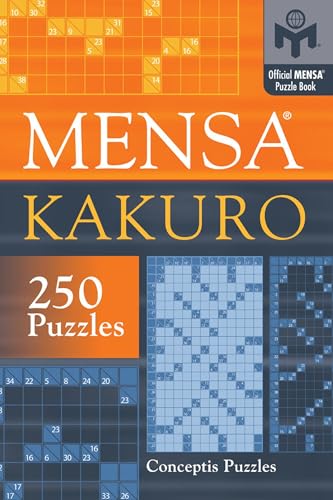
- 250 puzzles in the classic kakuro format
- Difficulty starts simple and increases over time
- 320-page book for extended practice
Best For: Solvers who want a gradual difficulty ramp
Hardest Mode Pick
Absolutely Nasty® Kakuro Level Three
- Built for hardcore kakuro devotees
- Described as head-explodingly difficult
- 160-page book for focused tough solving
Best For: Advanced solvers seeking an extreme challenge
Skill Builder Pick
Second-Degree Green Belt Kakuro

- Medium-hard puzzles for intermediate solvers
- Designed to hone kakuro technique
- 192-page book with a balanced challenge level
Best For: Players building intermediate kakuro skills
Extreme Challenge Pick
Absolutely Nasty® Kakuro Level Four
- Roughest, toughest kakuro puzzles in the set
- Best for experienced solvers only
- 160-page book focused on high difficulty
Best For: Experts wanting the most punishing puzzles
Variety Pack
600 Kakuro Puzzles: Easy to Hard

- 600 puzzles across easy, medium, and hard levels
- Multiple grid sizes, including 6x6, 10x10, and 19x12
- Solutions included for every puzzle
Best For: Solvers who want a long-lasting mixed-difficulty kakuro book
Advanced Challenge
Absolutely Nasty® Kakuro Level One

- Hard kakuro that is not for beginners
- Starts the Absolutely Nasty series
- Designed for a satisfying solving journey
Best For: Experienced solvers who want a tough kakuro book
Expert Level
Black Belt Kakuro: 150 Puzzles
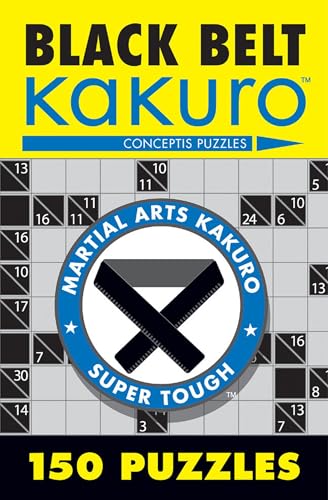
- 150 expert-level kakuro puzzles
- Pure logic with simple arithmetic
- Part of the martial arts belt series
Best For: Advanced solvers looking for an expert-level kakuro set
Level 2 Challenge
Absolutely Nasty Kakuro Level Two

- Second-level kakuro with nastier clues
- Language-free logic and simple arithmetic
- 160-page paperback from Puzzlewright Press
Best For: Solvers who want a tougher step up from beginner puzzles
Martial Arts Style Set
Green Belt Kakuro: 150 Puzzles

- Includes 150 language-free kakuro puzzles
- Belt-color system helps match difficulty
- 192-page collection from Puzzlewright Press
Best For: Intermediate solvers who want a large, themed puzzle set
Intermediate Step-Up
Third-Degree Green Belt Kakuro
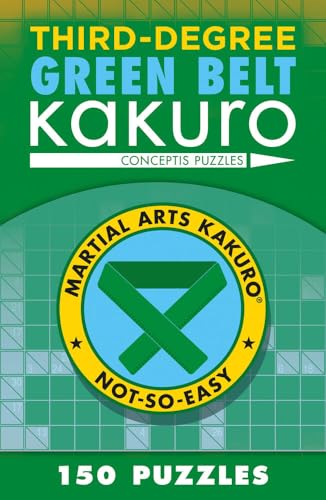
- Mid-level kakuro challenge in the series
- Designed to be harder than beginner puzzles
- 192-page Martial Arts Puzzles title
Best For: Solvers who want an intermediate challenge without going too far
Mensa Challenge Pick – Mensa® Kakuro
If you want a kakuro puzzle book that starts accessible and gradually ramps up, Mensa® Kakuro is a solid pick. This volume includes 250 puzzles built around the classic number-sum format, making it a practical choice for readers who want a structured challenge rather than a random mix of difficulty.
Best For: Solvers who want 250 kakuro puzzles that progress from simple to more difficult levels.
Pros:
- Includes 250 puzzles for plenty of practice.
- Difficulty starts simple and gets harder as the book progresses.
- Classic kakuro format is clearly described for straightforward play.
- Substantial 320-page paperback format.
Cons:
- May feel too easy at the beginning for experienced solvers.
- Focused on traditional kakuro only, with no variety beyond the core format.
Overall, this is one of the more approachable kakuro puzzle books for readers who want a long run of puzzles and a natural difficulty curve. It fits well if you like working through a book from warm-up puzzles to tougher entries without jumping straight into the deep end.
Hardest Mode Pick – Absolutely Nasty® Kakuro Level Three
Absolutely Nasty® Kakuro Level Three is aimed squarely at hardcore kakuro devotees who want a serious test. The supplied notes describe it as head-exploding puzzle solving, so this is a strong fit if you already know the format and are looking for a book that pushes your limits.
Best For: Experienced kakuro fans who want a very tough challenge.
Pros:
- Designed for hardcore kakuro devotees.
- Specifically positioned as a very difficult puzzle book.
- Compact 160-page format for focused solving.
Cons:
- Not a good entry point for beginners.
- The extreme difficulty may be frustrating if you prefer lighter puzzles.
If you want kakuro puzzle books that lean heavily into difficulty, this one delivers exactly that. It makes the most sense for solvers who enjoy wrestling with especially demanding logic problems and do not mind a steep challenge.
Skill Builder Pick – Second-Degree Green Belt Kakuro
Second-Degree Green Belt Kakuro is a good fit if you want something challenging but not impossible. These medium-hard green puzzles are meant to help hone intermediate technique, making the book a practical step up for solvers who want to improve without jumping to the hardest level.
Best For: Intermediate solvers looking to build kakuro technique.
Pros:
- Medium-hard difficulty is aimed at intermediate players.
- Useful for honing kakuro technique.
- Contains 192 pages of puzzles.
Cons:
- May be too easy for expert-level solvers.
- May still be challenging for newer players.
This is one of the more balanced kakuro puzzle books if you want to stretch your skills without going straight to the toughest tier. The green-belt positioning makes its role clear: it is meant to bridge the gap between basic solving and harder books.
Extreme Challenge Pick – Absolutely Nasty® Kakuro Level Four
Absolutely Nasty® Kakuro Level Four is the toughest option in this group, and the notes make that clear. It is presented as the roughest, toughest kakuros ever put on paper, so it suits readers who have already climbed through harder books and want the most punishing challenge available here.
Best For: Solvers who want the roughest, toughest kakuro challenge in this set.
Pros:
- Marketed as the roughest, toughest kakuros in the series.
- Ideal for solvers who have already advanced through earlier levels.
- Compact 160-page format keeps the focus on hard puzzles.
Cons:
- Not suitable for beginners or casual solvers.
- May be too difficult if you prefer steady, moderate progress.
For shoppers comparing kakuro puzzle books by difficulty, this is the most demanding choice among the four. It is best treated as a specialist book for experienced fans who want a real endurance test rather than a relaxed puzzle session.
Variety Pack – 600 Kakuro Puzzles: Easy to Hard
600 Kakuro Puzzles: Easy, Medium and Hard Unique Cross Sum Puzzles with Solutions.
Check Price On AmazonIf you want kakuro puzzle books with a broad difficulty spread, this collection is built to keep you busy for a long time. It includes easy, medium, and hard cross sum puzzles in multiple grid sizes, so you can work through a range of challenges without needing a second book right away.
Best For: Solvers who want a large, varied kakuro book with easy, medium, and hard puzzles.
Pros:
- 600 puzzles give you plenty of solving material.
- Mixes easy, medium, and hard difficulty levels.
- Includes multiple grid sizes, from 6×6 to 19×12.
- Solutions are included for checking work.
Cons:
- May feel less focused if you want a single difficulty level.
- Large variety may not suit buyers who prefer a tightly targeted book.
This is a practical pick if you want one of the more flexible kakuro puzzle books on the shelf. The range of levels and formats makes it useful for both casual practice and more serious logical workouts.
Advanced Challenge – Absolutely Nasty® Kakuro Level One
This is one of the kakuro puzzle books for readers who want a tough challenge rather than a beginner-friendly introduction. Although it is labeled level one, the publisher notes that it is absolutely not for beginners, making it a better fit for experienced solvers who enjoy difficult logic work.
Best For: Puzzle fans who want a hard kakuro challenge that starts an advanced series.
Pros:
- Explicitly aimed at solvers who are beyond beginner level.
- Opens a hard, satisfying solving journey.
- Part of the Absolutely Nasty series for readers who like collecting sets.
Cons:
- Not suitable if you are new to kakuro.
- Difficulty may be too steep for casual solvers.
If you want a book that leans into challenge from the start, this is a strong fit. Its main appeal is straightforward: advanced puzzlers get a serious workout without any beginner-level padding.
Expert Level – Black Belt Kakuro: 150 Puzzles
For buyers comparing kakuro puzzle books by difficulty, this one is clearly aimed at experienced solvers. It’s part of a belt-themed series where black belt represents expert level, and the puzzles use pure logic with simple arithmetic, making it a strong choice for focused number-puzzle practice.
Best For: Experienced kakuro fans who want an expert-level logic challenge.
Pros:
- 150 kakuro puzzles provide a solid-size collection.
- Expert-level black belt theme signals a tougher challenge.
- Uses pure logic and simple arithmetic.
- Part of a multilevel martial arts puzzle series.
Cons:
- Likely too difficult for novices.
- Smaller puzzle count than some larger compilation books.
This book makes sense if you want a compact but demanding kakuro set. It is best treated as an advanced workout rather than a casual intro to the format.
Level 2 Challenge – Absolutely Nasty Kakuro Level Two
If you’re shopping for kakuro puzzle books that push beyond the basics, this second-level volume is built for solvers who want the clues to get nastier while keeping the satisfaction high. It’s a focused, 160-page paperback from Puzzlewright Press that leans into trickier logic-and-arithmetic grids without leaving the language-free format behind.
Best For: Solvers who already know the basics and want a tougher kakuro puzzle book with a compact format.
Pros:
- Second-level puzzles are described as nastier and more challenging.
- Language-free number puzzles rely on logic and simple arithmetic.
- Compact 160-page format is easy to carry or work through steadily.
Cons:
- May feel too difficult for first-time kakuro solvers.
- Only 160 pages, so it’s a shorter book than some alternatives.
This is a good pick if you want a deliberate step up in difficulty rather than a beginner-friendly warmup. It’s best suited to readers who enjoy a tougher solve and want the payoff that comes with finishing a harder grid.
Martial Arts Style Set – Green Belt Kakuro: 150 Puzzles
For buyers comparing kakuro puzzle books, this one stands out for sheer volume and a clear difficulty ladder. It includes 150 language-free number puzzles that use logic and simple arithmetic, and it’s framed around martial arts belt colors so you can match your skill level to the challenge.
Best For: Intermediate solvers who want a large collection of language-free kakuro puzzles with a clear difficulty theme.
Pros:
- Contains 150 kakuro puzzles for extended use.
- Uses a belt-color system to suggest skill-based challenge levels.
- Language-free format makes it accessible for logic-focused solving.
- 192 pages give it a substantial workout feel.
Cons:
- The martial arts theme may matter more to some buyers than others.
- Intermediate-focused framing may not suit complete beginners or experts equally well.
This book is strongest if you want lots of puzzles and a straightforward progression concept. It offers a practical, theme-based way to choose a challenge level while still staying centered on classic kakuro solving.
Intermediate Step-Up – Third-Degree Green Belt Kakuro
If you’re narrowing down kakuro puzzle books and want something a little harder than entry-level but not overly punishing, this volume is positioned right in that middle ground. It offers another Martial Arts Puzzles challenge with grids where the little numbers guide you to fill in the blanks using digits that add up correctly.
Best For: Solvers who want a moderate challenge that sits between beginner puzzles and tougher advanced books.
Pros:
- Described as a next level of challenge for fans of these puzzles.
- Targets solvers who want harder-than-beginner, but not frustratingly difficult, puzzles.
- Uses the familiar Martial Arts Puzzles series format.
- 192-page book provides plenty of solving material.
Cons:
- May still be too challenging for true beginners.
- Focused on a mid-level challenge, so advanced solvers may want something harder.
This is a practical middle-ground choice for readers who want to build confidence while still feeling challenged. It’s a good fit if you like kakuro that stretches your mental muscles without jumping straight to the toughest tier.
How We Picked These Kakuro Puzzle Books
We prioritized books that offer a clear difficulty progression, strong puzzle variety, and a layout that supports comfortable solving. For Kakuro Puzzle Books, that means readable grids, a sensible mix of easy through advanced entries, and enough content to justify the purchase.
We also looked for trusted puzzle brands and series known for consistent editing and challenge quality, so buyers can choose with more confidence.
Quick Comparison
If you’re new to Kakuro, start with easier or mixed-level books that teach the logic without overwhelming you. If you already solve comfortably, a mid- or advanced-level title will be more satisfying than a beginner collection. Large-volume books are best for value seekers, while smaller level-specific books are better when you want a focused difficulty range.
Key Buying Factors for Kakuro Puzzle Books
Difficulty Level
Kakuro ranges from approachable to highly technical. Look for explicit level labeling such as easy, medium, hard, or advanced tiers if you want a predictable experience.
Puzzle Count and Value
More puzzles can mean better value, but only if the difficulty matches your needs. A smaller book with well-curated puzzles may be a better buy than a large mixed collection you won’t finish.
Layout and Solveability
Because Kakuro uses number placements and clue sums, a clean grid and plenty of spacing matter. Avoid books with cramped formatting if you plan to solve for longer sessions.
Solutions Included
Answer sections are essential, especially for newer solvers or anyone using these books as a learning tool. They make it easier to check work and understand mistakes.
Who Should Buy Which Kakuro Puzzle Books?
Beginners: Choose entry-level or mixed-difficulty books that build confidence and reinforce the core logic.
Intermediate solvers: Look for progression-based series or books labeled medium, green belt, or multi-level collections.
Advanced solvers: Pick harder titles with fewer obvious deductions and more complex sum combinations.
Gift buyers: A broad, mixed-level book is usually the safest choice because it gives the recipient room to grow without guessing their exact skill level.
If you want the most flexible option, choose a book with a clear difficulty ladder and a generous puzzle count. If you want the most rewarding experience, match the book to the level where you still need to think hard, but not so hard that every puzzle feels like a slog.