When seconds matter, a clear guide can make the difference between panic and a calm, correct response. The best first aid manuals give you step-by-step help for common emergencies, from cuts and burns to CPR and choking.
This roundup focuses on practical, easy-to-use references for beginners, families, outdoor users, and trained responders who want a dependable manual within reach.
Best 10 First Aid Manuals Picks for 2026
Comprehensive UK Reference

- Authorised by the UK's leading first aid providers
- 296-page book-length reference
- Good for home or workplace use
Best For: Households and workplaces wanting a fuller UK-authorised manual
Laminated Quick Reference

- Flat 6-page laminated format
- Covers many emergency topics concisely
- Easy to keep in a bag or car
Best For: Fast-access reference for kits, vehicles, and desks
Military Field Handbook

- Official U.S. Army manual
- Field-focused coverage of injuries and emergencies
- Compact handbook format
Best For: Outdoors and remote-use readers wanting a military-style guide
Portable Emergency Guide
Complete First Aid Pocket Guide

- Pocket-sized and easy to carry
- Broad emergency coverage with step-by-step help
- A-to-Z appendix for quick lookup
Best For: Portable broad-coverage guide for kits, cars, and bags
Red Cross 2025 Update
American Red Cross First Aid/CPR/AED Manual

- Updated to 2025 CPR and first aid guidelines
- Covers CPR, AED use, choking, and sudden illnesses
- Includes splinting, tourniquets, and naloxone basics
Best For: Learners wanting a current Red Cross training manual
Household Reference Pick
ACEP First Aid Manual 5th Edition

- Covers more than 100 conditions with action plans
- Uses step-by-step photos for easy reference
- Good fit for home, car, and family use
Best For: Families wanting a broad, visual emergency reference
Red Cross 2021 Training Manual
First Aid/CPR/AED Participants Manual

- Supports Red Cross first aid, CPR, and AED courses
- Covers choking, sudden illness, and cardiac arrest response
- Includes splints, tourniquets, and naloxone basics
Best For: Students needing a Red Cross course companion from the 2021 revision
Everyday Off-Grid Ready
First Aid Manual Pocket Guide 2025
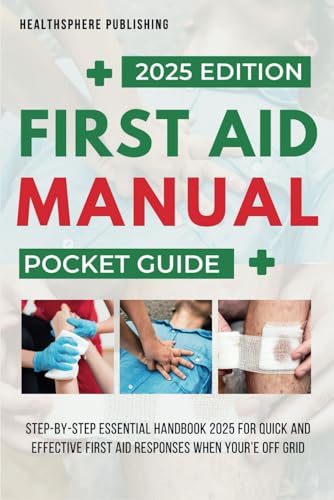
- Compact pocket format for fast reference
- Covers CPR, AED, burns, stroke, and shock
- Written in a user-friendly step-by-step style
Best For: Compact emergency reference for home, car, office, and off-grid preparedness
Fast Reference Pick

- Slim 89-page format for quick access
- Simple sections reduce confusion under stress
- Includes a printable first aid kit checklist
Best For: People who want a compact, easy-to-scan emergency guide for home and outdoors
Most Comprehensive Choice
The Complete First Aid Manual 2026

- Covers updated CPR, AED, and choking standards
- Includes trauma, wilderness, and special-population care
- Explains the reasoning behind each response
Best For: Readers who want a broad, up-to-date manual with both emergency and wilderness coverage
Comprehensive UK Reference – First Aid Manual 11th Edition
If you want first aid manuals that feel thorough, current, and easy to keep at home, this 11th edition from DK is built for practical use. It is written and authorised by the UK’s leading first aid providers, with clear coverage across common injuries and emergencies in a 296-page format.
Best For: Households, workplaces, and anyone who wants a fuller first aid manual with UK-authorised guidance.
Pros:
- Written and authorised by the UK’s leading first aid providers
- Substantial 296-page format for broader coverage
- Useful as a home or workplace reference
- Published in a recent 11th edition
Cons:
- Less portable than pocket-sized guides
- May be more detail than some users need for quick checks
This is a strong pick if you want a dependable, book-length manual rather than a condensed reference. It is best suited to people who value a more complete first aid manual for planned storage and occasional review.
Laminated Quick Reference – First Aid QuickStudy Guide
For first aid manuals that are meant to be grabbed fast, this laminated QuickStudy guide keeps the essentials in a slim, easy-to-store format. It covers symptoms, treatment, and tips for a wide range of emergencies, making it practical for a bag, desk, glove box, or kit.
Best For: People who want a compact first aid manual for quick access in cars, offices, schools, or first aid kits.
Pros:
- Flat 6-page laminated format for durability and quick access
- Covers a wide range of emergency topics in concise form
- Easy to store in a car, bag, school, or office
- Includes first aid kit building and emergency calling basics
Cons:
- Much less detailed than a full book-length manual
- Best as a quick reference, not an in-depth study guide
This guide makes sense when speed and portability matter more than depth. It is a practical backup reference for moments when you need the basics immediately and do not want to flip through a larger manual.
Military Field Handbook – U.S. Army First Aid Manual
If you prefer first aid manuals with a field-ready focus, this official U.S. Army manual is aimed at treating injuries and afflictions when medical help is not immediately available. It covers basic first aid, wound care, fractures, bites and stings, head injuries, and more in straightforward language.
Best For: Outdoorsmen, travelers, and readers who want a military-style first aid manual for remote or uncertain situations.
Pros:
- Official U.S. Army manual
- Covers a broad range of field injuries and emergencies
- Emphasizes prompt action to sustain life and reduce harm
- Compact 304-page format for a handbook-style reference
Cons:
- Military framing may be less appealing for casual home users
- Smaller size may mean denser reading than a visual guide
This is a solid option if your priority is practical, field-oriented guidance rather than a household-first presentation. It works well for anyone who wants a serious manual to keep on hand away from immediate medical care.
Portable Emergency Guide – Complete First Aid Pocket Guide
Among first aid manuals, this pocket guide is built for quick identification and step-by-step response across a wide range of emergencies. It uses simple language, includes A-to-Z lookup support, and is sized to travel well in a kit, vehicle, or bag.
Best For: Users who want a compact first aid manual with broad emergency coverage and fast reference features.
Pros:
- Portable pocket size with a small trim
- Wide coverage from minor injuries to major medical emergencies
- Includes CPR, AED, pediatric, and environmental guidance
- A-to-Z appendix helps you find conditions quickly
Cons:
- Smaller format limits how much detail it can include
- Less suitable if you want a more visual or expansive manual
This guide is a strong all-around choice if you want broad first aid coverage without carrying a full-size book. It balances portability and usefulness well, especially for home emergency kits and on-the-go preparedness.
Red Cross 2025 Update – American Red Cross First Aid/CPR/AED Manual
If you want one of the most up-to-date first aid manuals for CPR, AED use, and emergency response, this Red Cross participant’s manual is built around the 2025 ILCOR and AHA/Red Cross guidelines. It is designed to teach the knowledge and skills needed to give immediate care and decide when advanced medical care is needed, with clear coverage of common emergencies and life-threatening situations.
Best For: Learners who want a current Red Cross training manual aligned with 2025 CPR and first aid guidance.
Pros:
- Aligned with 2025 ILCOR and American Heart Association/American Red Cross guidelines
- Covers emergency action steps, cardiac arrest, heart attack signs, CPR, and AED use
- Includes extra skills like asthma inhaler assistance, epinephrine auto-injectors, splinting, tourniquet application, and naloxone administration
- Supports the Red Cross First Aid/CPR/AED program
Cons:
- Primarily a course participant’s manual rather than a broad reference book
- Best suited to people following Red Cross training content
This is the strongest pick if your priority is a current, training-focused manual that reflects the latest Red Cross guidance. It is especially useful for readers who want a structured approach to emergency care rather than a general household overview.
Household Reference Pick – ACEP First Aid Manual 5th Edition
For shoppers comparing first aid manuals for home or car use, this DK guide is a practical, step-by-step reference covering more than 100 conditions. It uses photographic sequences and clear explanations of causes, symptoms, and action plans, which makes it easy to check what to do in everyday emergencies.
Best For: Families and general users who want a broad, visual first aid reference for common emergencies.
Pros:
- Guides you through more than 100 conditions
- Uses step-by-step photographic sequences for easier following
- Includes emergency first aid, babies and children, and resuscitation tips
- Designed as a handy reference for home or car
Cons:
- Published in 2014, so it is not the newest option here
- Less training-program specific than the Red Cross manuals
This is a strong all-purpose pick if you want a visual, easy-to-navigate manual rather than a course workbook. Its broad coverage and photographic approach make it especially practical for quick reference in a household setting.
Red Cross 2021 Training Manual – First Aid/CPR/AED Participants Manual
If you are comparing first aid manuals for Red Cross training, this 2021 participant’s manual offers a focused course companion for first aid, CPR, and AED skills. It covers emergency recognition, cardiac arrest, heart attack signs, CPR, AED use, choking, sudden illnesses, and other life-threatening injuries, plus several added response skills.
Best For: Students and instructors who want a Red Cross participant manual based on 2020 guidelines.
Pros:
- Supports the American Red Cross First Aid/CPR/AED program
- Covers emergency steps, CPR, AED use, choking, and sudden illnesses
- Includes asthma inhaler help, epinephrine auto-injectors, splinting, tourniquets, and naloxone administration
- Built around 2020 ILCOR and AHA/Red Cross guideline content
Cons:
- Older than the 2025 revision
- Most useful when matched to Red Cross course materials
This manual remains a solid training resource if you need the Red Cross format and course structure. It is best suited to users who are fine with a 2021 edition and want the core skills laid out in a classroom-friendly way.
Everyday Off-Grid Ready – First Aid Manual Pocket Guide 2025
If you want a practical first aid manual for quick decisions away from professional help, this pocket guide focuses on the essentials. It covers common injuries, major emergencies, and clear step-by-step actions for CPR, AED use, and recovery position guidance in a format meant to be easy to follow under pressure.
Best For: People who want a compact first aid manual for home, car, office, or off-grid use, plus students and CPR exam prep.
Pros:
- Includes CPR and AED guidance for adults, children, and infants.
- Covers a wide range of emergencies, from cuts and burns to stroke and shock.
- Uses a user-friendly, step-by-step style for fast reference.
- Fits well as a home, car, or office emergency book.
Cons:
- At 150 pages, it is more compact than a full-length reference manual.
- Focused on quick guidance rather than deep medical explanation.
This is a straightforward option if you want first aid manuals that are easy to keep nearby and easier to use when time matters. Its strength is breadth and accessibility, especially for everyday emergencies and basic preparedness.
Fast Reference Pick – First Aid Pocket Manual 2026
This first aid manual is built for moments when you need instructions you can follow quickly, not dense medical language. It keeps things simple with clear sections on what the problem is, what it looks like, and what to do, making it a practical choice for home, car, and outdoor situations.
Best For: Readers who want a slim, easy-to-scan first aid manual for rapid response in everyday and outdoor emergencies.
Pros:
- Very portable at 89 pages and glove-box friendly.
- Uses a simple structure: what it is, what it looks like, what to do.
- Covers CPR, choking, burns, bleeding, shock, and outdoor emergencies.
- Includes quick-reference action cards and a printable first aid kit checklist.
Cons:
- Short format means less depth than a larger handbook.
- Best suited to quick action, not in-depth study.
If you want one of the most portable first aid manuals in this roundup, this is an easy pick. It is especially useful for anyone who wants a clear, no-frills emergency reference that can stay close at hand.
Most Comprehensive Choice – The Complete First Aid Manual 2026
Among first aid manuals, this one leans toward broader understanding as much as quick action. It covers current CPR and choking standards, trauma care, wilderness survival, and emergency topics like heart attacks and strokes, while also explaining the reasoning behind the steps.
Best For: Buyers who want a more comprehensive first aid manual with current standards, trauma coverage, and wilderness-focused guidance.
Pros:
- Includes updated 2026 CPR, AED, and choking guidance.
- Covers Stop the Bleed concepts, wound packing, and tourniquet use.
- Addresses wilderness survival and special situations like childbirth and infant care.
- Explains why techniques work, not just what to do.
Cons:
- More detailed approach may feel less immediate than a pure pocket guide.
- Better for study and preparation than ultra-fast scanning alone.
This is the strongest choice if you want a first aid manual that goes beyond a checklist and helps you understand the logic behind the response. It should appeal to readers who want current emergency guidance with a wider skill set.
How We Picked These First Aid Manuals
We looked for First Aid Manuals that are easy to follow in stressful moments, cover the most common emergencies, and suit different uses such as home kits, cars, backpacks, workplaces, and training settings. We also prioritized clear organization, portable formats, and up-to-date guidance where possible.
Quick Comparison
Some First Aid Manuals are best for rapid reference, such as laminated or pocket-sized guides. Others are better as fuller training resources with more detail on CPR, injury care, and emergency decision-making. If you want speed, choose a compact manual. If you want depth, choose a more comprehensive handbook or participant manual.
Key Buying Factors for First Aid Manuals
Scope and Depth
Think about whether you need a brief field reference or a more complete manual. A smaller guide is easier to carry, while a detailed book may be better for home use and training.
Clarity and Layout
Look for straightforward language, simple illustrations, and step-by-step instructions. In an emergency, fast readability matters more than dense medical detail.
Format and Portability
Laminated cards, pocket guides, and slim handbooks are ideal for vehicles, travel, and outdoor kits. Larger manuals work well on a shelf or in a classroom.
Current Guidance
Choose First Aid Manuals with recent revisions when possible, especially for CPR, AED use, and general emergency procedures. Updated editions are more likely to reflect modern recommendations.
Who Should Buy Which First Aid Manuals?
For families and general home preparedness, a balanced, easy-to-read manual is usually the best fit. For hikers, campers, and off-grid users, choose a compact guide that travels well and covers injuries, bites, burns, and environmental exposure. For workplaces, schools, and volunteer responders, a training-oriented manual may offer the most value. If you want the fastest reference possible, a laminated quick guide or pocket manual is often the smartest choice. If you want one source to keep on hand for broader emergencies, choose a fuller first aid manual with clear chapters and practical examples.