If you’re looking for psychology books for beginners, the best place to start is with titles that explain core ideas clearly without assuming prior knowledge. The right book can make psychology feel approachable, useful, and even fun.
This roundup highlights beginner-friendly options that cover the basics, explain key concepts in plain language, and help you decide whether you want a visual overview, a textbook-style introduction, or a simple first read.
Best 10 Psychology Books for Beginners Picks for 2026
Beginner-friendly classic

- Jargon-free introduction to psychology basics
- Covers behavior, stress, and mental health
- Practical focus on everyday decision-making
Best For: Readers who want an easy, broad first psychology book
Visual learning pick

- Graphic, jargon-free introduction to psychology
- Explains theories, conditions, and treatments
- Strong everyday-life applications
Best For: Visual learners who want a beginner-friendly overview
Study-guide starter
Psychology: A Complete Introduction

- Course-like structure for step-by-step learning
- Covers research, cognition, and mental health
- Includes summaries and practice questions
Best For: Students and self-learners who want a structured intro
Big-picture overview

- Covers 100+ ideas in an accessible format
- Charts and diagrams support easy learning
- Great overview for adults and students
Best For: Beginners who prefer a visual, big-ideas approach
Psychology Quick Starter
Psych 101: Psychology Facts, Basics, Statistics, Tests, and More!

- Hands-on overview with quizzes and personality tests
- Covers basics, development, and major psychology figures
- Engaging format that avoids textbook-style heaviness
Best For: Readers who want a fun, broad introduction to psychology
Visual Study Guide
A Degree in a Book: Psychology: Everything You Need to Know to Master the Subject - in One Book!

- Full-color diagrams, mind maps, and infographics throughout
- Covers core psychology ideas and major figures
- Includes definitions, timelines, and further reading suggestions
Best For: Beginners who prefer visual, structured learning
Beginner Friendly Primer

- Fully illustrated introduction with real-world examples
- Explains how people think, feel, and behave
- Short 128-page format aimed at new learners
Best For: Younger readers and first-time learners
Comprehensive Beginner Psychology Guide
Psychology 101: A Beginner’s Guide
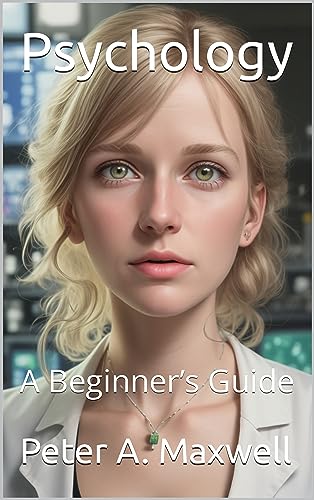
- Broad introduction to core psychology topics
- Covers research, memory, emotion, development, and more
- Designed for novices and enthusiasts
Best For: Readers wanting a broad, structured psychology starter
Practical Psychology Starter

- Simple explanations of 25 psychological effects
- Practice-oriented introduction to basics
- Short, approachable 90-page format
Best For: Beginners who want a quick, practical introduction
People-Focused Psychology Intro

- Covers emotions, personality, decision-making, and more
- Uses stories and personal examples
- Conversational, beginner-friendly approach
Best For: Readers who want an example-driven look at human behavior
Beginner-friendly classic – Psychology For Dummies
If you’re looking for psychology books for beginners, Psychology For Dummies is a practical starting point that explains why people think, feel, and act the way they do in clear, jargon-free language. It focuses on real-world uses too, from relationships and decision-making to stress, mental health, and finding counseling when needed.
Best For: Readers who want an approachable, broad introduction with everyday applications and a friendly teaching style.
Pros:
- Friendly, jargon-free explanations make the subject easy to approach.
- Covers core topics like consciousness, behavior, stress, and psychological health.
- Includes practical takeaways for relationships, careers, and decision-making.
- Useful for readers exploring both psychology basics and positive psychology.
Cons:
- At 416 pages, it may feel long for readers wanting only a quick overview.
- Its broad scope may be more introductory than deeply specialized.
This is a solid all-purpose option if you want a beginner book that balances concepts with everyday relevance. It’s especially helpful if you prefer a supportive tone and a wide survey of psychology topics.
Visual learning pick – How Psychology Works
For shoppers comparing psychology books for beginners, How Psychology Works stands out for its visual format and direct language. It introduces major approaches like behaviorism, cognitive psychology, and humanism, while also covering mental health conditions, treatments, and psychology in everyday life.
Best For: Visual learners and newcomers who want a graphic, easy-to-follow introduction to applied psychology.
Pros:
- Visual layout with graphics and diagrams helps simplify complex ideas.
- Uses jargon-free language that suits first-time learners.
- Includes major theories, mental health conditions, and treatment options.
- Connects psychology to relationships, work, education, and sport.
Cons:
- Its illustrated style may not satisfy readers seeking a text-heavy deep dive.
- At 256 pages, it provides breadth more than extended detail.
This book is a strong fit if you learn best from charts, diagrams, and concise explanations. It gives beginners a clear overview without making the subject feel intimidating.
Study-guide starter – Psychology: A Complete Introduction
If you want psychology books for beginners that feel structured and course-like, Psychology: A Complete Introduction is designed to cover the essentials in clear, jargon-free English. It follows a university-style layout and adds summaries of key experiments plus questions you might encounter in seminars or exams.
Best For: Students and self-learners who want an organized introduction that mirrors how psychology is taught.
Pros:
- Clear, jargon-free writing makes core topics easy to follow.
- Structured like a psychology course for orderly learning.
- Includes key experiment summaries and practice questions.
- Covers research, cognition, personality, social psychology, and mental health.
Cons:
- Its exam-focused structure may feel formal for casual readers.
- The compact format may not offer much visual support.
This is a practical choice if you want a beginner text that also supports study habits. It works especially well for readers who like a textbook-style path through the subject.
Big-picture overview – The Psychology Book
Among psychology books for beginners, The Psychology Book: Big Ideas Simply Explained is built to make major concepts feel accessible through charts, timelines, diagrams, and simple text. It presents more than 100 ideas and is aimed at adults and students who want an engaging overview of the field.
Best For: Beginners who want a broad, visually engaging overview of psychology’s big ideas.
Pros:
- More than 100 key ideas give a wide introduction to the field.
- Visuals, graphs, and mind maps make concepts easier to absorb.
- Easy-to-follow text suits new readers and general-interest learners.
- Connects historical thinkers with modern scientific ideas.
Cons:
- Its overview style may not go deeply into any single topic.
- Readers seeking a hands-on study guide may want more practice material.
This is a strong pick if you want a polished, big-picture introduction instead of a course-style textbook. It’s especially appealing for readers who like concise explanations paired with clear visuals.
Psychology Quick Starter – Psych 101: Psychology Facts, Basics, Statistics, Tests, and More!
Psych 101: Psychology Facts, Basics, Statistics, Tests, and More! (Adams 101 Series)
Check Price On AmazonIf you want psychology books for beginners that feel engaging rather than dry, Psych 101 is built to make the basics easy to explore. It skips a lot of textbook heaviness and focuses on approachable lessons, personality quizzes, classic experiments, and core names like Freud and Skinner.
Best For: Readers who want an entertaining, broad overview of psychology basics with quizzes and bite-sized explanations.
Pros:
- Uses quizzes and personality tests to keep learning interactive.
- Covers foundational topics like development, behavior, and major psychology figures.
- Written in a hands-on, easy-to-digest style instead of a textbook format.
- Includes hundreds of entertaining psychology basics and activities.
Cons:
- Less suitable if you want a highly academic or deeply detailed textbook.
- Focuses on breadth and engagement more than exhaustive coverage.
Overall, this is a strong starter pick if you want a lively introduction that makes the subject feel accessible. It works well for casual learners who prefer learning by exploring examples, quizzes, and core concepts first.
Visual Study Guide – A Degree in a Book: Psychology: Everything You Need to Know to Master the Subject – in One Book!
A Degree in a Book: Psychology: Everything You Need to Know to Master the Subject in One Book
Check Price On AmazonFor psychology books for beginners that organize the subject clearly, A Degree in a Book: Psychology offers a highly visual introduction. With full-color diagrams, mind maps, definition boxes, infographics, and short history sections, it is designed to make fundamental ideas easier to absorb.
Best For: Beginners who learn best with visuals, structured summaries, and a broad introduction to core psychology topics.
Pros:
- Uses full-color diagrams, flow charts, and infographics to simplify topics.
- Includes mind maps, definition boxes, and easily digestible chapter features.
- Covers major figures and ideas, including Freud and Pavlov.
- Includes suggestions for further reading for readers who want to keep going.
Cons:
- At 256 pages, it is an overview rather than a deep academic text.
- The visual, summary-driven format may feel too high-level for some readers.
This is a smart choice if you want an organized, image-rich primer that makes difficult ideas feel manageable. It is especially useful for readers who want quick clarity on the fundamentals before moving on to more detailed study.
Beginner Friendly Primer – Psychology for Beginners
If you are shopping for psychology books for beginners and want the most straightforward introduction, Psychology for Beginners keeps things simple. This fully illustrated book uses real-world examples to explain how people think, feel, and behave, while also showing how scientists study what is happening in the brain.
Best For: Younger readers or first-time learners who want a short, illustrated introduction to the basics of psychology.
Pros:
- Fully illustrated, making the subject easier to approach.
- Uses real-world examples to explain core psychology ideas.
- Explains both behavior and how psychology is studied scientifically.
- Compact 128-page format makes it easy to finish.
Cons:
- The shorter length means it covers only the basics.
- Its reading age of 10 – 13 suggests it is aimed at a younger audience.
This book is a strong entry point if you want a light, approachable overview rather than a comprehensive course. It is especially appealing for younger readers or adults who want a quick, visual refresher on the fundamentals.
Comprehensive Beginner Psychology Guide – Psychology 101: A Beginner’s Guide
If you want psychology books for beginners that start with the basics and gradually widen the lens, this guide offers a broad, structured overview of the field. It moves from core concepts like research methods, biology, sensation and perception, and consciousness into major topics such as memory, intelligence, emotion, development, social behavior, personality, and mental health.
Best For: Readers who want a wide-ranging, introductory psychology overview with coverage of many standard topics.
Pros:
- Covers a very broad range of introductory psychology subjects.
- Includes foundational areas like research methods and biological bases of behavior.
- Touches on both classic topics and modern applications, including positive psychology and health psychology.
- Written as an accessible starting point for newcomers and enthusiasts.
Cons:
- The scope is very wide, so it may not go deep on any single topic.
- No detailed chapter-by-chapter sample is provided in the notes.
This is a strong pick if you want one beginner-friendly book that maps out the landscape of psychology instead of focusing on just one niche.
Practical Psychology Starter – Psychology for Beginners
For shoppers comparing psychology books for beginners, this title stands out for its simple explanations of 25 psychological effects and its practice-oriented approach. The book says it starts with a stable foundation, then introduces psychological basics, mechanisms, historical origins of behavior, and ways to recognize and change those mechanisms.
Best For: Beginners who prefer a short, straightforward, practice-oriented introduction.
Pros:
- Focuses on clear, simple explanations of psychological basics.
- Includes 25 psychological effects as a central learning point.
- Emphasizes practical application, not just theory.
- Compact 90-page format may feel less intimidating for newcomers.
Cons:
- At 90 pages, it may be too brief for readers wanting deeper coverage.
- The style is more general and motivational than academic.
This is a good fit if you want a quick, approachable entry into the subject and like the idea of learning specific psychological effects alongside the basics.
People-Focused Psychology Intro – Human Psychology 101
If you’re browsing psychology books for beginners and want something centered on everyday human behavior, this book offers a story-driven introduction to what makes people tick. It organizes the material around seven areas—emotions, personality, decision-making, morality, perception, behavior, and relationships—using the author’s own research and real-life stories to illustrate the ideas.
Best For: Readers who learn best through examples and a broad look at human behavior.
Pros:
- Focuses on relatable human psychology topics like emotions and relationships.
- Uses stories and examples to illustrate concepts.
- Organized into seven clear subject areas.
- Accessible framing for readers who want a conversational introduction.
Cons:
- It is not a technical psychological treatise or DSM-based reference.
- Less suited to readers seeking a formal academic textbook.
This book works well if you want psychology explained through people, behavior, and everyday situations rather than a dense, textbook-style approach.
How We Picked the Best Psychology Books for Beginners
We focused on accessibility, clarity, and value for first-time readers. The strongest Psychology Books for Beginners usually introduce core concepts without heavy jargon, organize ideas logically, and make it easy to keep reading even if you have no background in the subject.
We also prioritized books that suit different learning styles, including visually driven explainers, concise introductions, and broader overviews that help readers build confidence before moving into more advanced topics.
Quick Comparison: What Kind of Beginner Are You?
If you want a highly visual overview, choose a book with diagrams, illustrations, and simplified concepts. If you prefer a more traditional learning path, a structured intro book or beginner textbook-style title may work better. If you just want the fastest possible orientation, look for a concise, plain-English guide that covers the essentials without overloading you.
Key Buying Factors for Psychology Books for Beginners
Clarity of Explanation
The best beginner books explain ideas like memory, personality, behavior, and cognition in everyday language. Avoid books that jump too quickly into theory-heavy or academic writing unless you already enjoy dense reading.
Depth Versus Brevity
Some readers want a quick overview, while others want something closer to a foundational course. Short books are great for sampling the subject, but a slightly fuller introduction often provides better context and fewer confusing gaps.
Visual Learning Support
Charts, illustrations, and infographics can make abstract concepts much easier to understand. For many newcomers, a visual format is one of the most effective ways to start learning psychology.
Practical Usefulness
Many readers choose Psychology Books for Beginners because they want ideas they can apply to everyday life, relationships, learning, or self-understanding. Books that connect concepts to real-world examples tend to be more memorable and rewarding.
Who Should Buy Which Psychology Books for Beginners?
Choose a visual, easy-to-scan book if you’re a total beginner or a more casual reader. Pick a broader introduction if you want a stronger foundation and plan to keep studying psychology. If you’re buying for a student, a clear and structured title is usually the safest choice. And if you’re mainly curious about human behavior, a book focused on everyday examples may be the most engaging entry point.
Overall, the best choice depends on how you like to learn, how much time you want to invest, and whether you want a friendly overview or a more serious starting point. The good news is that there are excellent Psychology Books for Beginners in every style, so it’s easy to find one that fits your goals.