If you want to understand organized crime beyond the myths, the best mafia history books combine reporting, scholarship, and clear storytelling. This roundup focuses on titles that explain how the Mafia evolved, how it operated, and why it mattered.
Whether you are starting with a broad overview or looking for a deeper dive into a specific family or city, these picks help you choose the right book for your level of interest.
Best 10 Mafia History Books Picks for 2026
Definitive Mafia History

- Start-to-finish history of the Sicilian Mafia
- Based on new research into how the Mafia works
- Strong cast of real historical figures
Best For: Readers who want a deeply researched Sicilian Mafia history
American Mafia Powerhouse

- Covers the five most powerful New York families
- Follows the Mafia from rise to decline to resurgence
- Strong timeline of major dons and investigations
Best For: Readers who want a detailed New York Mafia history
Inside-the-Mob Exposé

- First major inside account of the Mafia
- Breaks down bosses, capos, and hit men
- Classic testimony that shattered secrecy
Best For: Readers who want a firsthand Mafia exposé
Mafia Reference Guide

- Nearly 500 entries on mob figures and topics
- Includes illustrations and a chronology
- Useful for names, jargon, and organized-crime context
Best For: Readers who want a reference-style Mafia resource
Complete Mafia Overview
A Complete History of the Mafia

- Broad introduction to Mafia personalities, crimes, and culture
- Covers the Mafia’s role in Sicily and America
- Includes over 200 illustrations and a comprehensive glossary
Best For: Readers who want a wide-ranging overview with visual and reference support
Gambino Crime Family Story

- Inside story of the Gambino crime family
- Covers rise, power struggles, and government crackdown
- Features major names like Lucky Luciano and John Gotti
Best For: Readers who want a focused account of one famous crime family
Chicago Mob History
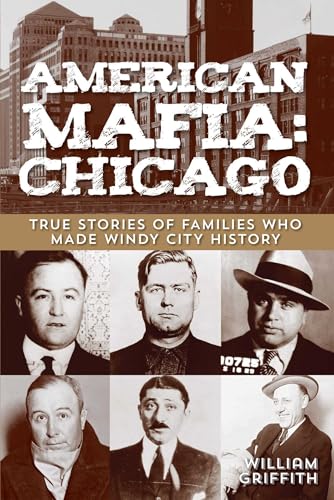
- Focuses on Chicago’s gangs, families, and neighborhoods
- Covers early gangs through the Al Capone era
- Explores the stories behind local legends and founding members
Best For: Readers interested in Chicago mob history and neighborhood-based stories
Mob Boss Biography
The Quiet Don: Russell Bufalino

- Biography of Russell Bufalino’s quiet rise
- Links Mafia power to politics and labor
- Includes photos and long-range history
Best For: Readers who want a mafia biography centered on one powerful, lesser-known kingpin.
Classic Mafia Overview

- Broad history from the 1880s to post-WWII
- Case-history approach keeps it readable
- Uses documents and field experience
Best For: Readers who want a balanced, accessible overview of the Mafia’s rise in the United States.
New York Crime Dynasty Guide

- Covers Genovese, Gambino, Bonanno, Colombo, and Lucchese
- Shows rise, decline, and law-enforcement pressure
- Audiobook format with multiple narrators
Best For: Readers who want a detailed, New York-centered look at the five major Mafia families.
Definitive Mafia History – Cosa Nostra
If you want mafia history books that go beyond legend, Cosa Nostra: A History of the Sicilian Mafia is a strong pick. John Dickie uses new research to explain how the Sicilian Mafia began, how it adapts to threats, and why it became such a powerful cultural force.
Best For: Readers who want a richly researched history of the Sicilian Mafia with memorable real-life figures.
Pros:
- Uses startling new research to dig into the Mafia’s inner workings.
- Focuses on the origins and evolution of the Sicilian Mafia.
- Includes vivid historical figures such as Joe Petrosino and Provenzano.
- Written in a gripping style that reads like fiction.
Cons:
- Centers on the Sicilian Mafia, so it is less broad than general organized-crime surveys.
- Its depth may be more than casual readers need.
This is a standout choice if you want a serious, immersive mafia history book with both narrative drive and historical detail.
American Mafia Powerhouse – Five Families
Five Families: The Rise, Decline, and Resurgence of America's Most Powerful Mafia Empires
Check Price On AmazonFor mafia history books focused on New York, Five Families traces the rise, decline, and possible resurgence of the city’s most powerful mob empires. Selwyn Raab follows the Genovese, Gambino, Bonnano, Colombo, and Lucchese families through major figures, law-enforcement pressure, and the changing conditions that shaped the modern Mafia.
Best For: Readers who want a detailed history of the New York Mafia and its major families.
Pros:
- Covers the five major New York Mafia families in one book.
- Tracks the arc from Lucky Luciano to John Gotti and beyond.
- Explains the long law-enforcement campaign against the mob.
- Looks at both decline and possible resurgence.
Cons:
- Very focused on New York rather than the broader Mafia world.
- The sweep of names and organizations may feel dense for newcomers.
This is a practical pick if you want a big-picture account of American Cosa Nostra’s most important power structure.
Inside-the-Mob Exposé – The Valachi Papers
If your shortlist of mafia history books should include an inside account, The Valachi Papers is a classic choice. It tells the story of Joseph Valachi, the Genovese Family soldier who broke the code of silence and described the structure, violence, and money behind America’s Cosa Nostra.
Best For: Readers who want a first-person Mafia exposé that helped end the code of silence.
Pros:
- Offers the first major inside account of the Mafia.
- Details the organization from bosses to hit men.
- Grounded in Valachi’s names, dates, addresses, and other specifics.
- A classic exposé that helped lead to arrests and convictions.
Cons:
- Its value comes from testimony, so it is less of a broad analytical history.
- Readers wanting a modern overview may want a companion title.
This book is especially useful if you want the firsthand revelations that changed how the public understood the Mafia.
Mafia Reference Guide – The Mafia Encyclopedia
Among mafia history books, The Mafia Encyclopedia, Third Edition works well as a reference-heavy guide to organized crime figures, jargon, and history. Carl Sifakis surveys major perpetrators and personalities, along with their power plays, crimes, and the wider criminal culture around them.
Best For: Readers who want a searchable reference on Mafia people, terms, and organizations.
Pros:
- Nearly 500 entries make it easy to look up key names and topics.
- Includes more than 100 illustrations and a chronology.
- Covers mob culture, jargon, hangouts, and hideaways.
- Adds broader organized-crime topics such as Chinese Mafia, Yakuza, and prison gangs.
Cons:
- Reference format is less narrative than a traditional history book.
- May feel more encyclopedic than immersive.
This is a smart buy if you want a desk-reference companion for exploring mafia history names, terms, and factions.
Complete Mafia Overview – A Complete History of the Mafia
If you want mafia history books that work as a broad introduction rather than a narrow case study, this volume is built for that purpose. It covers major Mafia personalities, crimes, schemes, hangouts, jargon, and culture, while also tracing the Mafia’s role in Sicily and America.
Best For: Readers who want a wide-ranging overview of Mafia history with visual and reference support.
Pros:
- Broad introduction to key perpetrators, personalities, and infamous activities
- Includes the Mafia’s history in both Sicily and America
- Over 200 illustrations add context and visual interest
- Comprehensive glossary is useful for newcomers
Cons:
- At 208 pages, it is more of an overview than an exhaustive deep dive
- Focuses on accessibility, so it may not satisfy readers seeking a highly academic treatment
This is a practical pick if you want a readable entry point into the subject and a solid reference for common names and terms. It stands out for combining history, imagery, and a glossary in one compact package.
Gambino Crime Family Story – Mafia Dynasty
Among mafia history books focused on one family, this title narrows in on the Gambinos and their rise from Sicilian roots to dominance in New York. It follows the family through bootlegging, underworld power struggles, construction and waterfront control, and the later government crackdown.
Best For: Readers who want an inside story of one of the most famous crime families.
Pros:
- Detailed inside story of the Gambino crime family
- Tracks the family’s rise, power, and fall over several decades
- Names major figures including Lucky Luciano, Carlo Gambino, and John Gotti
- Covers key spheres of influence like construction, garment, and waterfront industries
Cons:
- Focused on one family, so it is less of a general Mafia history
- Reprint edition may not appeal to readers looking for a newer publication
If you want a more narrative, family-specific angle, this book delivers a vivid account of power, betrayal, and organized crime control. Its strength is depth on the Gambinos rather than a broad survey of the entire Mafia world.
Chicago Mob History – American Mafia: Chicago
If your search for mafia history books is centered on a city-by-city view, this book spotlights Chicago’s underworld from its early gangs to the Capone era. It explores neighborhoods, founding members, shifting allegiances, and the historical scenes behind the legends.
Best For: Readers interested in Chicago’s mob history and the stories behind famous neighborhoods.
Pros:
- Strong Chicago focus with stories of families, gangs, and neighborhoods
- Includes early secretive gangs and the era of Al Capone
- Explains the events behind local legends and founding members
- Compact 232-page format is manageable for casual readers
Cons:
- Highly city-specific, so it is not a broad Mafia overview
- Emphasis on storytelling may be less detailed than academic histories
This is a good choice if you want a readable local-history approach to organized crime. It works especially well for readers who like place-based mafia history and want the Chicago angle rather than a national survey.
Mob Boss Biography – The Quiet Don: Russell Bufalino
If you’re comparing mafia history books that go beyond the usual headlines, The Quiet Don is a focused biography built around Russell Bufalino’s long, secretive climb through organized crime. It traces his role across decades, from coal country Pennsylvania to broader political and labor influence, and raises questions tied to Hoffa, the CIA, and even The Godfather era connections.
Best For: Readers who want a mafia biography centered on one powerful, lesser-known kingpin.
Pros:
- Profiles Russell Bufalino’s rise from immigrant to mob leader.
- Connects local crime history to national politics and labor power.
- Includes photos for added context.
Cons:
- Focuses tightly on one figure rather than the broader Mafia landscape.
- Best suited to readers interested in U.S. organized-crime history.
This is a strong pick if you want a detailed, biographical angle on American organized crime, especially one that emphasizes influence, secrecy, and long-term power rather than sensational storytelling.
Classic Mafia Overview – American Mafia: Rise to Power
For shoppers browsing mafia history books, American Mafia is a broad, readable history of the American Mafia’s rise from the 1880s through the post-WWII era. Thomas Reppetto organizes the story through case histories and known names like Lucky Luciano and Al Capone, while grounding the narrative in how Prohibition and later government scrutiny shaped organized crime.
Best For: Readers who want a balanced, accessible overview of the Mafia’s rise in the United States.
Pros:
- Covers the Mafia’s rise from the 1880s to the post-WWII era.
- Uses case histories to keep the history readable and focused.
- Draws on field experience and unseen documents.
Cons:
- More of a wide historical survey than a deep dive into one family or boss.
- Strongest for readers interested in the Italian American Mafia specifically.
This is a solid foundation book if you want context before moving into more specialized titles, especially one that explains how the Mafia developed into the structure most readers recognize today.
New York Crime Dynasty Guide – The Five Families of New York
If you’re shopping for mafia history books with a New York focus, The Five Families of New York bundles the major syndicates into one long-form history. It follows the Genovese, Gambino, Bonanno, Colombo, and Lucchese families from their rise under figures like Lucky Luciano to later eras marked by leaders such as Paul Castellano and John Gotti, while also covering the law-enforcement pressure that battered them.
Best For: Readers who want a detailed, New York-centered look at the five major Mafia families.
Pros:
- Covers all five major New York Mafia families in one package.
- Tracks both their rise and decline over multiple decades.
- Includes modern law-enforcement developments and changing criminal dynamics.
Cons:
- Geared toward readers interested primarily in New York organized crime.
- As an audiobook, it may not suit those who prefer a print-first research format.
This is a useful pick if you want a single title that covers the major New York mob organizations together, with enough historical sweep to show how their power was built, challenged, and diminished.
How We Picked These Mafia History Books
We prioritized books that offer strong historical context, recognizable subject coverage, and a useful balance of readability and depth. For Mafia History Books, that means looking for credible sourcing, clear organization, and a focus on real events rather than sensationalism.
We also considered whether a title works as an introduction or as a more specialized read, since many buyers want either a broad survey of organized crime or a concentrated look at one family, city, or figure.
Quick Comparison
If you want a broad national overview, choose a general history of the Mafia or a multi-family survey. If you prefer a more focused angle, look for books centered on the Sicilian Mafia, the Five Families, the Gambino organization, Chicago, or a specific mob figure. Reference-style titles and encyclopedias are best for readers who want names, dates, and context they can revisit later.
Key Buying Factors for Mafia History Books
Scope
Decide whether you want a wide-ranging history or a narrow study of one family or era. Broad titles are better for first-time readers; focused books usually reward people who already know the basics.
Style
Some Mafia History Books read like narratives, while others are more reference-oriented. Narrative books are better for page-turning readability, while reference works are stronger for research and fact-checking.
Historical Depth
Look for books that explain roots, alliances, law-enforcement pressure, and shifts over time. The best titles connect people and events to the larger development of organized crime in the U.S. and Italy.
Edition and Format
Updated editions can matter, especially for encyclopedias and broad overviews. Hardcover, paperback, and omnibus collections may also affect value depending on whether you want a display copy, a durable reference, or a budget-friendly read.
Who Should Buy Which Mafia History Books?
Newcomers should start with a broad history that covers the Mafia’s major families and milestones. Readers interested in New York crime history may prefer titles focused on the Five Families, while those drawn to regional stories may want Chicago or Sicilian-focused works. If you want a research aid, choose an encyclopedia or a comprehensive multi-book collection. For the most balanced purchase, pick one general overview and one specialized title that matches your interest area.