If you’re looking for investing books for beginners, the right first read can make the difference between confusion and confidence. The best titles break down core ideas like diversification, risk, index funds, and long-term thinking without drowning you in jargon.
This roundup focuses on approachable books that help new investors build a strong foundation, avoid common mistakes, and choose a path that fits their goals and comfort level.
Best 10 Investing Books for Beginners Picks for 2026
Money Psychology Pick
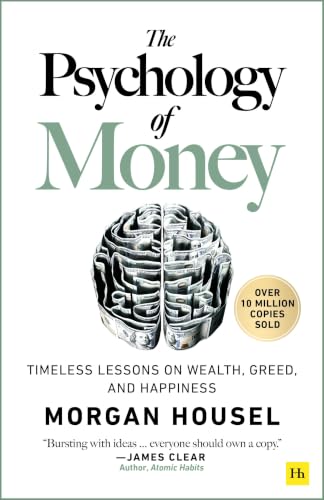
- 19 short stories on money behavior
- Focuses on investing mindset, not formulas
- Helps beginners think more clearly about wealth
Best For: Readers who want a behavior-first introduction to money and investing
Index Fund Classic
The Little Book of Common Sense Investing

- Explains low-cost index fund investing
- Includes updated data plus new chapters
- Built around long-term buy-and-hold strategy
Best For: Beginners who want a simple, evidence-based stock market approach
FIRE Roadmap

- Revised edition with updated data and tools
- Covers debt, retirement accounts, and asset allocation
- Built for financial independence and simplicity
Best For: Beginners pursuing a simple roadmap to wealth and financial freedom
Stock Market Starter
A Beginner's Guide to the Stock Market

- Short 98-page introduction for beginners
- Covers brokerage accounts and first stock purchases
- Includes trading and investing basics
Best For: Readers who want a quick, beginner-friendly stock market overview
Quick Primer
Investing 101: Stocks, Bonds, ETFs

- Covers stocks, bonds, ETFs, IPOs, and more
- Hands-on, engaging primer for beginners
- Touches on value investing and risk tolerance
Best For: Beginners who want a lively, broad introduction to core investing concepts.
Start Here
Stock Investing For Beginners: Buy Your First Stock

- Simple explanations aimed at first-time investors
- Shows how to buy and sell stocks
- Very short and easy to read
Best For: Absolute beginners who want a simple, step-by-step introduction to buying their first stock.
Student-Friendly Pick
Learn to Earn: Investing and Business Basics

- Explains investing and business fundamentals together
- Teaches reading stock tables and annual reports
- Accessible for high school age and older
Best For: High school students and adult beginners who want an accessible introduction to investing and business fundamentals.
Low-Risk Starter Pick
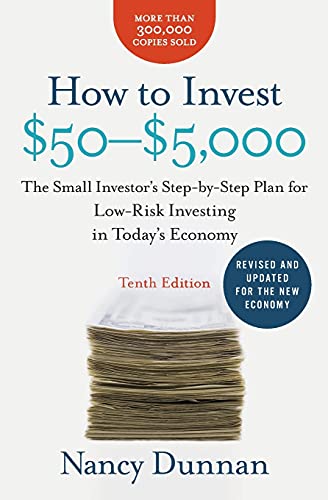
- Updated guide for small-dollar investing.
- Step-by-step coverage of basic investment choices.
- Emphasizes low-risk, beginner-friendly strategies.
Best For: Beginners with limited money who want a cautious, practical start.
Plain-English Wealth Builder
Investing for Beginners Made Simple

- Jargon-free guide to stocks, ETFs, and compounding.
- Shows how to start with very little money.
- Includes beginner mistakes and retirement basics.
Best For: Readers who want simple, practical investing guidance from zero experience.
Absolute Beginner Essentials
Investing for Absolute Beginners

- Short, beginner-friendly introduction to investing basics.
- Covers brokerage accounts, index funds, and ETFs.
- Includes a free beginner toolkit.
Best For: Absolute beginners who want a concise, actionable starter guide.
Money Psychology Pick – The Psychology of Money
If you want investing books for beginners that focus on real-world decisions instead of formulas, The Psychology of Money is an easy place to start. Morgan Housel uses 19 short stories to explain how behavior, ego, pride, and incentives shape money choices, making it useful for readers who want a clearer mindset before diving deeper into investing.
Best For: Beginners who want to build better money habits and understand the behavioral side of investing.
Pros:
- Focuses on how people actually make financial decisions
- Uses short stories that are easy to read and digest
- Helpful for understanding wealth, greed, and happiness in context
Cons:
- Not a step-by-step investing manual
- Leans more toward mindset than portfolio tactics
As a starter pick, this book works best if you want practical perspective before chasing strategies. It is less about market mechanics and more about building the judgment to make smarter long-term financial choices.
Index Fund Classic – The Little Book of Common Sense Investing
For readers looking at investing books for beginners, this classic offers a straightforward case for low-cost index funds and long-term buy-and-hold investing. John C. Bogle explains how broad market index funds can help investors aim for their fair share of stock market returns while avoiding the drag of high costs and frequent trading.
Best For: Beginners who want a simple, long-term stock market strategy built around index funds.
Pros:
- Clear explanation of low-cost index fund investing
- Updated edition includes new data and insights
- Includes added guidance on asset allocation and retirement investing
Cons:
- Strongly favors one core approach over many alternatives
- Can feel less useful if you want active stock-picking tactics
This is a strong pick if you want a proven, low-maintenance framework for building wealth over time. It keeps the message simple: stay diversified, keep costs low, and let compounding work.
FIRE Roadmap – The Simple Path to Wealth
The Simple Path to Wealth: Your Road Map to Financial Independence and a Rich, Free Life
Check Price On AmazonIf you are browsing investing books for beginners and want a practical roadmap, The Simple Path to Wealth is built around a radically simple plan for financial independence. JL Collins covers debt elimination, retirement accounts, asset allocation, and the traps of the financial industry, all in a direct style designed to make complex ideas easy to follow.
Best For: Beginners who want a simple, actionable path to financial independence and long-term wealth.
Pros:
- Revised and expanded edition with updated data and tools
- Covers both wealth-building and wealth-preservation phases
- Clear, straightforward guidance on debt and retirement accounts
Cons:
- Strong emphasis on simplicity may not suit readers seeking variety
- Focuses more on a core plan than on many investing styles
This book stands out for beginners who want a direct, no-nonsense plan rather than complicated investing theory. It is especially appealing if your goal is financial freedom, not just learning the basics.
Stock Market Starter – A Beginner's Guide to the Stock Market
A Beginner's Guide to the Stock Market: Everything You Need to Start Making Money Today
Check Price On AmazonIf you want investing books for beginners that promise a fast start, this guide is aimed at helping new readers understand how the stock market works and how to begin buying stocks. Matthew Kratter covers brokerage accounts, first purchases, passive income ideas, momentum trading, and value-stock basics in a concise, beginner-friendly format.
Best For: New investors who want a short, action-oriented introduction to stock market basics.
Pros:
- Written for complete beginners with no prior trading experience
- Covers brokerage accounts, buying stocks, and basic strategies
- Very short at 98 pages, so it is quick to get through
Cons:
- Much more focused on trading ideas than some beginner investing readers may want
- Less detailed than longer, more comprehensive investing guides
This is a compact starter book if you want a broad overview without a big time commitment. It works best as a quick launch pad rather than a deep long-term investing reference.
Quick Primer – Investing 101: Stocks, Bonds, ETFs
If you want investing books for beginners that move quickly from the basics to real portfolio ideas, Investing 101 is built for that purpose. It covers stocks, bonds, ETFs, IPOs, value investing, short selling, and risk tolerance in a hands-on style that aims to keep the learning practical rather than textbook-heavy.
Best For: Beginners who want a lively, broad introduction to core investing concepts and portfolio building.
Pros:
- Covers a wide range of beginner topics, including stocks, bonds, ETFs, and IPOs
- Hands-on approach with an engaging, easy-to-digest style
- Includes concepts like value investing, short selling, and risk tolerance
- Compact 264-page primer for getting the big picture fast
Cons:
- Broad coverage means it may not go deep on any single topic
- Best suited to readers who want a primer, not an advanced strategy book
Overall, this is a solid pick if you want a fast-moving introduction that explains the essentials without sounding like a dense textbook. It’s especially useful when you want to understand the building blocks of a portfolio before choosing where to start.
Start Here – Stock Investing For Beginners: Buy Your First Stock
Stock Investing For Beginners: How To Buy Your First Stock And Grow Your Money
Check Price On AmazonFor readers looking for investing books for beginners with a very direct starting point, this guide focuses on helping you buy your first stock and understand the basics in simple terms. It promises only what you need to know to get started, including how to buy and sell stocks, where to find recommendations, and a few key ways to protect yourself from big losses.
Best For: Absolute beginners who want a simple, step-by-step introduction to buying their first stock.
Pros:
- Explains stock investing in simple, beginner-friendly language
- Focuses on practical first steps, including how to buy and sell stocks
- Includes basic strategies to help protect investments from large losses
- Short 71-page format makes it easy to read quickly
Cons:
- Very brief, so it may feel too light for readers wanting deeper context
- Centered mainly on stock investing rather than broader investing topics
This is a straightforward starter book for someone who feels overwhelmed by the stock market and wants a simpler on-ramp. Its appeal is speed and clarity rather than depth, which makes it useful if your main goal is to take the first step.
Student-Friendly Pick – Learn to Earn: Investing and Business Basics
If you’re comparing investing books for beginners and want one that also explains business basics, Learn to Earn is a strong candidate. Peter Lynch and John Rothchild break down how the stock market works, how to read a stock table and annual report, and why understanding business can help you think more like an investor.
Best For: High school students and adult beginners who want an accessible introduction to investing and business fundamentals.
Pros:
- Explains the basics of investing and the stock market in an accessible style
- Covers practical skills like reading a stock table and annual report
- Connects investing to everyday business examples people already know
- Written to enlighten and entertain readers high school age or older
Cons:
- More focused on fundamentals than on advanced portfolio tactics
- Some readers may prefer a more modern beginner book
This book stands out if you want a foundation that goes beyond stock picking and explains how investing connects to the broader economy. It’s a good choice for readers who want to learn how to think like an investor, not just what to buy.
Low-Risk Starter Pick – How to Invest $50-$5,000 10e
If you’re looking for investing books for beginners that focus on practical first steps, this updated classic is built around small-dollar investing and low-risk decision-making. It covers how to choose a bank, read financial pages, and evaluate options like stocks, bonds, treasuries, and mutual funds with step-by-step guidance.
Best For: Beginners who want a cautious, structured introduction to investing with limited money.
Pros:
- Fully revised to reflect updated regulations and laws.
- Focused on small investors starting with $50 to $5,000.
- Step-by-step instructions make the process easier to follow.
- Covers a broad range of basic investment choices.
Cons:
- Centers on low-risk strategies, so it may feel conservative for some readers.
- Published in 2009, so some market details may feel dated.
This is a strong pick if you want a grounded, no-frills primer that helps you move from confusion to action. It’s especially useful for readers who value safety, structure, and small starting amounts.
Plain-English Wealth Builder – Investing for Beginners Made Simple
For readers comparing investing books for beginners, this 2026 guide is aimed at making the first steps feel simple and approachable. It breaks down stock market investing, ETFs, compounding, diversification, and passive-income basics in jargon-free language, with an emphasis on starting even with very little money.
Best For: Total beginners who want a clear roadmap and simple explanations without financial jargon.
Pros:
- Built around step-by-step beginner guidance.
- Explains ETFs, index funds, and compounding in plain language.
- Designed for people starting with $10, $20, or $50.
- Covers common beginner mistakes and retirement basics.
Cons:
- Independently published, so it may appeal more to self-directed readers.
- Focuses on basics, so advanced investors will likely outgrow it quickly.
This book is a straightforward option if you want a simple launch point and a beginner roadmap you can follow immediately. It’s best suited to readers who want clarity, confidence, and a low-stress introduction to investing.
Absolute Beginner Essentials – Investing for Absolute Beginners
If you want investing books for beginners that get straight to the basics, this short guide is designed for people starting from zero. It explains how investing works, how to open a brokerage account, and how to choose low-cost index funds and ETFs for long-term investing in the U.S. stock market.
Best For: True beginners who want a short, no-jargon introduction with a clear path to take action.
Pros:
- Very approachable for readers who are completely new to investing.
- Explains core ideas like stocks, ETFs, dividends, and compound interest.
- Includes a step-by-step brokerage account walkthrough.
- Comes with a free Beginner’s Investing Toolkit.
Cons:
- At 100 pages, it is more concise than many other beginner guides.
- Focuses mainly on simple long-term strategies rather than broader investing topics.
This is a compact, practical choice if you want a fast start and prefer learning by doing. It works well for beginners who want the essentials, an action plan, and a resource they can apply right away.
How We Picked These Investing Books for Beginners
We focused on books that are easy to follow, useful for true newcomers, and broad enough to support different goals, from learning stock market basics to building a long-term portfolio. Priority went to clear explanations, practical frameworks, and beginner-friendly pacing rather than advanced theory.
Quick Comparison: Which Type of Beginner Book Fits You?
Not all Investing Books for Beginners serve the same purpose. Some emphasize mindset and behavior, others cover the mechanics of stocks, ETFs, and bonds, while a few are more step-by-step and action oriented. If you want big-picture confidence, choose a foundational title. If you want to start investing soon, pick a book with portfolio basics and execution guidance.
Key Buying Factors for Investing Books for Beginners
Clarity Over Complexity
The best beginner books explain concepts in plain language and build ideas in a logical order. Look for books that define terms as they go and avoid assuming prior finance knowledge.
Practical Coverage
A strong starter book should help you understand how investing works in the real world, including asset allocation, index funds, fees, and risk management. For many readers, that practical focus matters more than market predictions.
Long-Term Perspective
Good beginner resources tend to stress habits over hype. That means less emphasis on trading tricks and more on saving consistency, patience, and choosing a strategy you can stick with.
Audience Match
Some books are better for absolute first-timers, while others assume you already know a little about stocks or personal finance. Matching the book to your experience level is one of the easiest ways to get value from it.
Who Should Buy Which Investing Books for Beginners?
If you want mindset and money habits, choose a book centered on behavior and wealth-building principles. If you want a simple path into index investing, look for a title that emphasizes low-cost, diversified investing. If you want a more hands-on introduction to stocks, ETFs, and the market, choose a beginner’s primer that walks through the basics step by step. Among Investing Books for Beginners, the best choice is the one that helps you understand enough to start, not just enough to read.